Laika Details Behind-the-Scenes Production of Upcoming Stop-Motion Film Wildwood
Hidden away in a cluster of nondescript buildings on the outskirts of Portland, Oregon, the employees of Laika Studios are making something magical. The stop-motion studio behind Coraline and Kubo and the Two Strings is preparing to release its most ambitious film yet, and it pushes the limits of the art form to tell a high-fantasy story full of magic and adventure.
Earlier this year, Polygon was invited on a press trip to Laika headquarters for an early look at Wildwood, which releases in theaters on Oct. 23. Based on the bestselling children’s fantasy novel by Colin Meloy, Wildwood tells the story of a young girl named Prue (Peyton Elizabeth Lee) who leaves her home in Portland and travels into a fantasy world to rescue her baby brother after he is kidnapped by a murder of crows. The film is directed by Travis Knight (Masters of the Universe, Bumblebee, Kubo and the Two Strings), who also serves as CEO of Laika.
Travis Knight was not at the offices during our visit, but we got a first-hand look at how Laika is bringing the world of Wildwood to life through 3D-printed models, detailed miniature sets, and staged battles that would impress J.R.R. Tolkien. We also spoke with multiple department heads to understand how the entire team works together to pull off something no other studio seems capable or interested in attempting.
It is impossible to boil down a full day of interviews, demonstrations, and behind-the-scenes previews into a single article, but here are four mind-blowing details from the making of Wildwood.
1. Welcome to Wildwood
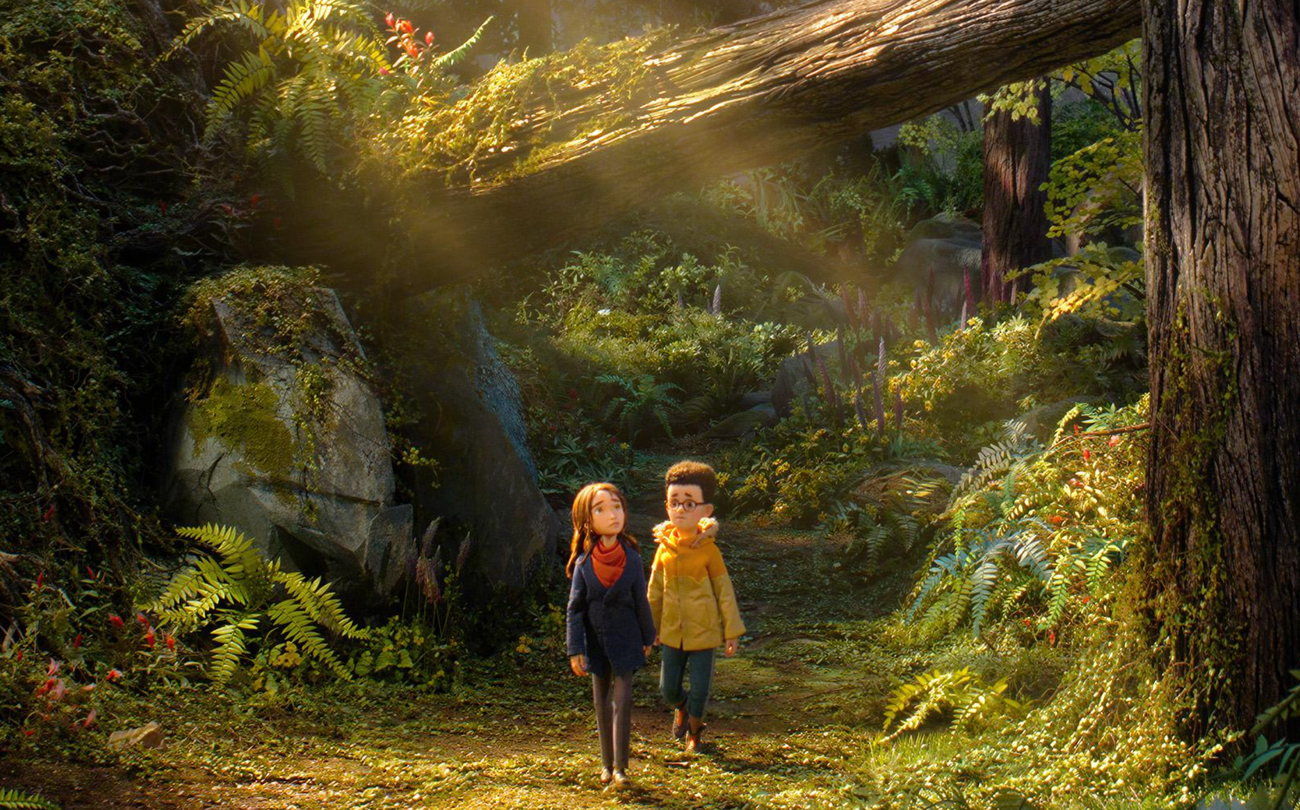
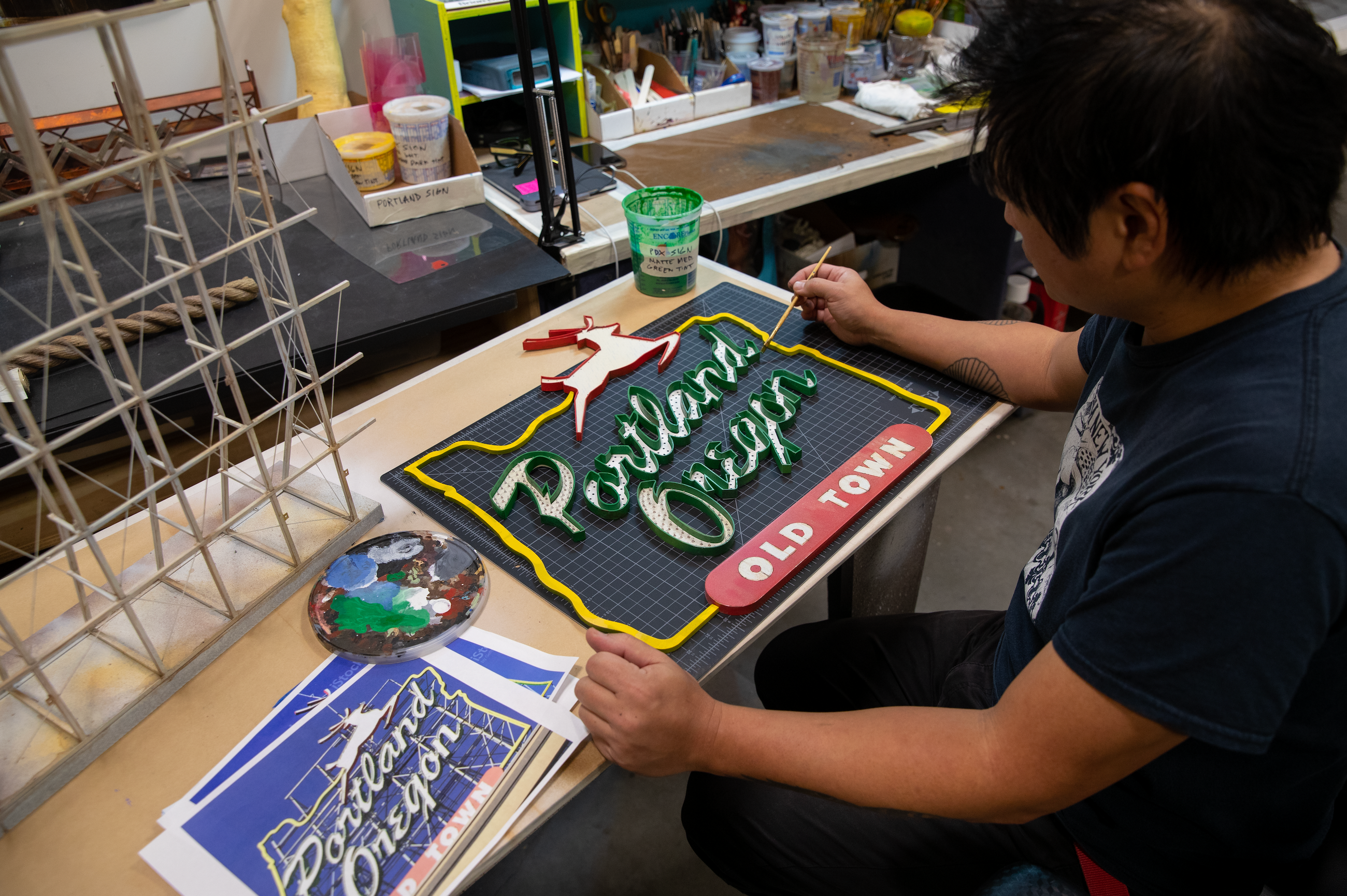
Wildwood is the first Laika movie set in Portland, where the studio is based, and the team took advantage of that situation as much as possible. That includes multiple scenes set in iconic Portland locations, such as a nod to Voodoo Doughnut, along with a big emphasis on the city’s sprawling wooded parks.
Much of the film and the book takes place in Forest Park, a massive green oasis in the northwest corner of the city that stretches for more than eight miles and features more than 80 miles of trails and walking paths, including the 30-mile Wildwood Trail that gives the story its name.
“I’ve never worked on a film that takes place where I live,” said Nelson Lowry, production design leader at Laika, who lives near Forest Park.
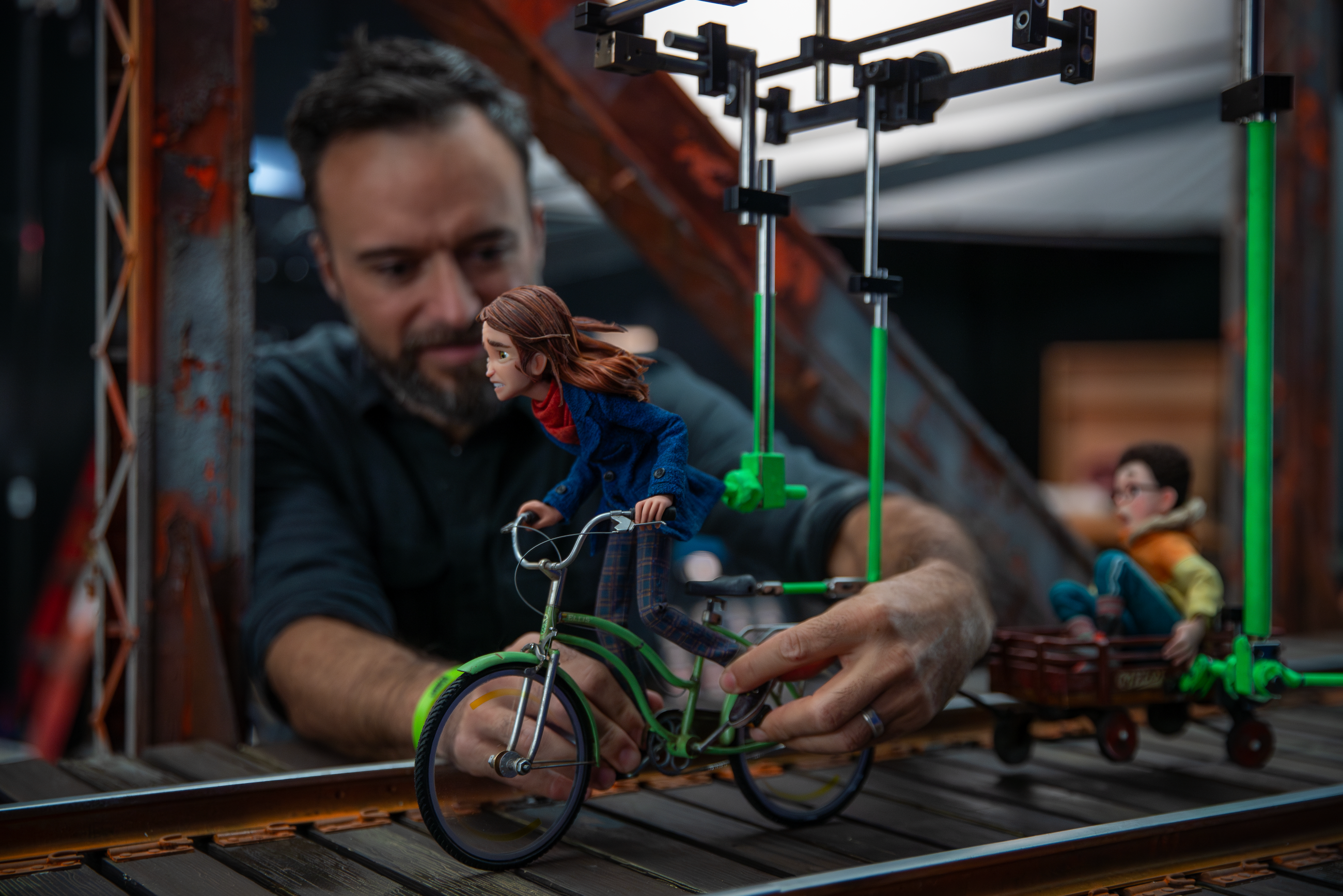
To bring Forest Park to life, Laika sent employees into the park to photograph and scan every inch of it before recreating favorite parts on raised platforms in the studio.
The studio used all that recorded data to try extending physical sets with VFX. Blending handmade stop-motion with modern filmmaking techniques is nothing new for Laika, and Nelson Lowry told us the blending of materials here is not particularly noticeable.
“It doesn’t take you out of the film,” he said.
I didn’t want to have floating mountains with waterfalls.
While there was some temptation to lean into the story’s fantastical elements, Nelson Lowry resisted transforming Forest Park into something unrecognizable.
“The act of just walking through the woods is pretty magical,” he said. “I didn’t want to have floating mountains with waterfalls, no offense to anybody who does that. Now that I’ve seen the film in its totality, I’m so glad we did that. It keeps it on Earth in some way without being too much fantasy.”
2. Bringing the General to life
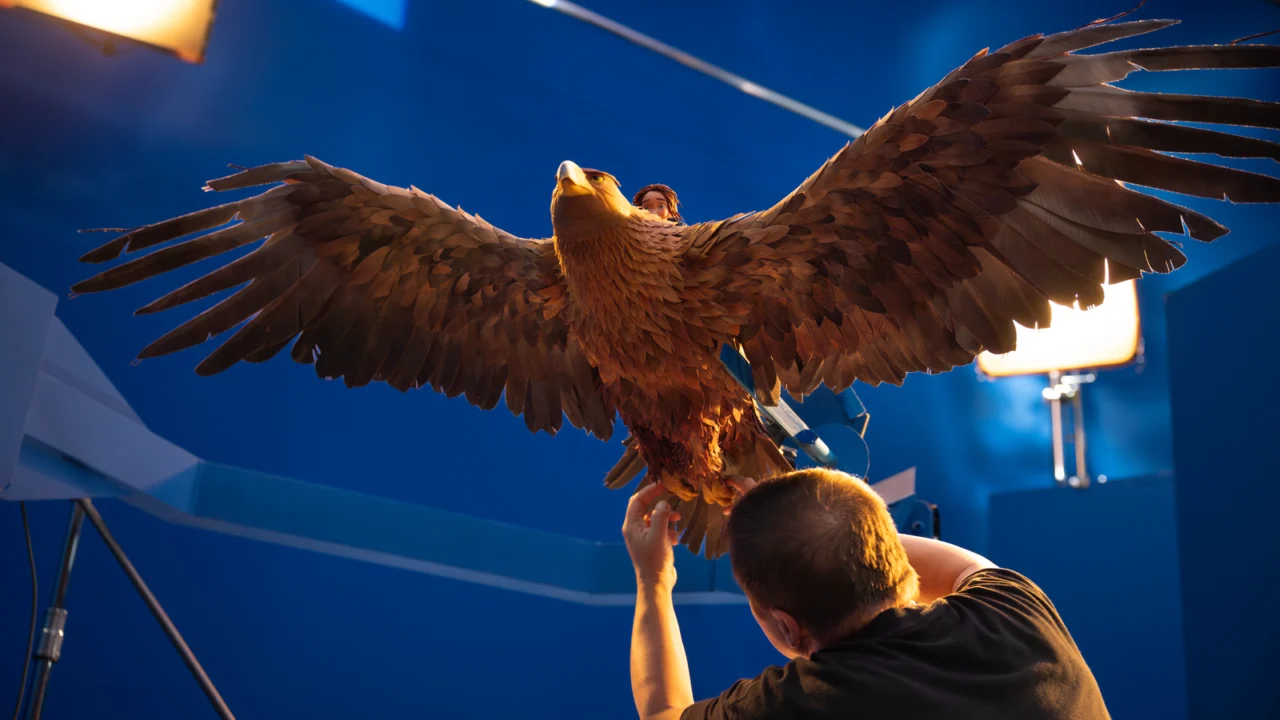
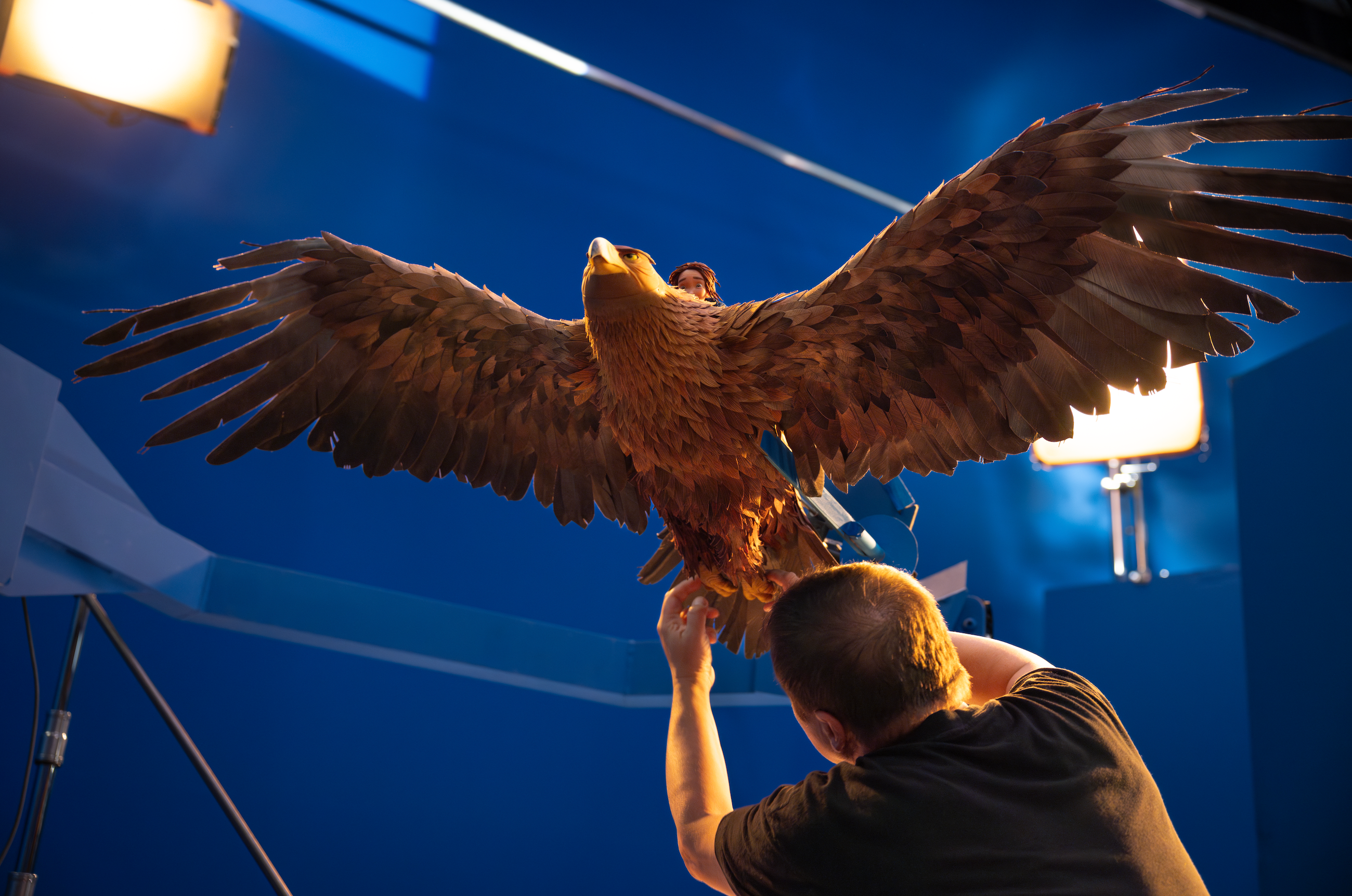
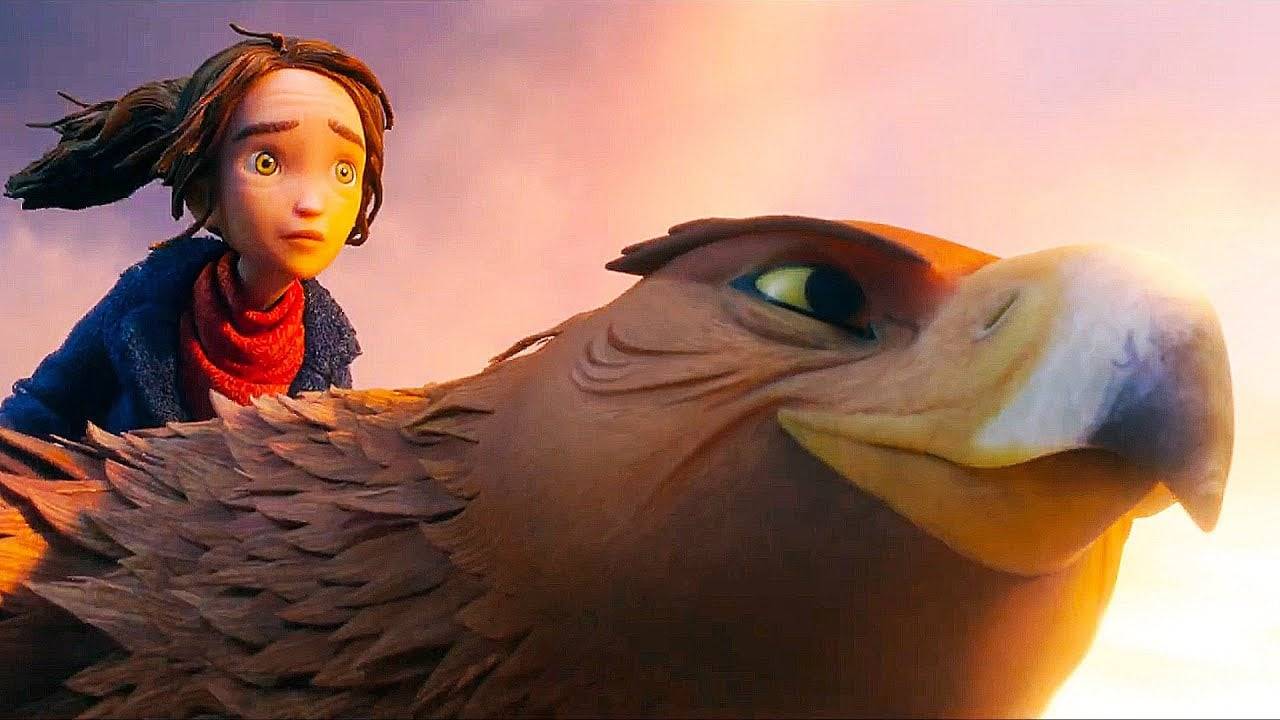
One of the centerpieces of Wildwood is an extended sequence where Prue rides on the back of a massive eagle called the General (voiced by Angela Bassett). To bring the character to life, the team at Laika created three versions of the General: one specifically designed to allow its wings to fold up for non-flying scenes, and two more for flight.
We have not taken our feet off the gas for really pushing this technology.
The biggest version of the General was attached to a gimbal to create dynamic flight movement, with a camera attached to a second circling gimbal. This setup was used to film the main flight sequence, with one animator working alone for days on end to bring the story to life one frame at a time.
To create the illusion of flight, Laika deployed a few clever tricks. The General’s design features over 3,000 feathers, each one made from laser-etched silk with a wire running through the tip. This setup meant the animator could adjust every single feather to create a sense of speed and movement.
“It’s rare that you get that much feather movement in an actual bird,” said animation supervisor Brad Schiff, “but in order to feel the scale with Prue sitting on top, it made sense to have a little bit of movement going on with it.”
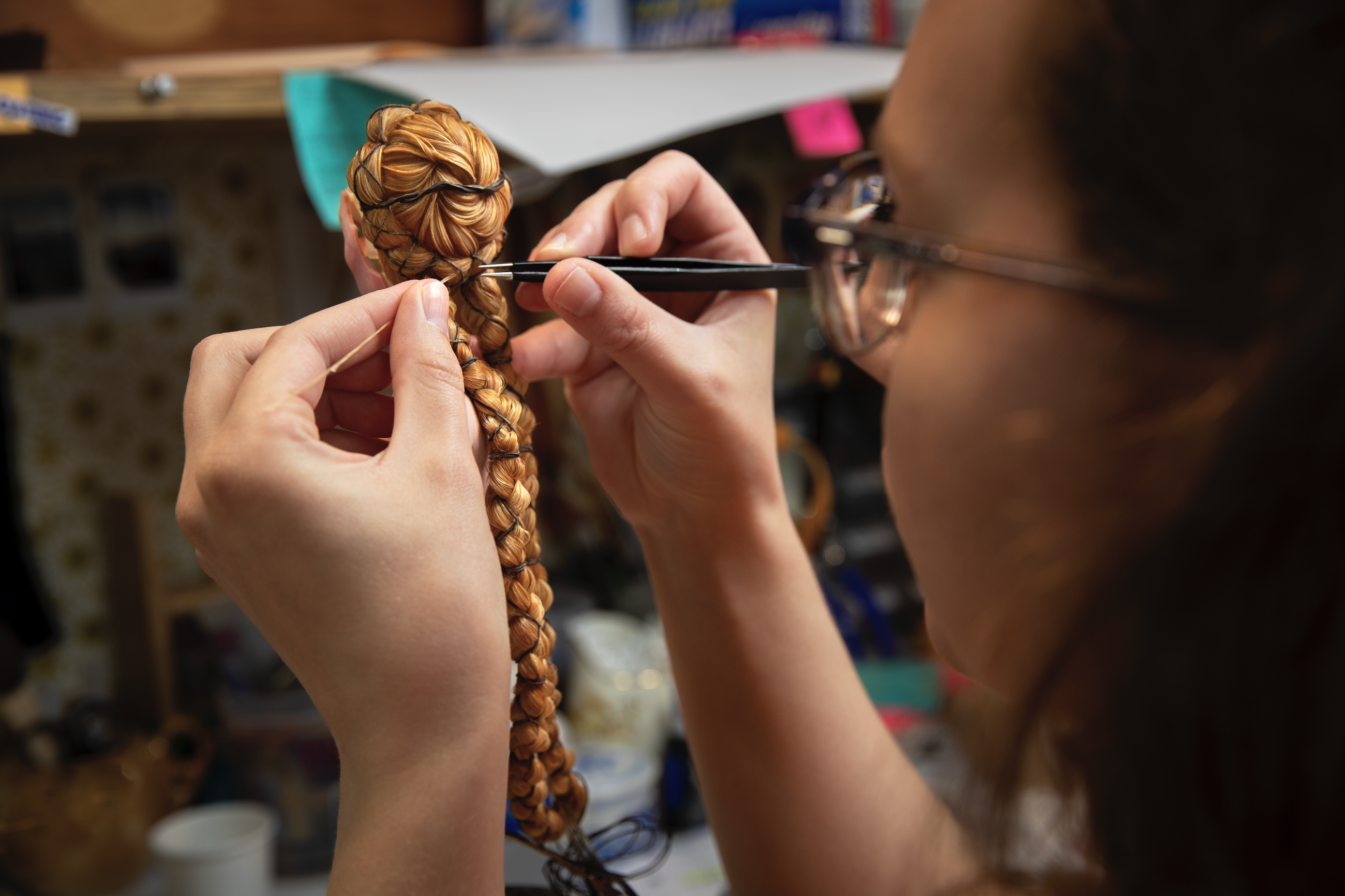
Another big area of focus was Prue’s hair. For most of the movie, it hangs past her shoulders and swings freely, which requires multiple posable strands with tiny wires running through them. Eventually, Brad Schiff came up with a solution.
“I approached Travis one time and I’m like, ‘Dude, this hair’s a pain in the ass. Could we put it in a ponytail for the General scene?'”
The ponytail version of Prue’s hair still has some movement, but it is a single rotating cylinder where the ponytail connects to the rest of her head.
3. 140,000 faces
Dating back to Coraline in 2009, Laika’s biggest innovation has been the combination of 3D printing and stop-motion animation. This melding of modern technology and classic technique allows the studio to produce thousands of different versions of each character’s face to match every possible expression.
“That was groundbreaking at the time and it really pushed performances to a whole new level for stop-motion animation,” said Brian McLean, director of rapid prototyping at Laika. “We have not taken our feet off the gas for really pushing this technology.”
For Wildwood, Laika 3D-printed 140,000 faces, a record for the studio and the art form. The studio’s previous film, Missing Link, boasted 106,000 face models.
“We have a Guinness Book of World Records for the most number of 3D-printed faces in a stop-motion animated movie,” Brian McLean said. “I don’t know if anyone is competing in that, but we nailed it.”
Every character goes on an emotional journey.
Once the faces are printed and prepared, animation can begin. Each face plate has magnets glued to the inside that attach to another set of magnets inside the head of the character models.
The most difficult part of animating all those faces comes down to the eyes. While each model’s eyeballs are fully movable, the process animators use to achieve lifelike expressions involves meticulous physical adjustments.
“They are taking an extremely sharp X-ACTO blade and stabbing the eye and moving around the eyeball and the eyelid,” Brian McLean said. “They’re doing this to get eye lines. They’re doing this to get blinks. They’re doing this to get squints.”
“This curvature of this little thin plastic eyelid, we dial that in for months, because we know that animators have to get the most subtle performance out of these eyeballs.”
To make things more challenging, Laika no longer reuses any of those 3D-printed faces for more than one shot. While the studio cycled through expressions on earlier films like Coraline and ParaNorman, Travis Knight decided that every facial expression needs to feel unique.
“The truth of the matter is, no director wants to be told they have to use the same smile at the end of the movie as they used in the beginning of the movie,” Brian McLean said. “Because every character goes on an emotional journey, a character arc.”
4. An epic battle out of Lord of the Rings
Wildwood culminates in a massive battle between multiple warring factions, including an army of bipedal coyote soldiers. Laika built five different sets to shoot the scene, including west and east slopes where rival forces prepare to attack. The studio also constructed working mini-trebuchets that shoot exploding cannonballs full of molten lava in the film, though that part is CGI.
In total, there are over 3,000 characters engaged in the fighting via a mix of practical models and digital doubles, similar to the orc armies in Peter Jackson’s Lord of the Rings trilogy.
“This film is so epic that we had to figure it out,” Nelson Lowry said. “Is VFX cheating? We built 136 locations and hundreds of puppets. I don’t find that to be cheating. It is seamless, actually, the VFX and the animation, which is the holy grail of digital work.”
Wildwood releases in theaters on Oct. 23.
Laika Studios covered the cost of travel and lodging for this trip.


 Marvel Renews ‘Your Friendly Neighborhood Spider-Man’ for Season 4 Ahead of Series Premiere
 Analyst Data Shows Saros Revenue 20 Percent Lower Than Returnal After Launch
 Insider Claims Both Seasons of God of War Will Be Filmed Back-to-Back
 Pokémon Celebrates the Holidays Early with a Festive Merch Collection
 Ben Affleck Calls Justice League Set Experience Awful
 Stephen King Adaptation Doctor Sleep Returns to Paramount Plus
 Cyberleek Vows to Stop GTA VI Leaks But Threatens to Reveal Game Ending
 Modders Port Bloodborne to Android While Sony Omits PC Release