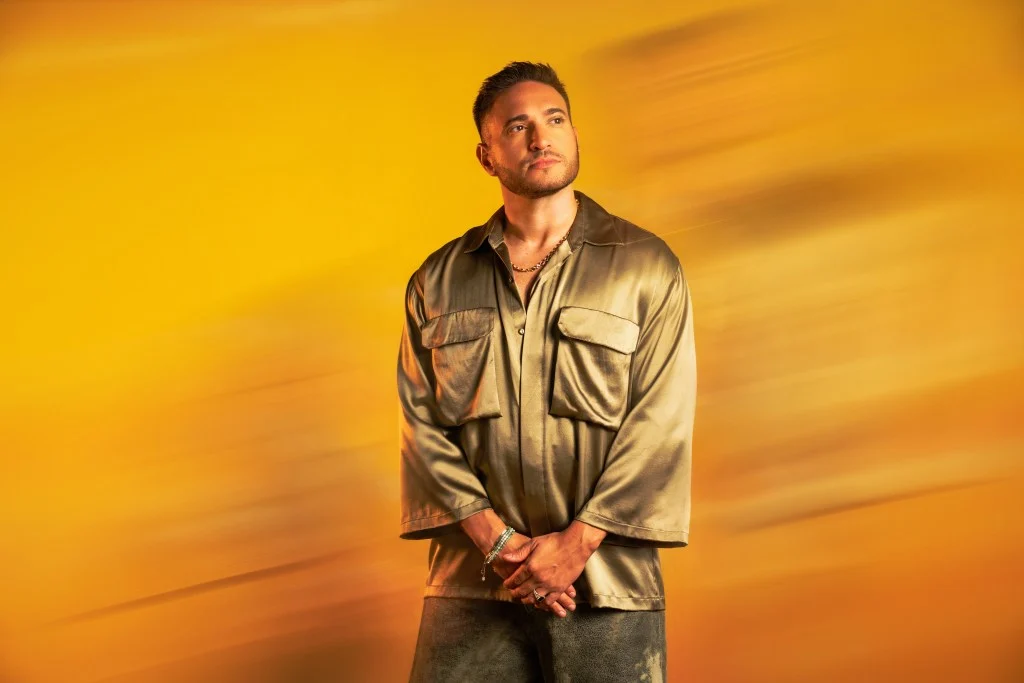
Jonas Blue on Rebranding, Engaging Your Senses, and the ‘Absolutely Horrendous’ State of AI
Jonas Blue Reclaims His Creative Freedom: On Artistic Rebranding, ‘SENSES,’ and the Perils of AI

Achieving massive commercial success is a milestone most electronic artists dream of, and Jonas Blue has certainly secured his place in the history books with over 20 entries on the Billboard Hot Dance/Electronic Songs chart. Yet, as the DJ discovered, global popularity doesn’t always guarantee creative fulfillment.
By 2024, Blue felt disillusioned. After nearly a decade of churning out high-tempo club staples—a journey that began with his massive 2015 cover of Tracy Chapman’s “Fast Car”—he found himself disconnected from the commercial pop sound he had pioneered. He felt trapped in a loop, missing the raw, authentic spark that initially drew him to dance music.
A transformative summer in Ibiza provided the reset he needed. Returning to the dance floor as a fan rather than a performer, he rediscovered the house music that originally captivated him at 18. This revelation led to a bold decision: severing ties with his major record label to return to his roots with Defected Records. The shift has already yielded fruit, with tracks like “Edge of Desire” and “Girl” signaling a rejuvenated, more organic chapter in his career.
Billboard sat down with Blue via Zoom from Tokyo, where he was prepping for the first of four Japanese shows. We discussed his newfound love for instrumentation, his immersive Ibiza residency, and why he finds the current proliferation of AI in music deeply unsettling.
The Reality of Life on the Road
Your summer itinerary is grueling, spanning Europe, Asia, and North America. How do you balance the chaos of touring with your creative life?
The best part is meeting fans from every corner of the globe and hearing how my music has become the soundtrack to their most significant life moments. That connection is unparalleled. The downside, of course, is the travel. My internal clock is constantly shattered—stability is a luxury you don’t get while touring.
The Japanese Connection
You’ve developed a special bond with your Japanese audience. How did that evolve?
It really started with my second single, “Perfect Strangers.” It resonated deeply with the Asian market. I believe there’s an alignment between my songwriting—which leans into simple, melodic hooks—and the musical sensibilities here. Since 2016, we’ve made a point to tour here consistently. When a market shows that much love, you show up for them.
Introducing ‘SENSES’
Your nine-week Ibiza residency, SENSES, sounds like a departure from standard DJ sets. What inspired this multisensory approach?
I wanted to mirror the way my music has traveled globally. We’re moving beyond just sound. We are incorporating visual elements and, uniquely, scent. When the set moves into Italian-inspired motifs, the air in the room shifts to the fragrance of lemon, evoking the Mediterranean coast. It was inspired by my trip to The Sphere in Las Vegas—seeing how a story could be told through every sense at once made me wonder, “Why aren’t we doing this with live music?”
Falling Back in Love with Music
You mentioned on social media that you had to rediscover your love for music. What caused that shift?
I felt stagnant. When you are signed to a major label, the pressure to hit specific streaming targets every month can turn art into a chore. I was bored. I needed to remove the barriers and stop focusing on data. I’ve started writing without constraints, picking up instruments and letting the melody lead, not the commercial algorithm. It’s the most fun I’ve had in years.
The AI Debate
You’ve been vocal about your skepticism regarding AI in the music industry. Why is that?
The lack of regulation is absolutely horrendous. I recently saw that my entire catalog was being used to train AI models. The fact that anyone can now prompt a machine to “create a Jonas Blue-inspired song” after I’ve spent my life refining my own sound is infuriating. While I support innovation, the ethical implications of unregulated AI copying artists’ work is just plain wrong. I’m sticking to real instruments and human connection. You can’t replicate the soul of an organic studio session with a lines of code.
Looking Ahead
What is next on the horizon?
For the first time in my career, I don’t have a rigid plan. I’m unsigned, I’m unpublished, and I’ve never been freer. I’m simply chasing inspiration, focusing on SENSES, and trying to stay present. I’m not worried about album quotas or single counts; I’m just enjoying the music again.
Related articles
 Becca Hatch and Lewis Love tapped for Spotify RADAR program
 J-Hope Thanks ARMY After BTS Win Three MTV Video Music Awards
 Former American Idol Contestant Caleb Flynn Found Guilty of Murdering His Wife
 Niall Horan Marks 10th Anniversary of His Song This Town
 HALCALI Discuss Otsukare Summer Going Viral and Returning to Music After a Fourteen-Year Career Gap in Billboard Japan Women in Music Interview
 BTS Member Jimin Posts on TikTok
 RAYE Addresses Michael B. Jordan Dating Rumors After Six Flags Outing Sparks Speculation
 LISA of BLACKPINK Adds New Dates to Las Vegas Residency Due to Demand