How Fortnite’s Massive Update is Redefining the Future of Star Wars Gaming
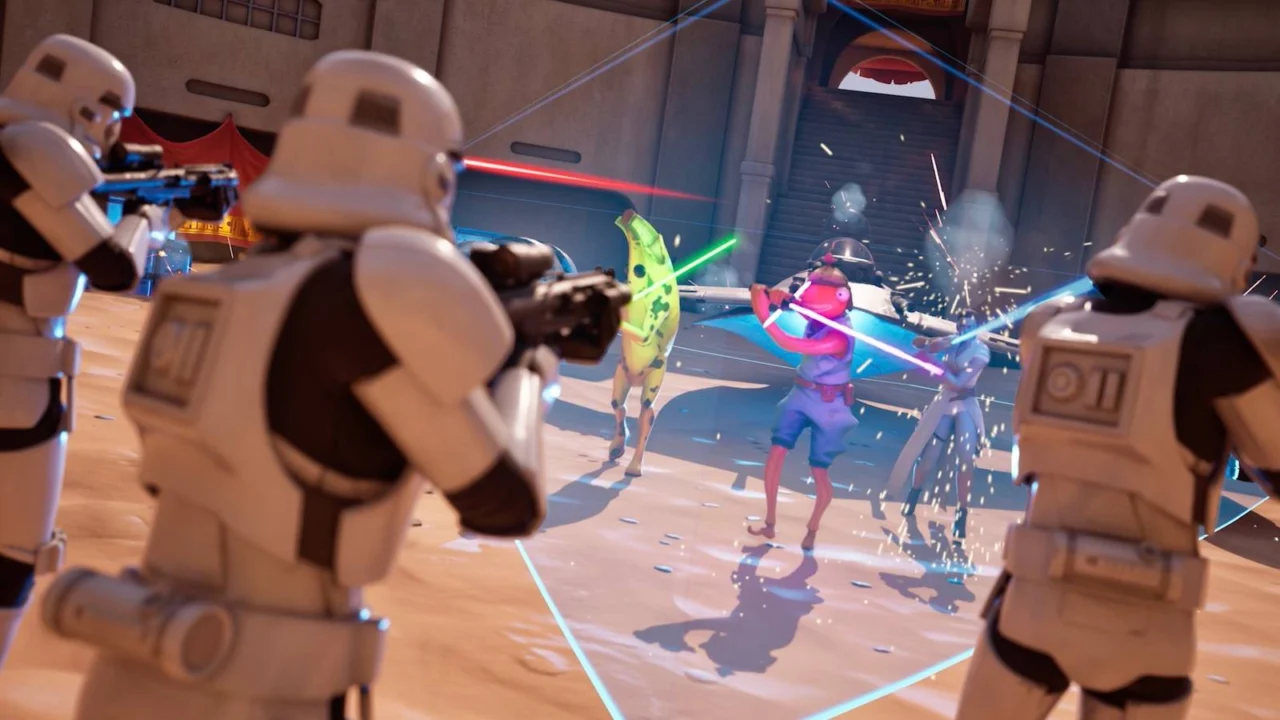
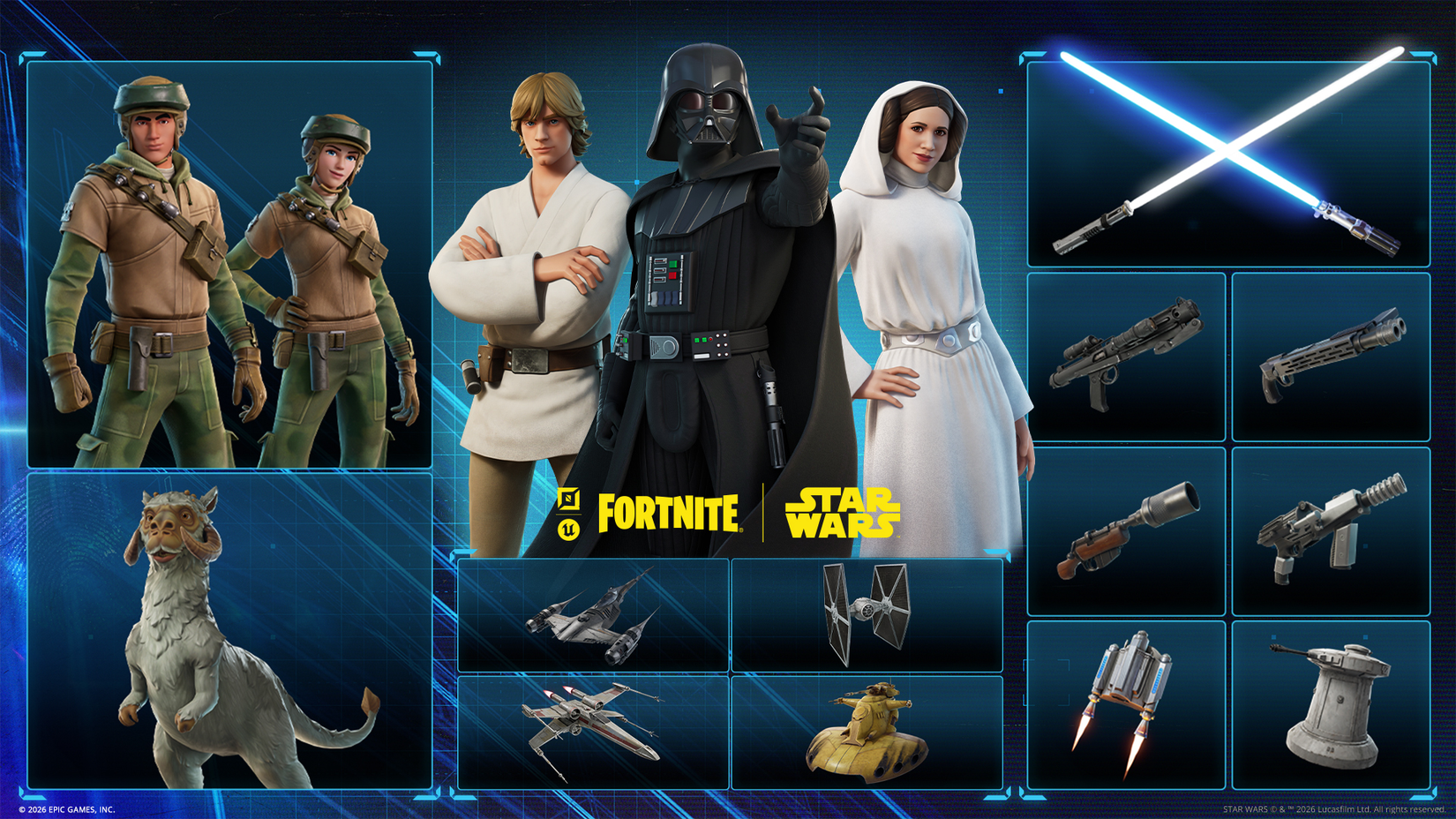
Starting today, the Unreal Editor for Fortnite (UEFN) is receiving a massive influx of Star Wars assets, empowering creators globally to build their own adventures in a galaxy far, far away. This update goes significantly deeper than a simple collection of lightsabers and Force abilities; Epic Games and Lucasfilm are granting developers the keys to the kingdom. Creators can now integrate legendary figures such as Luke Skywalker and the Mandalorian, Din Djarin, into their custom maps, alongside iconic starships like X-Wings and TIE Fighters.
While Star Wars has long been a staple of the Fortnite ecosystem, this UEFN integration represents a paradigm shift far beyond traditional battle passes or seasonal events. This toolkit provides the foundational blocks for virtually any experience a developer can imagine. During a recent demonstration at GDC, Epic Games showcased the engine’s versatility through several prototypes. These included a droid-centric tycoon game where players collect and modify robotic companions, as well as a high-stakes dogfighting simulator set within a dense asteroid field.
A recent sizzle reel further highlighted the creative potential, featuring everything from a side-scrolling action game starring Luke Skywalker to a whimsical multiplayer party game involving Tauntaun racing. Other highlights included a massive terrestrial battle on Hoth that channeled the scale of Battlefield and a precision flight minigame reminiscent of Pilotwings, requiring pilots to navigate a TIE Fighter through a series of aerial rings.
In a significant move for accessibility, players will not be required to own specific character skins from the Item Shop to enjoy these experiences. If a developer builds a game centered around Chewbacca, every player can step into the role of the legendary Wookiee immediately. While assets are pre-programmed with authentic Star Wars behaviors, creators have the freedom to adjust nearly every variable. This granular control allows for the customization of X-Wing flight speeds and firing rates, and even the creation of unique, player-designed lightsabers. Classic abilities like the Jedi Mind Trick and Force Push are also fully at the creator’s disposal.
The update also expands the mechanical sandbox with new Force powers, including defensive barriers, enemy detection, and healing. Notably, these abilities are no longer tethered to wielding a lightsaber. Existing assets have also seen upgrades; for example, the Mandalorian’s jetpack now supports omnidirectional flight, allowing players to hover and strafe while engaging in combat. To round out the immersion, creators can now utilize authentic Star Wars-themed typography and UI elements.
Beyond action, Epic is introducing a sophisticated conversation system designed to bolster role-playing gameplay. This allows for deep interactions with NPCs, which was demonstrated in a cantina setting where players could engage in branching dialogue. This functionality paves the way for complex, narrative-driven experiences where choice and conversation are just as vital as combat mechanics.
To provide a baseline for what is possible, Epic and Disney have collaborated on three “exemplar” islands representing Hoth, Tatooine, and Nevarro. These environments serve as both a showcase and a starting point for the community. Creators also gain access to pre-built sets for the Death Star and the Mos Eisley cantina. While the development tools are available immediately, the publishing window for these Star Wars islands will officially open on May 1st. In the interim, Epic plans to roll out further enhancements, including dedicated support for first-person shooter perspectives.
Epic anticipates a surge of community-made Star Wars content and will introduce a dedicated section within the Fortnite menu to help players discover the best new islands. As with existing creative maps, developers will earn revenue based on player engagement, though Epic noted that Disney will receive a 20% royalty cut from these specific experiences.
This update effectively consolidates seven years of Star Wars assets into a single, cohesive development suite. It signals a major shift in how Star Wars gaming content is delivered; with officially licensed titles often taking years to develop, Fortnite is positioning itself as a primary hub for the franchise’s interactive future. As the community has already proven its ability to create viral hits that rival AAA player counts, it is only a matter of time before an ambitious fan delivers a free-to-play, narrative-heavy Star Wars epic that fills the void between major theatrical and gaming releases.

The Disney-Epic partnership marks the first truly meaningful step toward the metaverse
A collaboration that actually moves the needle.
Source: Polygon
Related articles
 PlayStation Casts Doubt on 60 FPS Support for GTA VI
 Call of Duty Report Points to Modern Warfare 4 as Epic Finale Amid Major Franchise Overhaul
 Soulslike Valor Mortis Released on PC and Consoles
 There Are No Ghosts at the Grand Combines Hotel Management with Ghost Hunting
 Iconic Peanuts Quote About Love Remains a Defining Comic Strip Line After 62 Years
 Planet Zoo 2 Released with New Trailer Showcasing Animals and Aquariums
 Classic The Far Side Comic Quote Resonates 34 Years Later
 Microsoft Announces ID@Xbox Showcase Featuring 20 Games