HOI IV Developer Diary | Romania: A Flawed Democracy
Generals!
Welcome, I’m Norrman. I’ve been working alongside Marijn and Alex on the upcoming Romania Focus Pack, and I’ll be handling the opening section of this Dev Diary.
First, a little about me. I’ve been playing Hearts of Iron IV since roughly a month after launch, and I’ve now been modding it for a little more than four years.
The Starting Situation
Now, on to the Kingdom of Romania!
In January 1936, Romania stood at the very height of its territorial extent. After the First World War, and a brief conflict with Hungary in its wake, the country had forged what became known as Greater Romania.
Yet while most ethnic Romanians now lived under a single flag, so did sizeable Hungarian, Bulgarian, Ukrainian and Russian populations. The country must now prepare for possible clashes with revanchist neighbours. The Tsardom of Bulgaria wants the lost territory of Dobruja back. The Kingdom of Hungary chafes under the Treaty of Trianon and looks for a way to reclaim Transylvania. To the east, the Soviet Bear has not forgotten the annexation of Bessarabia.
Two alliances help Romania keep Bulgaria and Hungary in check. The first is the Little Entente, formed with Czechoslovakia and the Kingdom of Yugoslavia. The second is the Balkan Pact, which joins Romania with Yugoslavia, the Kingdom of Greece and the Republic of Turkey.
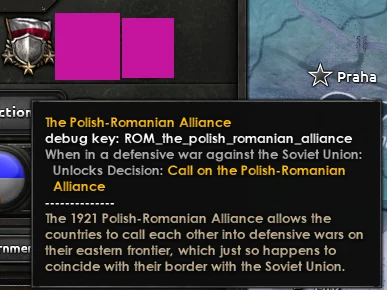
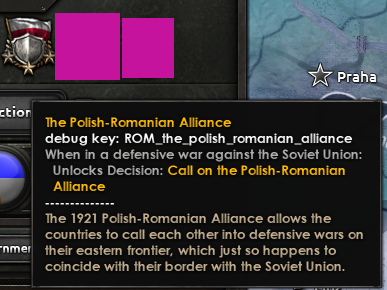
The Polish-Romanian Alliance adds a further guarantee: if either country is attacked from the east, the other stands ready to lend aid. It is strictly defensive, however, and directed solely at the Soviet Union.
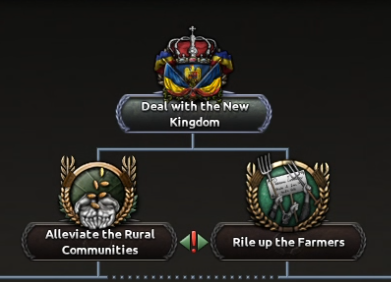
Rapid territorial gains bring a side effect, particularly when the land was held by another state for a long time: integration is slow. By January 1936, a clear divide had opened between two halves of the country. The Old Kingdom was Romania as it looked before the First World War. The New Kingdom comprised the lands gained from Hungary and the former Russian Empire.
The two halves often disagreed sharply on how matters should be run, and they regularly competed for funds from the central government in Bucharest.
Early in your political focuses, you face a decision: do you send financial support to the New Kingdom, or give priority to the Old Kingdom? Your answer determines which of the Alternative History paths you can reach. Either way, the Historical Path is always open to you.
The Fascist Branch
I’ll begin with the more radical option, in which you weaken the monarchy by building up the Iron Guard. You’ll widen their recruitment drives and spread anti-monarchist propaganda until the movement is strong enough to demand a referendum. That vote forces the monarchy to abdicate and hands the country to the Iron Guard.
Although you’ve reached your goal, not every Romanian will welcome the new regime. You must first deal with the various movements opposed to you, and only then can you move on to the expansion opportunities that appear further along the focus tree.
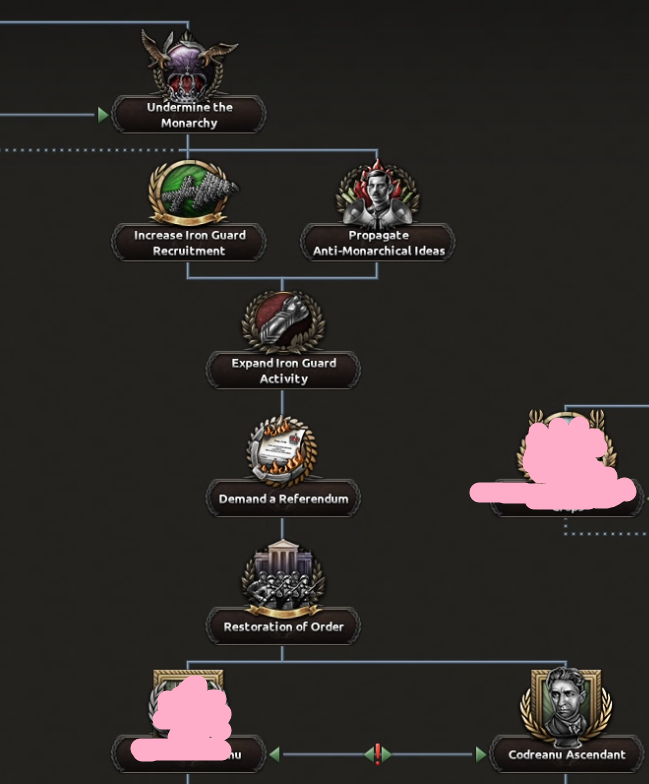
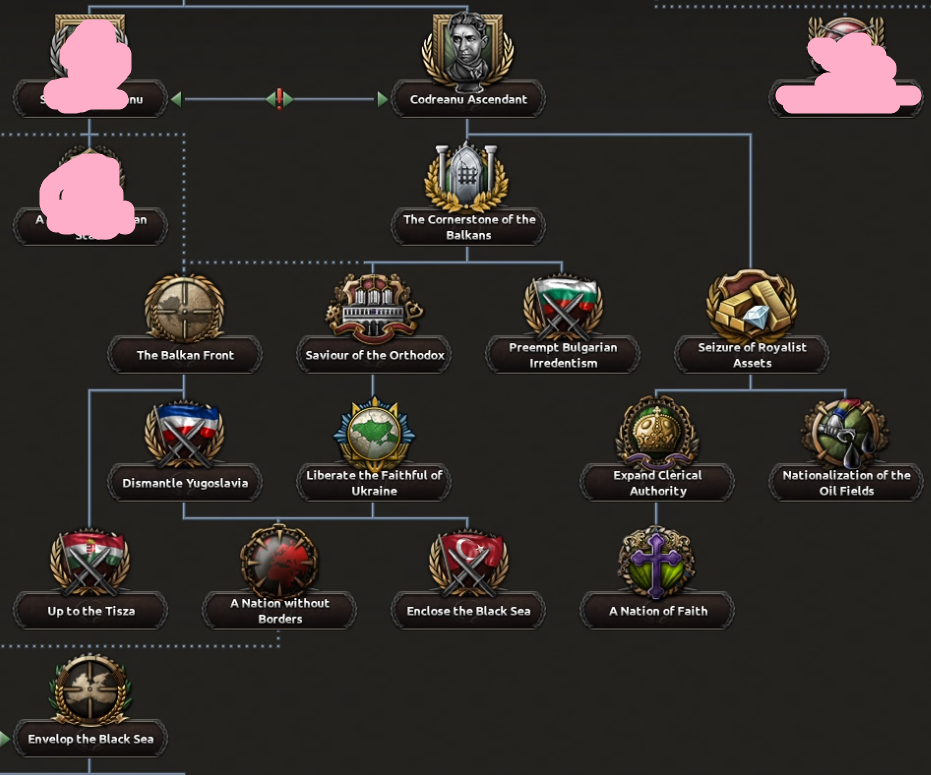
You then face a choice between two routes. The one I’ll describe here sees Corneliu Codreanu rise to power. Under Codreanu you create the Legion of the Archangel Michael, and any other Balkan nation that shares your ideology will be invited to join the faction. Deeper into the branch, you’ll find focuses similar to the Balkan Dominance Path in the Death or Dishonor version of Romania’s tree, where the aim is, quite simply, to dominate the Balkans.
Unlike in Death or Dishonor, though, a small reward awaits at the end of this branch, one that secures your position as the Cornerstone of the Balkans.
The Historical Branch
Historically, Romania pulled off what you might call a “gamer move” by switching its ideology not once, not twice, but four times. If your game stays close to history, you’ll pass through every ideology at least once before it ends.
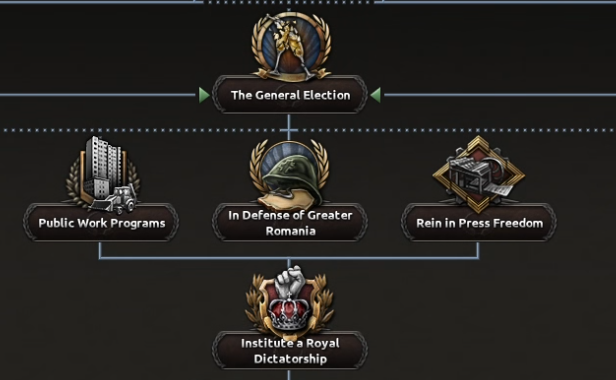
It all begins with the General Election, which historically took place in December 1937. Here it can happen earlier if you want to rush through the tree. After the election, you begin a gradual shift from democracy towards absolute monarchy. The early focuses reflect the liberal side of a democracy but also include more illiberal measures, such as curbing press freedom, all in the name of preserving Greater Romania.
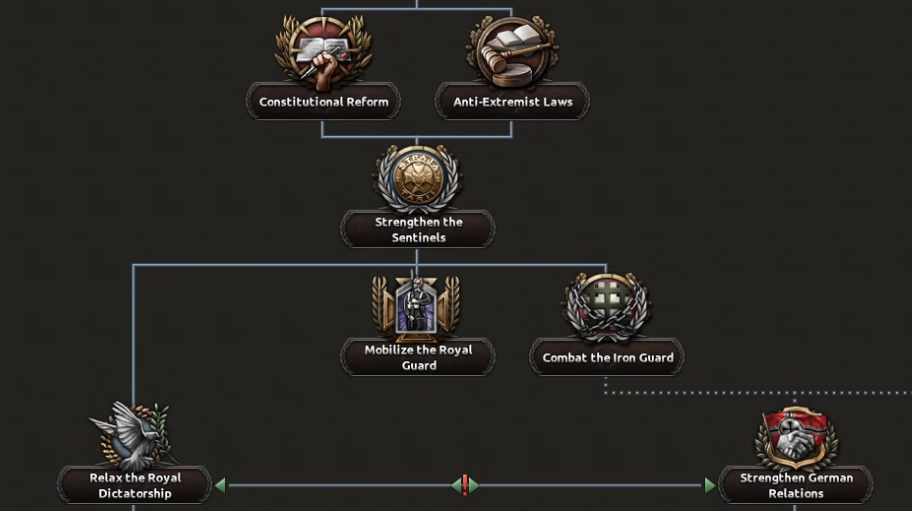
As you advance through this branch, some groups, chiefly the Iron Guard, grow far louder in their opposition to your regime.
You’ll need to find a way to neutralise them before they can sabotage your plans.
Once the Iron Guard has been dealt with (technically, the focus before it), you’ll have two options. You can stay on the Historical path and begin aligning with Germany, or you can choose to Relax the Royal Dictatorship, a path we’ll cover in a future post.
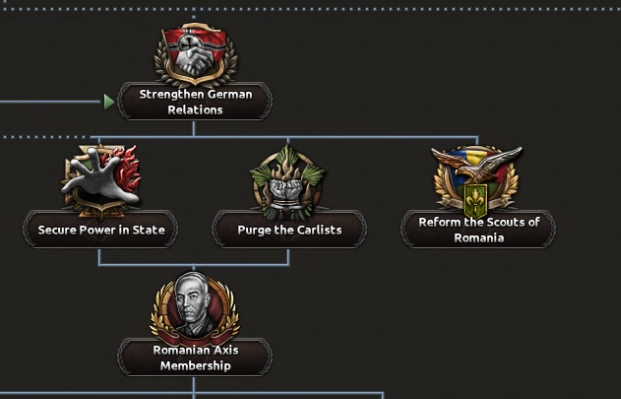
As you work to Strengthen German Relations, a series of events leads to King Carol’s eventual abdication and the rise of his son, the future King Michael.
Friendly relations with Germany don’t make you a fascist nation. That comes slightly later, once you’ve dealt with the Carlist elements (not the Spanish ones) that still hold sway over your government.
Around this time, outside pressure begins to build. The Soviet Union threatens war unless Bessarabia is returned, Hungary demands Transylvania back, and Bulgaria comes for Dobruja.
With those territories gone, you have a new objective: the restoration of Greater Romania. As you move closer to Germany, you’ll get the chance to reclaim some of the lands taken from you.
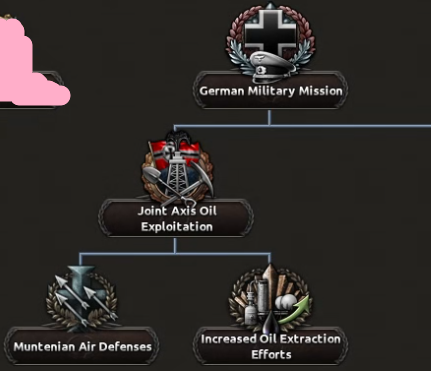
Before you set out on the path of war, you may want to invest in something Germany was desperate to keep from Soviet and Allied hands: the Muntenian Oil Fields.
These oil fields are vital to Germany, so you must do everything possible to keep that black gold flowing and the Axis war effort moving.
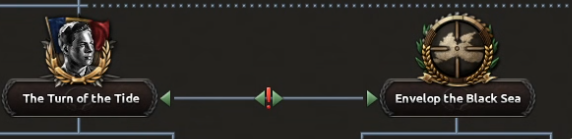
How the war unfolds decides which of two paths opens to you. If things go well and you’re pulling your weight, you can choose to press the advantage. If the situation turns against you, you can instead choose to face the turning tide. Rather than marching east, you’ll then march west as your government adapts to the new circumstances.
Industry: Economic Turmoil
Alex here, and now it’s time to talk industry. In designing Romania, we wanted to capture the economic turmoil and internal struggles of the era. At the time, 80-90% of Romanians lived in rural areas and relied heavily on agriculture, yet the state’s elite and leadership were determined to modernise and industrialise. That historical tension carries straight into the economic focus tree, where every benefit comes at a price. You can meet your population’s immediate needs by building a strong agricultural base, which lays a stable foundation for later industrialisation. Or you can force rapid industrial growth from the outset to secure your geopolitical position. We’ll look at the agricultural branch in full in a future dev diary, so today we’ll cover the heavy industrialisation path and touch briefly on the agricultural one.
The Balkan Industrialist Branch
If you’d rather concentrate on political manoeuvring or military buildup without being weighed down by economic management, the Balkan Industrialist branch is for you. It’s the shorter of the two industry paths and much quicker to complete. It gives you access to vital industry in the short term, but leaves your long-term economic potential to chance and political success.
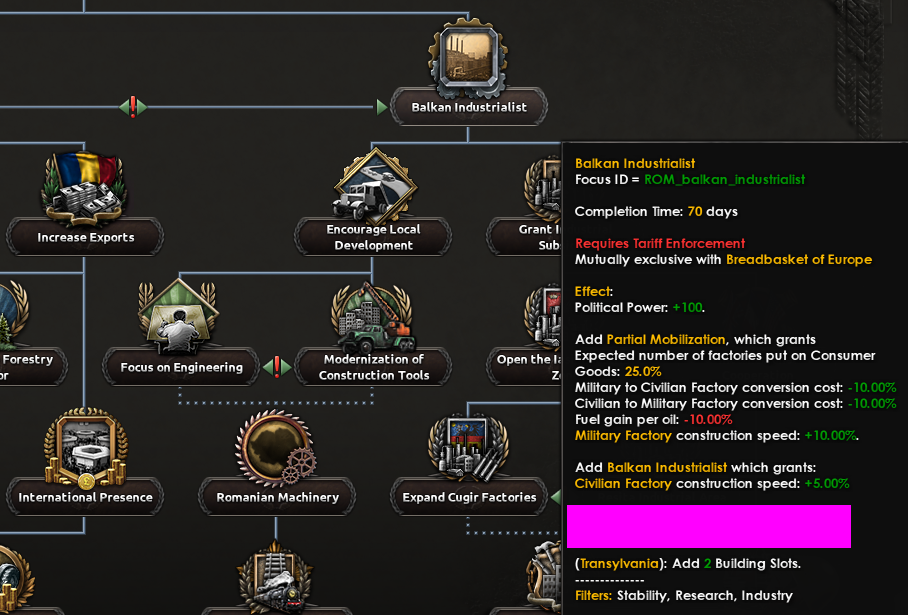
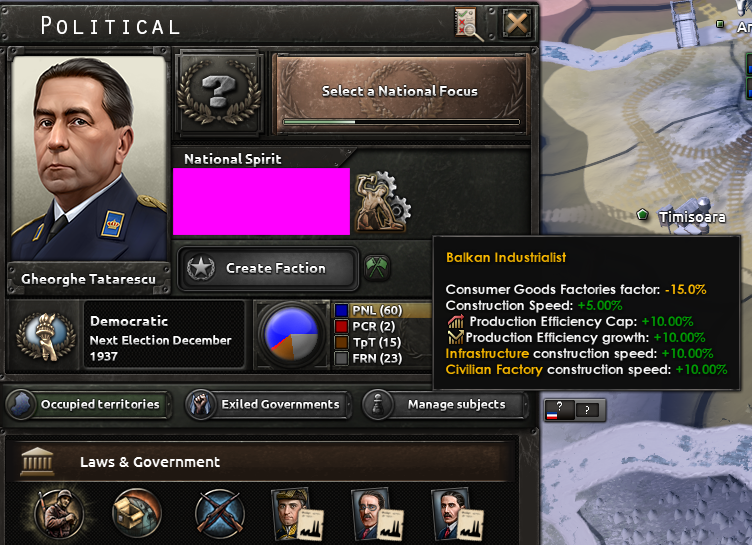
On this route, Romania unlocks powerful production bonuses early in the game. They are tuned to last through your peacetime buildup, giving you room to concentrate on building a strong diplomatic presence on the world stage (which we’ll discuss in depth in the next diary) or to rush down other branches of the focus tree.
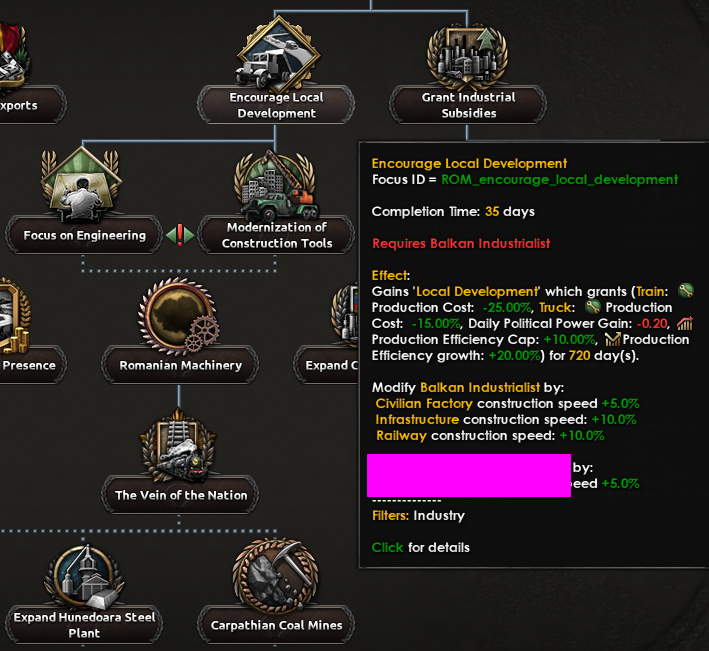
Here is a fully realised peacetime Balkan Industrialist build. I stress peacetime, because once war breaks out, Romania has unique ways to mobilise its industry and face the storm head-on, which we’ll cover in a future dev diary. Please bear in mind that the political and economic situation shown here is only one example, and yours may differ slightly depending on your choices and priorities.
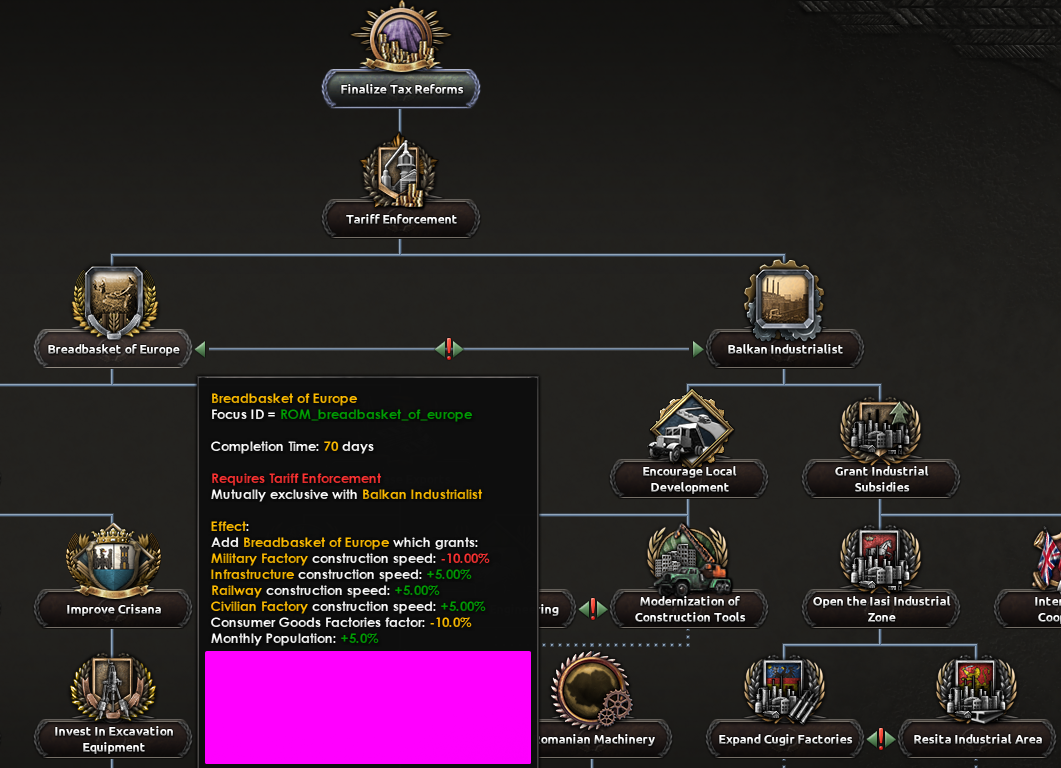
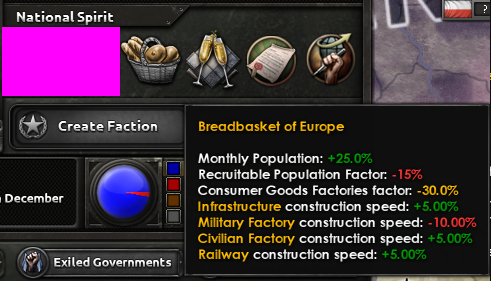
Breadbasket of Europe
Next is the more nuanced and rather complex branch of the economic tree. Without giving away its main mechanic just yet, we can tell you this path was reworked and improved based on YOUR feedback. In a previous Dev Corner, some community members suggested that Romania should be able to embrace its historical nickname, “Breadbasket of Europe”, a title it held briefly just before the outbreak of WW2, and that the path should adhere more closely to agricultural norms.
To reflect the historical friction between the agrarian sector and the military, the agricultural route applies some recruitable population factor debuffs (don’t worry, they can be removed later!). Historically, men were kept in the army during peacetime with very little leave, leaving their families to struggle on the land. By choosing this side of the economic branch, you effectively reform that policy and give men more freedom to return to their farms in peacetime.
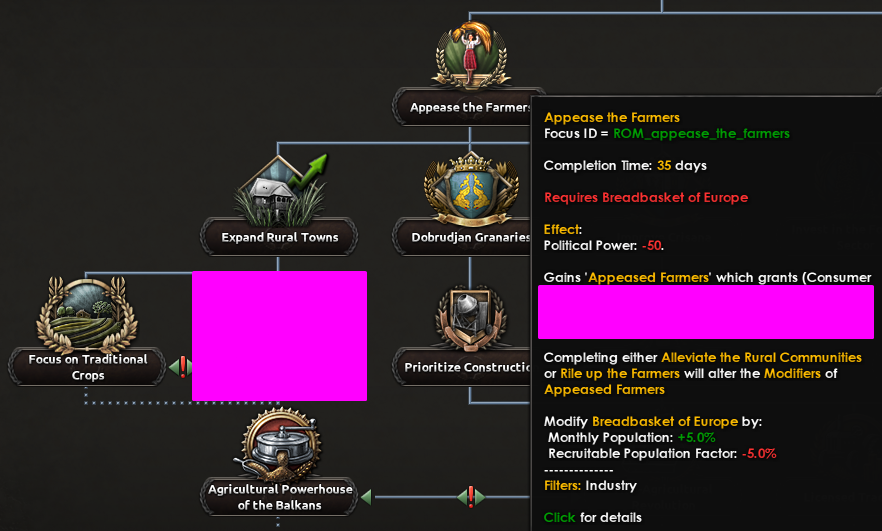
This side of the economic tree gives Romania fewer “free” factories directly from focuses. In return, it offers large trade bonuses and plenty of extra building slots. In the heavily industrial branch, the focus tree largely dictates what you receive. The agricultural route instead lets you shape your own late-game economy, with the building slots and civilian economy to construct exactly what you want. The trade-off is time: you’ll need to invest heavily in the agricultural branch to unlock its full potential.
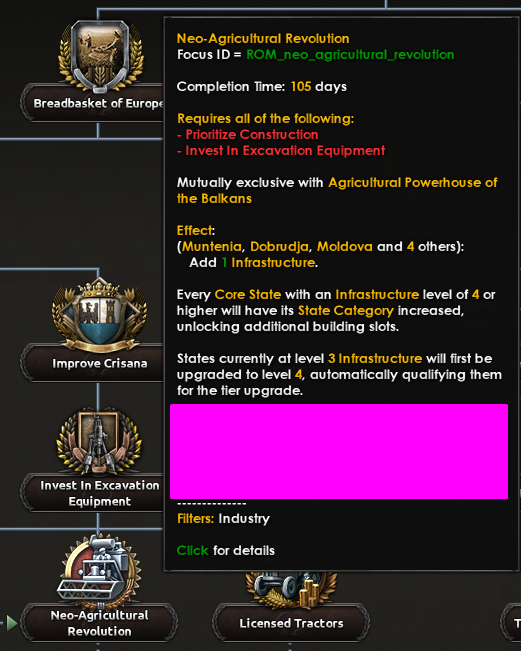
Here is a fully realised peacetime Breadbasket of Europe build. Once again, I want to stress peacetime: we’ll explain how Romania shifts its industry to cope with the outbreak of war in a future dev diary. As always, your actual situation may differ greatly depending on the choices and priorities you pursue along this branch. Besides what you see here, one more major mechanic is tied exclusively to the agricultural path. It was heavily shaped by community feedback, and we’ll showcase it in a later dev diary.
Let us know what you think! In the next Dev Diary, we’ll explore the other alt-historical political paths, the country’s shared mechanic, and the military branch.
Related articles
 Developer Corner & Open Beta: Energy #2
 Hearts of Iron IV Dev Corner | Strikes!
 Hearts of Iron IV Dev Corner: Old Canada Questions Before New Canada
 Hearts of Iron IV Dev Corner | Energy
 Steam Autumn Sale 2026
 HOI IV Dev Corner | The Great Depression
 Hearts of Iron IV | Patch 1.19.3
 HOI IV Dev Corner | One if by Land, Two if by Sea, Three if by…Air?