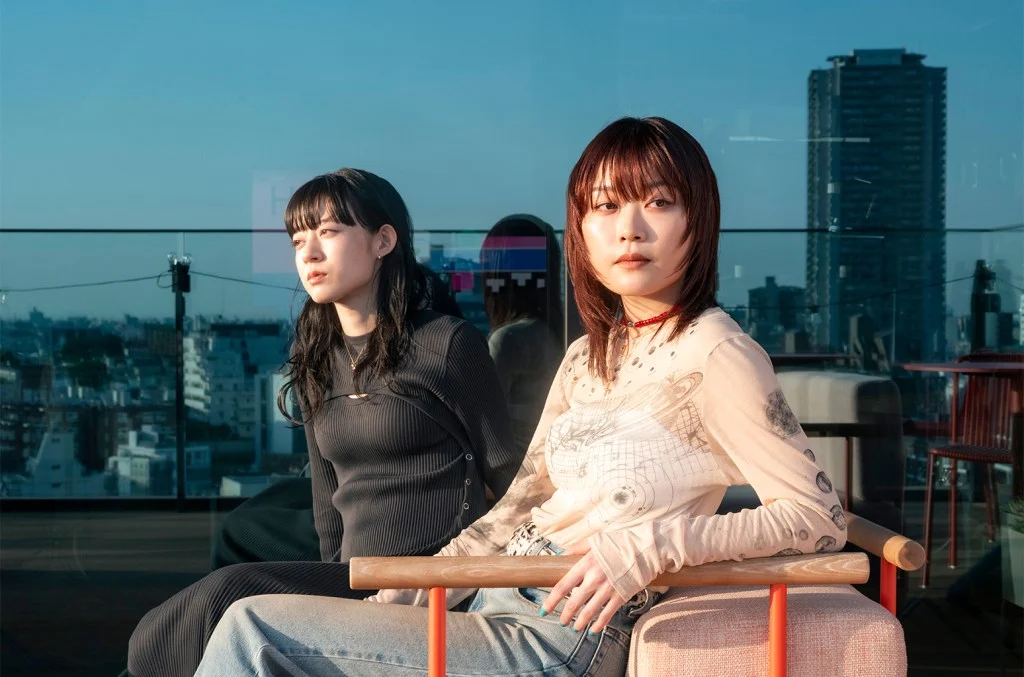
Hitsujibungaku Interview: Discussing Their New Single ‘Dogs’ and Redefining Cool Beyond Gender (Billboard Japan Women In Music)

Yukitaka Amemiya
Hitsujibungaku recently joined Billboard Japan for a candid conversation as part of the ongoing Women in Music series. Launched in 2022, this initiative honors the trailblazing artists, producers, and executives who have reshaped the entertainment landscape, serving as a regional extension of Billboard’s global commitment to championing female voices in the industry.
This latest feature coincides with the “Women in Music – EQUAL STAGE” live event, hosted by Billboard Japan and Spotify. Despite a recent transition in their lineup, Moeka Shiotsuka and Yurika Kasai have maintained extraordinary momentum. Following sold-out performances at the legendary Nippon Budokan and a sprawling European tour in 2025, they kicked off 2026 with the release of “Dogs,” the gritty, evocative theme song for the Netflix series Sins of Kujo. In this follow-up interview, the duo reflects on their evolving artistry and the internal shifts that have defined the last three years.
“Dogs” marks a departure from your signature sound with its raw, aggressive edge. What sparked this shift?
SHIOTSUKA: The narrative of Sins of Kujo really dictated the tone. That jagged, unvarnished intensity has always been a part of our musical identity; we just hadn’t found the right vessel to release it until now.
Did it feel liberating to embrace that side of your sound?
SHIOTSUKA: Absolutely. Performing it live, I feel a total sense of authenticity. There’s a certain transparency that comes with letting your darker impulses shine alongside the more polished elements of our work—it creates a more honest whole.
KASAI: I agree. This is the music where I feel most uninhibited and true to myself.
Your music video was a collaboration with acclaimed director Gakuryu Ishii. What was that experience like?
SHIOTSUKA: Ishii-san framed us as otherworldly sorcerers. He mentioned that the song carries a sense of “prayer”—a nuance I hadn’t even realized I was embedding in the music. Working with him was a masterclass in creative trust.
KASAI: His perspective was transcendent. Even after a legendary career, he maintains the boundless curiosity of a newcomer. It was inspiring to witness his creative longevity firsthand.
Three years since we last spoke, how has your stage presence changed?
SHIOTSUKA: We’ve moved toward a more simplified aesthetic, like the denim ensembles we adopted this year. We’ve realized we don’t need elaborate costumes to project our message; the music stands on its own. Internally, I’ve also traded anxiety for a more grounded approach to my craft.
KASAI: It’s about comfort and clarity. Rather than using fashion as a heavy-handed statement, we are embracing a look that feels transparent and honest to who we are.
As your international footprint expands, do you feel a shift in your perception of the industry?
SHIOTSUKA: Performing abroad offers a blank canvas. Without the preconceived expectations of the Japanese market, we’ve felt free to discard the pressure to perform “cuteness” or charm. This experience has naturally bled back into our domestic work, pushing us to be more authentic.
What is your ultimate goal for the future of your career?
SHIOTSUKA: I want to cultivate a body of work defined by depth and maturity rather than just fleeting energy. We are constantly questioning how we can push our sound further as artists.
KASAI: For me, it’s all about maintaining a healthy equilibrium between our personal lives and our work. That balance is the foundation that keeps us sustainable in the long run.
Related articles
 Aubrey O’Day Expresses Concern Diddy Will Emerge From Prison Worse Due to a Broken System
 BTS Teases Return of ‘Run BTS!’ With Pickleball Showdown in Toronto
 Kelly Clarkson Recalls Dolly Parton’s Words to Her Thirty Minutes After Her Divorce Was Finalized
 Macklemore Says Free Palestine Tour Sold Out Immediately and Teases Upcoming Lineups
 Pete Davidson Discusses Conflict With Ye Four Years After Kim Kardashian Romance
 Pete Davidson Criticizes Online Criticism of Ex-Fiancée Ariana Grande’s Appearance
 RAYE, Sombr, Troye Sivan, Conan Gray and More Musicians Named to 2026 TIME100 Next
 BTS’s RM Reveals His Art Collection for New Exhibit and Explains Why He Felt Embarrassed to Do So