
Gyakie, Billboard’s African Rookie of the Month, Says Releasing Debut Album “After Midnight” After Three Years Was “a Dream Come True”
Gyakie: Crafting After Midnight — A Conversation on Music, Heritage and Late-Night Creativity

@brown_ilyy
Although Gyakie — born Jackline Acheampong — is often called the “Songbird” for her honeyed voice, she says the quiet of night best channels her creativity. Since releasing her reggae-tinged debut, “Love Is Pretty,” in 2019, she’s found that late-night studio sessions bring the clearest lyrics and truest ideas.
“When I’m in the studio after dark, everything changes,” she tells the magazine. “Those hours let me imagine the right words and deliver them with intention.”
Across sessions in Ghana, the U.K. and Nigeria, that stillness shaped her debut LP, After Midnight. The album moves through tender reflections and bold decisions — the brief interlude that expresses pure affection, the lead single “sankofa,” which confronts whether one should return to a former lover, and expansive Afro-fusion arrangements that blend Ashanti rhythms with sweeping strings on the gospel-tinged closer, “hallelujah.” “The record starts in a soulful place, builds into more energetic territory, then circles back — that arc mirrors my life and the way I make music,” she explains.
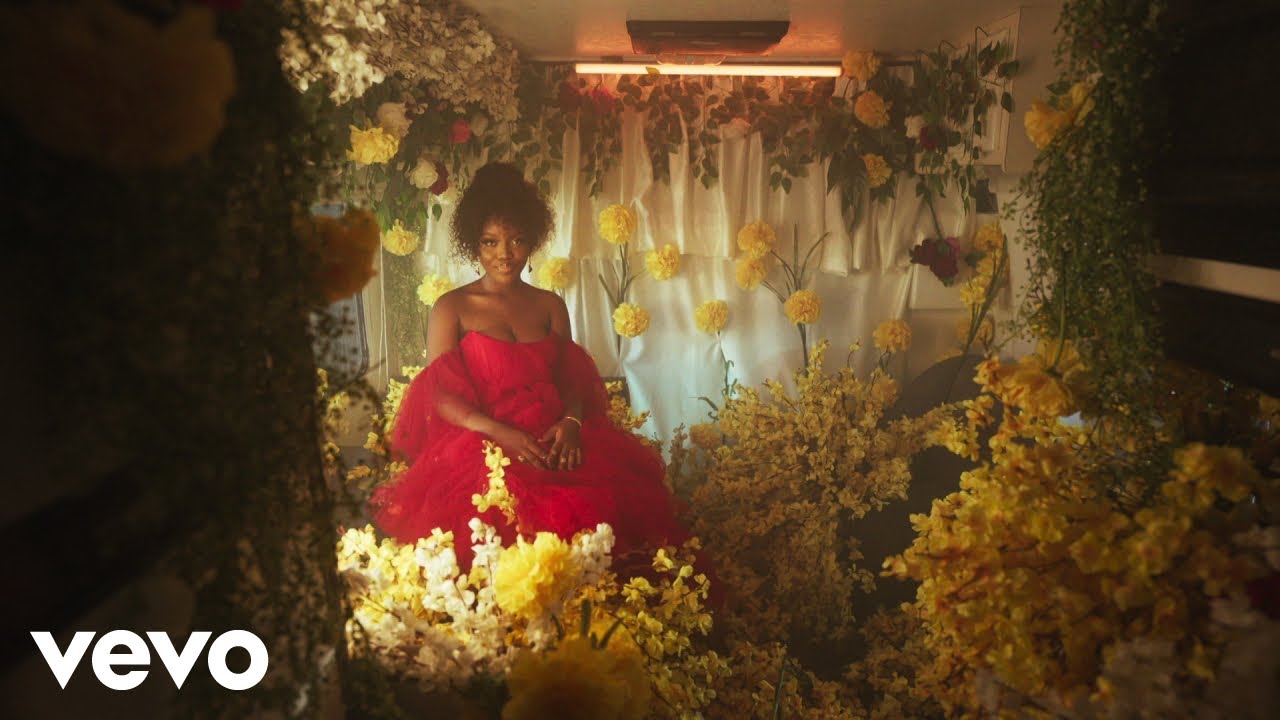
Raised surrounded by classics — from Nina Simone and Teddy Pendergrass to Ghanaian highlife voices such as her father Nana Acheampong and Gyedu-Blay Ambolley — Gyakie absorbed a spectrum of soulful sounds. A childhood photo of her and younger brother Justin in a studio booth appeared on the cover of her 2020 EP Seed, which included the breakout single “Forever.” After a 2021 remix with Omah Lay, “Forever” climbed charts, hitting No. 3 on the Top Triller Global list and making waves on Shazam.
Her trajectory includes being named Emerging Woman of the Year at the 3Music Awards in 2021, Woman of the Year in 2022, signing with RCA Records UK and earning spots on Forbes Africa’s 30 Under 30 and Spotify’s EQUAL Africa campaign. “My life feels like a house of doors — each opportunity opens another,” she says.
The magazine sat down with Gyakie to talk about balancing an international business degree with a blossoming career, the three-year process of finishing After Midnight and why she sampled her father’s classic for one song on the record.
Interview
How much did your father’s career shape your path?
When I released my first EP and people realized the man in the studio photo was my dad, there was surprise. Early on, I intentionally kept that detail quiet because I wanted to build my own identity. Over time, as people learned about our connection, they began to understand why music has always been my world.
When did being a musician feel like more than a passion — a calling?
I studied international business thinking I would pursue a corporate career. “Love Is Pretty” started as a demo I planned to share with friends; I didn’t expect a reaction. The heartfelt messages I received — people telling me the song touched them deeply — made me realize this might be my purpose. Those responses pushed me to take music seriously.
How did growing up in Kumasi influence your sound?
Kumasi is calm and rooted in routine: home, school, church. My father’s highlife music and the quiet of the city exposed me to soulful, contemplative recordings — Sade, Nina Simone, Etta James — and that sensibility stuck. It taught me to favor music that speaks to emotions rather than noise.
How did your music journey actually begin?
In my second year at university I met a producer through a friend. I was curious, joked about recording, and he sent some beats. We recorded in his hostel the next day — and that casual session became the beginning of everything.
How did you juggle studies and a rising music career?
Looking back, it feels almost impossible. I’d be in class and then take a five-hour bus ride to Accra for interviews, sometimes returning the same day. There were moments I wanted to drop school, especially when “Forever” blew up during my third year, but I was determined to complete my degree while building my career.
Did you ever consider quitting school to focus only on music?
COVID-19 changed that calculus. The song’s momentum in 2021 happened when touring and live shows were mostly impossible. If the world had been open then, balancing sudden fame and studies would have been much harder.
How would you describe the sound and style of your music?
My music aims to shift how people feel. I want listeners to find something emotional and memorable — whether it’s joy, longing or reflection. I see my work as versatile: one day I might lean into jazz, another day into highlife or hip-hop. But I’m most drawn to calm, soulful sounds because that’s how I create when I’m relaxed in the studio.
You worked on After Midnight for three years. How did you change during that time?
Patience became essential. With a 17-track project, creative blocks are inevitable, and sometimes a song that could have been finished in a day took weeks. I learned to resist external pressure and let the project mature. I also accepted that focusing so intensely would cost me relationships — people drifted away, and I had to allow that to happen.
Why is the album titled After Midnight?
I’ve been creating at night since 2019. Evening sessions clear my head: fewer distractions, dim lights, sometimes a single candle. That solitude helps me imagine and perform the lyrics with greater honesty than daytime sessions, which can feel busy and distracting.
Why include songs like “no one,” “is it worth it?” and “hallelujah” as motivational records?
I write lyrics that can read like uplifting messages even off the mic. “No one” is about confidence, “hallelujah” offers inspiration and “Is It Worth It?” wrestles with existential questions. Those tracks reflect my experiences and the kinds of thoughts listeners often feel but don’t voice — and when they hear them, they connect.

Why sample your father’s “Nanka Ebeye Den” on “y2k luv”?
I was making a song with Omar Sterling and wanted an old-school hip-hop vibe that would trigger nostalgia. Sampling a classic from my father felt authentic and meaningful — it gave the track a familiar warmth that matched the song’s tone.
Which songs from your EP Seed were inspired by Sterling?
The intro, “Joy and Happiness,” and the outro, “The Journey,” were where I first experimented with rap influences inspired by Omar Sterling’s style.
Who would you love to collaborate with next?
I’d love to work with Dave from the U.K. — I think our styles would blend beautifully. Among female artists, Jorja Smith and Doechii are on my wish list; SZA would also be incredible.
What’s been the biggest “pinch me” moment so far?
Hearing the album at midnight during the Ghana listening event felt surreal. After three years of work, releasing the project and hearing it back-to-back for the first time was a dream realized.
What’s next for you this year and into 2026?
We have several music videos planned and tour dates in the works. With 17 songs on the record, there’s a lot more to share — and many listeners who’ve yet to discover the project.

Related articles
 Nicki Minaj Responds to Criticism Over Support for Trump Administration
 John Farnham’s Family Reveals Health Decline Ahead of Tribute Show
 Ed Sheeran Calls Situation in Gaza ‘Catastrophic and Unjustifiable’ at Philadelphia Tour Stop
 Céline Dion sings with a crowd of fans in Paris while standing atop a car
 Carrot Top Hospitalized After Reported Suicide Attempt and Cancels Weekend Shows
 Dropkick Murphys’ Ken Casey criticizes Ed Sheeran over treatment of Macklemore
 PSYCHIC FEVER Discuss New Album ‘DIFFERENT’ in Interview
 Vaundy Expands Live Audience Beyond Japan