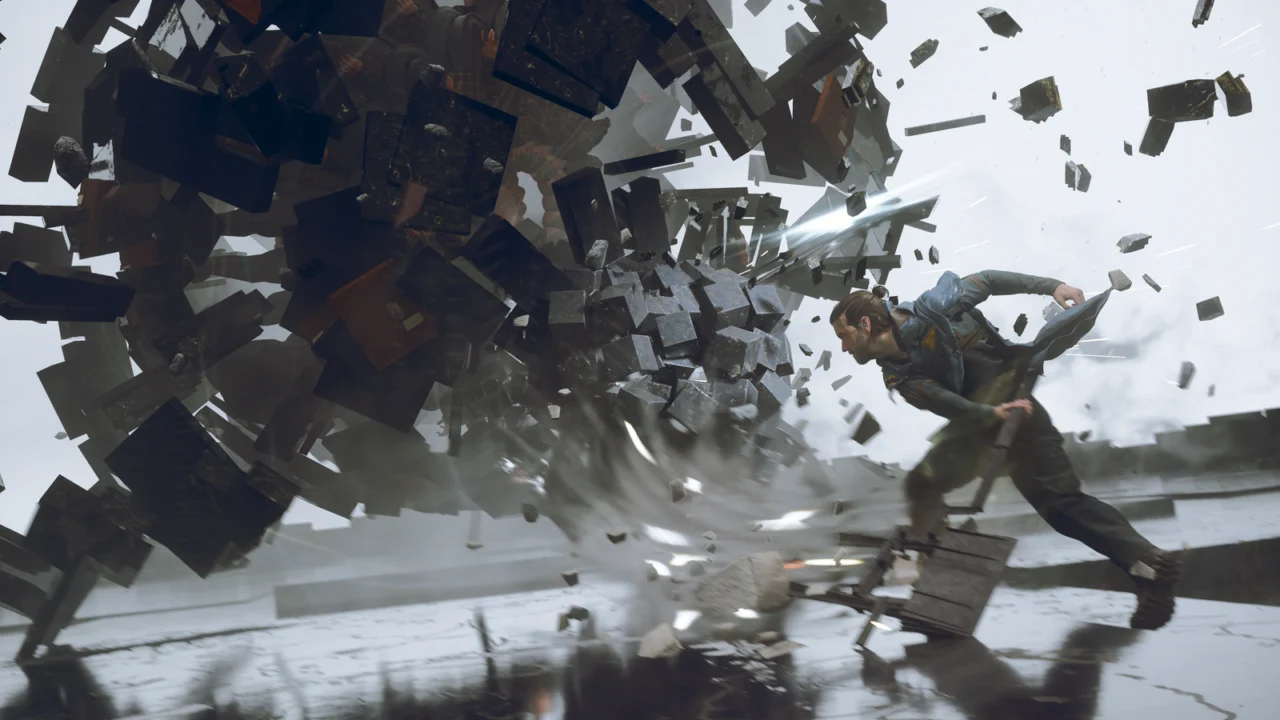
Control Resonant Violates the Number One Commandment of Video Game Lore
Elements of Control, Remedy Entertainment’s 2019 paranatural shooter, continue to resonate with me years later, yet its intricate lore stands out above all. Set within The Oldest House—a labyrinthine Brutalist skyscraper in Manhattan—the environment was strewn with heavily redacted documents that shed light on the clandestine operations of the Federal Bureau of Control. The imagery was striking enough that censored text still immediately brings Remedy’s masterpiece to mind.
Naturally, it makes complete sense that the studio would lean into this signature strength for Control Resonant. Even though the sequel trades the sterile halls of the Oldest House for the chaotic, Hiss-infested avenues of Manhattan, protagonist Dylan Faden constantly uncovers scattered journals and audio logs left in the wake of cataclysmic events. Ironically, however, what should be one of Resonant‘s greatest selling points ultimately becomes a minor hindrance: there is simply an overwhelming volume of narrative debris to sift through.
This critique is by no means a reflection on the caliber of Remedy’s writing; every piece of lore discovered in Resonant remains exceptional. Even a straightforward environmental puzzle involving a tuning fork inside a subway station is wonderfully enriched by accompanying notes that depict a bewildered research team grappling with spontaneous teleportation. These details ensure the world feels purposeful rather than artificially constructed solely for gameplay mechanics, reaffirming why Remedy operates on a tier above most AAA developers.
The primary issue lies in the pacing and distribution of these narrative breadcrumbs. Initially, lore logs are introduced at a manageable frequency, offering brief, engaging pauses without breaking momentum. Deeper into the campaign, however, the frequency spikes dramatically. During a mid-game sequence set within a sprawling underground subterranean maze, Dylan encounters a succession of FBC testing grounds crammed with endless text files and audio logs. Finishing one entry only to step forward and immediately trigger another rapidly becomes exhausting.
This design flaw is compounded by how audio logs function. Upon collection, they automatically begin playing without requiring the player to open a menu. In theory, this allows exploration and listening to happen simultaneously. In practice, however, these recordings abruptly cut out if the player triggers nearby narrative dialogue. Given the dialogue-heavy nature of Control Resonant, encountering these triggers often results in accidentally severing an ongoing transmission, forcing players to retreat into menus just to resume listening. Consequently, appreciating a full audio log requires standing completely still.
While hardly game-breaking, these friction points qualify as notable grievances, especially since lore collection remains entirely optional. Nevertheless, Resonant occasionally leans too heavily on exposition-heavy storytelling that disrupts the otherwise fluid acrobatics and combat. Furthermore, the sheer abundance of scattered logs lacks the organic harmony found in the original Control. Because the predecessor took place within the bureaucratic offices of a government agency, ubiquitous paperwork made logical sense, subtly reinforcing the impression that the FBC operated with dangerous negligence. Resonant, conversely, prioritizes an intimate sibling narrative between Jesse and Dylan, making the endless trail of documents feel like an emotional distraction.
Admittedly, lore saturation is not an issue exclusive to Remedy; it has become an industry-standard convention affecting everything from compact experiences like Pragmata to sprawling open-world epics such as The Blood of Dawnwalker. Handled sparingly, these elements cultivate atmosphere and place—as brilliantly demonstrated throughout the Resident Evil franchise. When mismanaged in fast-paced action titles like Marvel’s Wolverine, however, forcing players to stand completely motionless while listening to tape recordings acts as an absolute momentum killer.
A desire for rich worldbuilding does not mean sacrificing subtlety; rather, it highlights the need for storytelling deeply intertwined with active gameplay. Call it traditional, but environmental storytelling that allows players to piece together mysteries independently carries a distinct magic. In many ways, it mirrors the experience of navigating the real Manhattan that inspired Resonant‘s backdrop—encountering bizarre, inexplicable sights that leave lingering, unresolved questions for years. Sometimes, less truly is more.
The Hiss is back and just as weird
Source: Polygon
Related articles
 JND Studios Teases Hyper-Realistic Rubeus Hagrid Statue
 007 First Light Gets Performance Mode on Xbox Series S
 Remedy Begins Full Production on Max Payne Remakes
 New Crazy Taxi: World Tour Trailer Showcases Brazil
 Ubisoft Promotes Diversity, Equity, and Inclusion Director to Head of AI Implementation
 US Xbox Sales Hit Historic Low Amid Record Prices While PlayStation Sees Weakest Result Since 2013
 PlayStation Store Launches Players’ Choice Sale With Discounts Up to 85 Percent
 SEGA Casts Charlie Cox in New Game Despite Initial Preference for American Actor