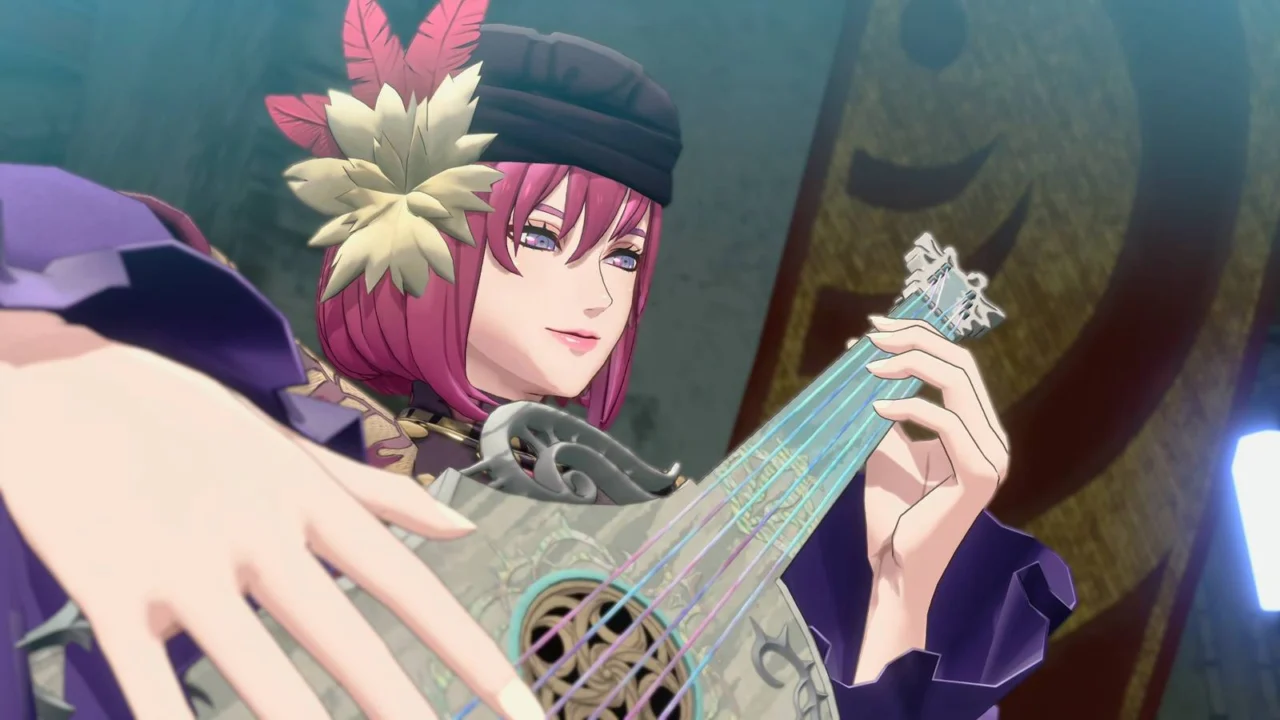
Casual vs. Classic Mode: Which Should You Choose in Fire Emblem Fortune’s Weave?
Before the prologue even begins, Fire Emblem: Fortune’s Weave requires you to choose whether you want to experience the journey on Casual or Classic mode. Unfortunately, the game provides very little context to help you make this crucial decision. Much like Three Houses before it, Fortune’s Weave splits its foundational settings into four distinct categories—Normal, Hard, Casual, and Classic—with each option profoundly altering how your campaign unfolds.
Below, we break down the exact differences between the Casual, Classic, Normal, and Hard difficulty settings in Fire Emblem: Fortune’s Weave so you know precisely what lies ahead.
Differences between Casual and Classic mode in Fire Emblem: Fortune’s Weave
 Image: Intelligent Systems/Nintendo via Polygon
The core distinction between Casual and Classic mode centers entirely on how character downing is handled. On Casual mode, if a unit’s health drops to zero, they simply retreat from the ongoing skirmish, sitting out the rest of the engagement before returning safely for the next mission. The sole exception involves your chosen Flame Lord and other story-critical personnel; if their HP hits zero, it triggers an immediate game over, even on Casual. Rest assured, a tactical retreat has zero negative impact on support progression, shared meals, or any social activities outside of combat.
Conversely, Classic mode introduces permanent consequences—well, mostly. Fallen characters perish when their health bars empty, though Act 1 operates under a slight variation during the Heroic Games. In this opening act, defeated allies retreat rather than suffering true permanent death. While they remain technically alive and wander the hub city, they become completely inaccessible for meals, party management, battles, gifts, and support conversations. The game effectively treats them as ghosts despite their physical presence.
An important nuance here applies to guest members during Heroic Games matches. While the guest faction leader must survive, the ordinary fighters under their command only retreat if defeated, meaning their status remains intact, allowing you to continue sharing meals and gifting items with them post-match.
Once you reach Act 2 and Act 3, however, Classic mode enforces uncompromising, traditional permanent deaths for all standard units.
Differences between Normal and Hard modes in Fire Emblem: Fortune’s Weave
 Image: Intelligent Systems/Nintendo via Polygon
Normal mode is tailor-made for newcomers or players who wish to prioritize narrative immersion over grueling tactical puzzles. Chapter enemy levels align closely with your recommended progression benchmarks, making it straightforward to keep your roster’s attributes on par with or ahead of the opposition. This forgiving scaling ensures that slightly underleveled units won’t face instant annihilation during skirmishes, granting you the creative freedom to test out unconventional classes and skill builds without feeling heavily penalized for suboptimal choices.
Hard mode, by contrast, throws off the training wheels. Adversaries sport significantly inflated levels—elite foes frequently outpace the chapter’s recommended threshold by three or more levels—alongside vastly superior attribute pools. While high defense and resistance can usually be bypassed with targeted elemental weaknesses or specific weaponry, skyrocketing speed and attack speed represent the true danger of Hard mode. Fast enemies will routinely strike twice during a single exchange, spelling swift doom for even your sturdiest combatants. Success on this tier demands meticulous attention to class synergy, equipment loadouts, and tactical accessory pairing.
Consider weapon weight distribution, for instance: swords generally offer high attack velocity paired with minimal weight compared to heavier spears. If you deploy a Shido (Fortune’s Weave‘s reimagined swordmaster archetype) equipped with a heavy spear alongside a slightly lower-damage sword against an agile rival, choosing speed over raw attack power becomes vital to preventing devastating double-strikes.
Should you test your mettle on Hard mode only to find it overwhelmingly punishing, you can dial back the challenge by visiting the Shrine of Causality located within the Obelisk Chamber. Keep in mind, however, that once you scale down, you cannot elevate the difficulty back to Hard.
 Image: Intelligent Systems/Nintendo via Polygon
Another monumental differentiator tied to Normal mode is the economy surrounding Divine Sand. This precious resource powers essential boons—most notably Fortuna’s Blessing, which functions identically to the chronological rewind mechanic known as Divine Pulse in Three Houses. Additional blessings are unlocked by performing duties at Dagsion’s temples, a gameplay loop echoing monastery chores from past titles, though absent of direct skill point rewards.
Crucially, on Normal mode, activating Fortuna’s Blessing costs zero Divine Sand, allowing you to manipulate time limitlessly. Furthermore, alternative blessings carry heavily discounted rates compared to Hard difficulty. For instance, Aurora’s Blessing—which halves incoming physical and magical onslaughts for a single turn—costs 15 Divine Sand on Normal, compared to 20 on Hard. Meanwhile, executing a time rewind via Fortuna’s Blessing on Hard drains five Divine Sand per use, capping your total undid mistakes at 20 per battle assuming zero other blessings are triggered.
Regardless of your chosen difficulty framework, you can leverage Karma Shards, gathered by conquering in-game challenges, to unlock Boons of Salvation within the Obelisk Chamber, permanently lowering resource costs for your favorite blessings.
If you are just stepping into the intricate world of Fire Emblem: Fortune’s Weave, our dedicated guides can help you untangle its labyrinthine lore and mechanics. We have assembled comprehensive breakdowns on which starting character to choose and how to swap your lead heroes to tailor the campaign precisely to your liking.
Because Fortune’s Weave is an absolute behemoth of an RPG, we’ve also calculated the total playtime required to reach the credits. As you navigate the introductory Heroic Games brackets, prioritize expanding your roster, securing Boons of Salvation, and making the most of your downtime. Just make certain you carve out a moment to visit the Perch for a relaxing Bird Time session.
Source: Polygon
Related articles
 Ubisoft Plans to Downsize Trials Developer and Ubisoft Singapore
 How to Reach the Top of the Prison Tower in Castlevania: Dracula’s Curse
 Epic Games Claims Its Launcher Starts Faster Than Steam
 Marvel Star Confirms Absence in Doctor Doom Movie
 Blizzard Explains World of Warcraft Forever Development Approach and Community Relations
 ‘Garry’s Mod’ Creator Delivers Grim Update on Spiritual Successor: ‘It Hasn’t Been Going Well’
 Third Trailer Released for The Apothecary Diaries Anime Film
 Sony Reveals PlayStation Plus Free Games Lineup for October