Beyond the Lore Dump: Why Video Game Romances Must Evolve
When one envisions a truly resonant love story, the mind typically wanders toward the literary elegance of Jane Austen’s Emma or the cinematic longing of Casablanca. Perhaps the thoughts turn toward the poignant tragedies of James Baldwin’s Giovanni’s Room or the timeless archetypes of Romeo and Juliet. Even the contemporary “cozy” appeal of Nobody Wants This or Heated Rivalry holds a distinct place in the romantic canon. Rarely, however, does a video game come to mind. There is a cynical but valid reason for this exclusion: despite the medium’s technological leaps, interactive romances remain curiously stagnant, often failing to qualify as genuine romance at all.
Given that gaming is still a nascent storytelling medium, a lack of parity with centuries of literature or a century of film is expected. What is jarring, however, is the sheer lack of evolution over the last thirty years. In 1994, Konami’s Tokimeki Memorial pioneered the “dating sim” as a collection of statistics and checklists. This mechanized approach to affection set a rigid precedent. While titles like Harvest Moon and later Baldur’s Gate 2 introduced more sophisticated characters and high-stakes narratives, the underlying engine remained the same: input the correct dialogue, trigger the right flag, and receive “love” as a predetermined reward. Over two decades later, most modern blockbusters still operate on this turn-of-the-century logic, save for a few strides in inclusivity and the removal of the most overt sexism.
 Image: Larian Studios
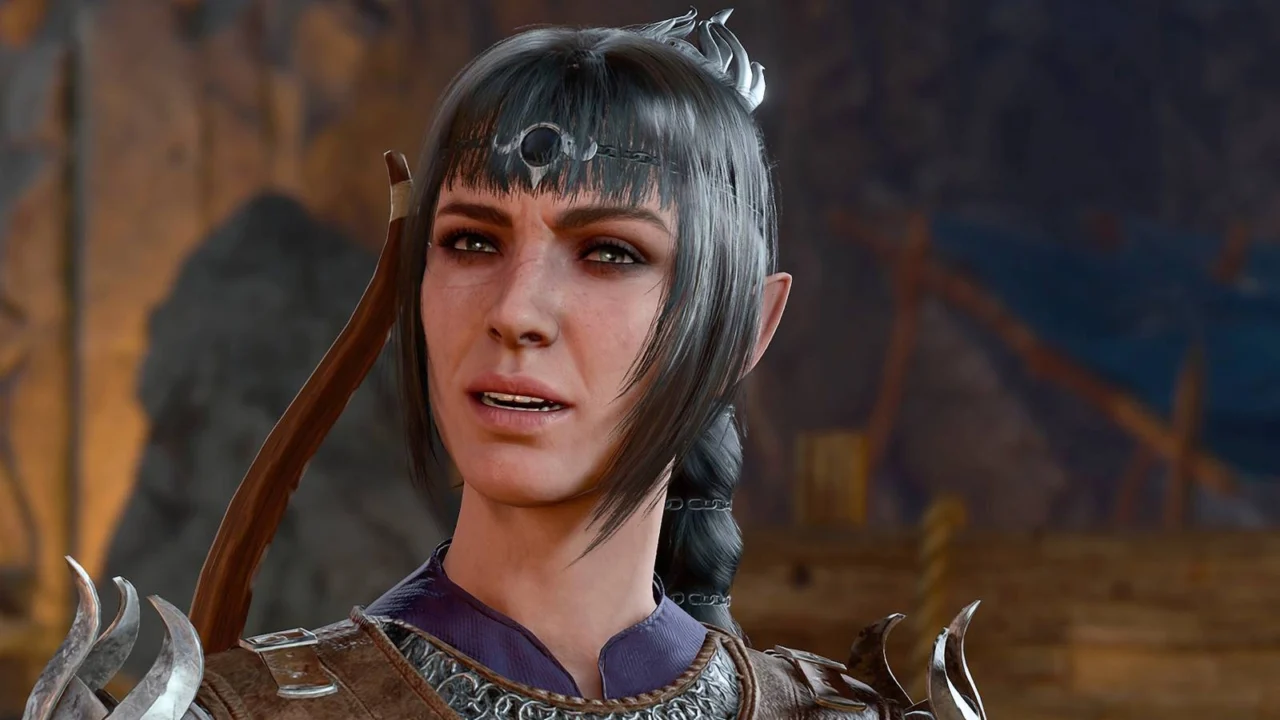
Advocates might suggest these games fulfill a power fantasy of seduction, but does “wooing” actually occur? More often than not, these relationships are merely lore dumps masquerading as intimacy. In Baldur’s Gate 3, characters like Shadowheart or Halsin offer their vulnerabilities as a reward for the player’s non-judgmental silence. The Mass Effect and Fire Emblem series lean heavily on the “foxhole bond”—throwing characters into life-or-death proximity where intense flings are a natural byproduct of trauma. Yet, these scenarios rarely evolve beyond that initial spark. Furthermore, there is a recurring, problematic trope of turning deeply wounded characters into romantic targets; seeking a savior in the nearest sympathetic listener is a recipe for an unstable dynamic, not a healthy partnership.
The issue isn’t solely the transactional “quest for affection” structure—games, by nature, require objective-based mechanics. The failure lies in the substance of those transactions. We might navigate the personal tragedies of Judy Alvarez or Panam Palmer in Cyberpunk 2077, or witness Anders’ soul-baring intensity in Dragon Age 2, but these revelations rarely require an actual synthesis of personalities. You are essentially reading an encyclopedia of their pain rather than building a life with them. There is a distinct absence of emotional friction or the genuine “rapturous hurricane of passion” found in the balcony scene of Romeo and Juliet. Even the famously reserved Jane Bennet displays more palpable excitement for her future than the most lauded digital paramours.
Ultimately, most video game romances distill down to simple gratitude. The love interest isn’t necessarily falling for the player’s character; they are expressing a profound sense of obligation because you listened to them or solved their most harrowing problem. While support and mutual history are foundational to any relationship, they do not automatically bridge the gap between “helpful ally” and “soulmate.” What exists between these characters once the problems are solved and the quests are complete? In most games, that question goes unanswered.
 Image: Black Tabby Games
A few titles do reach for something more authentic. The Witcher 3 excels by leaning into the pre-existing history between Geralt and his former lovers; their shared silence and coded barbs carry the heavy emotional weight of years lived. Scarlet Hollow, a small-town horror mystery, approaches romance by focusing on social integration. It asks how you fit into a character’s existing life—including their relationship with their family—rather than treating the partner as an isolated island to be conquered. These are the “where do you fit in my world” questions that define real-life commitment, whether the players are monster hunters or star-crossed lovers.
POLY Report: Stay ahead of the curve
Get the latest gaming news, deep-dive reviews, and industry analysis delivered directly to your inbox.
By subscribing, you agree to our Terms of Use and Privacy Policy.
At its core, romance remains a peripheral garnish in the gaming industry. It is a secondary feature designed for wish fulfillment rather than narrative depth. If video games are to be respected as a mature artistic medium, they must move beyond the era of the gratitude-based lore dump. It is time for digital stories to embrace the complexity, friction, and authenticity of real human connection.
Source: Polygon
Related articles
 Final Fantasy Resonance’s Denuvo Protection Cracked Within a Day
 Tim Sweeney Again Criticizes Valve Over Steam Rules Requiring Disclosure of AI Use
 Psychological Thriller Movies You Can Stream for Free Online
 Heroes Is Now Free to Stream 20 Years After Its Premiere
 Half-Life 2 RTX Update Adds Improved Frame Generation and ARM Support
 Dead by Daylight Developers to Pull Chucky Chapter From Sale Soon as Farewell Discount Begins
 Steam Offers Free Play of Low-Poly Zombie Apocalypse Survival Game
 The Sims 4 Big Update to Fix Infinite Loading Issue and More Than 100 Bugs