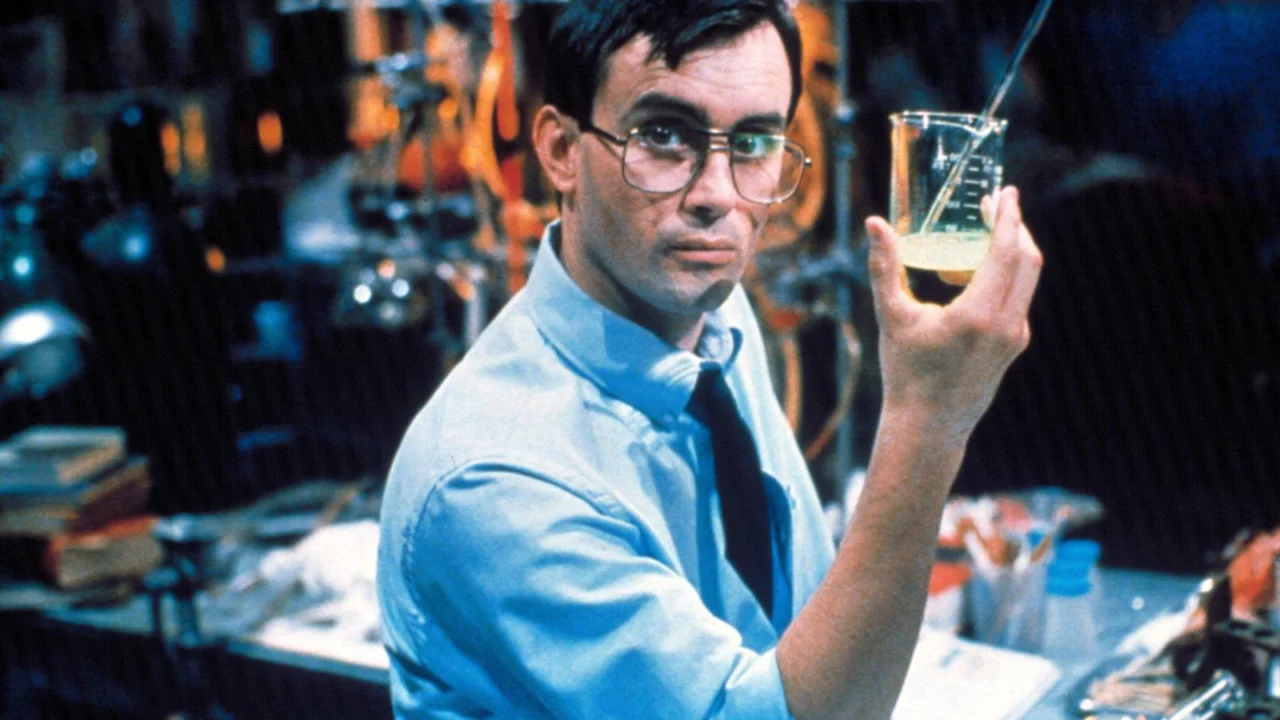
35 Years Later, the Weak Re-Animator Sequel Still Has Striking Horror Effects

Stuart Gordon’s 1985 masterpiece, Re-Animator, is a definitive exercise in grotesque camp and high-octane horror. This cult classic embraced a visceral B-movie aesthetic, pairing lurid practical effects with a narrative that leaned into its own absurdity. This frantic energy stood in stark contrast to its literary origins—H.P. Lovecraft’s “Herbert West–Reanimator”—which offered a much more somber portrait of a brilliant, amoral scientist obsessed with conquering the grave. In Gordon’s adaptation, Jeffrey Combs portrayed West as a man of clinical detachment driven by a manic, singular purpose. Brian Yuzna’s 1991 follow-up, Bride of Re-Animator, attempts to keep that neon-green spark alive, even if it struggles to replicate the effortless charm of the original.
It has been over three decades since Bride of Re-Animator made its direct-to-video debut. By the time it arrived, the cultural impact of the first film had already been absorbed by a new wave of “splatstick” horror, including Peter Jackson’s Braindead and Yuzna’s own surreal directorial effort, Society. Picking up eight months after the Miskatonic massacre, the sequel finds Herbert and his reluctant partner, Dan Cain (Bruce Abbott), serving as combat medics in the Peruvian civil war. The battlefield serves as a grim buffet of raw material for their experiments, though their progress is halted when a military raid forces them to flee.
Upon returning to Miskatonic University Hospital, Herbert’s ambitions escalate from mere reanimation to the creation of entirely new life from disparate parts. This Frankensteinian pivot hits home for Dan, as Herbert intends to use the heart of Dan’s deceased fiancée, Megan, as the core of their new creation. Through a mix of manipulation and scientific zeal, Herbert eventually wins Dan over, resulting in the assembly of “The Bride” (Kathleen Kinmont)—a macabre jigsaw of salvaged biological remains.
 Image: 50th Street Films
However, their scientific breakthrough is quickly derailed by the literal ghosts of their past. The severed, now-winged head of Dr. Carl Hill (David Gale) returns to haunt them, accompanied by a legion of reanimated corpses that infiltrate their secret lab. The logic of these encounters is secondary to the spectacle; Yuzna is far more interested in bombarding the viewer with practical oddities, such as a bizarre creature composed of severed fingers attached to a single, roving eyeball.
Perhaps the most fascinating element of Bride of Re-Animator is the toxic, deeply codependent dynamic between West and Cain. The homoerotic subtext is palpably present: West is technically self-sufficient, yet he refuses to proceed without Dan’s presence, creating a warped domesticity within their laboratory-home. His insistence on referring to the reanimating fluid as “our” reagent reveals a desperate need for partnership that contradicts his usual professional narcissism.
 Image: 50th Street Films
While the narrative may feel somewhat skeletal, the film’s visual identity is a masterclass in practical horror artistry. The “eyeball-finger” puppet was brought to life by Tony Doublin using a sophisticated blend of rod-operated and stop-motion puppetry. This same commitment to the uncanny is visible in scenes involving biological fusions, such as a canine creature grafted to a human limb.
Bride of Re-Animator doubles down on the gore of its predecessor, showcasing a parade of decaying flesh and undulating anatomical horrors. These gruesome set pieces were crafted by the legendary Screaming Mad George, whose surrealist style left an indelible mark on films like Predator. Additionally, the return of Dr. Hill was managed by John Carl Buechler’s Magical Media Industries, a team known for their stellar work on several major horror franchises.
 Image: 50th Street Films
The collective effort of these practical effects artists provides the film with its lasting visual impact. While Yuzna’s sequel doesn’t necessarily reinvent the wheel, it amplifies the confrontational perversity of Gordon’s original. The titular Bride herself is tragically fleeting, disintegrating almost as soon as she is brought to life, leaving the audience to marvel more at the craftsmanship of her construction than her character. What remains is a chaotic celebration of splatter cinema—a term synonymous with the extreme, unapologetic violence pioneered by George A. Romero.
The true strength of Bride of Re-Animator lies in the tragic, symbiotic relationship between Herbert and Dan. When the two are locked in their familiar cycle of ethical debate and surgical precision, the film’s manic energy and blood-soaked special effects coalesce into a uniquely cathartic horror experience.
Bride of Re-Animator is currently available to stream for free with ads on Tubi, and can be rented or purchased digitally via Amazon, YouTube, and other major platforms.
Source: Polygon
Related articles
 Director Peter Berg Says Call of Duty Movie Won’t Be a Mindless Action Film
 Takopi’s Original Sin Compilation Film Gets New Trailer Ahead of November 27 Japan Release
 Cyberpunk: Edgerunners 2 Creators Release Two Music Albums
 Pricing Expert Criticizes Hollow Knight: Silksong for Being Priced Too Low
 Gears of War: E-Day Hotfix Fixes Crashes and Campaign Bugs but Not Smoke Grenade Exploit
 NDP Leader Avi Lewis Criticizes EA Over BioWare Closure, Calls for Federal Support for Employee Buyout
 Trailer for Canceled Mass Effect 5 Leaks Online, Bloomberg’s Jason Schreier Says It Is Real
 Capcom Had to Improve RE Engine for Onimusha: Way of the Sword’s New Enemy Dismemberment System