
25 Years Later, Steven Spielberg Finally Reveals One of His Biggest Sci-Fi Movie Regrets
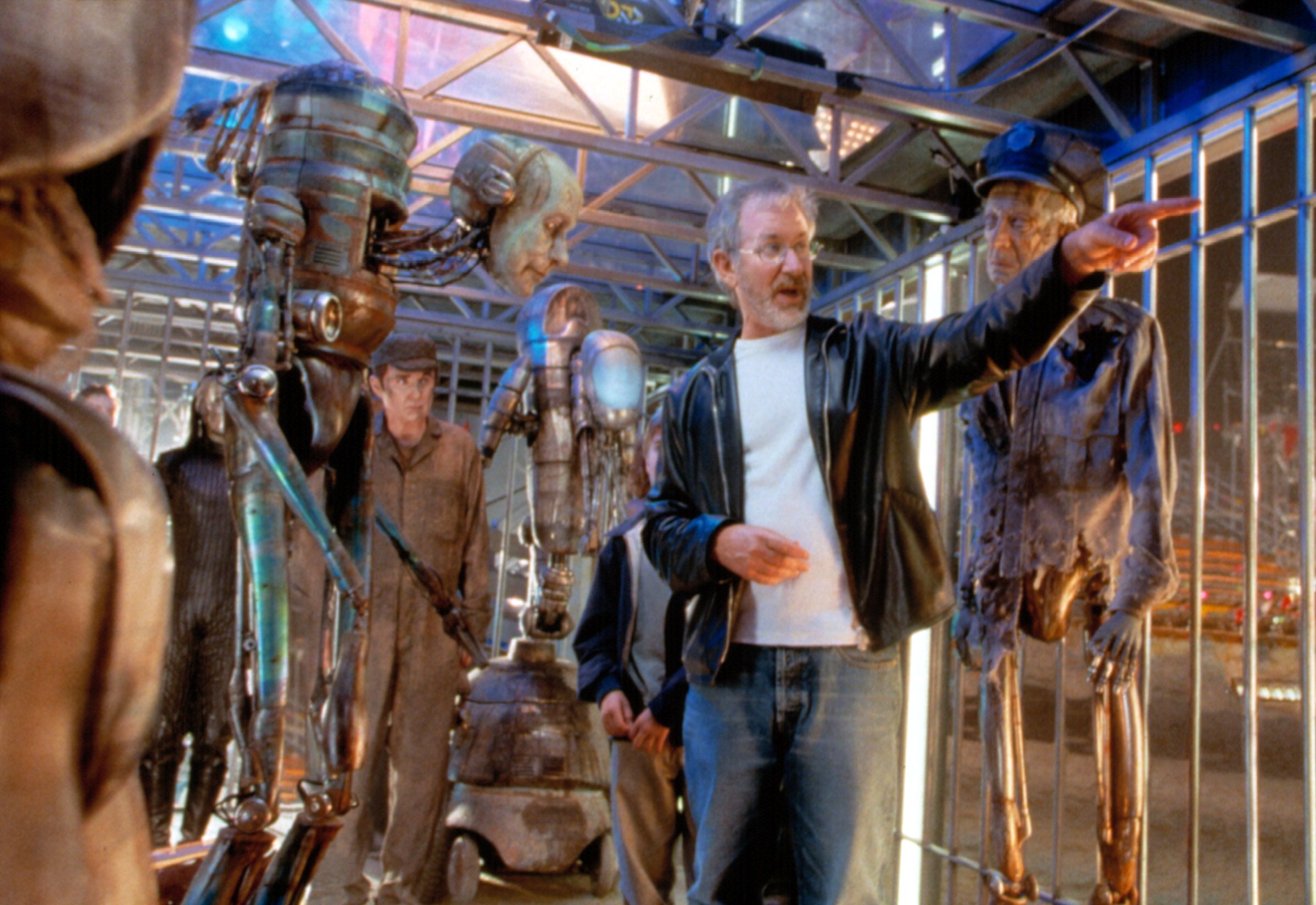
Steven Spielberg’s filmography is essentially bifurcated: there are the seminal masterpieces he helmed entirely solo—think Jaws or Jurassic Park—and those communal efforts where his voice intertwines with another visionary’s perspective. This latter category has always struck me as the most compelling, as Spielberg’s unmistakable cinematic language often acts as a filter for the intentions of his peers.
Take, for instance, Poltergeist. While Tobe Hooper is credited as director, the film is deeply rooted in Spielberg’s sensibilities, sparking decades of speculation regarding a “ghost-directed” influence. Similarly, The Goonies, while under the stewardship of Richard Donner, carries the clear DNA of a Spielberg adventure; many of the film’s child actors have long suggested that Spielberg’s hand was heavy enough to warrant a formal co-directing credit.
Perhaps no film embodies this dynamic as poignantly as 2001’s A.I. Artificial Intelligence, a project that flipped the script, having Spielberg actualize the vision of the late Stanley Kubrick. When I recently sat down to discuss his latest feature, Disclosure Day, I felt compelled to revisit that collaboration.
In an era where artificial intelligence has transitioned from science fiction to an omnipresent reality, A.I. feels more prophetic than ever. Twenty-five years later, how does Spielberg reflect on that ambitious endeavor? And if he were to revisit the material today, what would he shift? His response suggests a filmmaker who is actively contending with—and deeply skeptical of—the rapid encroachment of machine-generated intelligence.
The genesis of A.I. was an arduous, long-gestating odyssey. Kubrick originally tapped sci-fi author Brian Aldiss to adapt the 1969 short story “Super Toys Last All Summer Long,” but the project languished through various iterations. By the 1990s, even the legendary Kubrick felt the limitations of visual effects, eventually concluding the technology hadn’t quite matured enough to realize his vision. It wasn’t until the boundary-pushing CGI of Jurassic Park that Kubrick felt the project was finally viable, eventually inviting Spielberg to take the director’s chair.
“Stanley presented Steven with roughly 650 storyboard sketches, alongside a finished script and treatment,” producer Jan Harlan noted in a 2001 interview. “He basically asked him, ‘Why don’t you direct it? I’ll produce.’ Steven was stunned.”
The collaboration was complex, marked by Kubrick’s characteristic perfectionism and, ultimately, the tragedy of his passing in 1999. Spielberg eventually returned to the project, effectively stepping away from directing Harry Potter and the Sorcerer’s Stone to bring Kubrick’s dream to fruition. The result is a seamless, haunting synthesis: Kubrick’s intellectual rigor and bleak, epic scale married to Spielberg’s innate sense of wonder. The film’s fairy-tale structure, underscored by Ben Kingsley’s hypnotic narration, manages to bridge these two seemingly disparate cinematic worlds.
Though Spielberg penned the screenplay himself, the narrative remains faithful to Kubrick’s dark, existential core: a future where sentient machines eventually supersede their human creators. It echoes the themes of 2001: A Space Odyssey, but with a more intimate, melancholic focus.
“Our film was truly about sentient robotics,” Spielberg told me. “It explored the concept of machines building machines until humanity is effectively outmoded. That was Stanley’s core thesis. I signed on to honor that vision.”
Looking back from the vantage point of 2026, I asked what he might change if he were tackling the project in today’s climate. His answer was revealing: “If I truly understood the trajectory of AI, I would have placed more emphasis on the personal input we feed into our devices—and how that input reshapes our perception of reality. It wouldn’t just be about robotics; it would be a critique of how machine tools threaten to supplant the very essence of human creativity.”
It is a stark assessment, and one that hints at a fascinating, perhaps more cynical film than the one we received. As more filmmakers rush to integrate AI into their workflows, there is something deeply refreshing about a master director taking a principled stand against the homogenization of the soul. I, for one, would love to see that version of the movie, Steven.
Disclosure Day hits theaters June 12.
Source: Polygon
Related articles
 Collector’s Edition of GTA VI Without Game Sells Out Immediately in Australia
 Warhammer 40,000 and Horus Heresy Custodian Pre-Orders Open October 3
 Avatar: Seven Havens Episode Titles Revealed
 16 Years Later, A ‘Let’s Play’ Classic Blows Up on Steam with 750K Wishlists
 Silent Hill Player Sells Rare Gift From Developers at Auction for Over $2,000
 Cosplayer recreates Spirit Blossom Morgana from League of Legends
 Wo Long 2: Wings of Ember Developers Reveal Aggressive Boss and New Skills
 The Witcher 3 Remastered Is Still An Unfinished Masterpiece