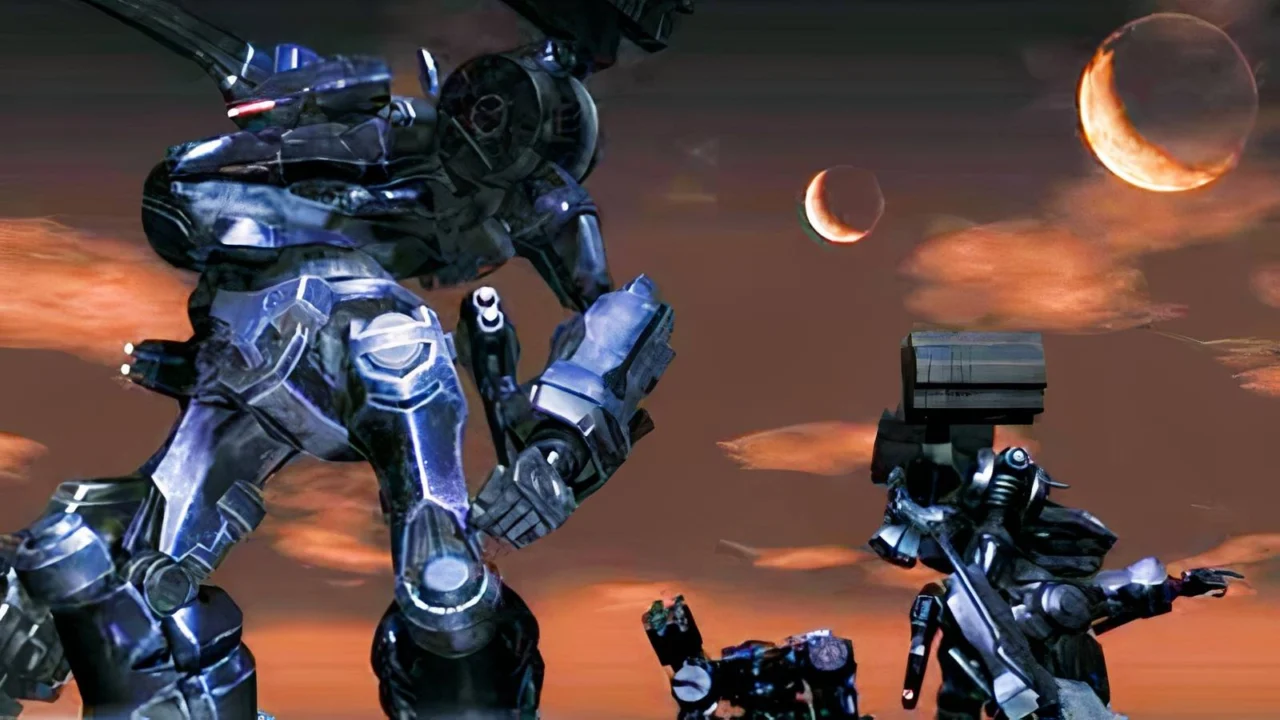
25 Years Later, Armored Core 2’s Best Ideas Still Feel Ahead of Their Time
There is a poetic irony in how Armored Core 2 fails to command the same nostalgic reverence as other installments in FromSoftware’s legendary mecha franchise. Fittingly, it is a game obsessed with machinery caught in the liminal space between bygone eras and unprecedented horizons. Arriving on the PlayStation 2 in October 2000, this fourth mainline entry (despite its deceptive moniker) represented the series’ maiden voyage into a fresh hardware generation—an ambitious evolutionary leap that resonates through every facet of the experience.
Armored Core 2 is undeniably grander, crisper, and more daring than its original PlayStation predecessors, yet it clings tenaciously to the idiosyncratic, rigid mechanical design philosophy that made the IP such an acquired taste from its inception. It lacks the streamlined precision of Armored Core 3, the blistering velocity of Armored Core: For Answer (arguably the zenith of the sub-genre), and the triumphant mainstream renaissance sparked by Armored Core 6: Fires of Rubicon. On paper, however, it embodied everything a definitive next-generation sequel should have strived to be.
Relocating the dystopian narrative to a terraformed Mars, the sequel thrusts players into the boots of mercenary Ravens navigating a volatile proxy war between three corporate behemoths. Spanning roughly 30 distinct operations, players could align with shifting factions while meticulously upgrading their Armored Core (AC) within the garage. While the overarching progression felt familiar, the sheer scope was revolutionary. Armored Core 2 introduced an unprecedented arsenal of armaments and chassis components, 50 formidable Arena adversaries, and split-screen multiplayer capabilities, all anchored by exceptionally sleek mech models that pushed early PS2 hardware to its limits. Reviewers of the era marveled at how realistically every customized juggernaut moved and reacted, completely unhindered by how drastically its structural integrity had been reconfigured.
Garage customization remains the title’s crowning achievement. Armored Core 2 understood that the ultimate power fantasy isn’t simply sitting inside a walking tank, but engineering that war machine from the chassis up through exhaustive parameters. Every modification—ranging from gross weight distribution and power consumption to thermal dynamics and offensive loadouts—directly dictated battlefield performance. The most rewarding moments arose when painstaking trial and error blossomed into deep tactical comprehension, transforming an ungainly blueprint into an unstoppable behemoth once the interplay of its constituent parts finally clicked.
What predominantly deters modern players from revisiting Armored Core 2 is its stubbornly archaic control scheme. Bizarrely eschewing full dual-analog stick support on the DualShock 2 controller in 2000, the game created a glaring barrier to entry. Contemporary critics frequently lamented these restrictive inputs; while sympathetic reviewers recognized that the deliberate, heavy movement added tangible gravity to combat compared to arcade-style alternatives like Virtual-On, newcomers often struggled to distinguish intentional mechanical friction from poor design. For genre veterans, however, that exact learning curve fostered an immersive sense of operating a temperamental, high-spec industrial weapon rather than a agile superhero avatar.
When Armored Core 2 debuted, Sony’s PlayStation 2 promised a generational leap that birthed an industry-wide obsession with cinematic presentation. FromSoftware, true to form, firmly rejected this trajectory. In a revealing 1999 interview with Game Hihyou magazine, studio visionary Naotoshi Jin—who oversaw production alongside Toshifumi Nabeshima—vociferously criticized the burgeoning industry trend toward Hollywood-style blockbusters.
“Right now there’s this trend in the game industry, this idea that ‘if you just throw enough money and people at a project, it will be a good game,’” Jin asserted, “Trying to make games like movies is a mistake.”
Rather than functioning merely as a superficial tech demo for Sony’s Emotion Engine, Armored Core 2 leveraged the novel hardware to double down on uncompromising, old-school depth. Much like Hidetaka Miyazaki would later pioneer with Demon’s Souls on the PS3, producer Kenichiro Tsukuda delivered a rigorous, unforgiving experience that demanded patience, punished hubris, and required players to invest just as much intellectual capital tinkering in menus as they did executing combat maneuvers in the field.
This potent blend of soaring ambition and tactical opacity explains why Armored Core 2 occupies a fascinating, interstitial role in franchise history. It neither violently upends conventions in the manner of Armored Core 4 nor serves as the definitive polish of the classic PS1 formula. Instead, it remains a captivating transitional artifact—an awkward middle child that fearlessly propelled the core design philosophy forward.
Evaluated through a contemporary lens, Armored Core 2 transcends its status as a quaint PS2 launch title, reading instead as a visionary conceptual blueprint for what Armored Core 6 ultimately perfected: casting players onto desolate frontlines, handing them an overwhelmingly deep sandbox, and entrusting them to forge their own path to mechanical mastery.
While the control schema and graphical fidelity have inevitably weathered poorly with time, that foundational design ethos remains as indestructible as ever.
Source: Polygon
Related articles
 Persona Creator Discusses Potential Remakes of Early Games
 New Ghost of Yōtei Story Content and Roguelike Mode Arriving in October
 PlayStation Users Launch Global Campaign Against Sony Over Account Bans
 Cosplayers Depict Sisters of Battle From Warhammer 40000
 Why Is Blizzard Thriving Despite Xbox’s Struggles?
 Helldivers 2 Receives Massive Update and Joins PS Plus Game Catalog
 The Game Awards 2026 Date Announced
 Metal Gear Solid 4 Trophy List Leaks for Master Collection Vol. 2