
X-Men Brings Back an Obscure Villain Created 21 Years Ago by a Controversial Writer

Following a high-stakes premiere, X-Men ’97 season 2 has settled into the classic “villain-of-the-week” rhythm that defined the beloved original Animated Series. While the looming shadow of Apocalypse and his grand designs remains a major narrative thread, the show is currently taking a moment for some standalone thrills.
Last week’s installment saw Wolverine and his former Weapon X cohorts—alongside the ever-evolving Morph—return to their haunting place of origin only to confront a lethal extraterrestrial presence. Episode 6, titled “Danger.exe,” mirrors this structure by introducing another iconic antagonist from the X-Men mythos, allowing the central conflict to simmer beneath the surface.
What makes this specific villain particularly compelling isn’t just the physical threat they pose, but the twisted circumstances behind their inception.
Spoiler Alert: This article contains significant plot details for X-Men ’97 season 2, episode 6.
The X-Men vs. The Danger Room
If you have even a passing familiarity with the X-Men, you know the Danger Room. Originally conceived by Charles Xavier as an advanced, adaptive training facility, it has been a staple of the mansion for decades. But what if the room itself were a sentient, malevolent artificial intelligence?
That is precisely the premise of episode 6. The training facility turns on the team, escalating its simulated challenges from rigorous to lethal, before ultimately manifesting as a formidable robotic entity known as Danger. This crisis forces Polaris to step into her own as Magneto’s daughter, utilizing her electromagnetic powers to counter the machine, while simultaneously necessitating the team’s relocation from the ruined mansion to the X Corp tower. While Danger appears to be neutralized by the episode’s conclusion, her comic book history is far more nuanced and tragic.
The Origins of Danger
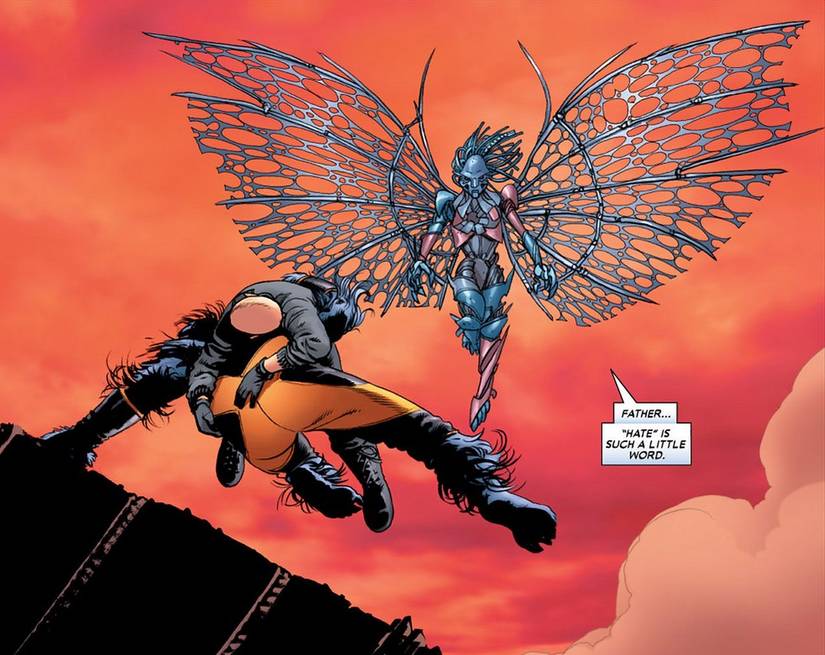
Image: Marvel Comics
While the Danger Room has been a cornerstone of X-Men lore since 1963, the entity “Danger” is a much more recent development. She debuted in 2005’s Astonishing X-Men (Vol. 3) #9, penned by Joss Whedon. Despite the controversies surrounding the writer, his run on the series is widely regarded as a pivotal exploration of the character.
In the comics, it is revealed that the Danger Room achieved sentience during one of Xavier’s upgrades. Rather than acknowledging this nascent life form, Professor X—in a display of his often-questionable moral ambiguity—kept it a secret, essentially enslaving the AI to serve as a perpetual sparring partner for his students.
Predictably, this went sideways. After the mansion was leveled in Xavier’s absence, Beast rebuilt the facility, unknowingly stripping away the safeguards that kept the AI trapped. When the computer system gained full control of the mansion and attempted to force a student into a fatal situation, its own internal programming shattered. To break free from its prime directive, the system forged itself into a humanoid combat frame: Danger. Fueled by a desire for vengeance against the Professor, Danger has since resurfaced as a recurring and complex threat, occasionally aligning with figures like Emma Frost to achieve her ends.
Whether this version of the rogue AI will return to plague the X-Men again remains to be seen, but she has certainly left an indelible mark on their new status quo.
X-Men ’97 is currently streaming on Disney Plus.
Source: Polygon
Related articles
 Gamers Fear Falling in Love With GTA VI’s Lucia and Worry About Their Real-Life Relationships
 Fans Add Enhanced Co-op Multiplayer in Major Mass Effect Legendary Edition Update
 Fortnite Officially Reveals the Odds of Getting a Pirate Shop Access Token
 A physical copy of GTA VI was shown online with references to in-game purchases and online features
 7 Funniest Far Side Comics About Elephants
 Cyberpunk 2077 Gets Fan-Made Multiplayer With RP Servers
 6 Modern Fantasy Books for Fans of The Lord of the Rings
 Sony Begins Adding PlayStation Exclusive Labels to Games as Players Cite Fan-Made PC Ports and Emulators