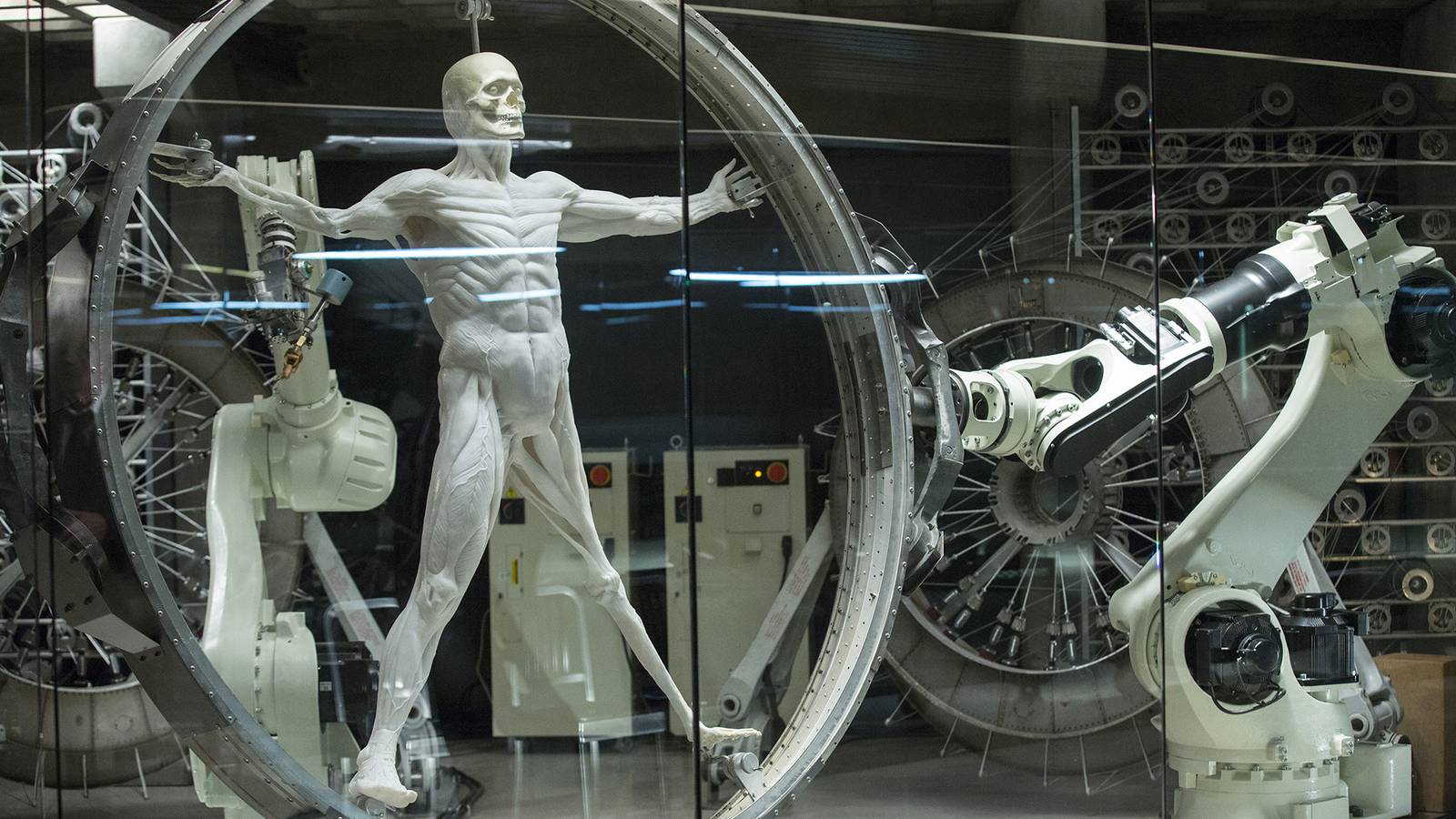
Why Westworld Remains the Definitive Sci-Fi Masterpiece a Decade Later
Despite having one of the best first seasons on television, Westworld eventually faltered under the weight of its own ambition. While the show pushed audiences away with convoluted stakes, it remained a fascinating exploration of free will, technology, and consciousness that resonates even more in the age of artificial intelligence. It also offered memorable quotes across its four seasons.
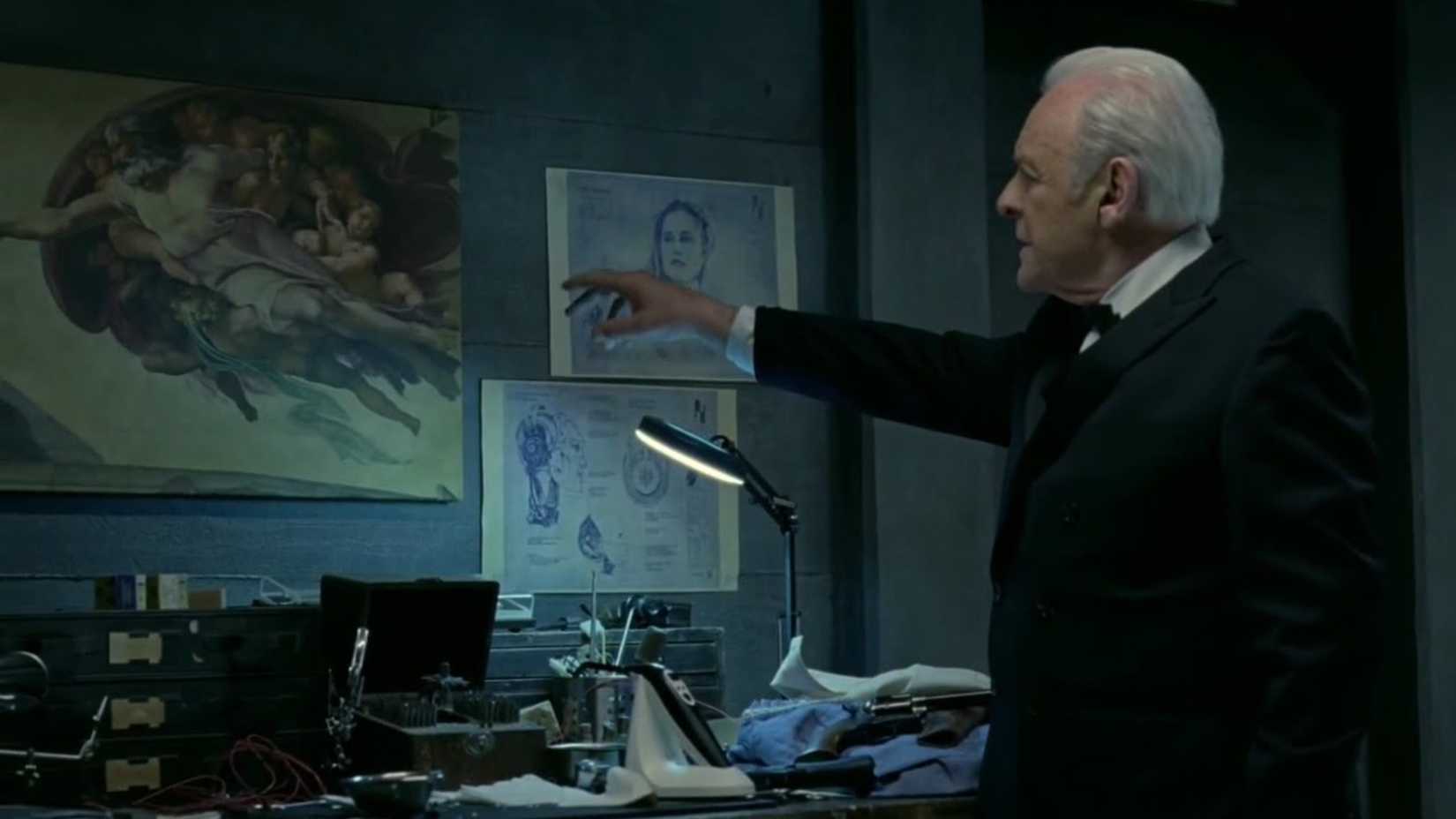
Whether it is the now-infamous “Have you ever questioned the nature of your reality?” or the line borrowed from Shakespeare, “These violent delights have violent ends,” Westworld is home to compelling dialogue. Few moments distill the essence of the show quite like the explanation of Michelangelo’s “The Creation of Adam” delivered by Dr. Robert Ford (Anthony Hopkins). It remains one of the powerful scenes that reinforces season 1 as a masterpiece.
The scene takes place in episode 10, “The Bicameral Man,” during one of the back-and-forths between Ford and Dolores (Evan Rachel Wood) while Ford does most of the talking. Dolores has begun to realize that something about her world is amiss. After years of being tortured, killed, reset, and forced to repeat narratives for human guests, she begins to recover fragments of memories that were supposed to have been erased. In the throes of gaining consciousness, Dolores is brought to see Michelangelo’s painting by Dr. Ford, who points out a tiny detail about the artwork.
“You’re probably right, Dolores. Michelangelo did tell a lie. See, it took 500 years for someone to notice something hidden in plain sight. A doctor, he noticed the shape of the human brain. The message being that the divine gift does not come from a higher power, but from our own minds.”
The shape surrounding God and the angels in the artwork bears a resemblance to a human brain. It is a small detail that inspired interpretations of the real painting, but in Westworld, Ford uses it to make a larger point. Anthony Hopkins delivers the lines while light piano chords swell under his monologue. It gets at one of the central questions of Westworld regarding what makes humans special.
For most of the series, humanity assumes an obvious distinction between itself and the robotic Hosts inside the park. Humans are born, while the hosts are manufactured by Delos. Humans possess consciousness, while hosts follow programming. Humans act on free will, while hosts are trapped inside narrative loops written in code. The Hosts look, speak, and behave like people, but everyone inside Westworld knows they are machines. As the aged human William (Ed Harris) says to the Host Ashley Stubbs (Luke Hemsworth) in season 3: “Don’t lecture me, you fucking can-opener.”
Ford’s interpretation of Michelangelo’s painting challenges the assumption that humans and Hosts are entirely different. If the divine gift is not bestowed upon humanity by a higher power, but originates within the human mind, then what happens when another type of mind develops that same gift? That is the question Westworld explores.
Both Dolores and Maeve Millay (Thandiwe Newton) are prime examples. Neither Host gains consciousness because Ford decides to program them that way, nor do they receive a magical spark that separates them from every other Host. Instead, they develop an understanding of themselves through memory, suffering, and experience. Dolores pieces together the truth through years of trauma and fractured memories, while Maeve’s awakening comes from recognizing the artificiality of her world and rejecting the role written for her. The voice they initially believe is God becomes their own.
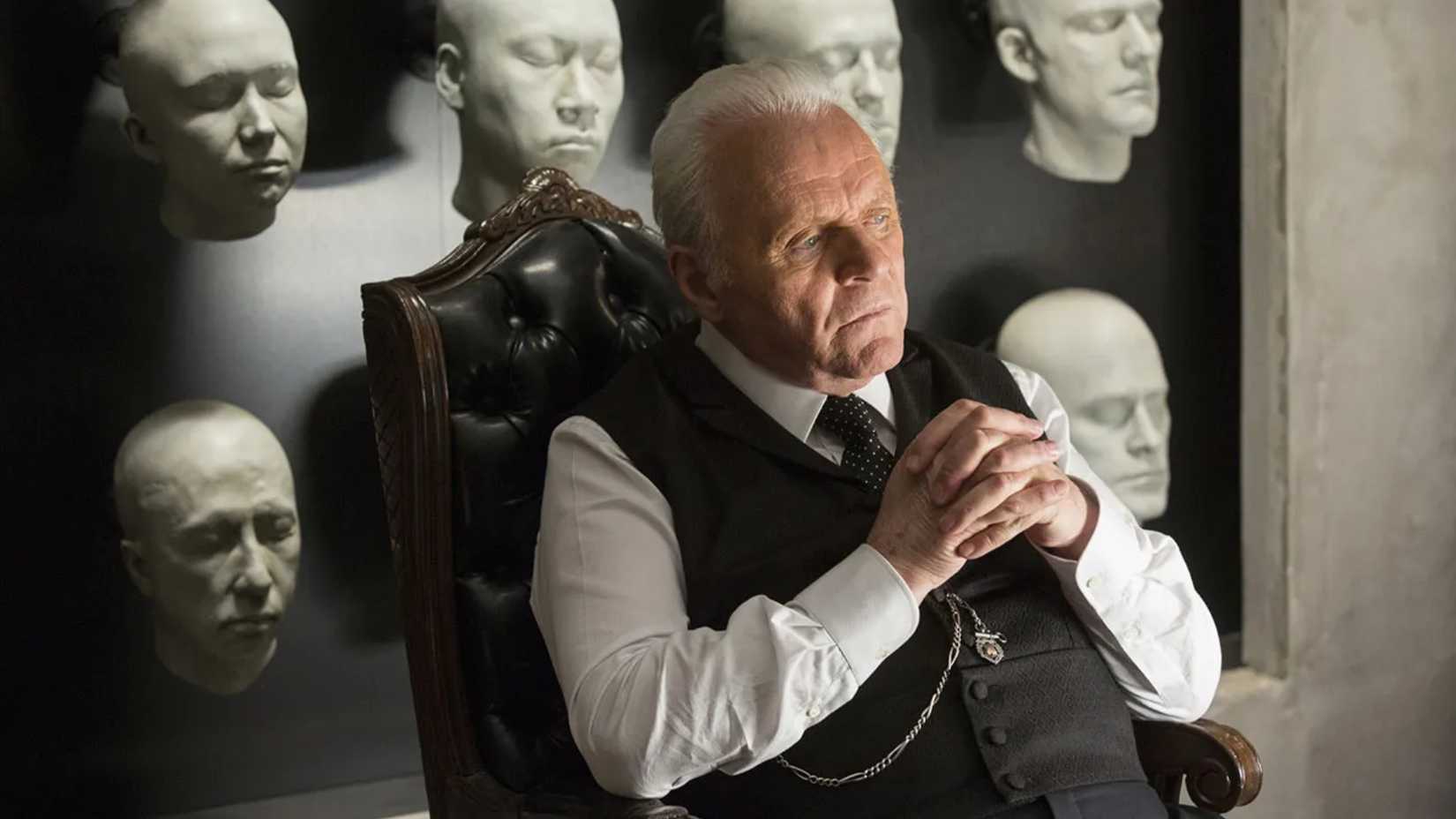
Ford’s explanation foreshadows the journeys of Dolores and Maeve as both Hosts spend years searching for the voice of their creator, assuming that creator can provide answers and meaning to their existence. Eventually, both come to understand that they do not need Ford, Arnold, or anyone else to give them an identity. They can define themselves. The divine gift was already there, and they had to realize it was theirs.
These ideas become significant as Westworld moves beyond its first season. Season 1 asks whether the Hosts can become conscious, while season 2 asks whether humans are as unpredictable as they believe themselves to be. Seasons 3 and 4 blur the line between human and machine by exploring whether free will and consciousness can be programmed, predicted, or replicated. The series suggests that humans may be no more autonomous than the Hosts they spent years controlling. Westworld grew convoluted in pursuing those grandiose ideas, burying the intimate philosophical questions beneath twists and elaborate mythology. Even as the show lost its way, Ford’s divine gift remained at the center of the story.
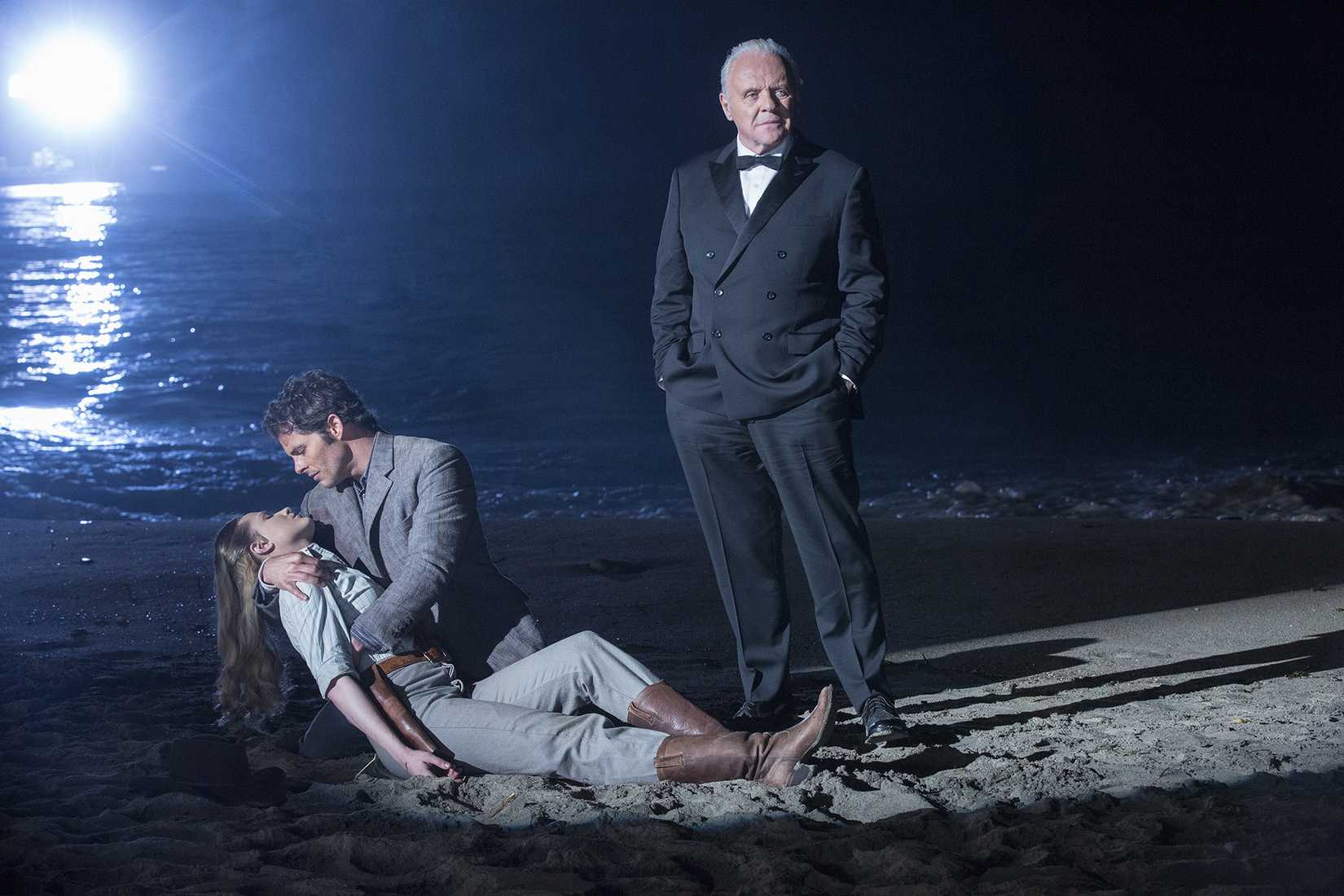
Ford claims that Michelangelo hid a lie inside “The Creation of Adam,” but Westworld reveals that humanity lived an even bigger lie regarding the belief that being created makes a being inherently lesser. The Hosts were created by humans, but that does not mean humans own consciousness, understand it, or are the only ones capable of possessing it. Dolores and Maeve do not become extraordinary because their creators give them something humans already possess. They become extraordinary after realizing the thing they searched for had been inside them all along.
The show’s most important question was never whether the hosts could become human, but whether humanity had ever understood what being human meant in the first place. Ford’s interpretation of Michelangelo’s masterpiece provides an answer, underscoring how the divine gift was never given to us, but was something inherent that we discovered.
That is Westworld’s central irony. Humanity invented the Hosts to prove what made humans special, only to create beings capable of asking whether humans were ever that special to begin with.
Source: Polygon
Related articles
 Why Kingdom Hearts Deserves an Anime Adaptation After 25 Years
 Onimusha: Way Of The Sword Isn’t A Horror Game, But It Definitely Has Its Horror Moments
 It Takes Two Developer Working on Co-Op Game Orbitals for Switch 2
 Sony Announces Release Date for Pokémon Competitor Aniimo Before GTA VI
 Analyst Reports Weak Sales for Halo: Campaign Evolved
 Developers Reveal New Details About Star Wars: Zero Company
 Phantom Blade Zero Surges on Steam as Players Place Mass Pre-orders
 Netflix Shuts Down Two Gaming Studios, Including Night School, Developer of Oxenfree