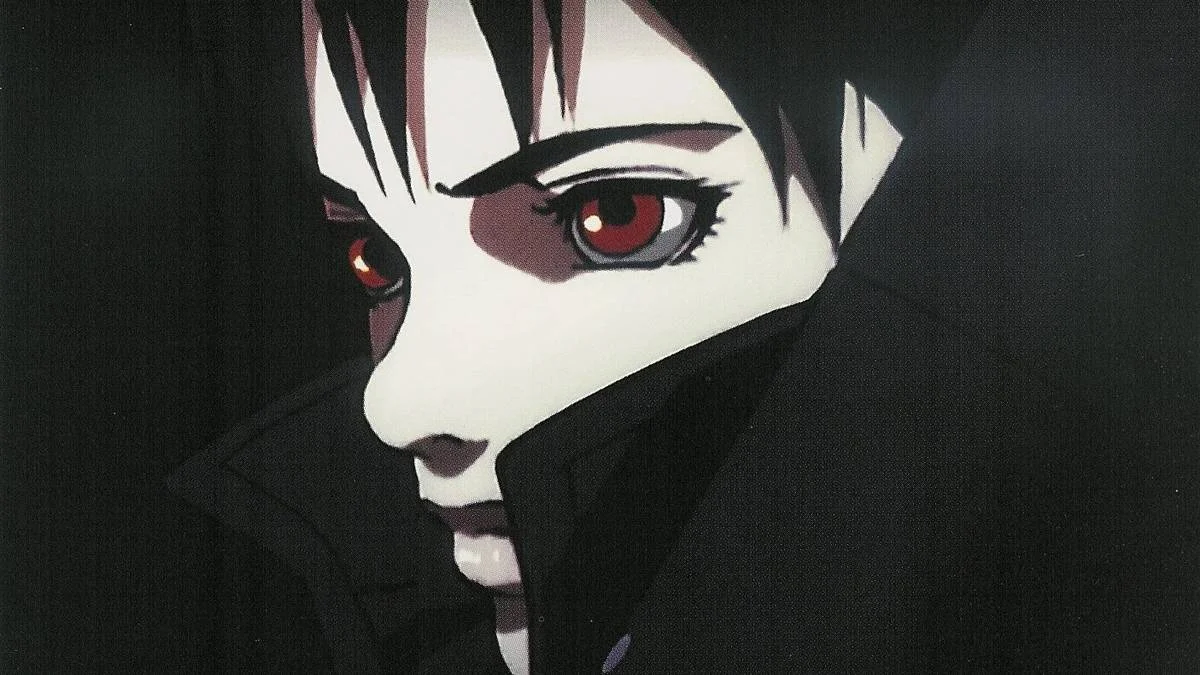
Why Blood The Last Vampire Deserves a Revisit 26 Years Later
For years, anime creators like Toyoo Ashida, Yoshiaki Kawajiri, and Mamoru Oshii experimented with vampires in ways Hollywood never attempted. The result is a rich lineage of bloodsucking stories, from the gothic grandeur of Vampire Hunter D (1985) and the lavish spectacle of Vampire Hunter D: Bloodlust to the operatic violence of Hellsing Ultimate and the slow-burning horror of Shiki.
These stories treat vampires differently. Some are tragic immortals, while others are raging monsters. Among anime vampire films, one often gets overshadowed despite shifting expectations about what a vampire story could look like.
Blood: The Last Vampire represents a convergence of talent that defined Production I.G.’s most influential era. The story was developed by Oshii, with directorial duties handed to Hiroyuki Kitakubo (Roujin Z, Robot Carnival). Kitakubo was operating at the peak of his powers after key animation stints on Akira, Angel’s Egg, and The End of Evangelion. To pen the script, the creators tapped industry newcomer Kenji Kamiyama, who later became a prominent science fiction anime director on projects like Ghost in the Shell: Stand Alone Complex, Star Wars: The Ninth Jedi, and Mobile Suit Gundam RG XARX-ZERO.
Channeling Oshii’s institutional paranoia and Kamiyama’s procedural grit through Kitakubo’s lens, the film strips away traditional gothic vampire iconography for oppressive lighting and precise violence. Mirroring adult animation like Ninja Scroll and Wicked City, Blood: The Last Vampire turns an American military base on the eve of the Vietnam War into a pressure cooker. The horror relies on the guttural shriek of a Chiropteran, bat-like creatures that blend into society, cornered in a brightly lit school clinic. Divested of exposition, the creative trio weaponizes the brisk 48-minute runtime to deliver a relentless sensory nightmare where monsters are treated as a classified government secret.
Saya drives the plot as a quiet, reclusive enigma voiced by Youki Kudoh. She looks like a fragile teenager, but she is actually an original, a centuries-old vampire employed by a shadowy U.S. government agency to slaughter her own kind. Armed with a bespoke katana, she operates with ruthless efficiency. The film helped pioneer the “girls with guns” archetype that exploded across 2000s anime in shows like Noir, Gunslinger Girl, The Garden of Sinners, and Canaan. Saya does not hunt out of heroic justice, but through a cold biological imperative. In 2000, the premise felt fresh by presenting vampires as biological predators rather than romantic aristocrats.
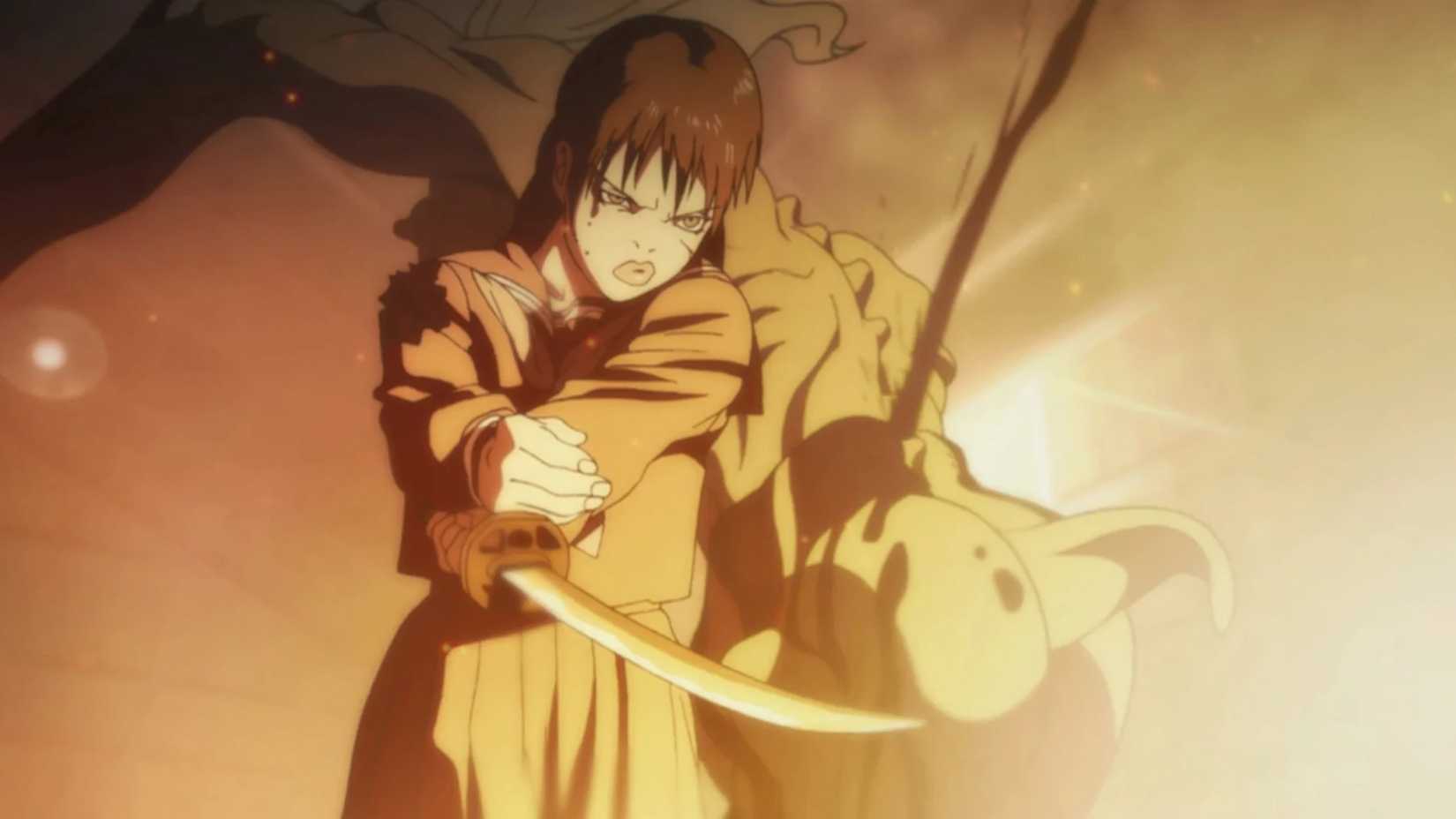
Saya is never invincible despite her heritage. Every encounter is messy and dangerous, with fights ending almost as quickly as they begin. The film sets this tone during the opening sequence on the Marunouchi Line. Saya’s execution of a suspected Chiropteran in a train car is a sudden swing of her katana followed by arterial spray. Within seconds, the violence ends, leaving only the thud of the body and the hum of the empty car.
Blood: The Last Vampire stands out because it was Japan’s first fully digital animated feature. The film combined traditional character animation with digital compositing years before that approach became the industry standard, explaining its shorter runtime. That hybrid aesthetic gives it a texture that still stands apart from modern digital productions. The project later spawned novels, manga, games, the Blood+ television series, and a live-action adaptation, yet the original film remains singular. It never overexplains its mythology, leaving behind a world that feels much larger than the audience sees.
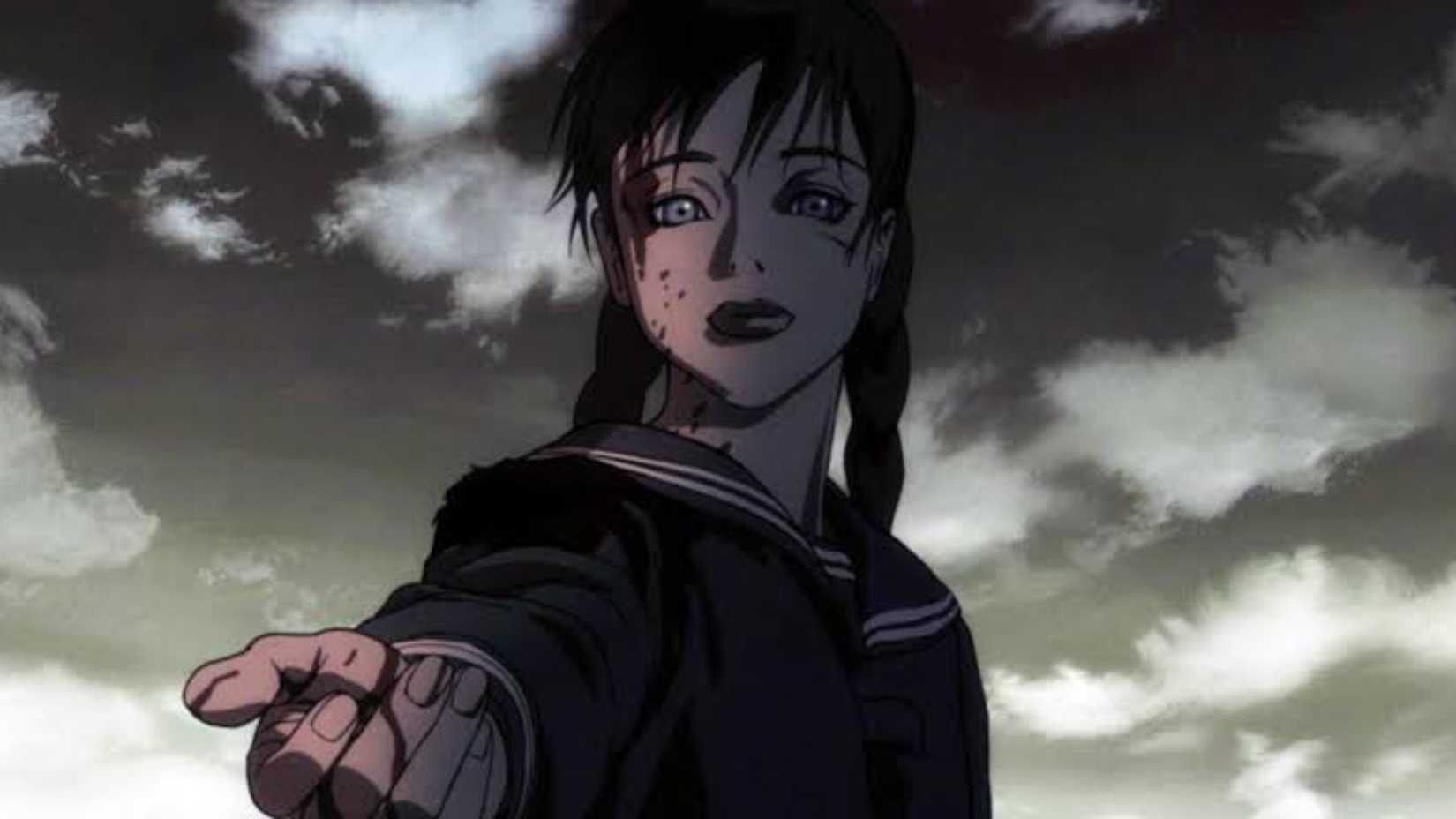
Every viewing uncovers hidden background details and clues about Saya’s past. The film trusts viewers to connect the dots instead of spelling everything out.
While countless anime projects cover vampires, Blood: The Last Vampire remains the leanest and most unnerving. At the turn of the century, it was a revolutionary statement forged by an unreplicable trio of industry visionaries. Though its DNA trickled into subsequent TV series, manga, and films, the original feature is often forgotten. Stripped of filler and refined into 48 minutes of atmospheric terror, Blood ignores typical vampire mythology for claustrophobic dread. More than two decades later, it remains an uncompromising masterpiece.
Blood: The Last Vampire is streaming on YouTube
Source: Polygon
Related articles
 Planet of the Apes Star Cast in The Legend of Zelda Movie
 ‘Clayface’ Director Inspired by Sam Raimi and Brian De Palma
 Insider Reports Marvel is Developing Its Own Answer to The Boys
 Lies of P Creator Promises Sequel Will Not Disappoint Players
 Spider-Man: A New Day Grosses $1.67 Billion in 12 Days as Analysts Expect Record
 The Best Video Game Ending in Years Belongs to 2026’s Ultimate 10/10 Masterpiece
 Modder Adds Requested Combat Mechanic to Assassin’s Creed Black Flag Resynced
 Ranking the 10 Best Tales from the Crypt Episodes of All Time