
Twenty Years Ago, J.J. Abrams Directed the Perfect Mission: Impossible Movie That Changed the Franchise Forever

Let’s be honest: Mission: Impossible 2 was a disappointment.
After the original film successfully breathed new life into the classic 1960s espionage series with a taut thriller anchored by some of the decade’s most impressive action, the sequel felt like a chaotic misfire. Director John Woo leaned heavily into his signature stylistic tropes, resulting in an endless barrage of slow-motion shots and preposterous action beats (the infamous motorcycle duel being the prime culprit). Essentially, Woo seemed unconcerned with establishing Tom Cruise’s Ethan Hunt as the anchor for a long-running, multi-decade cinematic juggernaut. Fortunately, Mission: Impossible III course-corrected, offering clean, coherent action, a compelling spy narrative, and a central antagonist who remains the franchise’s gold standard.
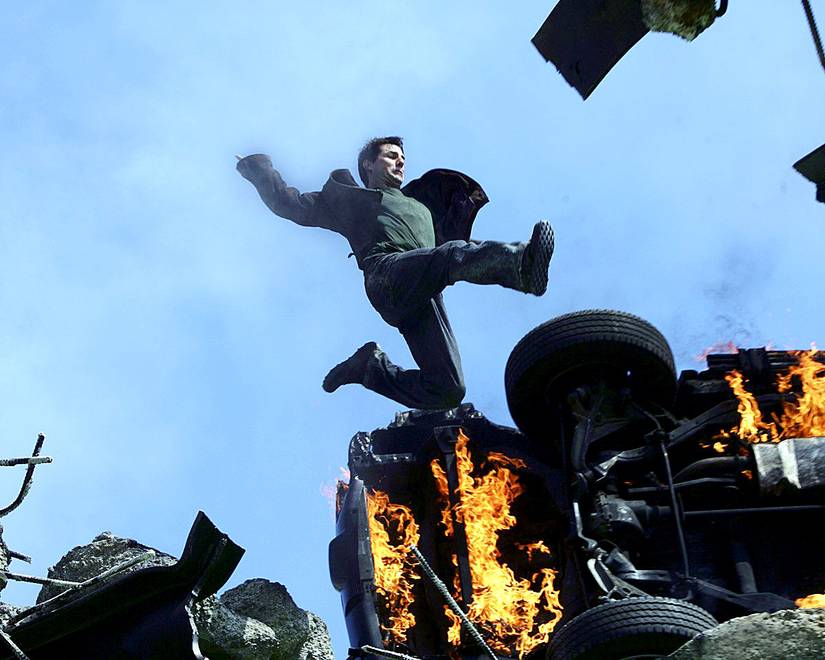 Image: Paramount/Everett Collection
Helmed by J.J. Abrams and debuting two decades ago on May 5, 2006, Mission: Impossible III depicts a retired Hunt lured back into the Impossible Mission Force (IMF). His objective: to rescue a former protégé who was tracking the ruthless arms dealer Owen Davian (played with chilling intensity by Philip Seymour Hoffman), who is hunting down a mysterious biological entity known as the Rabbit’s Foot.
The brilliance of Mission: Impossible III lies in how it reclaimed the grounded espionage tone of the original while ratcheting up the tempo with unexpected narrative pivots. While the first film boasted iconic sequences—the disastrous opening mission, the aquarium heist, the wire-hang—it often suffered from pacing lulls. Abrams effectively filled those gaps with escalating tension, constant abductions, and surprising revelations.
Even with its dense plot, Abrams maintained clarity through necessary, efficient exposition. This approach defined the pacing for subsequent entries, keeping the momentum high even when the characters occasionally veer into overly descriptive dialogue.
Furthermore, the introduction of Simon Pegg as Benji Dunn provided a much-needed comedic infusion. While the brotherly rapport between Cruise and Ving Rhames (Luther Stickell) remained the emotional backbone of the series, Pegg injected a fresh, levity-filled energy.
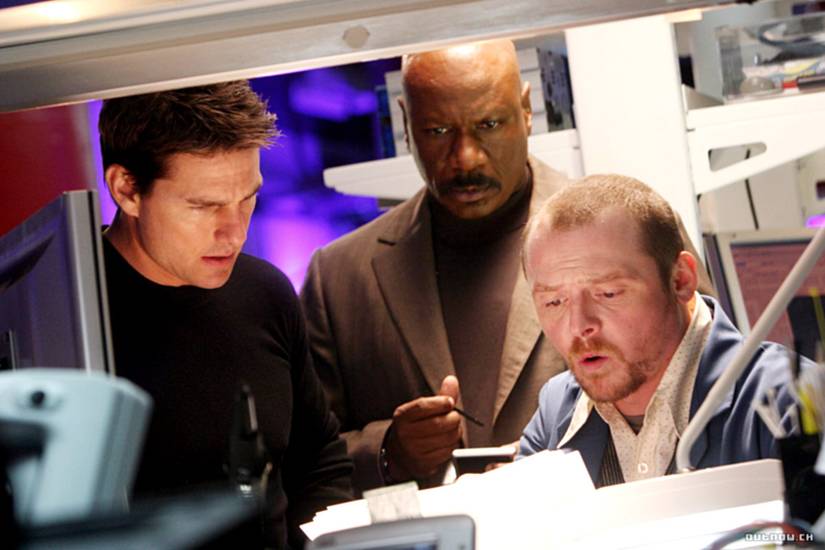 Image: Paramount/Everett Collection
The action beats in Mission: Impossible III are consistently solid, though perhaps not inherently revolutionary. Highlights include the infiltration of the Vatican to intercept Davian, the explosive Chesapeake Bay bridge rescue, and Hunt’s daring leap between Shanghai skyscrapers. Interestingly, while the franchise is celebrated for grand spectacle, this entry’s most enduring moment is intimate rather than explosive. Teased early and fully realized later, the scene sees Hunt restrained, helplessly watching his wife threatened by Davian at gunpoint, with a countdown to her execution.
This sequence serves as a masterclass in performance for both Cruise and Hoffman. Hunt’s desperation and confusion—believing he had already successfully surrendered the Rabbit’s Foot—clash against Davian’s cold, methodical menace. In the face of mounting terror, Hunt cycles through every tactic in his arsenal—threats, pleas, and desperate bluffs. It is a testament to Hoffman’s unnerving, quiet intensity that he manages to be genuinely terrifying even when he isn’t shouting. It’s revealed later, thanks to the series’ penchant for signature mask-work, that the woman wasn’t actually his wife, yet the emotional gravity of the scene remains undiminished.
 Image: Paramount/Everett Collection
Despite limited screen time, Hoffman crafted the most compelling antagonist in the entire series. While the Mission: Impossible saga is often contrasted with James Bond, it has historically struggled with creating iconic villains. Davian, however, stands as a notable exception.
By blending the thematic template of the first film with the pacing lessons learned from the second, the franchise evolved into a multi-billion dollar powerhouse. While subsequent entries sometimes fell into a predictable formula, they never wavered in their commitment to high-stakes, brilliantly directed action. These films celebrate the magic of the big screen, proving that audiences can instinctively differentiate between authentic, practical stunts and artificial CGI. As the series potentially draws to a close with Mission: Impossible – The Final Reckoning, one can only hope that future filmmakers continue to uphold this standard of cinematic craft.
Source: Polygon
Related articles
 Microsoft Admits It Is Too Difficult to Release Games on Xbox
 Space Marine 2 vs. Gears of War: E-Day Graphics and Performance Comparison
 Ghost of Yotei impresses reviewers as developers release new trailer
 CI Games CEO Announces Delay in Lords of the Fallen II Playtests
 Persona’s Horrifying Penis Monster Will Haunt My Nightmares Forever
 Valve Announces Dates for Upcoming Steam Sales and Festivals
 Microsoft Redesigning Xbox App for Windows 11 with Major Update
 It Takes Two Headed to Nintendo Switch 2 with Free Update Within Days