The Pluribus Finale Reveals a Chilling New Truth About the Hivemind

Much like Carol Sturka (Rhea Seehorn) obsessively documenting her observations of the collective, we have spent the inaugural season of Pluribus meticulously parsing every frame for answers to its central sci-fi enigma. Yet, as the season 1 finale draws the curtain, it reveals a hauntingly dark truth that fundamentally shifts our perception of every interaction between the hivemind and the few remaining human holdouts.
[Editor’s note: Significant spoilers for Pluribus episode 9 ahead.]The series previously established that the collective is actively strategizing to integrate the “Others”—those like Carol who possess a natural immunity. While Carol remains steadfast in her refusal, other immune survivors appear more inclined toward assimilation. Among them is Kusimayu (Darinka Arones), a young woman living in a remote Peruvian village.
 Image: Apple TV
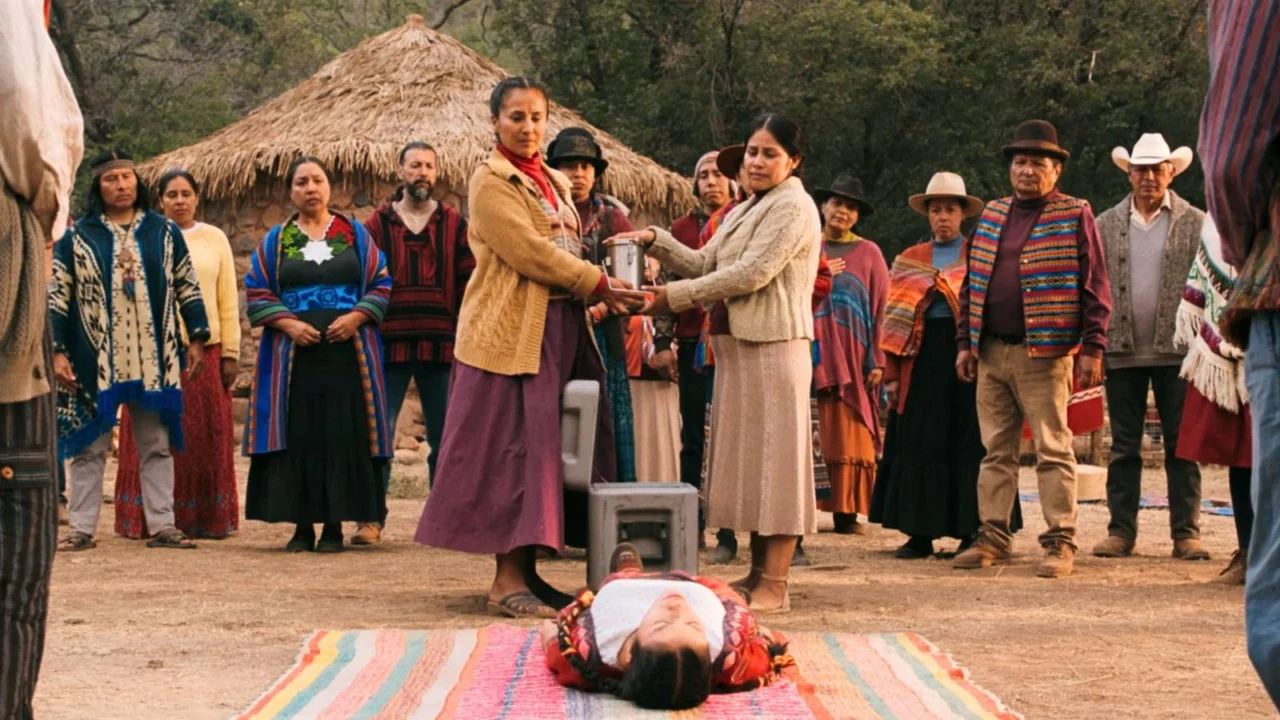
In the opening sequence of the finale, we find Kusimayu’s community engaged in a seemingly idyllic routine—tending to livestock and maintaining their mountain home as if they weren’t already part of a global Borg-like entity. The arrival of a plane carrying a tailored strain of the virus signals the end of this charade. The villagers assemble for a ceremony that feels more like a religious rite than a medical procedure. Guided by the hivemind—operating through the bodies of her own family—Kusimayu is promised a painless transition. As she shudders during the process, the community’s chant remains eerily beautiful, sounding like a haunting, untranslated liturgy.
When Kusimayu rises, she bears the unmistakable, vacant smile of the collective. Immediately, the village’s purpose evaporates. Every “human” detail we witnessed—the mending of clothes, the preparation of traditional meals, the construction of fences—is revealed to be a elaborate theatrical performance designed solely to pacify one woman until she was ready for harvest. With the goal achieved, the masks fall. The villagers abandon their homes and livestock without a second thought. While their destination is unknown, it likely mirrors the utilitarian horror Carol discovered in episode 8: rows of drones sleeping shoulder-to-shoulder on gym floors to maximize efficiency.
The sequence is chilling because it highlights the hivemind’s total apathy toward anything that doesn’t advance its agenda. Kusimayu was the final custodian of her specific culture. By absorbing her, the collective effectively extinguished that heritage, discarding it like a worn-out tool. They release the animals, abandon their history, and leave their belongings to rot. To the collective, culture is a disposable recruitment tactic, existing only as a flickering memory with no functional value.
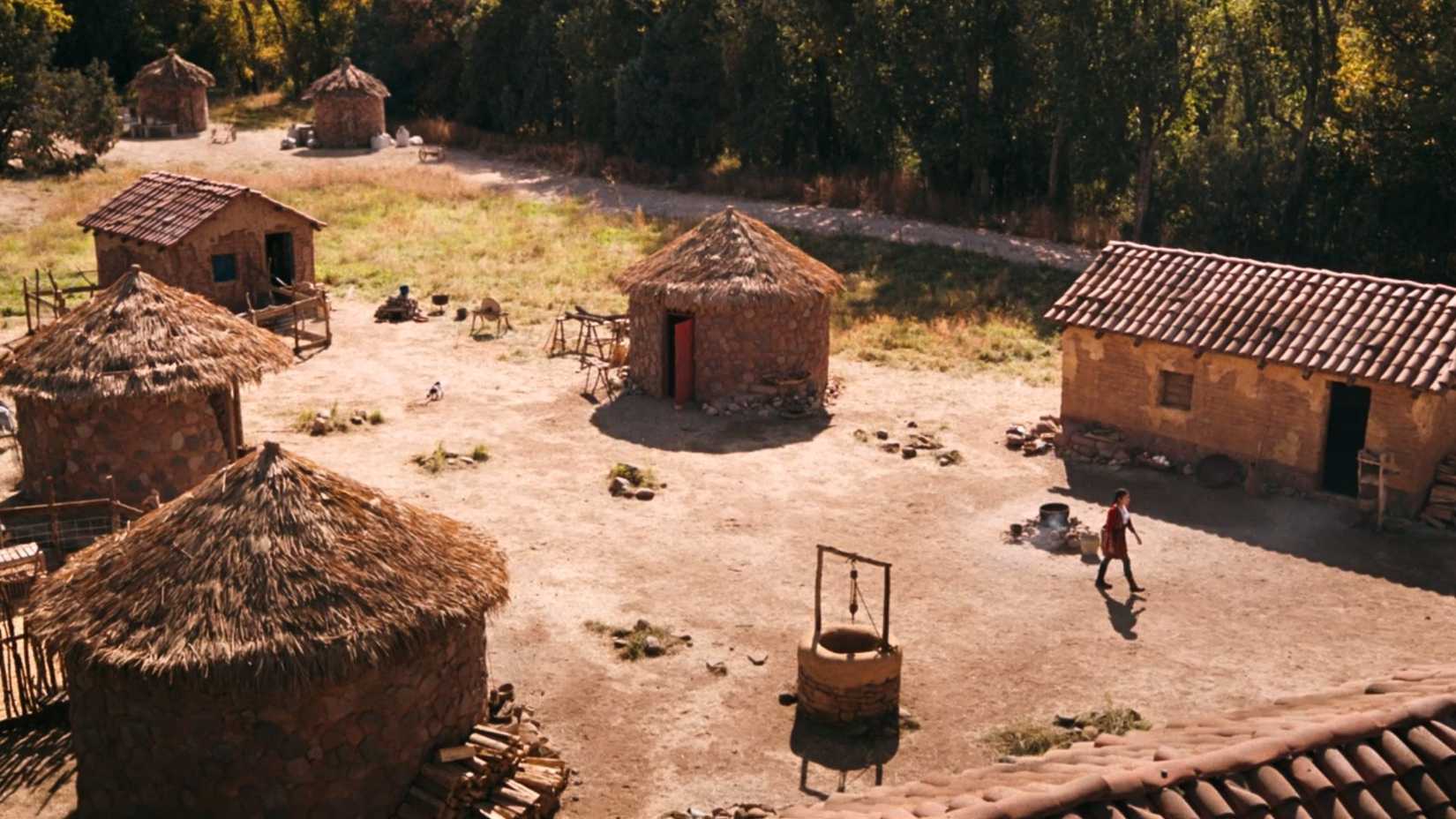 Image: Apple TV
It’s not that the hivemind is incapable of recognizing beauty; it simply lacks the capacity for genuine passion. This was evident in episode 8 when Zosia (Karoline Wydra) observed an O’Keefe painting in Carol’s home. The hivemind’s empathy is vast, yet it remains devoid of individual sparks or original thought. They can mirror adoration, but they cannot form an opinion or care for a subject beyond its survival utility. Consequently, art and culture are the first things to be sacrificed at the altar of efficiency.
The events in Peru also underscore the lengths to which the collective will go to manufacture a sense of security for the immune. While their desire to provide “happiness” might be a biological imperative, it blurs the line between genuine care and psychological manipulation. We’ve seen this with Koumba Diabaté (Samba Schutte), who uses the collective to indulge in power fantasies. Even Carol’s developing romance with Zosia feels tainted by this dynamic—a connection born out of extreme isolation rather than true agency.
Ultimately, the hivemind is an unstoppable force driven by its own biological mandate to propagate, regardless of individual consent. As Carol aptly noted in episode 4, they are essentially the world’s most polite conversion therapists—smiling warmly while they systematically dismantle the very essence of what makes a person an individual.
Pluribus season 1 is now available for streaming on Apple TV+.
Source: Polygon
Related articles
 Square Enix Announces Final Fantasy VII Remake Collector’s Edition Including Three Games and Large Figure
 Cosplayer portrays Lady Dimitrescu from Resident Evil Village
 Square Enix Confirms New Kingdom Hearts 4 Showing This Month
 Rockstar Details New Activities and Depth in GTA VI
 Capcom Well Optimized Onimusha for Switch 2
 Two Nintendo Directs Air Next Week, And One Of Them Celebrates Zelda’s 40th Anniversary
 Brandon Sanderson and Janci Patterson Discuss Cytoverse Novel Blightfall
 Naughty Dog Teases More The Last of Us Games After HBO Season 3