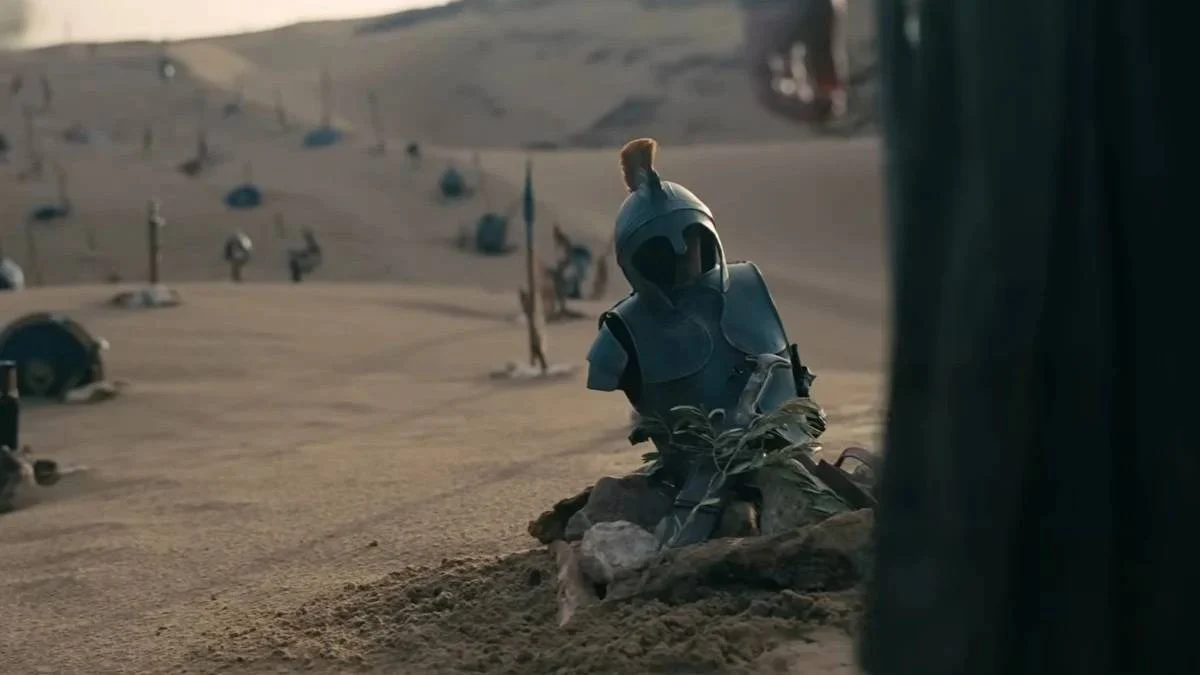
The Most Important Character in Christopher Nolan’s The Odyssey Isn’t Even in the Original Poem
Christopher Nolan’s The Odyssey breathes new life into a foundational text that has endured for millennia. Homer’s epic spans hundreds of pages in modern translation, packed with deities, mythological beasts, and harrowing trials that perpetually obstruct the hero’s homecoming. Translating such monumental source material naturally requires creative trimming, yet Nolan’s most striking narrative pivot is the introduction of an entirely original character absent from Homer’s original verses.
Who is Sinon in The Odyssey?
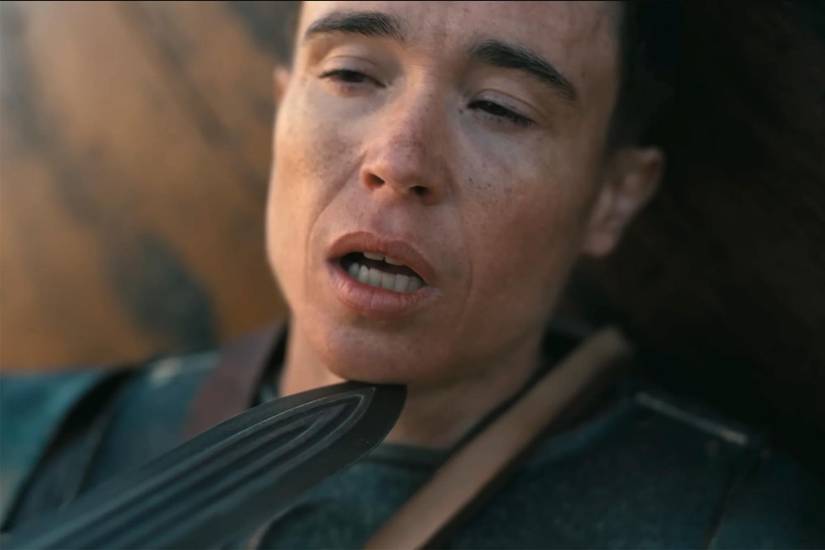
Brought to life by Elliot Page in the film’s striking prologue, Sinon emerges as a vital face onscreen just as the bard Phemius (Travis Scott) recounts the legend of the Trojan Horse. He quickly serves as a heartbreaking embodiment of the steep human cost and far-reaching fallout born from Odysseus’ legendary deception.
Sinon’s introduction finds him spotting armored Trojan scouts advancing toward the colossal wooden structure left on the shoreline. Rushing desperately toward it, he is instantly struck down by a volley of arrows and a spear. With his dying breath, he convinces the approaching Trojans that the horse is a sacred offering dedicated to Athena—a fabrication that ultimately allows Odysseus and his covert strike team to infiltrate Troy from within.
Although missing from Homer’s original text, Sinon is not entirely a fabrication of Nolan’s imagination. The character originates from Virgil’s Aeneid, composed roughly eight centuries later, which details the grim aftermath of the Trojan War through the eyes of an escaping Trojan who ultimately helps lay the foundations of Rome. In Virgil’s narrative, Sinon plays a far more active, manipulative role—deliberately deceiving the citizens by framing himself as a victim of Greek betrayal while advocating for the horse’s sanctity.
Once the deceived city drags the wooden beast inside its protective fortifications, Sinon unlocks its hollow core to liberate the hidden Greek forces. Traditionally, he has stood as an archetype of pure cunning and a primary catalyst for the fall of Troy.
Nolan’s interpretation of the character
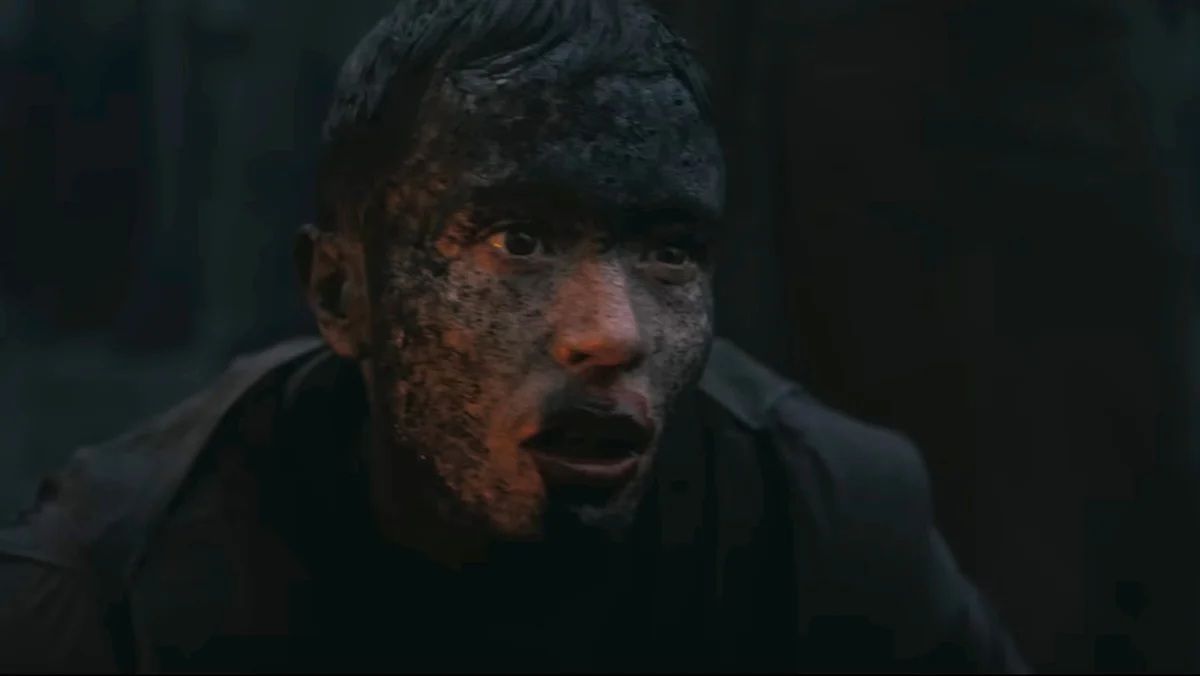
Nolan reimagines Sinon through a much more melancholic and sympathetic lens. In this adaptation, he is the son of a humble servant employed by the household of Antinous (Robert Pattinson), the narrative’s central antagonist. Childhood flashbacks reveal Sinon and Antinous accompanying Odysseus on royal hunts. When the military draft for the war arrives, Antinous is selected while Sinon is initially spared. Terrified by the prospect, Antinous pressures Sinon to swap places with him, promising financial support and the protection of Sinon’s family in his absence.
During a hauntingly surreal sequence, this betrayal is unmasked. As Odysseus and his crew navigate the murky depths of the underworld, they cross paths with restless phantoms and speak with Sinon first. He exposes the grim truth: Odysseus never warned him that armed soldiers lurked inside the wooden horse, cynically exploiting his innocent trust to pull off the ruse. Furthermore, he reveals that his father died in destitution back in Ithaca because Antinous utterly failed to honor their agreement.

From a storytelling perspective, Sinon embodies a profound personal loss for Odysseus, representing one of the few common soldiers he genuinely bonded with. He stands as a symbol of pure innocence swallowed up by a conflict he never asked to join. “In a way, you’re looking to put a face on certain elements of what Odysseus has done, what that means for the world as a whole. You’re looking to put a face on the tragedy of war,” Nolan explained to Rolling Stone UK.
Sinon also elevates the bitter feud between Antinous and Odysseus, giving their eventual confrontation deep emotional resonance. Throughout the runtime, audiences witness Pattinson’s character scheming, courting Queen Penelope (Anne Hathaway), and mistreating Telemachus (Tom Holland). While Odysseus remains unaware of these domestic abuses, he learns enough to realize that Antinous is an unprincipled liar directly responsible for an innocent young man’s wartime execution.

Upon finally reclaiming Ithaca, Odysseus invokes Sinon’s name to psychologically dismantle and torment Antinous. When the final blow is struck, Sinon’s memory seals his fate, ensuring that Antinous dies a thoroughly exposed coward.
Though Sinon occupies only a brief window of screen time within a nearly three-hour cinematic journey, Nolan’s precise writing and Page’s poignant performance profoundly reframe the overarching narrative. He exposes both the cold pragmatism of Odysseus—who is all too willing to sacrifice pawns for a perceived greater good—and his lingering capacity to honor the memory of the fallen. Even within a mythos as vast as The Odyssey, the core of the story always remains anchored to human collateral.
The Odyssey is in theaters now.
Twenty movies. Four choices each. How well do you know summer at the cinema?
Final Score
Source: Polygon
Related articles
 Kojima Celebrates Death Stranding’s 7th Anniversary and Reveals Player Count
 World of Warcraft: Forever Sets Record for Biggest WoW Launch by Concurrent Players
 Mass Effect Fans Park Truck Outside EA Headquarters, Calling for Franchise to Be Saved
 Modder Combines Fallout 3, Fallout: New Vegas, and Fallout 4 Into One Game With Multiplayer
 Forget a Tears of the Kingdom Sequel: Nintendo Wants to Surprise Zelda Fans
 Sony shuts down development of unusual shooter blending DOOM and Call of Duty: Zombies
 God of War: Sons of Sparta Spotted in PlayStation Database, but PS4 Release Is Unclear
 GTA VI Approved for Adults in Japan as Players Fear New Restrictions