
The 10 Most Ambitious Video Games of All Time
While safe iterations and conventional designs often dominate the industry, certain development teams dare to challenge the status quo. These studios envision projects so breathtakingly audacious that they fundamentally alter the gaming landscape. Though critical acclaim and commercial triumphs aren’t always guaranteed, they frequently accompany such groundbreaking endeavors.
When it finally drops, Rockstar’s open-world crime masterpiece Grand Theft Auto 6 will likely claim the throne, shaping up to be the most ambitious title ever conceived based on all available insights. However, it stands far from alone in history’s pantheon of monumental projects. Here are the 10 most daring video games of all time.
10
Shenmue (1999)
 Sega AM2, d3t/Sega
Available on: Dreamcast
The core promise behind Shenmue was introducing a living, breathing world populated by non-player characters with independent daily routines, echoing the dynamic townsfolk of The Legend of Zelda: Majora’s Mask. Most contemporary titles relied on static characters who merely lingered in place waiting to dispense exposition. To sustain this unprecedented level of detail, the experience demanded a sprawling narrative designed to span multiple installments. Restricted by the Dreamcast hardware, the original release struggled to fully realize this grand vision. Years later, a successful crowdfunding campaign brought Shenmue 3 to life, though it ultimately left the overarching saga unresolved. Even so, the pioneering early chapters left players yearning for more, with one prominent poll rating it among the most influential games in history. That extraordinary ambition was far from wasted.
9
Fable (2004)
 Image: Lionhead Studios/Microsoft Game Studios
Available on: Windows PC, Xbox
Visionary designer Peter Molyneux has spearheaded numerous celebrated projects throughout his career, from Populous to Dungeon Keeper. During the press run for Fable, he openly shared a flurry of revolutionary concepts that ultimately proved too lofty for the technology of the day. Players were originally meant to raise children who would inherit their heroic legacies, a feature that did not make the final cut. While he envisioned a deeply reactive world shaped by player choices, the finished game streamlined this into a binary morality system that manifested as physical halos or horns on the protagonist. Ultimately, technological constraints forced him to scale back his grandest theories, yet the result still crystallized into one of the definitive action-RPGs of its generation.
8
Daikatana (2000)
 Image: Ion Storm/Kemco
Available on: Nintendo 64, Windows PC
When crafting a narrative, developers typically deliberate extensively over setting, pacing, and atmosphere. John Romero largely bypassed those conventional constraints when conceiving Daikatana, opting instead for a sprawling time-travel epic. Wielding the titular weapon, players leap across diverse eras and locales—battling through ancient Greece, a futuristic San Francisco, and a high-tech modern Japan. The underlying mandate prioritized scale above all else, stuffing the adventure with denser polygon counts and hordes of foes that pushed hardware limits past the breaking point. Plagued by high-profile staff departures, vicious press cycles, and endless delays, the finished product fell desperately short of its lofty aspirations. Today, Daikatana is remembered as the rare misstep capable of tanking a studio—a fate Ion Storm only narrowly avoided by pivoting to the monumental success of Deus Ex.
7
No Man’s Sky (2016)
 Image: Hello Games
Available on: Windows PC, PS4, PS5, Switch, Switch 2, Xbox One, Xbox Series X
Prior to launching No Man’s Sky, developer Hello Games was known exclusively for the beloved yet tightly focused Joe Danger motorcycle stunt series. Pivoting away from arcade action, the tiny team dramatically expanded their horizons to deliver an entire procedurally generated universe. Given the studio’s modest headcount, the sheer scope was staggering. Unsurprisingly, the initial release underwhelmed both critics and players who felt the game buckled under the weight of unfulfilled promises. Fortunately, the developers channeled that intense community feedback into years of tireless updates, successfully transforming the experience into the breathtaking space-faring epic it was always meant to be.
6
L.A. Noire (2011)
 Image: Team Bondi/Rockstar Games
Available on: PS3, Xbox 360
Modern video games routinely showcase advanced character models capable of conveying complex, conflicting emotions. It is a delicate discipline, sidestepping the dreaded uncanny valley that threatens to shatter immersion over a misplaced eyebrow or a rigid smile. Commencing development in 2004, L.A. Noire met this challenge head-on by utilizing groundbreaking facial capture technology. This costly innovation pushed boundaries, rendering digital suspects more human and expressive than ever before. While its meticulously reconstructed period-accurate Los Angeles setting was equally impressive, the unprecedented focus on micro-expressions established an entirely new benchmark for cinematic storytelling within the industry.
5
The Legend of Zelda: Breath of the Wild (2017)
 Image: Nintendo EPD/Nintendo
Available on: Switch, Switch 2, Wii U
By the time Breath_of_the_Wild launched in 2017, many fans raised on Ocarina of Time and its successors had nearly forgotten that the franchise originated as an open-world sandbox. Nintendo remembered, however, constructing a vibrant, boundless wilderness for Link to conquer. If a distant mountain caught your eye, you could scale its vertical cliffs or explore its hidden caverns. Shake a tree to harvest falling apples, roast them over a flickering campfire, hunt local fauna, or wade through rushing rivers—every systemic interaction felt organic. Backed by a remarkably robust physics engine, environmental puzzles offered multiple ingenious solutions. Nintendo’s engineering wizards accomplished this miracle on hardware vastly inferior to its competitors, crafting one of the most wondrous and ambitious interactive achievements ever witnessed.
4
Baldur’s Gate 3 (2023)
 Image: Larian Studios
Available on: PS5, Windows PC, Xbox Series X
The magic of tabletop role-playing lies in friends gathering around a table, bound by loose rules, embarking on adventures where the sole limitation is human imagination. For decades, video games have attempted to capture that elusive chemistry with varying degrees of success, frequently constrained by the rigid frameworks developers must manually assemble. A virtual swamp feels hollow unless an artist intricately designs it, and an ally’s betrayal rings hollow when reduced to emotionless pixels. Baldur’s Gate 3 shattered those limitations, constructing areactive world where player choice genuinely reverberates. While narrative guideposts remain to steer the plot like an attentive dungeon master, the sheer freedom is staggering: companions can be romanced, betrayed, or slain entirely, yet the simulation relentlessly adapts to your actions rather than halting its momentum.
3
EVE Online (2003)
 Image: CCP Games via RonUSMC
Available on: Mac, Windows PC
For more than two decades, players have remained enthralled by EVE Online, driven by its radical player-driven freedom. Within the unforgiving expanses of deep space, participants engage in complex interstellar commerce, forge massive political alliances, and resort to ruthless piracy. While many mechanics mirror standard sci-fi tropes, EVE stands apart through its staggering scale and total lack of hand-holding. If you choose to swindle or ambush a fellow player, the game permits it entirely, with corporate espionage and virtual heists carrying zero in-game penalties. Massive fleet engagements involving thousands of concurrent pilots routinely make real-world headlines. A persistent, fully player-run universe remains an intoxicating concept, explaining why this digital frontier continues to thrive.
2
Microsoft Flight Simulator (2020)
 Image: Asobo Studio/Xbox Game Studios
Available on: Windows PC, Xbox Series X
The Microsoft Flight Simulator franchise actually predates the Windows operating system itself, yet none of its heritage releases rival the sheer audacity of the 2020 installment. Developed by Asobo Studio, the software streams live Bing Maps data and cloud computing to render photorealistic topographical maps of the entire planet, factoring in real-time weather patterns and authentic aerodynamics. In traditional simulation games, your playground is restricted to a curated region; in Microsoft Flight Simulator, your map is literally planet Earth.
1
Star Citizen (TBA)
 Image: Cloud Imperium Games
Available on: Windows PC
Spearheaded by industry veteran Chris Roberts (Wing Commander), Star Citizen is so breathtakingly expansive that it still lacks an official release date well over a decade after its 2012 Kickstarter campaign. Bolstered by massive crowdfunding and ongoing microtransaction revenues from early-access backers, Cloud Imperium Games has amassed upwards of $1 billion to fund a sprawling development army continuously expanding the multi-genre project. While currently playable via starter packs and periodic free-fly events, newcomers should realistically not expect a full commercial launch until late into the decade. For a game promising to forge bespoke personal journeys for every participant, the longest journey of all remains the grueling path toward its final release.
Related articles
 Isekai Anime Multi-Mind Mayhem Gets First Trailer
 Story Puzzle Game A Guidebook of Babel Free on Mobile EGS
 Made in Abyss: The Binary Star Falling into Darkness Releases New Trailer Featuring Tepaste and Cravali
 Why You Should Binge Fargo Season 4 on Disney+ This Weekend
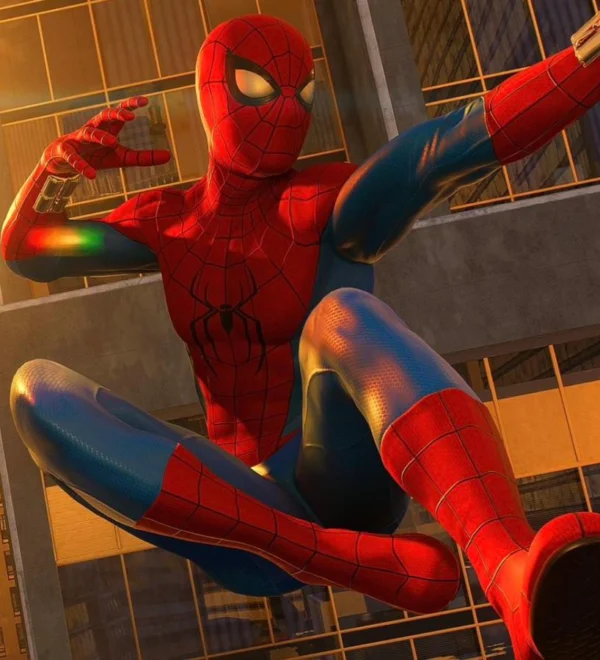 Marvel’s Spider-Man 2 Developers Alter Criticized Suit Following Mixed Player Reactions
 Nintendo Quietly Emerged as a 2026 GOTY Powerhouse
 Kazakhstan-Made Metroidvania About Warrior Nun Trainee Released on Steam
 James Gunn Denies Simultaneous Filming of Two Matt Reeves Batman Sequels