
Steam’s quietest feature changed my gaming life more than I expected
After spending significant time with the Steam Machine, the initial shine has worn off, allowing me to form a clearer picture of what life with this hardware is actually like. My original assessment holds firm: while it serves as a polished, plug-and-play console, the raw specifications struggle to justify the price tag. Yet, despite these hardware shortcomings, I find myself using it daily. The reason? A surprisingly mundane feature that has completely overhauled my gaming routine: Steam Cloud saves.
Granted, cloud syncing isn’t new; the ability to carry progress between platforms has existed for a while. However, centering my gaming around a dedicated TV-bound device has highlighted just how vital this feature is. While the hardware might not be a “value” proposition in the traditional sense, I am increasingly drawn to the Valve ecosystem because it offers a level of genuine freedom that traditional consoles simply lack.
For those who stick to one gaming setup, it’s easy to overlook Steam Cloud. In practice, however, it acts as a silent, digital tether that syncs my progress across devices. Whether I’m transitioning from my desktop to a handheld like the Steam Deck, the shift is virtually instantaneous. It is such a seamless, invisible process that it barely registers as a perk, even though it fundamentally changes how I approach my library.
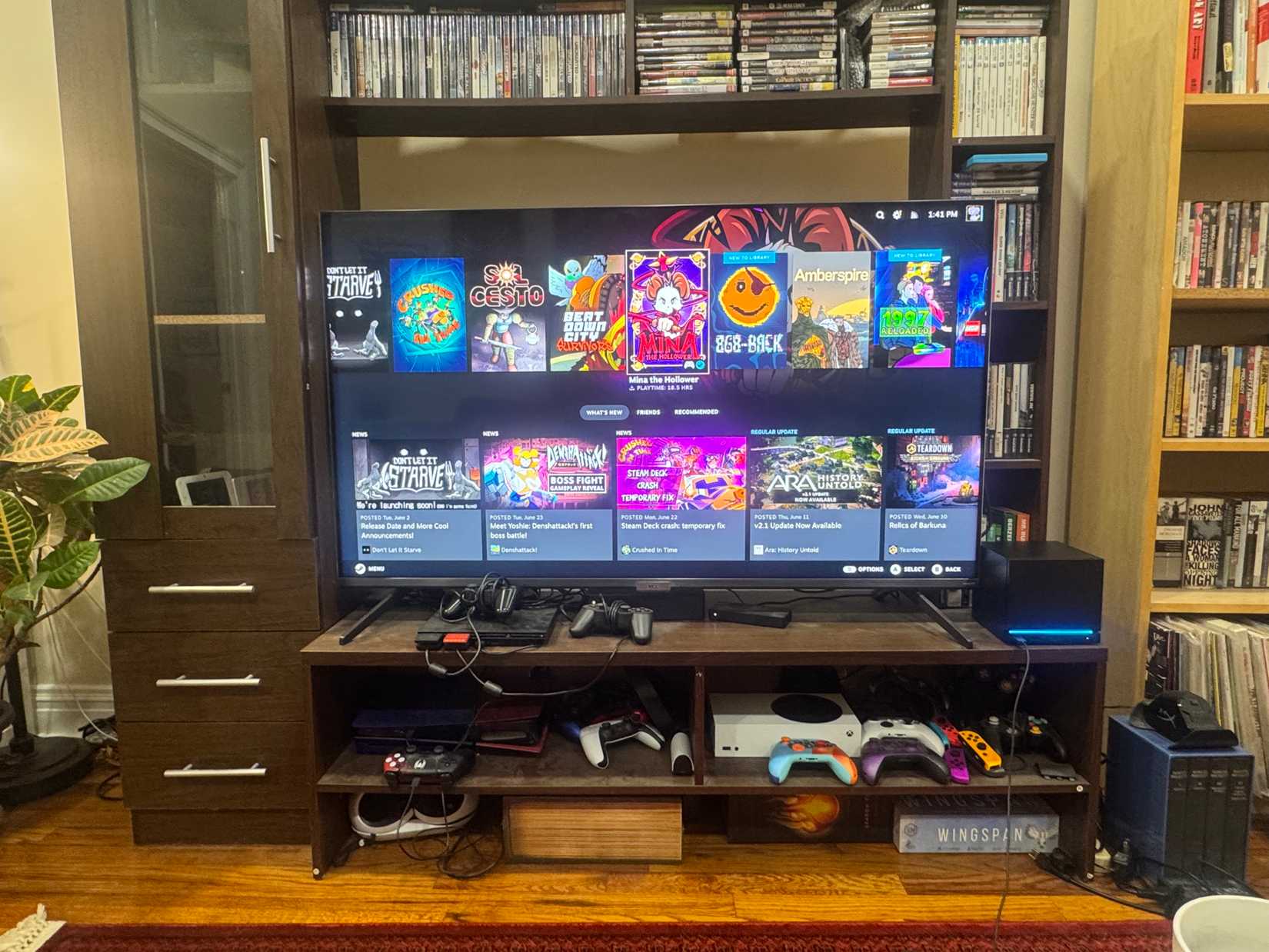 Image: Polygon
The Steam Machine leverages this cloud architecture just like any other PC, and it has proven its worth in my home repeatedly. Recently, I started the web sim Desktop Explorer on my TV, then effortlessly picked up where I left off on my Steam Deck while traveling. Conversely, I’ve started fast-paced roguelikes on the handheld, only to realize they feel better with a keyboard, prompting me to swap to the living room setup without missing a beat. It even allows for household flexibility; if my partner needs the TV, I simply grab my handheld and keep playing.
In a curious way, my current setup fulfills the promise the Wii U made years ago. Nintendo’s vision was to bridge the gap between living room and portable play, an idea the Switch later perfected. Valve is taking that philosophy to its logical extreme: as long as a device can run the Steam client, your library and progress are essentially untethered from static, aging hardware. You aren’t locked into a single box with a fixed lifespan.
When I go back to platforms like the Xbox Series X or PS5, I suddenly feel the weight of those limitations; I am firmly anchored to the television. Current solutions like the PlayStation Portal feel like fragmented, unreliable stopgaps. By pairing a Steam Machine with a Steam Deck, I have achieved a level of convergence that truly rivals the convenience of the Switch.
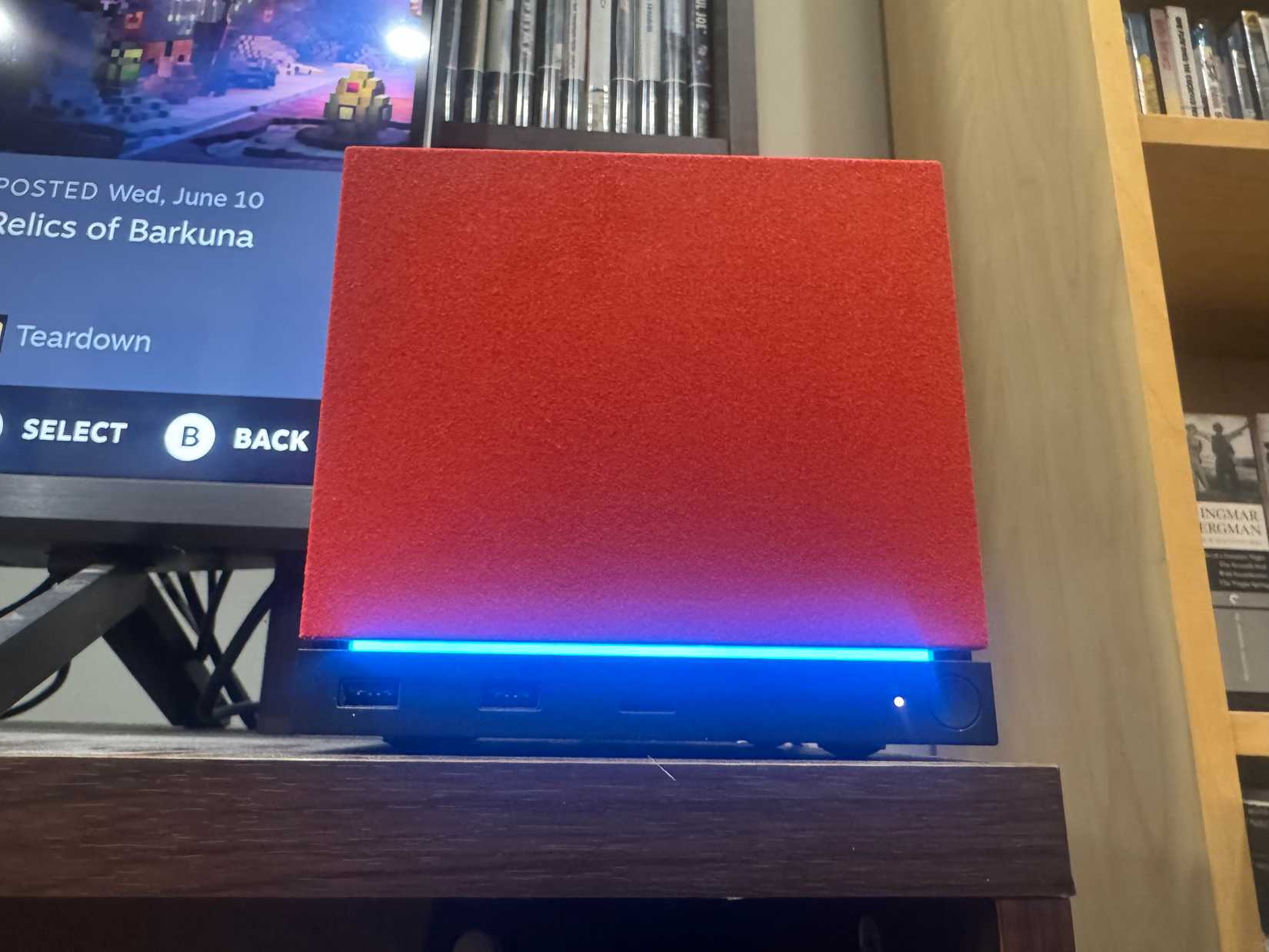 Image: Polygon
This brings me back to the central question of my review: what is the cost of convenience? It is easy to calculate the value of teraflops, but harder to quantify the value of a lifestyle. The flexibility provided by the Steam Machine has led me to shelf my other consoles in favor of this ecosystem. The ability to trial a game on the TV and migrate it to my handheld—or even a high-end desktop if the performance demands it—is a transformative shift that feels like the next evolution in gaming culture.
We likely haven’t reached the pinnacle of this trend yet. The Switch 2 will undoubtedly offer a more streamlined, “all-in-one” experience, though it remains to be seen if it can match the raw power and breadth of Valve’s library. For now, a truly unified handheld-desktop hybrid remains the “endgame.” Until that point arrives, my habits confirm that I will stick with the ecosystem that maximizes my access, provided Valve keeps my saves safe in the cloud.
Related articles
 Overwatch Plans Collaboration With Cyberpunk Edgerunners and Diablo IV Gets Witcher 3 Content
 Onimusha: Way of the Sword Debuts at Number One in Japan Chart
 Blizzard Announces 30th Anniversary Diablo Player Milestone
 Level-5 President Apologizes for AI Use in Game Presentation
 Blizzard Shifts Diablo 5 Formula to Mirror Dragon Age and Baldur’s Gate
 Could Marvel’s Wolverine Cost Sony a Top Nomination at The Game Awards Due to Low Scores
 Roblox Discloses Creator Earnings
 $400 Death Stranding 2 Sam Figure Features Typo