Say Goodbye to the Century’s Most Unexpected Sci-Fi Adventure Leaving Netflix

Looking back, I’m still struck by the baffling snub at the 87th Academy Awards. When the nominees for Best Animated Feature were announced, the list included Big Hero 6, The Boxtrolls, How to Train Your Dragon 2, Song of the Sea, and The Tale of the Princess Kaguya. While those are respectable films, the Academy notoriously overlooked the most audacious, hilarious, and visually inventive animation of 2014. With the film currently facing the indignity of departing Netflix’s library, there is no better time to revisit this modern animated classic.
Before its debut, The Lego Movie was unfairly maligned as a cynical, feature-length commercial for plastic bricks. In reality, the Danish toy giant was the hardest party to convince, wary of turning their heritage brand into a Hollywood spectacle. The spark came from producer Dan Lin, who witnessed his five-year-old son transforming two simple bricks into a pretend airplane. As he told The Hollywood Reporter in 2015, that moment of pure, unadulterated play was the seed of the entire project. He subsequently tapped Hotel Transylvania scribes Dan and Kevin Hageman to craft an adventure that would honor the spirit of that imagination.
Lego’s executives remained understandably cautious until Jill Wilfert, the company’s VP of licensing and entertainment, recognized the potential to imbue a film with the brand’s core values of creativity. Phil Lord and Christopher Miller were then brought on board to write and direct. Though they are now industry titans known for the Spider-Verse franchise, at the time they were primarily celebrated for the charm of Cloudy with a Chance of Meatballs. Even with their involvement, public skepticism lingered until the film’s February 2014 release. Once it hit screens, it was met with near-unanimous acclaim; critics praised its “brick-by-brick” visual panache, and the film eventually grossed an impressive $470 million against a $65 million budget.
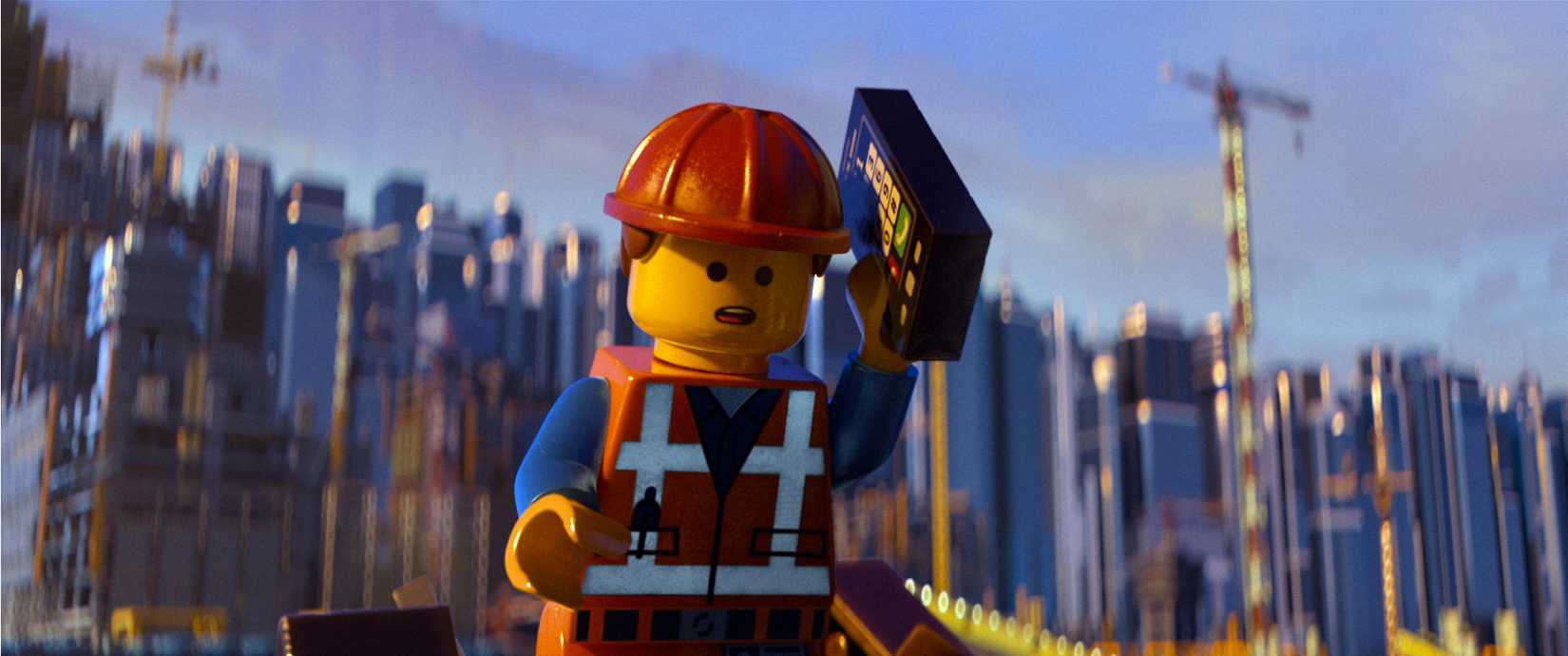
Image: Warner Bros/Everett Collection
Far from being a hollow product placement, The Lego Movie is a poignant meditation on the creative process. It follows Emmet Brickowski (Chris Pratt), an unremarkable “everyman” minifigure who rises to greatness by defying the rigid instructions of his world. The narrative’s genius lies in its shift in perspective: the world we inhabit is framed through the lens of a young boy playing in his basement. This explains the movie’s “child logic,” such as the absurdly impractical double-decker couch, which makes perfect sense to an eight-year-old even if it defies engineering standards.
The film elevates household objects into profound symbols. The “Kragle”—a tube of Krazy Glue—becomes the antithesis of creativity. It represents the impulse to fix and fossilize, transforming dynamic, modular toys into permanent, static statues. In this dynamic, the father (Will Ferrell), an obsessive adult collector, serves as the unintentional antagonist whose rigidity threatens the child’s imaginative freedom.
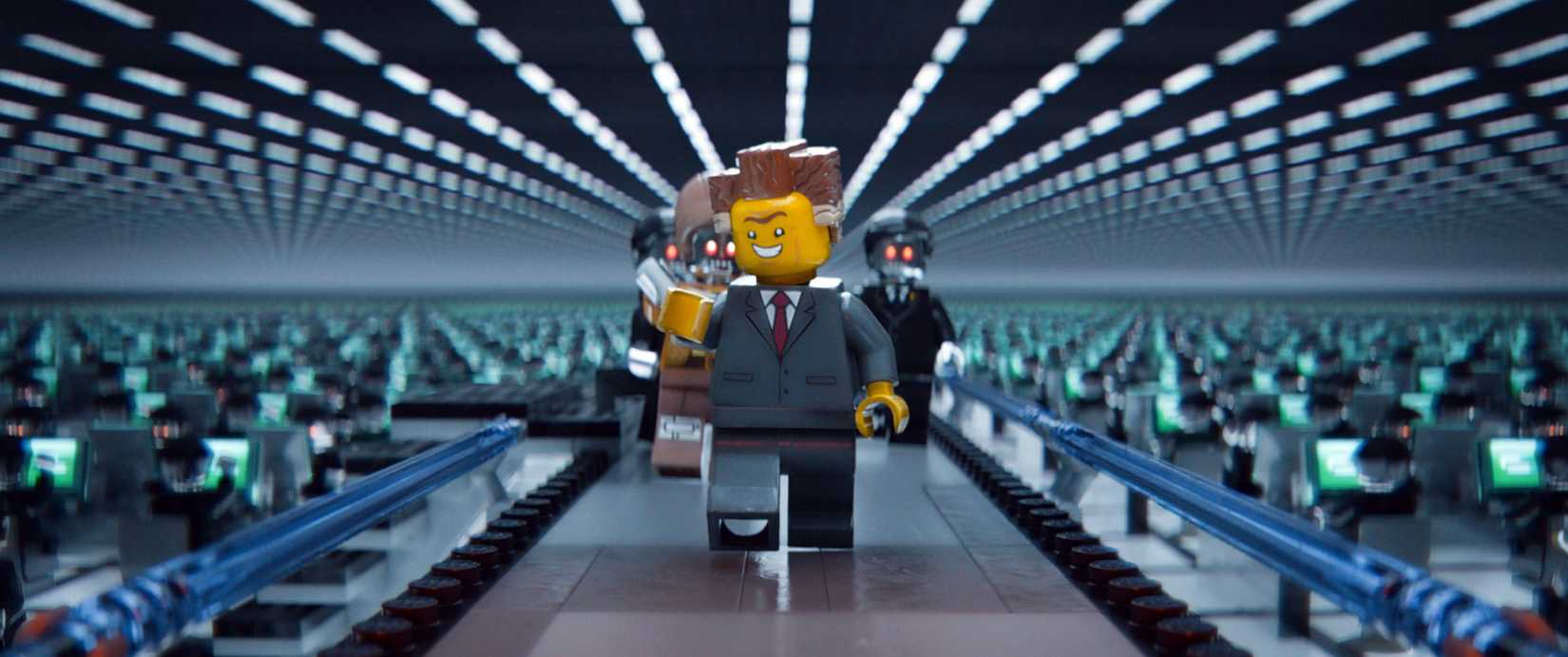
Image: Warner Bros/Everett Collection
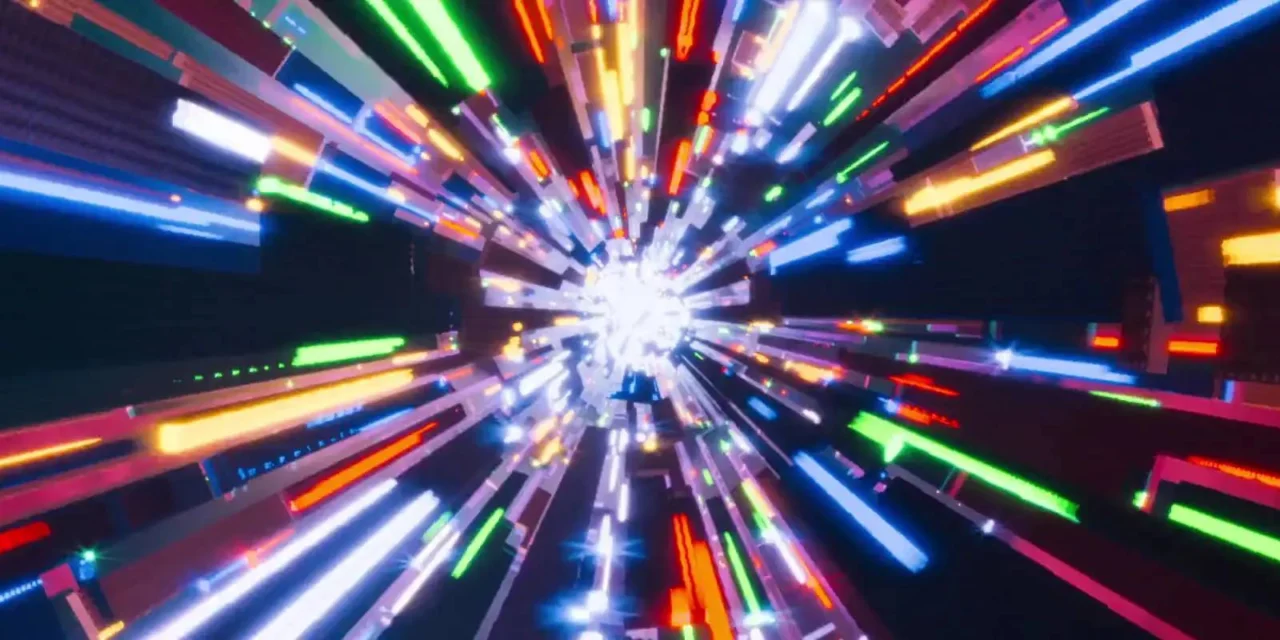
The film’s most enduring legacy, however, is its aesthetic. By rendering the entire universe—save for the live-action segments—in digital bricks, Lord and Miller achieved a tactile, stop-motion-inspired style that felt completely fresh. They treated their digital assets with the strict physics of plastic: water, explosions, and environments were all constructed from individual bricks. The ocean sequence is particularly striking; rather than resorting to standard CGI liquid effects, the filmmakers animated millions of individual blue bricks to mimic the movement of waves. It was a stylistic gamble that paid off, creating a look that felt authentically toy-like yet cinematic in scale.
Every creative choice was governed by the physical limitations of the product. Minifigures don’t bend at the elbow, and they don’t have facial micro-expressions. By adhering to these constraints, the animation team leaned into the charm of the medium, ensuring that even with the limitless power of CGI, the film felt grounded in the reality of what a kid could build at their kitchen table.
As Phil Lord noted in 2014, “There’s something about taking something really simple and trying to animate it with as much emotion as possible that is really appealing.” By honoring the bricks themselves, the filmmakers created a visually distinct masterpiece. It remains a hilarious, heartfelt triumph of animation that absolutely deserved more hardware than it received. If you have the chance, stream it before it vanishes—it is, in every sense of the word, a piece of art.
Source: Polygon
Related articles
 Nintendo Patent Details Game-Key Cards Functionality
 Rumor: AMD is Developing New Ryzen Z3 Chip for Gaming Handhelds
 PlayStation Creator Cites Modern Gaming Industry Problem
 Warner Bros. New Owners Will Retain DC Studios Leadership, Keeping James Gunn Safe
 Hot Toys Adds Interactive Tech to Robocop and RoboCain Figures From Robocop 2
 Creator of Heroes 3 Plays Remake and Shares Feedback
 John Boorman’s Excalibur Transcends Fantasy Genre 45 Years After Release
 Dead by Daylight Announces Collaborations with Diablo IV and Stranger Things in VHS-Style Trailer