Popular Deckbuilder Follows in Magic: The Gathering’s Footsteps With Lord of the Rings Adaptation
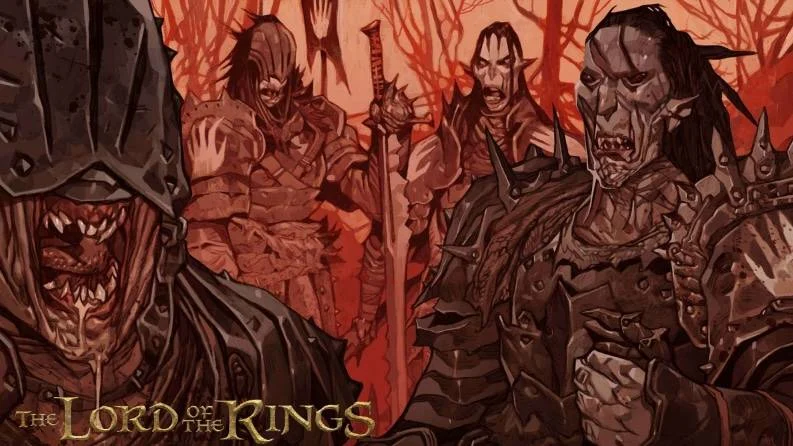
Before launching his hit deck-building franchise Ascension in 2011, Justin Gary cut his teeth as a professional Magic: The Gathering competitor. Now, having shepherded his original fantasy realm of Vigil through 17 expansions, Gary is pivoting toward a strategy popularized by Magic: external licensing. Much like Magic’s successful Tales of Middle-earth expansion, Stoneblade Entertainment is set to debut The Lord of the Rings: Ascension, with a Gamefound crowdfunding campaign launching this July.
“To be frank, any creator who has built a compelling fantasy world owes a debt to the legacy of The Lord of the Rings,” Gary remarked during an interview with Polygon. “When integrating an established IP into a game engine, I couldn’t conceive of a more perfect marriage. I believe Magic reached that same conclusion for identical reasons.”
Gary’s interest in a Middle-earth iteration of Ascension predates the acquisition of the license. He essentially mapped the base game’s four primary factions—Lifebound, Enlightened, Void, and Mechana—onto the racial archetypes of elves, hobbits, men, and dwarves. The core gameplay loop remains intact: players draft powerful heroes and strike down monstrous foes appearing in a shared central row. With Tolkien’s vast bestiary at his disposal, Gary has ample material for these encounters, even reintroducing a classic mechanic where defeating specific monsters grants a “trophy,” perfectly capturing the spirited rivalry between Legolas and Gimli.
 Image: Stoneblade Entertainment
To honor the narrative weight of fellowship, corruption, and temptation—pillars established in acclaimed titles like War of the Ring and Duel for Middle-earth—Gary has overhauled the game’s risk-reward systems. Players will accumulate corruption whenever an “Eye of Sauron” card emerges in the center row, ultimately penalizing their final score. However, players are constantly baited by powerful cards that grant immediate tactical advantages at the cost of rising corruption levels.
“We’ve designed characters to reflect these internal struggles,” Gary noted. “Take Boromir: he’s an exceptional warrior, but once he hits a corruption threshold of nine, you’re granted the ability to sacrifice him to clear the entire center row of monsters. We want these narrative-driven beats to feel earned and authentic to the source material.”
Beyond competitive play, the game supports a cooperative mode where up to four players unite against a deck piloted by Sauron. By working as a unified Fellowship, players must complete specific objectives before being overwhelmed by corruption. The product will roll out in three distinct installments corresponding to the original trilogy, designed to stand alone or be combined into a massive “Saga Collection,” mirroring the scope of the Shards of Infinity expansions.
 Image: Stoneblade Entertainment
Stoneblade holds the rights to The Hobbit as well, leaving the door open for future expansions. While Magic: The Gathering is also diving into The Hobbit on August 14, Gary is unbothered by the competition. He views his project as a complementary entry point for those already enchanted by Middle-earth.
“Ascension was born in the downtime between rounds at Magic tournaments because the mechanics inherently resonate with that player base,” Gary explained. “The more excitement Magic generates for Lord of the Rings content, the more likely those players are to explore our version. A $50 price point for a complete, infinitely replayable experience is a modest investment compared to the typical spend on a Magic set.”
The upcoming crowdfunding event will feature a deluxe collector’s edition, complete with premium components and packaging designed to mimic a bookshelf aesthetic. Shipments for backers and retail distribution are slated for early 2028.
Source: Polygon
Related articles
 CDPR Releases First Patch for The Witcher 3 Remaster to Align Console Version with PC
 PUBG: Black Budget Development Cancelled Before Release
 Former Halo Studios Art Director Claims Studio Is Headed by Convicted Criminal
 X-Men Star Discusses Approach to Playing MCU Professor X
 Kena: Scars of Kosmora Release Delayed to 2027
 Critics Praise Gears of War E-Day as Best in the Series
 Reports Indicate Naughty Dog is Developing New Uncharted Game Led by The Lost Legacy Director
 Helldivers Movie Delayed to 2028 with Alan Ritchson Starring