Pokémon GO Regional Exclusive Pokémon List: 2025 Edition
Regional exclusive Pokémon in Pokémon Go are unique creatures restricted to specific geographic locations across the globe. To secure these entries for your Pokédex, you must either travel to these regions personally or connect with international players to arrange trades. This guide serves as your comprehensive reference for locating every regional exclusive currently in the game.
For any dedicated collector aiming to “catch ‘em all,” regional limitations are the ultimate challenge. Fortunately, Niantic frequently hosts global events that occasionally make these rare spawns accessible worldwide, so even if a trip to Australia for a Kangaskhan isn’t on your immediate horizon, there is always a chance to complete your collection.
Latest Update (June 23): We have refreshed this guide to include details on Squawkabilly and its specific regional color variants.
Pokémon Go Regional Exclusives: Full Breakdown
While it is thematic that a tropical creature like Tropius resides in equatorial zones or that the kangaroo Pokémon Kangaskhan is native to Australia, the roster of regional exclusives is constantly evolving. Staying informed on where each species spawns is essential for any aspiring Pokémon Master.
The following list organizes these Pokémon by their original generation and corresponding in-game region. Keep an eye out for the ✨ emoji, which denotes species that currently have a shiny variant available.
Kanto

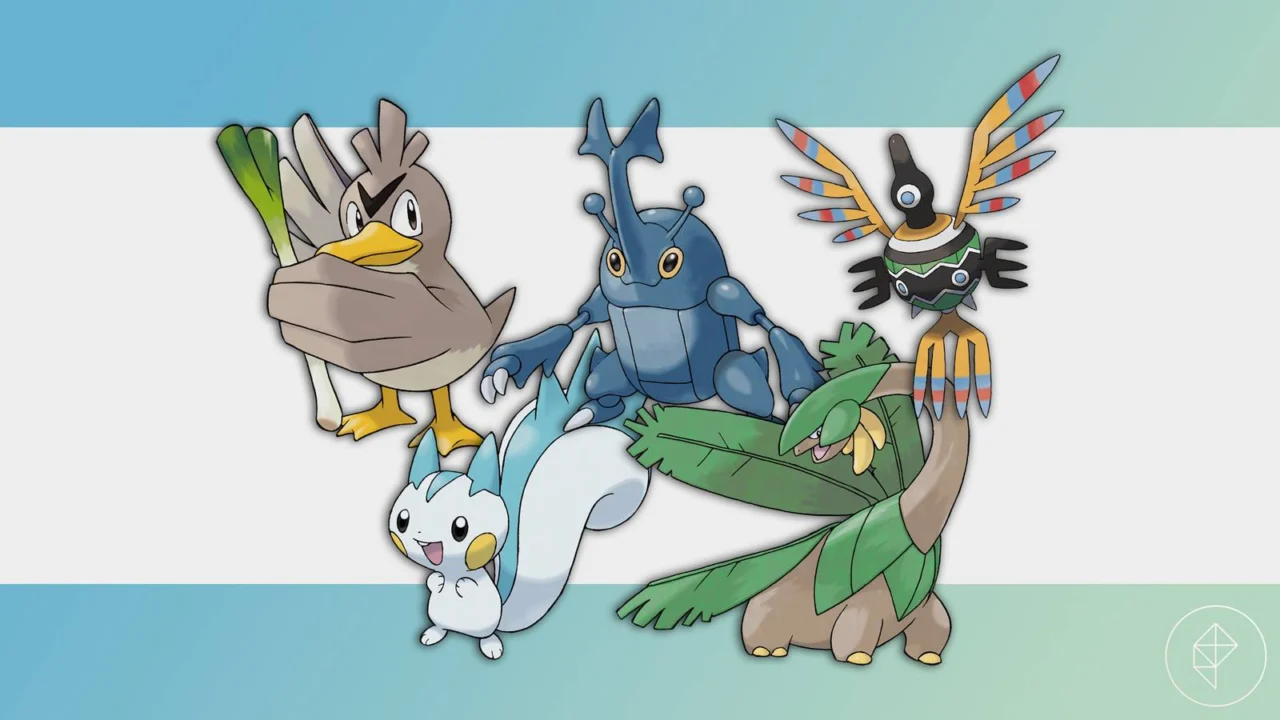
Graphic: Julia Lee/Polygon | Source images: Niantic
- Farfetch’d: Eastern Asia
- Kangaskhan: Australia
- Mr. Mime: Europe
- Tauros: North America (Southern Canada, United States, and Mexico)
Note: Both Farfetch’d and Mr. Mime feature Galarian forms that are available globally and share the same Pokédex entry as their regional counterparts.
Johto
- Heracross: South America, Central America, Mexico, and portions of southern Florida and Texas
- Corsola: Equatorial regions
Hoenn
- Volbeat: Europe, Asia, Australia
- Illumise: North America, South America, Africa
- Torkoal: Western/Southeast Asia
- Tropius: Africa, Middle East, Mediterranean
- Relicanth: New Zealand, Fiji, New Caledonia
Sinnoh
- Pachirisu: Canada, Russia, Alaska
- Mime Jr.: Hatches from Eggs obtained at PokéStops/Gyms in Europe
- Chatot: Southern Hemisphere
- Carnivine: Southeastern United States
- Uxie: Asia-Pacific
- Mesprit: Europe, Middle East, Africa, India
- Azelf: North, Central, and South America; Greenland
Unova
- Pansage / Simisage: Asia-Pacific
- Pansear / Simisear: Europe, Middle East, Africa, India
- Panpour / Simipour: The Americas and Greenland
- Throh: North/South America, Africa
- Sawk: Europe, Asia, Australia
- Maractus: Southern US, Mexico, Central America, Caribbean, South America
- Sigilyph: Egypt and Greece
- Bouffalant: New York City metropolitan area
Kalos
- Hawlucha: Mexico
- Klefki: France
Alola
- Comfey: Hawaii
- Buzzwole: North/South America, Greenland
- Pheromosa: Europe, Middle East, Africa, India
- Xurkitree: Asia-Pacific
- Celesteela: Southern Hemisphere
- Kartana: Northern Hemisphere
- Stakataka: Eastern Hemisphere
- Blacephalon: Western Hemisphere
Galar
- Stonjourner: United Kingdom
Migratory Pokémon
Some species are classified as “migratory.” While they function as regionals, their spawn locations rotate periodically. Current locations include:
- Seviper: North/South America, Africa
- Zangoose: Europe, Asia, Australia
- Solrock: Eastern Hemisphere
- Lunatone: Western Hemisphere
- Heatmor: Europe, Asia, Australia
- Durant: North/South America, Africa
Regional Form Variations
Beyond standard regional spawns, several Pokémon feature forms tied to your real-world location. While Furfrou requires you to travel or trade to collect its various regional trims, Vivillon patterns are tied to the locations of the gifts you receive from friends.
The following Pokémon have forms based on your location, though they all register under a single Pokédex entry:
- Shellos (West/East Sea): Split by the Prime Meridian.
- Basculin (Red/Blue Striped): Split by Eastern/Western hemispheres.
- Flabébé / Floette / Florges: Blue (Asia-Pacific), Red (Europe/Middle East/Africa/India), Yellow (Americas/Greenland).
- Oricorio: Pa’u (Islands), Pom-Pom (Americas), Sensu (Asia-Pacific), Baile (Europe/Middle East/Africa).
- Paldean Tauros: Combat (Iberia), Blaze (Eastern Hemisphere), Aqua (Western Hemisphere).
- Tatsugiri: Curly (Europe/Middle East/Africa), Droopy (Americas), Stretchy (Asia-Pacific).
- Squawkabilly: Green (Eastern Hemisphere), Blue (Western Hemisphere).
Note: The White-striped Basculin is not regional and is found via Routes. Additionally, some species (like Flabébé) have variants that appear globally.
Source: Polygon
Related articles
 Dozens of New Games Scheduled for Release on Xbox This Week
 Microsoft to Release Physical Edition of Forza Horizon 6 for PS5 with a Catch
 Modder Enables PS5 to Run PS2 Disc Games
 Dungeon Crawler Carl Author Settles Audiobook Debate
 Gears of War: E-Day Suffers DDoS Attacks Amid Backlash From Activists
 Johnny Flynn Discusses His Approach to Lucius Malfoy in Upcoming Harry Potter Series
 First Xbox Game Pass Games for November Revealed
 Former Sony Head Says He Ignored Leadership Orders to Benefit PlayStation