Marvel’s Gorgeous New Game Can’t Overcome Its Hulk-Sized Problems
The Marvel vs. Capcom franchise holds a legendary status in fighting game history. Its cultural footprint remains so vast that even the missteps of Marvel vs. Capcom: Infinite couldn’t extinguish fan passion, with hardcore enthusiasts still yearning for a proper contemporary sequel. Consequently, Marvel Tokon: Fighting Souls faced a monumental uphill climb from day one. How could any new Marvel tag-team fighter possibly measure up to the pixel-perfect precision of classic Magneto infinites and iconic tournament moments that continue to inspire players decades later?
While press review codes were withheld prior to launch—leaving us eager for deeper hands-on time—it quickly becomes evident that approaching Marvel Tokon with the ghost of MvC in mind does more harm than good. Yes, familiar faces like Doctor Doom, Spider-Man, and Storm return to the roster in a 2D tag format, but mechanically, the pacing stands worlds apart from that older, breakneck era.
Marvel Tokon boldly charts its own course and ultimately demands to be evaluated on individual merits. Even viewed through an objective lens, however, the competitive package stumbles in notable ways. While boasting a breathtaking visual style and a surprisingly compelling narrative campaign, sluggish baseline mechanics and severe PC optimization hurdles prevent it from becoming the universal darling purists hoped for.
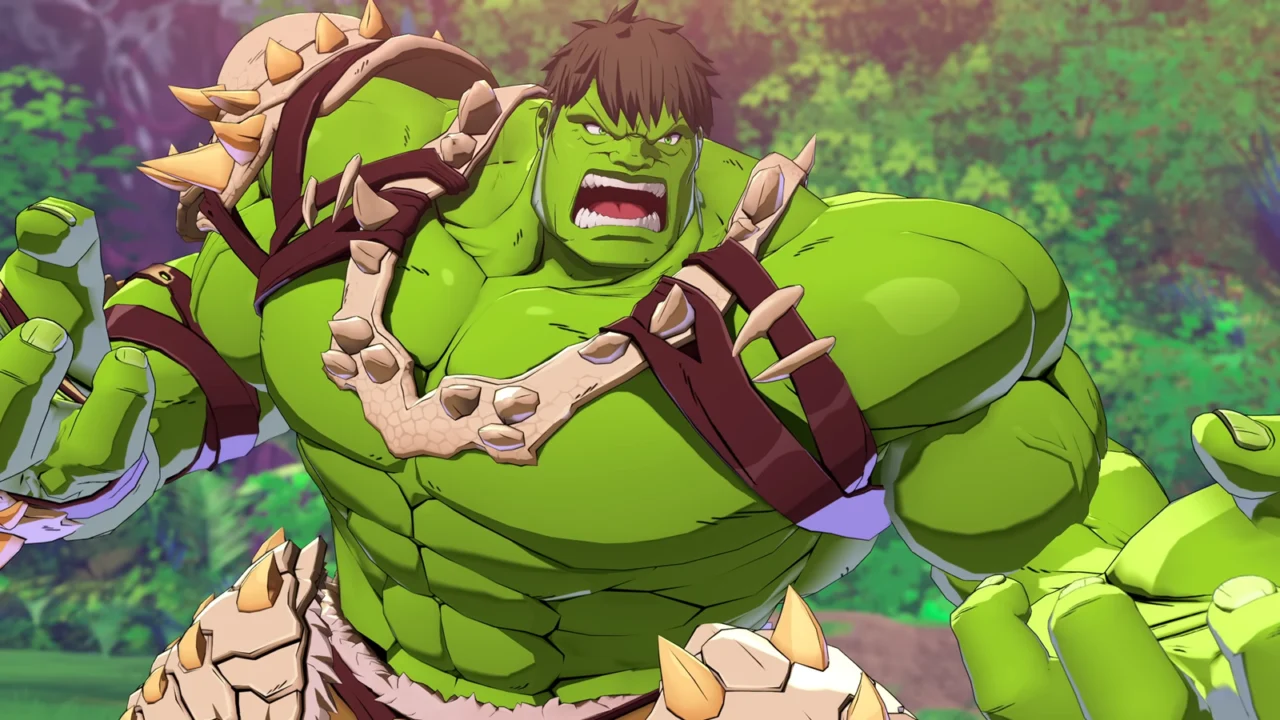
That artistic ambition deserves immense praise. Developer Arc System Works—celebrated for Guilty Gear, Dragon Ball FighterZ, and BlazBlue—delivers a masterclass in aesthetic presentation. Classic comic book foundations receive a sleek, modern anime overhaul (with the notable exception of Danger receiving a heavy stylistic pivot). The animation work truly shines as heroes and villains tear across the screen, leaving stylistic Ben-Day dot afterimages in their wake, blending retro charm with cinematic, screen-clearing spectacles. Deadpool serves as a stellar ambassador for this creative vision, offering a relentless barrage of fourth-wall-breaking Easter eggs nodding to everything from Super Smash Bros. to Street Fighter: The Movie.
This stellar presentation extends directly into the story mode, which leaves a strong initial impression. While leaning on a traditional tournament narrative arc, acclaimed comic writer Kieron Gillen infuses the script with genuine character-driven moments. The premise pits Earth’s elite champions against the cosmic powerhouse known as the Champion of the Universe in a high-stakes gauntlet where failure means planetary eradication. Divided into five distinct storylines featuring squads of four, the tale unfolds through a creative blend of motion comics and fully realized anime cinematics. Though my time here remains limited compared to the extensive multiplayer betas, the narrative framework holds immense promise.
Unfortunately, a massive dark cloud hangs over both single-player and multiplayer experiences: the current Windows PC port is in a rough state. Optimization leaves much to be desired, resulting in persistent frame drops that outlast beta-era teething pains. Even when running robust hardware like an RTX 3080, maintaining a locked 60 FPS proves nearly impossible. Early community feedback indicates that high-end rigs are similarly plagued by unavoidable micro-stutters.
These technical shortcomings bleed directly into online matchmaking. Due to the game’s netcode architecture, encountering an opponent struggling with performance dips introduces stuttering across the match, regardless of connection quality. Such widespread technical friction explains the dismal user reviews currently dominating Steam. While rumors point toward Sony’s anti-cheat implementation and forced PlayStation Network integration as the culprits behind the subpar PC performance relative to the PS5 version, players must wait to see if official patches arrive.
Even on console, however, Marvel Tokon feels philosophically divided. It tries desperately to bridge the gap between newcomers and fighting game veterans without fully satisfying either demographic. Core movement feels deliberately restrained—presumably to prevent beginners from feeling overwhelmed compared to frantic titles like Dragon Ball FighterZ. Dashes lack urgency, and attacks carry heavy startup and recovery frames. Simultaneously, the four-on-four tag format encourages chaotic projectile spam and oversized hitboxes, enabling high-level competitors to engineer oppressive, unorthodox mix-ups.
The result creates an awkward identity crisis: it lacks the deliberate, tactical grounding of beginner-focused titles like Granblue Fantasy Versus, yet fails to deliver the high-velocity expression of traditional air-dash fighters. Anyone who bounced off modern Arc System Works releases like Guilty Gear Strive or DNF Duel will likely encounter similar friction here.
Furthermore, blockstring pressure frequently feels overly dominant, offering defenders scant room to retaliate. While the “Crossover” mechanic allows players to spend assist meter to push attackers away, aggressors can respond in kind—a tactic elite players will undoubtedly master immediately—to extend their onslaught. Universal defensive options like the Assemble Counter may eventually offer reliable relief, but right now, matches often devolve into extended periods of passive blocking while waiting for a turn to play.
Subscribe for Newsletter Insights on Marvel Tokon
Marvel Tokon may very well blossom over time as the community unlocks the true depth of its tag mechanics. Evaluated on its current state, however, it struggles to establish a cohesive identity. Between design choices that alienate traditionalists and debilitating performance bugs on PC, this rollout has been far from heroic.
Fans quickly found elements to both celebrate and critique in the upcoming fighter.
Source: Polygon
Related articles
 Rockstar Reminds GTA 6 Actors Not to Discuss Roles Following Leak
 Shift Up Head Apologizes for AI-Generated Stellar Blade Blood Rain Clip
 Capcom Announces New Sales Milestones for Pragmata and Phoenix Wright Trilogy
 GTA VI Developers Issue New Modding Rules Banning Story Changes and Crossover Content
 Starfield Reaches 200 Million Mod Downloads on Nexus Mods
 Xbox Series X Runs PlayStation 5 Games Via Emulator
 Enthusiast Ports GTA 3, Vice City, and Liberty City Stories to Nintendo 3DS
 Daughter Asks Rockstar to Let Terminally Ill Father Play GTA VI Before Release