
Magic is abandoning a 34-year tradition in 2027 — and 6 more takeaways from MagicCon
During MagicCon: Amsterdam 2026, Wizards of the Coast officially revealed the exciting roadmap for its 2027 Magic: The Gathering expansions. The upcoming lineup features a nostalgic homecoming to Kamigawa, an exploration of a hidden piece of the game’s original realm, and an entirely submerged oceanic environment. Although players still have three notable releases to look forward to this year—Reality Fracture, The Hobbit, and Star Trek—our exclusive conversations with the developers have uncovered fascinating details about the trading card game’s long-term trajectory. Here are seven major revelations regarding the 2027 Magic releases, ranging from the temporary benching of a foundational mechanic to unexpected cultural influences and clues about the next major crossover.
Kamigawa: Titanbreach Monsters Adhered to a Whimsical Design Rule
Kamigawa remains a beloved setting that the creative team continually uses to push genre boundaries, successfully transitioning from traditional Japanese mythology to cyberpunk aesthetics in Kamigawa: Neon Dynasty. For Kamigawa: Titanbreach, developers are drawing heavy inspiration from classic kaiju cinema, showcasing epic clashes where mech pilots battle colossal beasts originating from the plane of Ikoria.
“During the initial conceptualization for the set, we made a conscious choice that every massive monster needed to be realistically proportioned so a person could theoretically fit inside them,” explained narrative lead Roy Graham. “Every creature had to feel like it could be translated into a physical rubber suit.”
Omenpaths Collide Ikoria Directly into Kamigawa
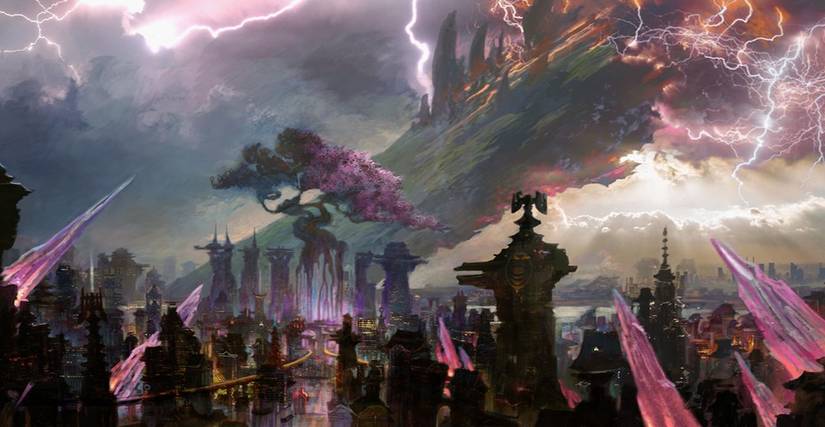
Interplanar portals known as Omenpaths were first introduced in the 2021 set Kaldheim, later becoming central to the storyline when the Phyrexians utilized the Invasion Tree during March of the Machine. The sudden collision of Ikoria into Kamigawa highlights how these pathways will drive the conflict in the upcoming narrative arc.
“The past three years have focused on gradually integrating Omenpaths into the multiverse while evaluating the structural consequences for both worldbuilding and card design,” Graham noted. “Following Reality Fracture, we are finally taking the safety gloves off for expansions like Titanbreach.”
It appears that once the monumental clash of Reality Fracture concludes, the enduring presence of Omenpaths will continue to destabilize the multiverse—frequently resulting in crises far more catastrophic than previously witnessed.
Nauctis Makes History as the First Standard Set Without Flying

As one of the game’s foundational mechanics, flying has been a staple of nearly every expansion, with the sole exception of the 1999 beginner-friendly set Portal Three Kingdoms, which temporarily substituted it with Horsemanship. However, because Nauctis: The Sunken Realm unfolds entirely beneath the waves, head designer Mark Rosewater concluded that traditional aerial threats like seagulls or winged fish simply did not fit the environment.
“Evasion certainly exists within the set; it just manifests differently than flying,” Rosewater explained during a press briefing. “We engineered a fresh alternative that feels organic, thematic, and entirely suited for an underwater domain.”
While Magic has previously explored alternative evasion keywords like landwalk and shadow, Nauctis caters directly to enthusiasts of marine life. Consequently, designers are adapting concepts from actual oceanography. This could introduce camouflage mechanics to mirror octopuses and flounders blending into their surroundings, potentially balanced by mechanics reflecting how aquatic species detect hydrodynamic movement.
Nauctis Sparks a Fresh Narrative Arc and Introduces a New Antagonist
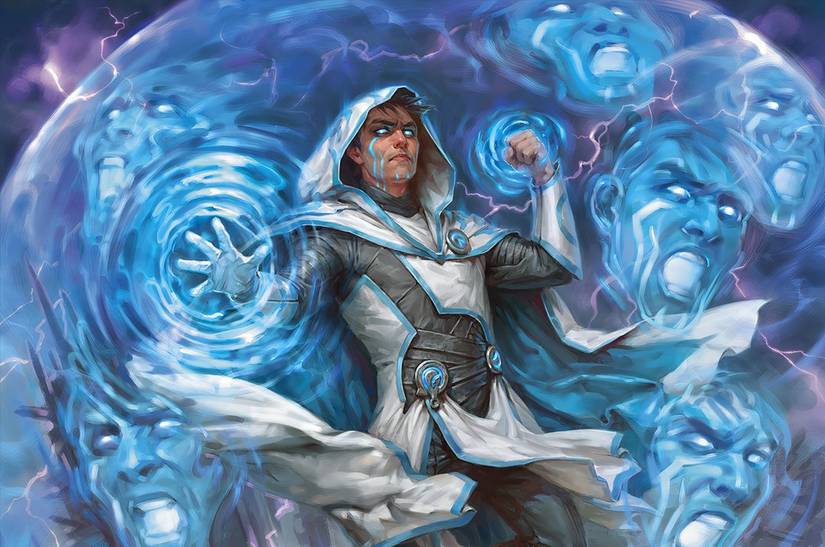 Image: Wizards of the Coast
The impending release of Reality Fracture—which portrays Jace’s allies striving to prevent him from rewriting reality—will conclude the multi-year storyline that commenced in September 2023 with Wilds of Eldraine. Following this conclusion, Nauctis will inaugurate a brand-new narrative arc projected to span two to four years.
“Surpassing Jace presented a tremendous creative hurdle in terms of landing the narrative airplane,” Graham admitted. “While I cannot divulge specifics regarding the next overarching threat, I believe Magic is primed for an unprecedented antagonist. It’s a force players haven’t encountered before, yet it possesses profound roots in the historical lore of the multiverse.”
Remarkably, this upcoming villain might originate entirely outside known planes. By depicting Jace as he forces an artificial reality into being, Wizards could finally unveil the mysterious entities dwelling within the Blind Eternities—and demonstrate the catastrophic consequences when that interdimensional fabric fights back. This narrative direction also sheds light on why the studio experimented with cosmic themes in 2025’s Edge of Eternities.
Wizards Employs Rigorous Collaboration to Authentically Capture Zhalfir’s Afrofantasy
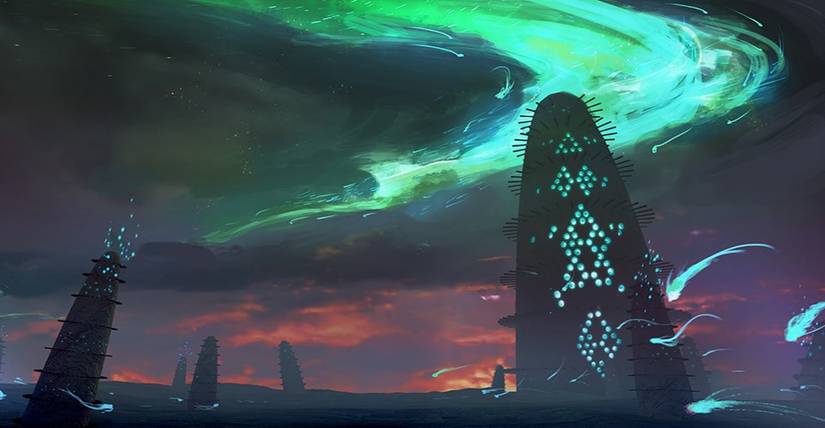 Image: Wizards of the Coast/Bimpe Aliu
The production cycle for Zhalfir required a full year longer than standard in-universe expansions, largely because Wizards of the Coast integrated dedicated cultural consultants into the design framework for the first time.
“When constructing Afrofantasy settings, creators often inadvertently reduce the continent down to a single monolith, overlooking the staggering diversity of regional cultures, mythologies, and inspirations,” Graham stated. “Embracing that rich tapestry was crucial, but it naturally demanded a significant escalation in behind-the-scenes effort to ensure respectful representation.”
To achieve this authenticity, developers partnered closely with renowned Afrofantasy authors and creative advisors to shape worldbuilding elements that accurately reflect various African and diasporic traditions, encompassing Caribbean, North African, and Egyptian influences. Meanwhile, the illustration team prioritized diverse character designs, incorporating varied hairstyles and physiological traits.
“There is a lingering misconception within certain online circles that cultural consultants act merely as censors blocking creative freedom,” Graham emphasized. “That perception couldn’t be further from our collaborative reality. They served as invaluable sources of inspiration, encouragement, and directional expertise, enabling us to take bolder risks and deliver a vastly superior expansion.”
A Veteran Character Steps Out of Retirement
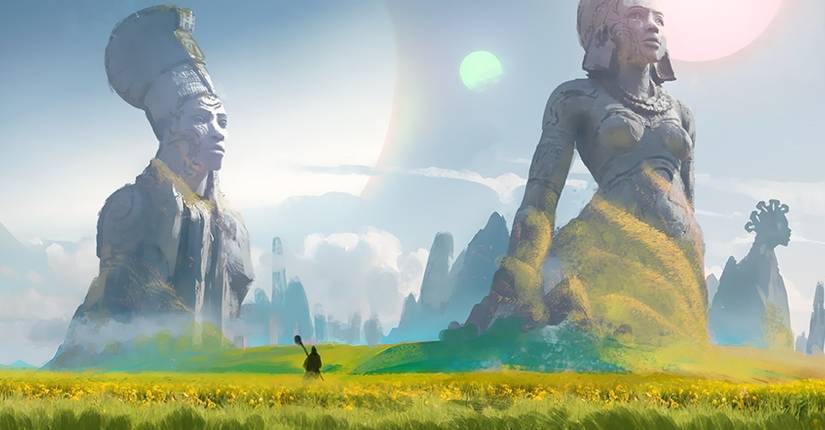 Image: Wizards of the Coast/Jose Vega
Teferi has been an integral fixture of Magic‘s narrative since the 1996 release of Mirage, an expansion that introduced both the planeswalker and his native realm of Zhalfir. Initially mentored by Urza to safeguard Dominaria from Phyrexian forces, Teferi has subsequently appeared across numerous iconic sets, including War of the Spark, Innistrad: Midnight Hunt, and Ravnica Remastered. Having previously manipulated time and confronted formidable entities like Nicol Bolas and the demon Belzenlok, his journey has been legendary.
Teferi remained isolated from his homeland for over three centuries following its phase-out, ultimately rediscovering the nation prior to the New Phyrexian Invasion and successfully phasing it back into reality to supplant New Phyrexia. His citizenry, having rigorously trained to combat the Phyrexians, proved vital in defending the broader multiverse. Following the exhaustion of his spark in the aftermath of the conflict, Teferi embraced a well-deserved retirement.
“He will officially return in Zhalfir,” Graham revealed. “Thanks to the Omenpaths, he is finally able to revisit his homeland and witness how its culture evolved in isolation outside the multiverse. Naturally, it wouldn’t be in his character to stay out of trouble when a new crisis arises.”
The Upcoming Marvel Crossover Shifts Away From New York City
 Image: Wizards of the Coast
Although Wizards has yet to officially outline its 2027 Universes Beyond schedule, a subsequent Marvel collaboration remains highly probable given their ongoing multi-year partnership, which previously yielded Spider-Man in 2025 and Marvel Super Heroes in 2026. However, during Hasbro’s latest quarterly financial earnings call, CEO Chris Cocks offered a notable hint: “Regarding our Universes Beyond partnerships slated for next year, they will likely lean closer to traditional fantasy—and I doubt any of them will be situated in New York City, especially considering direct feedback we’ve received from fans.”
Given that both the Spider-Man expansion and the March release of the Teenage Mutant Ninja Turtles Universes Beyond set heavily emphasized metropolitan New York settings, and with prominent X-Men largely missing from Marvel Super Heroes, Cocks’ statement suggests players won’t be visiting Xavier’s School for Gifted Youngsters anytime soon. Instead, it is reasonable to expect upcoming installments to focus heavily on Marvel’s mystical and supernatural pantheon, potentially spotlighting figures like Doctor Strange, Ghost Rider, and Moon Knight.
Source: Polygon
Related articles
 Danganronpa 2×2 System Requirements Include RTX 4070 and 32 GB RAM
 Genshin Impact Version 7.1 Livestream Codes
 Director Na Hong-jin Discusses Transition from Slow-Burn Horror to Monster Movie Hope
 Set Photos From The People v. Gorilla Grodd Hint at King Solovar Appearance
 Cosplayer Portrays Sniper Wolf From Metal Gear Solid
 Ace Combat 8 Developers Are on a Mission to Create the Perfect Clouds
 Developers of Moss Shut Down Studio Despite Cross-Platform Release
 Rockstar Documents Reference 32-Player Limit for GTA VI Online