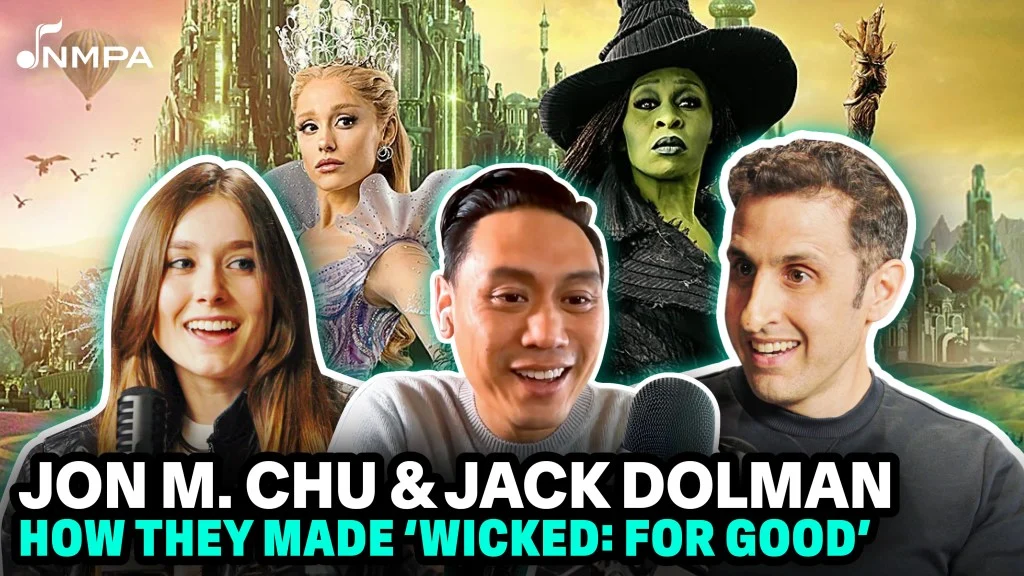
Jon M. Chu on New Wicked’s Music and Ariana Grande & Cynthia Erivo’s First‑Ever Duet of “For Good”: “This Is History”
Jon M. Chu and Jack Dolman on Bringing Wicked to the Screen: Live Vocals, New Songs and the Art of Splitting a Musical
How the director and supervising music editor collaborated with Stephen Schwartz, Ariana Grande and Cynthia Erivo to expand Wicked’s story for film.

After adapting the Broadway phenomenon Wicked into a blockbuster last fall—starring Ariana Grande and Cynthia Erivo—director Jon M. Chu and supervising music editor Jack Dolman return this month with the sequel, Wicked: For Good. The filmmakers faced the complex task of reimagining the musical’s second act so it stands both as a continuation and as a film in its own right.
Splitting the story into two films introduced editorial and musical challenges. To give the second installment its own emotional depth, Chu and Dolman collaborated with composer Stephen Schwartz to create two original songs for the film’s leads: “The Girl in the Bubble,” performed by Grande, and Erivo’s “No Place Like Home.”
Filming with live vocal performances added another layer of complexity. Choosing to capture the singing on set rather than relying on pre-recorded tracks demanded inventive post-production techniques to assemble performances that are both sonically polished and visually authentic.
Chu brings considerable experience with music-forward cinema—he previously directed In the Heights and several films in the Step Up franchise, and worked on Justin Bieber’s Never Say Never—skills that informed his approach to staging, choreography and the musical rhythm of Wicked: For Good.
Chu and Dolman joined Billboard’s new music-industry podcast, On the Record with Kristin Robinson, to discuss adapting the show’s songs for film, developing new material with Stephen Schwartz, and what they learned working with artists like Grande, Erivo and Lin-Manuel Miranda. Below is an edited excerpt from that conversation.
Listen to the full episode on YouTube, Spotify or Apple Podcasts here, or watch the clip below.
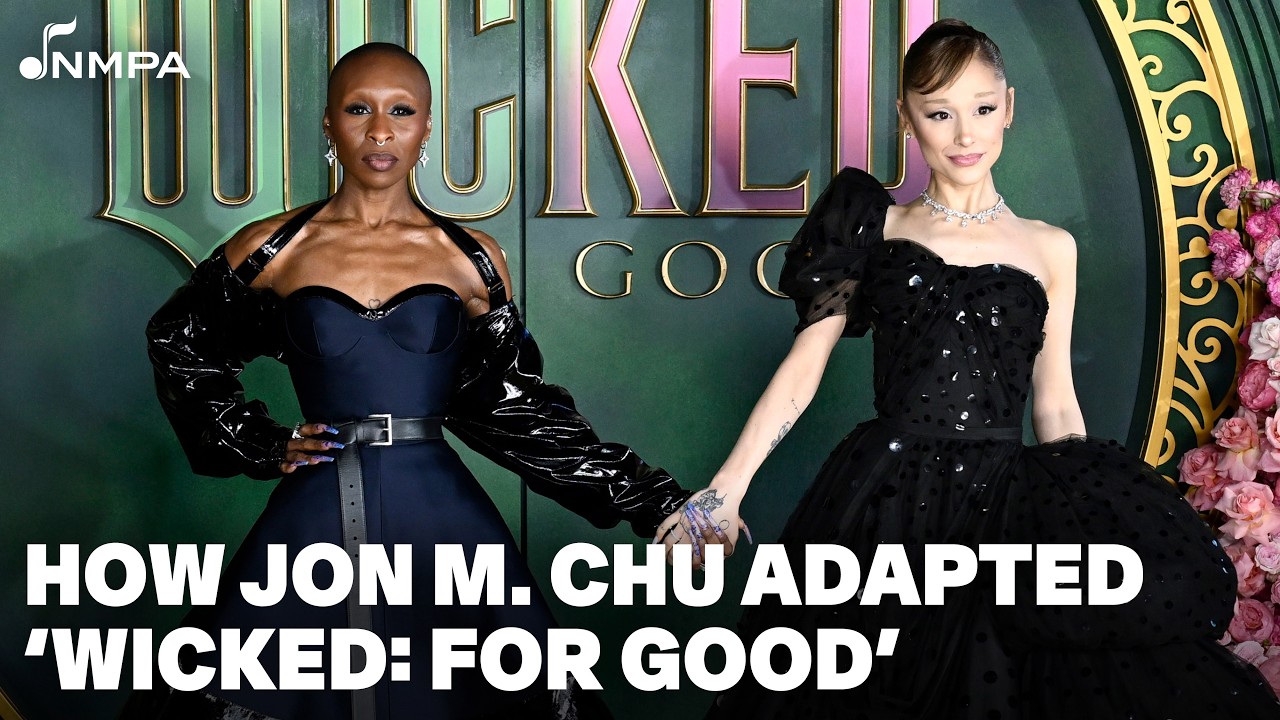
Q: There are two new songs in Wicked: For Good that weren’t in the stage show. How did you work with Stephen Schwartz so those additions felt like part of the original score?
Jon M. Chu: Stephen was generous and pragmatic about expanding the material. Splitting the film gave us the space to preserve more of what made Wicked special—without that breadth, too many moments would be cut. By creating new songs, we could deepen character arcs in ways the stage version doesn’t always have time for. Stephen’s first instinct is always story and character; melody follows the dramatic need, which made him an ideal partner for this process.
Q: Was there a moment when a new song crystallized what you needed emotionally for these characters?
Chu: Yes. We realized there were gaps—moments when we needed to lean in on Elphaba’s loneliness or on Glinda’s decision to break out of her bubble. Stephen responded quickly, sending ideas and voice memos. That immediacy helped us find songs that truly resonated with the characters’ inner lives.
Q: Jack, how much fixing or studio re-recording was required after capturing so much singing live on set?
Jack Dolman: Surprisingly little. We had exceptional performances from Ari and Cynthia—alternate takes often contained different vocal nuances we could use. Rather than replacing a live performance, we were able to curate moments: a single vowel or a breath could change the emotional focus of a scene. Working with singers at that level is an editor’s dream.
Q: Jon, when a shot’s best visual take differs from its strongest vocal, how did you balance the two?
Chu: It was always a negotiation, but because the performers were so reliable live, we had a lot of flexibility. My intention was to make musical moments feel as natural as dialogue—alive and occasionally imperfect. That “messiness,” like a chair scraping or a breath, can make a performance feel organic rather than studio-polished. We asked ourselves: does the moment serve the character? If yes, we embraced the texture.
Q: You’ve worked with many musicians—Lin-Manuel Miranda, Justin Bieber, Ariana Grande, Cynthia Erivo. Any surprises about how these artists approach their craft?
Chu: Each artist brought something different, but all were devoted to the craft. Lin’s command of language and lyrical storytelling was instructive; it taught me how lyrics can reshape a scene. Justin, even as a teenager, would quietly write in hotel rooms between shows—his curiosity was constant. Ariana surprised me with her technical fluency; she understands tools and workflow and wants to engage with the production on that level. Cynthia brings impeccable taste and a deep knowledge of her instrument. They’re all artists first, and celebrities second.
Q: Tell us more about “No Place Like Home,” Elphaba’s new song.
Chu: “No Place Like Home” explores a painful, existential question: if your home rejects you, what does home mean? Stephen used that idea as a lens to examine Elphaba’s loyalty and doubt. The song reframes home as both a place and an idea—which opens up a lot of emotional territory for the character.
Q: When did the cast first hear the new material?
Chu: The first time they heard the songs was an intimate moment: a dinner at my house after lockdown. Stephen played the pieces on piano in front of everyone. Watching Ari and Cynthia react—tears, goosebumps—felt historic. It was a quiet, powerful confirmation that we were on the right path.
Q: Were the songs written with Ariana and Cynthia’s voices in mind?
Chu: They were in mind by the time Stephen began writing. We hadn’t fully revealed every detail to the cast yet, but when the songs arrived, they naturally evolved to fit each performer. That early listening session set the tone: these were songs meant for these voices and for the characters they inhabit.

Related articles
 Travis Barker promotes shelter pet adoption and meat-free lifestyle in Humane World For Animals PSA
 Justin Bieber and Hailey Bieber celebrate eighth wedding anniversary
 Ariana Grande Gets Stuck in Elevator After Final Eternal Sunshine Show
 My Chemical Romance Teases Possible New Album During Tour-Closing Show
 Pink Addresses Backlash Over Comments About Macklemore’s Pro-Palestine Stance
 Stray Kids Make Historic Debut at Rock in Rio
 Ocean Way Festival in Santa Monica Canceled Weeks Before Planned Debut
 Zach Bryan Joins Kings of Leon to Perform Collaboration During Nashville Show