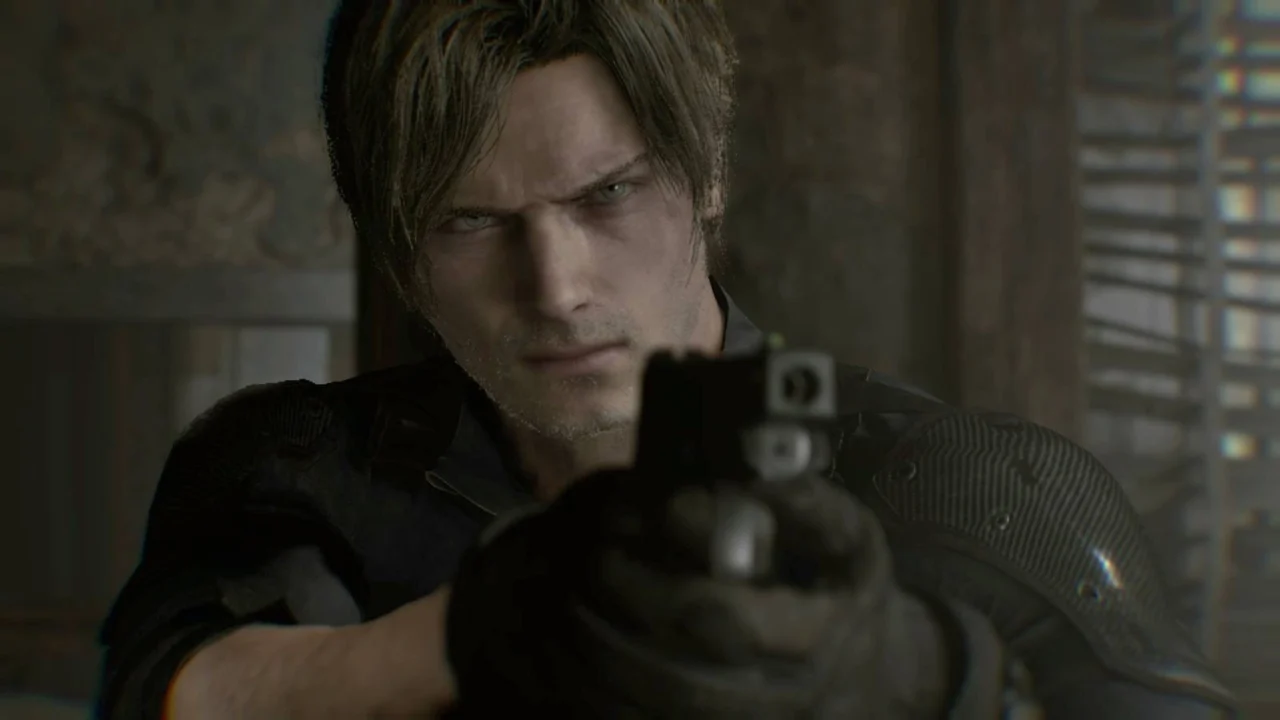
I Almost Quit Resident Evil Requiem Because of This Unfair Moment
Navigating the world of video games requires a remarkably high threshold for the absurd. To truly enjoy the medium, you have to accept a certain level of narrative nonsense. Whether it’s a plumber doubling in size after snacking on a fungus or a protagonist curing a terminal viral outbreak by chewing on random foliage, we generally agree to suspend our disbelief and keep moving. Resident Evil Requiem is full of this “earned” absurdity—the physics-defying motorcycle sequence comes to mind—but there was one specific instance of unearned frustration that nearly eclipsed my enjoyment of the entire game.
[Editor’s Note: The following contains significant spoilers for the latter half of Resident Evil Requiem.]Public opinion regarding Resident Evil Requiem’s reliance on nostalgia is sharply divided. Critics dismiss it as “yearnslop”—a cynical, hollow exercise in fanservice that suggests Capcom is paralyzed by its own legacy. Conversely, proponents argue that a game intended to provide closure to a decades-long saga naturally requires these callbacks. I find myself in the latter camp; I appreciated how Requiem handled Leon S. Kennedy’s return to the Raccoon City Police Department with a sense of quiet, somber reverence. The inclusion of a solitary zombie wandering the halls where Leon first encountered the undead felt like a poignant, atmospheric nod to his origins. It was a moment of reflection, showing how the ghosts of 1998 still haunt his psyche.

However, that goodwill evaporated during the RPD East Office segment. At Zeno’s command, a Tyrant—the spitting image of the relentless Mr. X—smashes through the ceiling. What followed was a confrontation outside the gun shop that felt beneath the series’ standards: a mechanical, poorly animated boss fight that lacked any real tension or tactical depth.
At first, the logic seemed baffling. Is Zeno simply trekking through the ruins of Raccoon City with a spare Tyrant in his back pocket? Files discovered later in the ARK research lab clarify the situation: this wasn’t the original Mr. X, but a mass-produced unit, one of many biological weapons birthed in that lab and distributed globally. Paradoxically, this explanation made the encounter even more irritating.
Because it was a generic clone, the victory felt hollow. Three decades after narrowly escaping death at the hands of the original stalker, Leon—now a seasoned veteran armed with high-caliber weaponry and a bottomless pit of dry quips—dispatches a random copy in a completely unrelated setting. Where is the catharsis? Zeno doesn’t even acknowledge the historical significance of the creature. It exists purely as a “member-berry,” a visual prompt for the player to recognize and then immediately discard. It is nostalgia for nostalgia’s sake, stripped of narrative weight.
The frustrating part is that Capcom had far more sophisticated ways to handle this. Imagine a sequence where Leon is paralyzed by flashbacks of his first encounter with the Tyrant, dreading the dark corners of the station, only to realize the “monster” is merely a phantom of his trauma. It would have driven home the emotional toll of his journey at a critical juncture in the story. Instead, we got a target-dummy cameo.
While the superior ARK lab chapters and the game’s final endings eventually restored my enthusiasm, the “Surprise Tyrant” remains a glaring blemish. It’s a reminder that there’s a thin line between a meaningful tribute and a cheap gimmick.
Source: Polygon
Related articles
 Two Pallets of GeForce RTX 5090 Graphics Cards Disappear at Brazilian Airport, Causing Hundreds of Thousands of Dollars in Losses
 Rockstar Accused of Hiring Informants to Spy on GTA VI Developers Who Joined Union
 AYN Names Processor for Odin 3 Portal Handheld Console and Shares First Trailer
 Lucia and Jason’s Relationship in GTA VI Prompts Study on Whether Flirting With a Game Character Counts as Infidelity
 Modders Teach GTA V Characters to Respond to Players in Real Time Using Their Own Voices
 Red Dead Redemption 2 Gets Shadow of Mordor-Style Nemesis System Where NPCs Remember Player Actions and Seek Revenge
 Matthew Mercer Tested With Critical Role Campaign 3 Episode Fans Call Funniest
 Resident Evil Requiem Characters Have Sensors That Affect Sweat and Animations, Plus Several Levels of Clothing Dirt