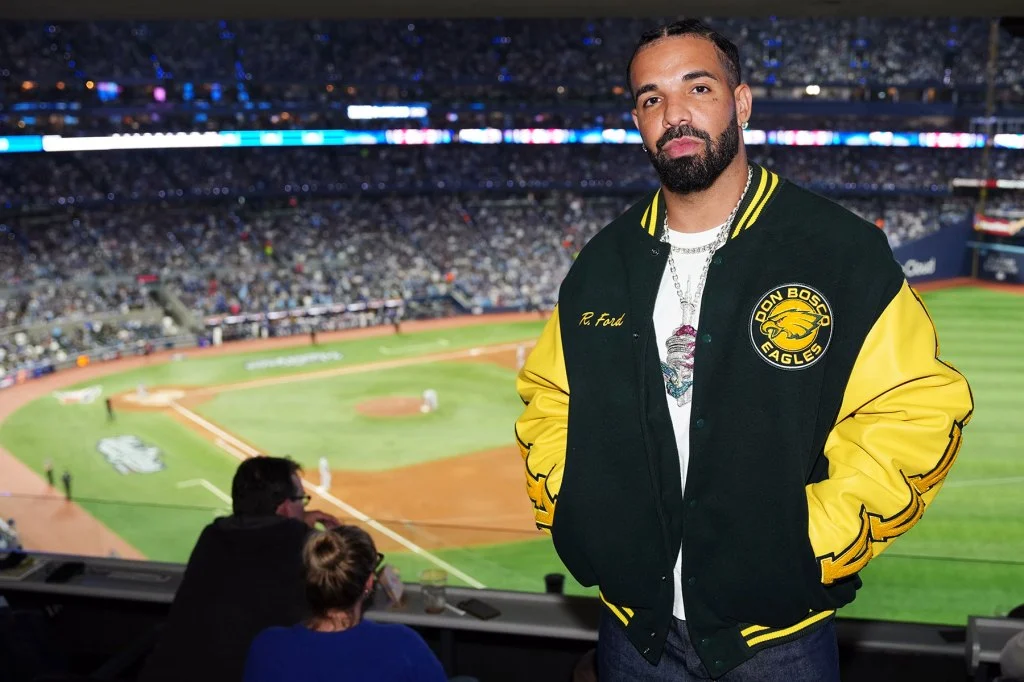
How Toronto Became the Epicenter of Music and Culture During the Blue Jays’ World Series Run
How the Blue Jays’ World Series Run Turned Baseball into a Cultural Moment
By Billboard Canada

If the soundtrack coming from Canada feels a touch more melancholy this season, it’s because the country is still absorbing the sting of a heartbreaking World Series defeat. In Toronto, where people from every part of the city tuned in, the loss landed hard.
For a week the city became more than a sports venue — it became a cultural magnet. The Blue Jays’ matchup with the Dodgers radiated beyond the Rogers Centre, spilling into living rooms, bars and concert halls and merging baseball with the music scene in a way that felt distinctly Canadian.
Musicians and fans adapted on the fly. Bands playing on the night of Game 7 (Nov. 1) improvised — some watched the decisive moments on an iPad from stage, others projected the broadcast behind them. The Beaches, for example, prioritized the game even while performing, and Born Ruffians streamed the contest into their set.
@thebeachesband priorities!!!! #bluejays #worldseries
At the ballpark, the action was threaded with familiar faces and impromptu performances: Rush’s Geddy Lee was a constant presence, Arkells’ Max Kerman joined a busker to sing Tragically Hip favorites, and Justin Bieber — who showed support in a “Bieber” Blue Jays jersey (a nod to pitcher Shane Bieber) — watched from Los Angeles with his wife Hailey. Even Drake, better known courtside at Raptors games, spent time in a private Rogers Centre box for Games 1, 6 and 7, and Vybz Kartel sported a custom Jays jersey at an OVO-presented show in the city.
Walkup songs and clubhouse playlists made the sport feel contemporary. Players arrived to stadiums to a mix of genres — from Addison Barger’s choice of System of a Down’s “B.Y.O.B.” to Davis Schneider’s use of Chappell Roan’s “Pink Pony Club.” Vladimir Guerrero Jr. favored Latin trap and reggaetón artists such as Eladio Carrión, Alejandro Kirk leaned on regional Mexican tracks from Xavi, and Shohei Ohtani used Michael Bublé’s take on “Feeling Good” as his entrance music — a selection that reportedly left Bublé with mixed emotions as a devoted Jays fan.
Major League Baseball’s reach also helped shape the moment. The 2025 season began with a game in Japan and culminated in Canada — the first MLB campaign to both open and close outside the United States — underscoring the league’s increasingly international footprint. Stars from Canada, the U.S., the Dominican Republic, Venezuela, Mexico and Japan all played leading roles across the postseason, broadening baseball’s global resonance.
Uzma Rawn Dowler, MLB’s Chief Marketing Officer, told Billboard Canada at Game 6 that music is integral to the sport’s identity: it’s not only walk-up songs but a genuine connection point for younger, diverse audiences. “Music is a staple in baseball,” she said, describing how the league curates moments that reflect each local market — whether that’s a Toronto-facing moment with Drake or acts chosen for a Tokyo opener.
That strategy is mirrored in clubhouse culture as well. EJ Aguado, MLB’s Vice President of Player Engagement and Celebrity Relations, explained that clubhouses feature a broad array of music — a reflection of the game’s international makeup and the variety of players’ backgrounds — and that celebrity appearances tend to be invitations to genuine fans rather than perfunctory photo ops.
Players’ own approaches to pregame music varied. Former Blue Jay and current Dodger Teoscar Hernández told Billboard Canada that he prefers calm, Christian music to center himself before competition: “For me, it’s more relax time,” he said, adding that those tracks help clear his head for the game.
Creatives in Toronto leaned into the moment as well. Scarborough artist Azeem Haq collaborated with rapper Choclair on a new take of the classic seventh-inning stretch anthem “OK Blue Jays,” which riffed on Choclair’s 1990 CanCon hit “Let’s Ride.” Haq, who attended the Blue Jays’ 1992 and 1993 World Series games with his family, calls the new recording “a generational thing,” saying he’s passing fandom down to his nephews.
Not every musical choice landed without debate. There was public reaction when some performers adjusted lyrics to “O Canada,” and Jonas Brothers’ Game 2 appearance drew criticism from some viewers after they performed a song following a Stand Up To Cancer tribute. Still, the league pushed to bring profile acts and high-energy moments to the series — from Pharrell Williams opening with Voices of Fire in Toronto to celebrity sightings in both cities (Brad Pitt and Sydney Sweeney in L.A., and Toronto photo-ops staged with the Commissioner’s Trophy for personalities such as P.K. Subban).
Despite the disappointing finish for Blue Jays fans, the series reignited a widespread enthusiasm for baseball in Canada that felt comparable to the excitement around the Raptors’ 2019 championship. Reports indicate Game 7 of the 2025 World Series drew significantly large audiences — described by some outlets as the most-watched baseball game since 2017 — underscoring the event’s cultural weight.
Dowler framed the moment as part of a larger upward trajectory for the sport: “I think we’re in the middle of the crest of the wave right now,” she said, noting MLB’s excitement about making the game feel culturally indispensable. Aguado added that bringing artists and true fans to the ballpark helps signal that baseball’s marquee stage now attracts the brightest names on and off the field.
For four games, Toronto was at the center of that cultural surge. The outcome stung, but the series renewed a national appetite for baseball and may well leave behind new anthems that outlast the 2025 season.
This article was originally published by Billboard Canada.


Related articles
 Travis Barker promotes shelter pet adoption and meat-free lifestyle in Humane World For Animals PSA
 Justin Bieber and Hailey Bieber celebrate eighth wedding anniversary
 Ariana Grande Gets Stuck in Elevator After Final Eternal Sunshine Show
 My Chemical Romance Teases Possible New Album During Tour-Closing Show
 Pink Addresses Backlash Over Comments About Macklemore’s Pro-Palestine Stance
 Stray Kids Make Historic Debut at Rock in Rio
 Ocean Way Festival in Santa Monica Canceled Weeks Before Planned Debut
 Zach Bryan Joins Kings of Leon to Perform Collaboration During Nashville Show