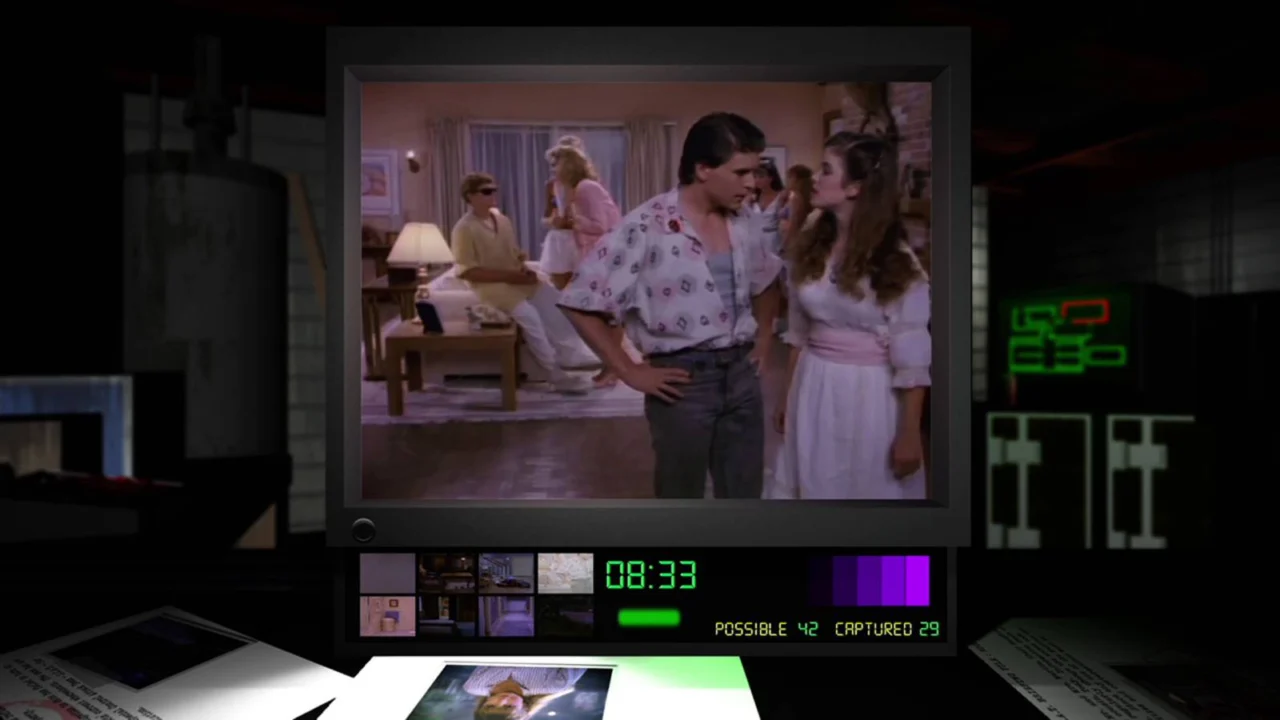
How This Controversial FMV Game Inspired Five Nights at Freddy’s
I have long harbored a profound appreciation for the FMV (Full-Motion Video) titles of yesteryear; there is a certain eccentric magnetism to them that is hard to replicate. By utilizing live-action footage rather than rudimentary computer animation, developers were able to weave intricate—and frequently campy—narratives. This approach bypassed the technical and financial hurdles of 3D character modeling at a time when the lifelike graphics we now enjoy were nothing more than a distant dream. During that era, FMV was the only way to achieve a sense of visual realism on a home console.
Whenever the subject of FMV gaming arises, Night Trap is the title that inevitably dominates the conversation. Originally released in 1992 by Digital Pictures as a flagship title for the Sega CD, this horror-themed experience centers on a group of teenagers staying at a secluded estate, unaware they are being hunted by blood-draining creatures known as “Augers.” Players take on the role of a tactical operative within the Special Control Attack Team (or S.C.A.T.), tasked with monitoring the house through a series of hidden surveillance cameras. By timing the activation of various household traps, you must neutralize the intruders before they can abduct the guests.

Discussion of Night Trap almost always pivots to the 1993 congressional hearings regarding video game violence, a pivotal moment that led to the creation of the ESRB in 1994. Alongside Mortal Kombat and Doom, Night Trap was unfairly characterized as a corrupting influence on the youth of America. Critics focused on the scenes where the girls are captured, ignoring the fact that the player’s primary goal is to prevent those very outcomes. Nintendo, then locked in a fierce rivalry with Sega, seized the opportunity to denounce the game. Former Nintendo of America Chairman Howard Lincoln infamously testified that the title had “no place in our society” and would never grace a Nintendo console.

Time, however, has a funny way of highlighting irony. In 2017, a 25th Anniversary Edition was launched for PlayStation 4 and PC via Steam. Just one year later, the very game Howard Lincoln swore would never see a Nintendo system was released on the Nintendo Switch. Today, it is simply rated “T” for Teen, cited for mild blood, suggestive themes, and violence—labels that seem remarkably quaint given the original controversy.
But the true importance of Night Trap lies in its foundational influence on the industry. It essentially laid the groundwork for the “surveillance horror” genre, most notably seen in the Five Nights at Freddy’s franchise. While FNAF is not an FMV game, its core loop—sitting in a central location, cycling through monitors, and managing a security system to survive quirky antagonists—is Night Trap‘s DNA through and through. Furthermore, at a time when most games punished failure with a binary “Game Over,” Night Trap was a precursor to modern narrative-choice games like Until Dawn, Detroit: Become Human, and even Baldur’s Gate 3. In these games, the story doesn’t stop if you fail; it simply branches into a different, often darker, reality.

By allowing the narrative to proceed despite player error, Night Trap offered multiple endings based on the survival of the cast. While this level of consequence is expected in contemporary storytelling, it was revolutionary in the early ’90s. Experiencing the game today, it is difficult to fathom the moral panic it once caused. It remains an incredibly entertaining, if campy, experience that I highly recommend for anyone interested in the evolution of horror gaming. If you are seeking visceral gore, you won’t find it here; what you will find is a fascinating historical artifact that inspired everything from 1996’s surreal Harvester to today’s cinematic epics.
Furthermore, the game features a notable performance from the late Dana Plato (of Diff’rent Strokes fame), whose career remains tragically underappreciated. Filmed in 1987, the sequences are drenched in 80s nostalgia and can be unexpectedly difficult to master.

Ultimately, Night Trap is just as much a comedy as it is a thriller. Whether it’s the absurdity of the “SCAT” acronym, the bizarre mechanics of the traps, or Dana Plato’s character matter-of-factly critiquing your failure to save her friends, the game is an undeniably strange piece of interactive media. It is an essential experience for any gamer who appreciates the weird, the bold, and the influential history of the medium.
Source: Polygon
Related articles
 Necromunda Tabletop Team Shares Plans for 2027
 Director Peter Berg Says Call of Duty Movie Won’t Be a Mindless Action Film
 Takopi’s Original Sin Compilation Film Gets New Trailer Ahead of November 27 Japan Release
 Doctor Who Episode “The Caretaker” Showed Peter Capaldi’s Twelfth Doctor at His Worst
 Cyberpunk: Edgerunners 2 Creators Release Two Music Albums
 Pricing Expert Criticizes Hollow Knight: Silksong for Being Priced Too Low
 Gears of War: E-Day Hotfix Fixes Crashes and Campaign Bugs but Not Smoke Grenade Exploit
 NDP Leader Avi Lewis Criticizes EA Over BioWare Closure, Calls for Federal Support for Employee Buyout