George R.R. Martin Explanation For House of the Dragon Criticism Revealed
George R.R. Martin surprised fans of his fantasy epic when he published a blog post on September 4, 2024. He outlined changes he disagreed with for HBO’s adaptation of his Targaryen history book, Fire & Blood, specifically criticizing the handling of Helaena Targaryen and her son, Maelor. The post, titled Beware the Butterflies, was deleted shortly afterward. Fans had already saved and analyzed every word to understand why the relationship between GRRM and House of the Dragon showrunner Ryan Condal had frayed.
The final episode of House of the Dragon season 3 makes the reason for GRRM’s frustration abundantly clear.
Warning: This article contains spoilers for House of the Dragon’s season 3 finale.
House of the Dragon season 3 ending explained
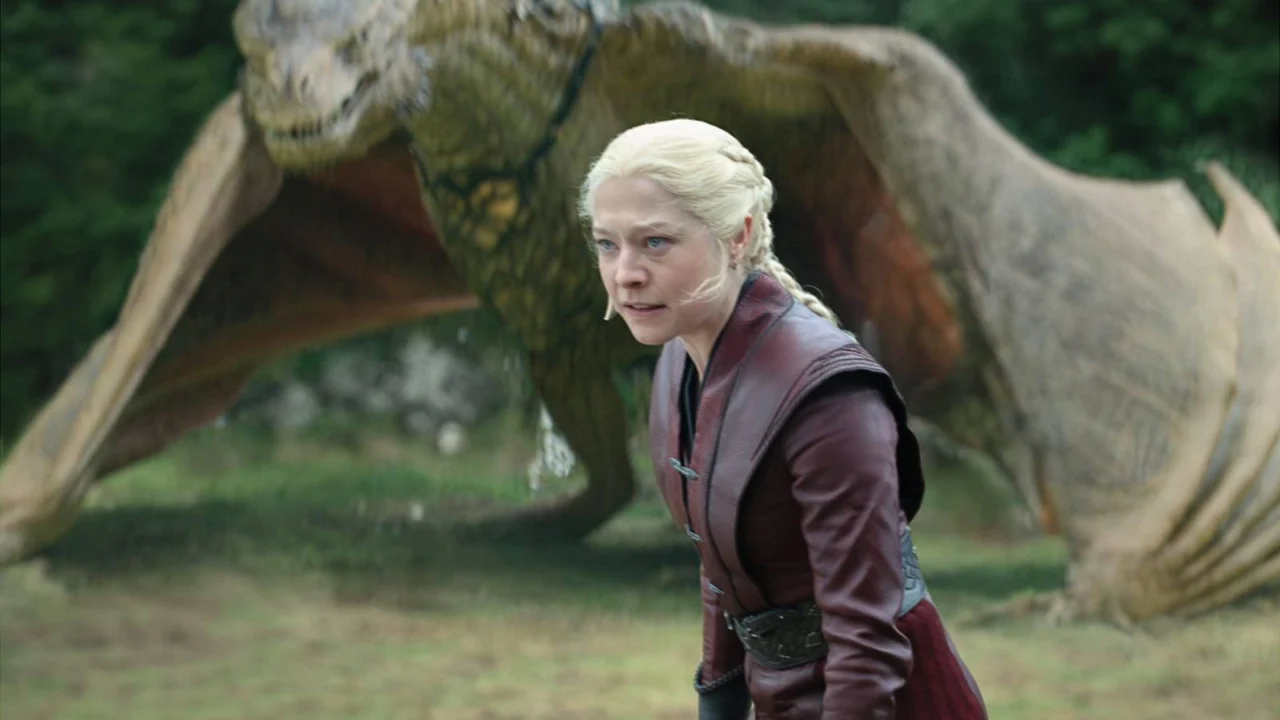
After spending most of season 3 trying to prove herself a woman of the people, Rhaenyra, played by Emma D’Arcy, has reached her limit. Ormund Hightower, played by James Norton, is damaging her reputation from his captured seat at Tumbleton. Combined with the discovery that Aegon and his dragon Sunfyre are still alive, Rhaenyra goes on the offensive. Everyone is caught in the line of fire, including her half-sister Helaena Targaryen, played by Phia Saban. Helaena has been left isolated after Rhaenyra forced Alicent Hightower, played by Olivia Cooke, to travel to Harrenhal to kill her own son, Aemond Targaryen, played by Ewan Mitchell.
Rhaenyra becomes relentless and harsh after realizing she is losing her grip on King’s Landing while still mourning her son Jace. This tension boils over when Baela Targaryen, played by Bethany Antonia, accuses Rhaenyra of using her allies and dragonriders as chess pieces. Baela claims Rhaenyra does not care whether they live or die as long as they serve her.
Helaena also confronts Rhaenyra. Revealed earlier in the season to be with child, Helaena has stopped eating. When Rhaenyra tries to force her to eat, Helaena tells the Black Queen that her desire to rule is ugly and worthless. Helaena adds that their father, Viserys, would disapprove of Rhaenyra’s actions. Rhaenyra responds by aggressively forcing food on her half-sister.
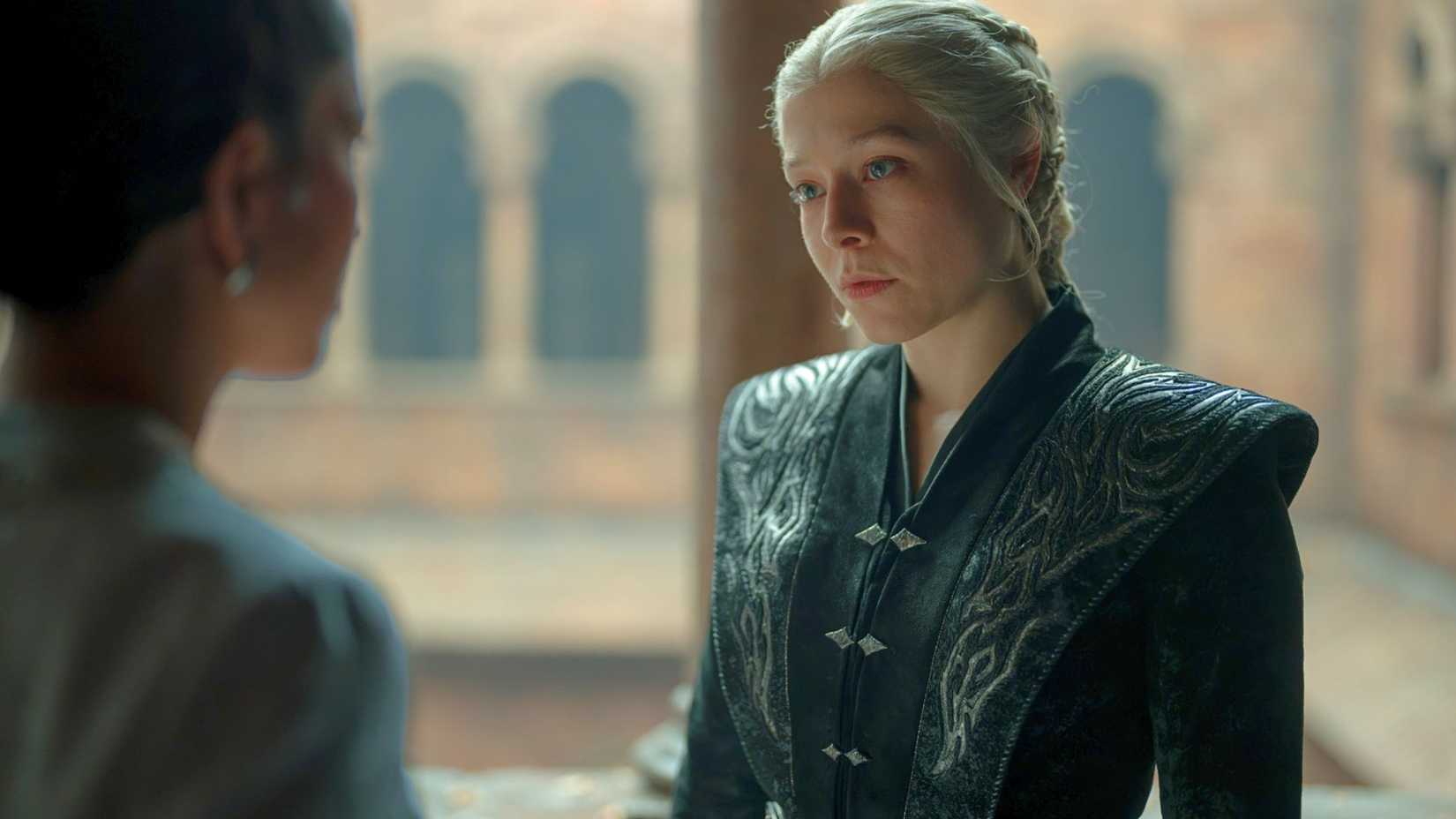
This is the most severe act Rhaenyra directs at Helaena this season, following earlier demands that Helaena share her prophetic visions. The situation worsens because Mysaria, played by Sonoya Mizuno, recently warned Helaena not to trust Rhaenyra, stating that she and her child will always remain hostages. Following the force-feeding scene, Helaena jumps out a window and dies on the battlement spikes below. A servant informs Rhaenyra, who finds the body and closes the window to end season 3.
GRRM fans were not entirely surprised by this ending. His ‘Beware the Butterflies’ post warned that Helaena’s death would conclude the season. After Helaena dies, the show cuts to Alicent returning to King’s Landing. Alicent approaches a bush, and a swarm of blue butterflies flies in front of her. Helaena maintained an affinity for bugs since season 1, making the butterflies a poignant symbol of her death, even if GRRM revealed the spoiler in his original blog post.
How do House of the Dragon’s changes set up season 4?
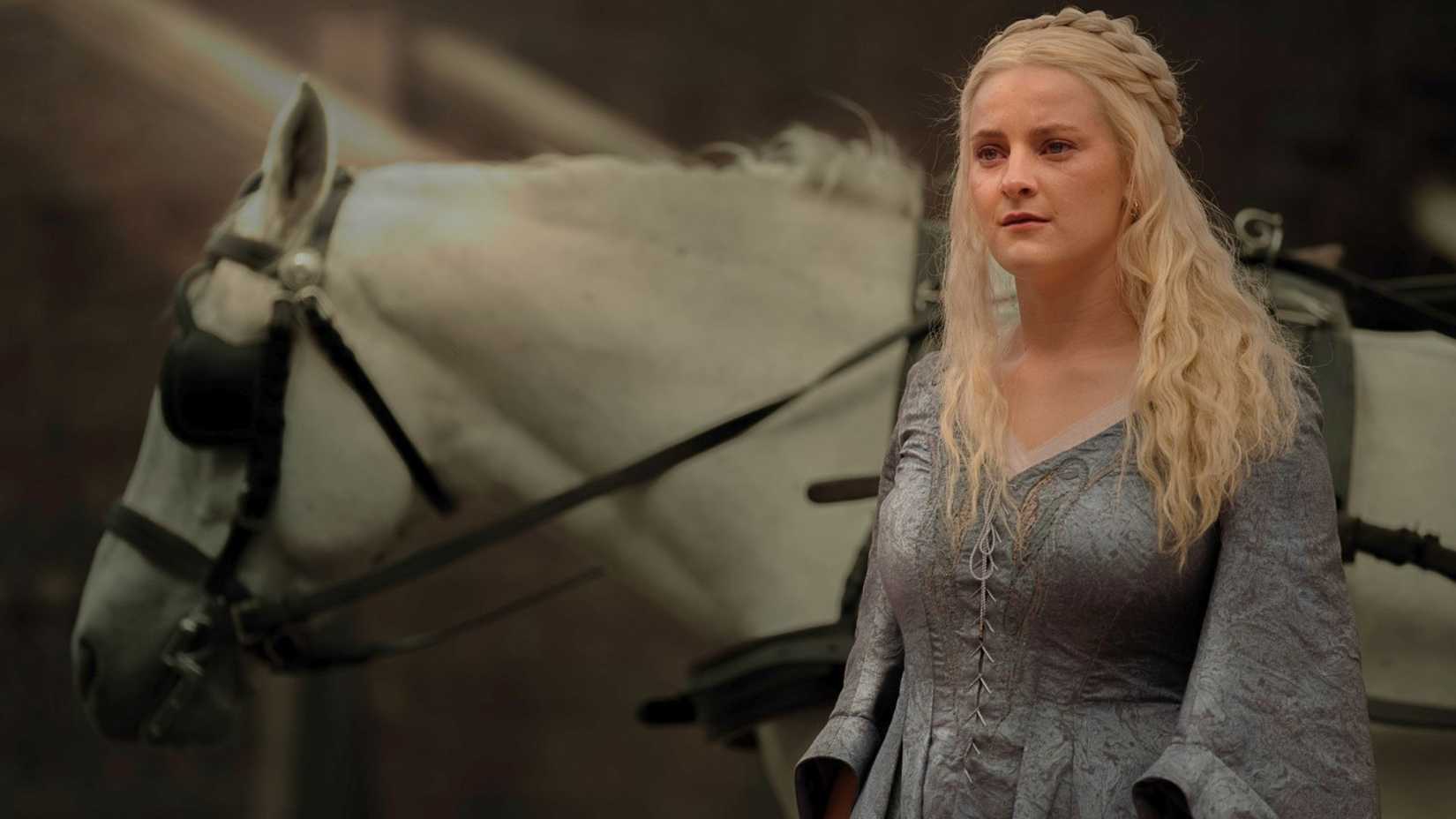
In Fire & Blood, the cause of Helaena’s death is open to speculation. Historians and eyewitnesses suggested either that her son Maelor was torn apart by a mob at Bitterbridge or that Rhaenyra threw Helaena from the window herself. GRRM’s blog post inadvertently confirmed that Helaena killed herself due to Maelor’s death. This explains GRRM’s disappointment with Condal’s changes, given that Maelor does not exist in the television series.
Helaena’s death in the show stems from her prophetic dreams and her deteriorating treatment under Rhaenyra. Alicent Hightower will likely take serious issue with the Black Queen when she returns to King’s Landing in season 4. Fire & Blood establishes that the Dowager Queen outlasts all her children before dying of Winter Fever in 133 AC, though the circumstances of her confinement remain to be seen.
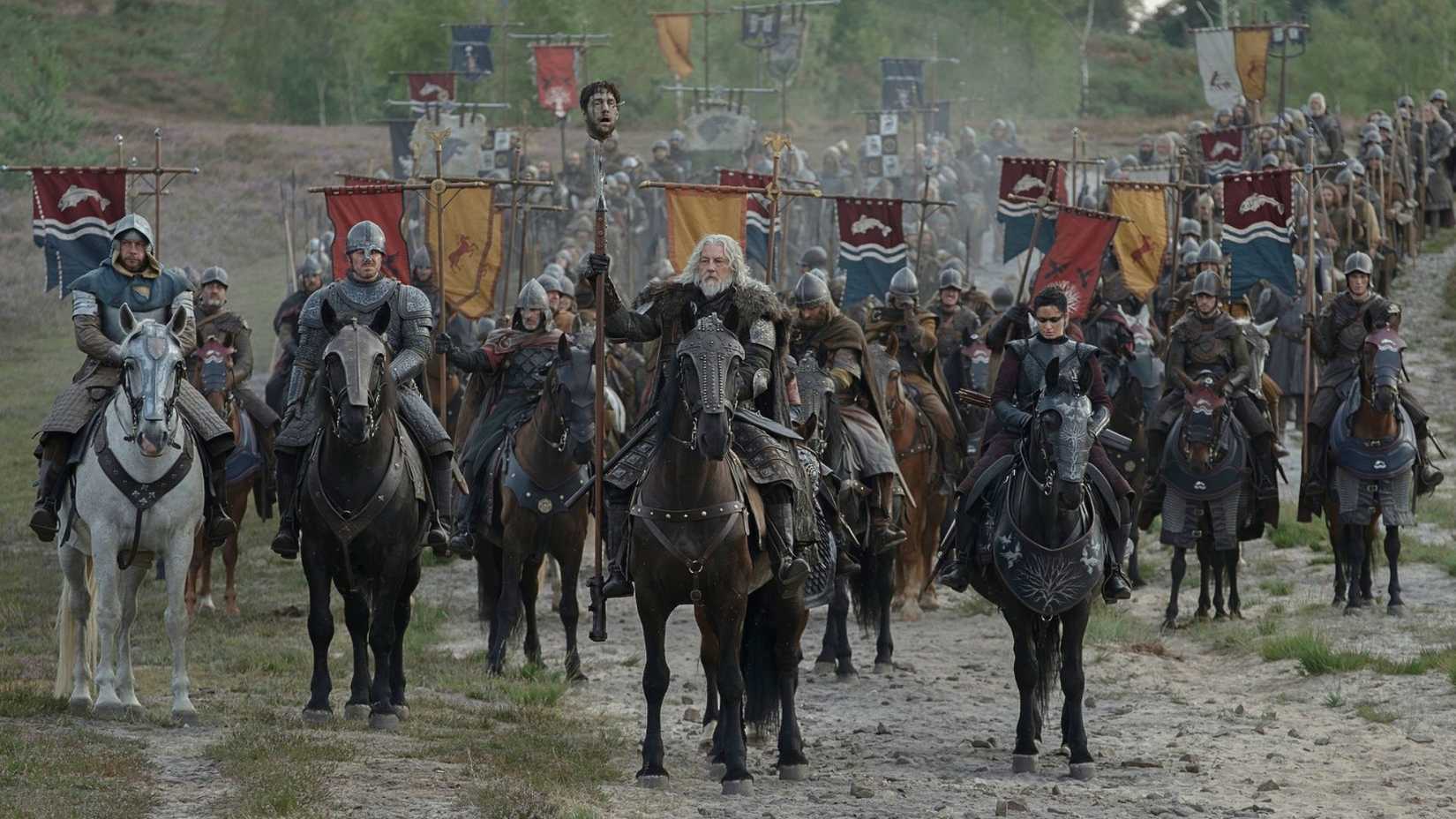
Ulf the White, played by Tom Bennett, and Hugh Hammer, played by Kieran Bew, present another shift. Both appeared at the Battle of Tumbleton. Ulf turned on the Black Council and attacked both innocents and enemies, while Hugh focused on finding his wife, Kat. In Fire & Blood, Ulf and Hugh are known as the Two Betrayers, making Hugh’s refusal to turn Vermithor against the Black Council a major departure from the book.
Aegon and Aemond also chart a new path. Aegon appears at Harrenhal to scold Aemond for trying to murder him, mentioning potential forgiveness once they locate Vhagar and retake King’s Landing. Season 4 will likely feature the brothers searching for Vhagar before Aegon travels to Dragonstone.
Rhaenyra herself faces a grim foreshadowing. Before closing the window on Helaena’s death, Rhaenyra encounters a tapestry stitched by Helaena. The imagery depicts Rhaenyra’s future as queen: a bloodied Rhaenyra sits on the Iron Throne with hair askew as flames lick at her feet, while a deformed Sunfyre rages in the background. This closely mirrors Rhaenyra’s ultimate fate in Fire & Blood.
Condal’s divergence from the source material leaves questions about how closely season 4 will follow the text. Viewers will see whether these narrative choices pay off when House of the Dragon returns for season 4.
Source: Polygon
Related articles
 Black Myth: Wukong Developers Abandon AI for Quality in New Game
 Vincent D’Onofrio Teases Time Jump in Daredevil: Born Again Season 3
 The Red Cathedral will be free on Steam from August 25 to September 6
 Persona Surpasses Sonic to Become Sega’s Biggest Hit
 Warrior of Light Destroys Enemies in New Final Fantasy Resonance Trailer
 Filming Concludes on Season 2 of A Knight of the Seven Kingdoms
 Road 96 Developers Tease New Game Featuring John and Fanny
 First DLC Released for Reanimal Featuring New Horror Story