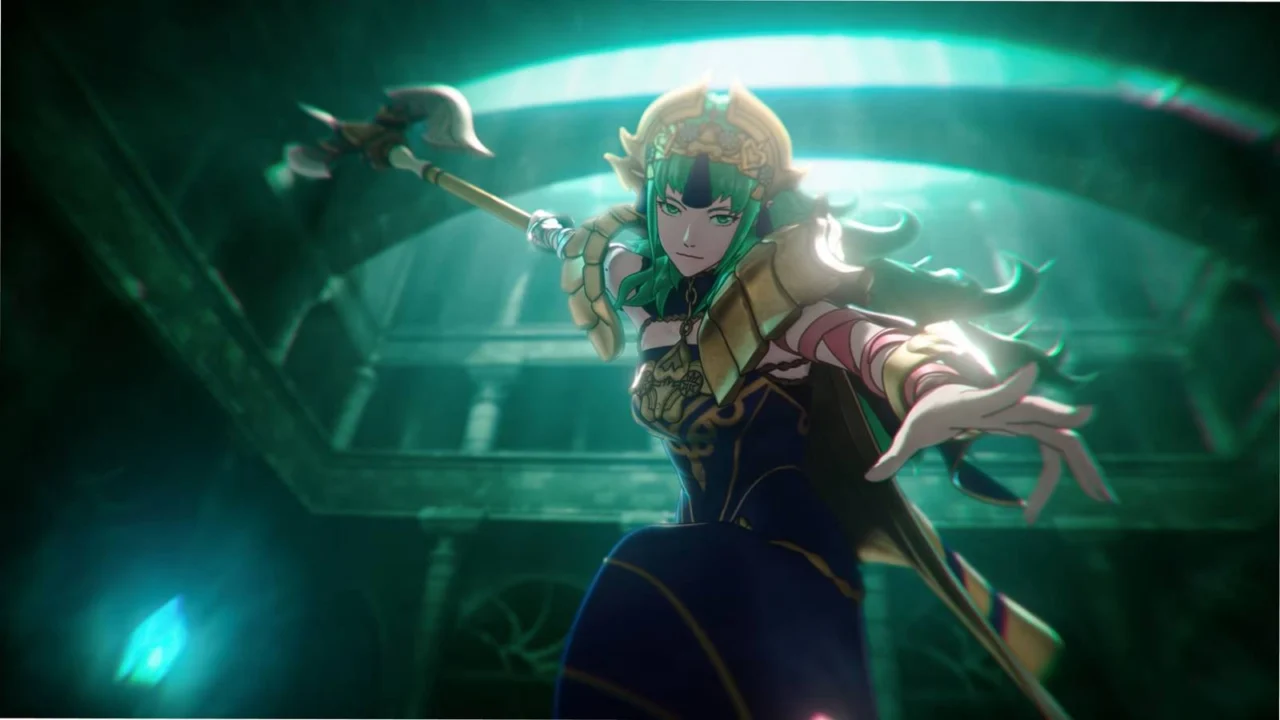
Fire Emblem: Fortune’s Weave Share the Same Plot As Twisted Metal
Like countless other Nintendo Switch 2 owners at the moment, I am completely immersed in Fire Emblem: Fortune’s Weave. The tactical combat remains exceptionally polished, and I appreciate my regular routine of Perfect Bird Time, but it is the narrative that has genuinely compelled me to log 30 hours thus far. Having already completed Theodora’s Act 1 route, I am currently navigating Dietrich’s campaign, which is so wonderfully unhinged that I find myself entirely hooked. I am fully committed to shepherding this eclectic group of characters through the Heroic Games, regardless of how long the journey takes.
While I continue making my way through the campaign, permit me to voice a persistent realization: Fortune’s Weave essentially shares the exact same premise as Twisted Metal, does it not?
Hear me out. On the surface, this comparison might sound completely absurd. Fortune’s Weave is an expansive fantasy epic focusing on four legendary figures uniting to rescue an empire from total destruction. Conversely, Sony’s vehicular combat franchise, Twisted Metal, centers around a driver in a pink low-rider obliterating rival vehicles using hood-mounted weaponry. At first glance, the overlap is virtually nonexistent, and yet the parallel holds up.
The overarching narrative of Fortune’s Weave kicks off with the Heroic Games—a gladiatorial championship where combatants from across the Dagdan Empire are summoned to Dagsion’s Grand Arena by the Divine Sovereign, Solel. Every participant strives to lead their squad to triumph through intense rounds of battle, and occasionally, mystical basketball. The ultimate reward? The victorious champion ascends to the status of a Flame Lord, earning the right to have a single wish granted by the Divine Sovereign. Cai enters the tournament to secure his father’s release from captivity. Theodora seeks to enact profound reforms within her homeland. Leda is driven by a quest for vengeance. As for Dietrich… well, he largely seems to view the event as a convenient excuse to slaughter adversaries.
Now consider the core premise of Twisted Metal. Set against the backdrop of Los Angeles—essentially the Dagsion of California—drivers from all over the metropolis are called upon to compete in the eponymous tournament. It represents a brutal test of combat proficiency orchestrated by the seemingly omnipotent Calypso, offering the exact same grand prize as the Heroic Games: a single granted wish. Charlie Kane participates to discover if his son is still breathing. Bruce Cochrane aims to revitalize his local community. Needles Kane enters because… honestly, he mostly just wants an excuse to murder people.
Granted, the comparison isn’t entirely a one-to-one match. A signature twist within the Twisted Metal series is that Calypso possesses a notoriously malicious sense of humor. Having your wish fulfilled by him typically leads to a Twilight Zone-style irony that rarely benefits the victor. It serves as a dark cautionary tale suggesting that incinerating rivals with a flamethrower is, ultimately, a poor life choice. By contrast, the wish-fulfillment mechanism in the Heroic Games appears far more genuine, seemingly devoid of hidden catches for the triumphant Flame Lord. Whether this institution is entirely honorable, however, is a secret you will need to uncover by progressing through the tale.
Get Polygon’s Wishlister newsletter
A weekly cheat sheet to what you’ll eventually love to play. No buying, no
commitment — just saving for later.
Free. Unsubscribe anytime.
To be completely clear, I am not trying to diminish the quality of Fortune’s Weave. It establishes a robust foundation for a narrative tasked with juggling multiple protagonists simultaneously. A high-stakes tournament culminating in a life-altering wish provides compelling motivation for the characters, injecting every engagement with tangible tension. Furthermore, it channels a timeless, almost mythological storytelling tradition that feels adapted across eras. Though the comparison is undeniably lighthearted, it successfully highlights a fascinating conceptual link between two wildly different gaming experiences that I consistently gravitate toward. The enduring spirit of gladiatorial combat lives on—manifesting equally through strategic grid-based battles and chaotic demolition derbies. Our ancestors would likely be thoroughly bewildered by this evolution, yet perhaps strangely proud all the same.
How long is Fire Emblem Fortune’s Weave and how many chapters are there?
Along with a comprehensive breakdown of Fire Emblem: Fortune’s Weave chapters
Source: Polygon
Related articles
 Undead Labs Buys Itself Out from Microsoft to Become Independent
 Some Witcher 3 Fans Are Disappointed by New Remastered Footage
 Final Fantasy VII Revelation Creator Replays Game 46 Times Ahead of Release
 Blizzard Details Three-Story Structure for Diablo V
 Silent Hill: Townfall First Player Reviews Detail Performance Across Devices
 DreamWorks Animation Releases Forgotten Island
 First Trailer Released for Nathan Fielder and A24 Movie You Can See Everything
 The Witcher 3 Writer Says Ideal Quest Requires Player to Put Down Controller