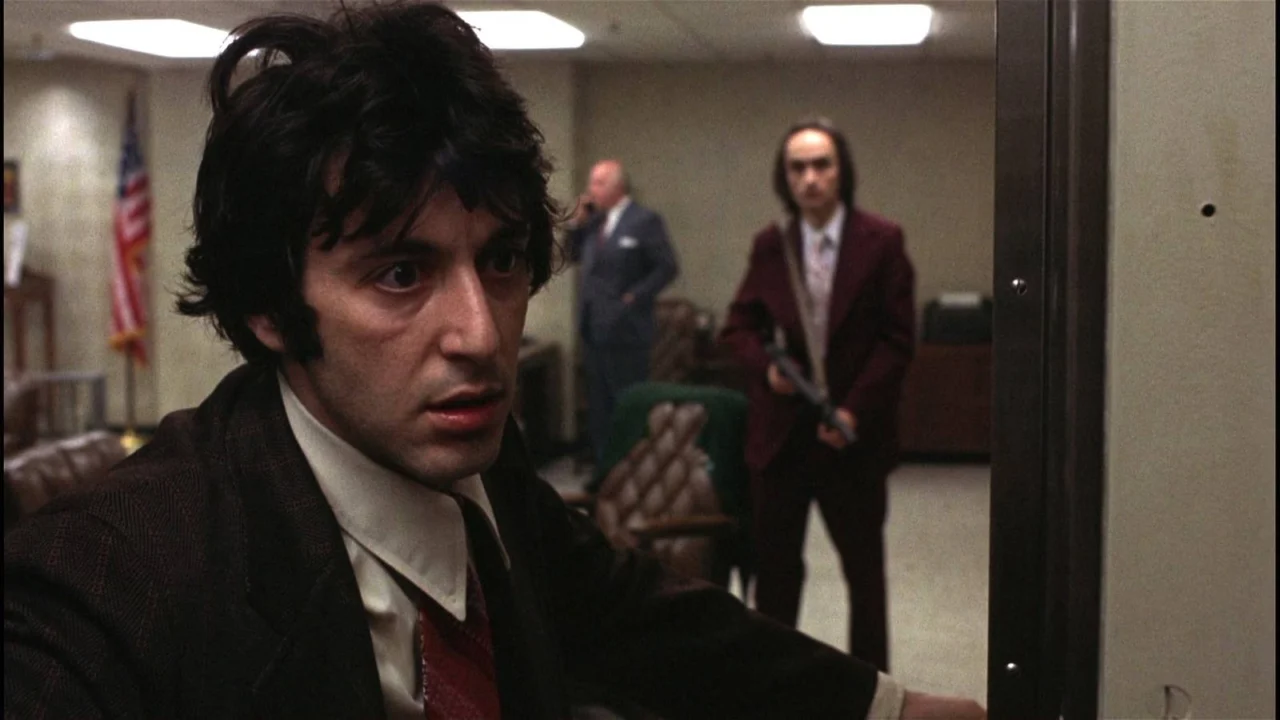
Fifty Years Ago, Al Pacino Starred in a Perfect Crime Thriller Ahead of Its Time

Visit the real-life address where the Brooklyn bank from Dog Day Afternoon supposedly stands and you’ll find a private apartment building in a pleasant neighborhood — a far cry from the rundown block the film evokes more than fifty years ago. (If you hope to catch a screening nearby, the Nitehawk Cinema in Prospect Park regularly programs revivals.) City streets transform faster than motion pictures can capture them, but what’s surprising is how contemporary the film still feels: though rooted in a specific incident, Dog Day Afternoon often reads less like a period artifact and more like a story with modern resonance.
Al Pacino plays Sonny, a desperate ex-bank employee whose scheme to rob a branch is driven by a personal goal: he intends to raise money for gender-affirming surgery for his partner Leon (Chris Sarandon). Leon plays no active role in the heist; Sonny enlists two acquaintances — the jittery Stevie (Gary Springer) and the quieter Sal (John Cazale) — who feel more like opportunistic recruits than trusted allies. What begins with a pragmatic, if hasty, plan quickly unravels when the gang discovers the safe has already been emptied earlier that day and the police are summoned. Before long Sonny is trapped inside the bank, hostages in tow, as law enforcement surrounds the building.
 Credit: Warner Bros.
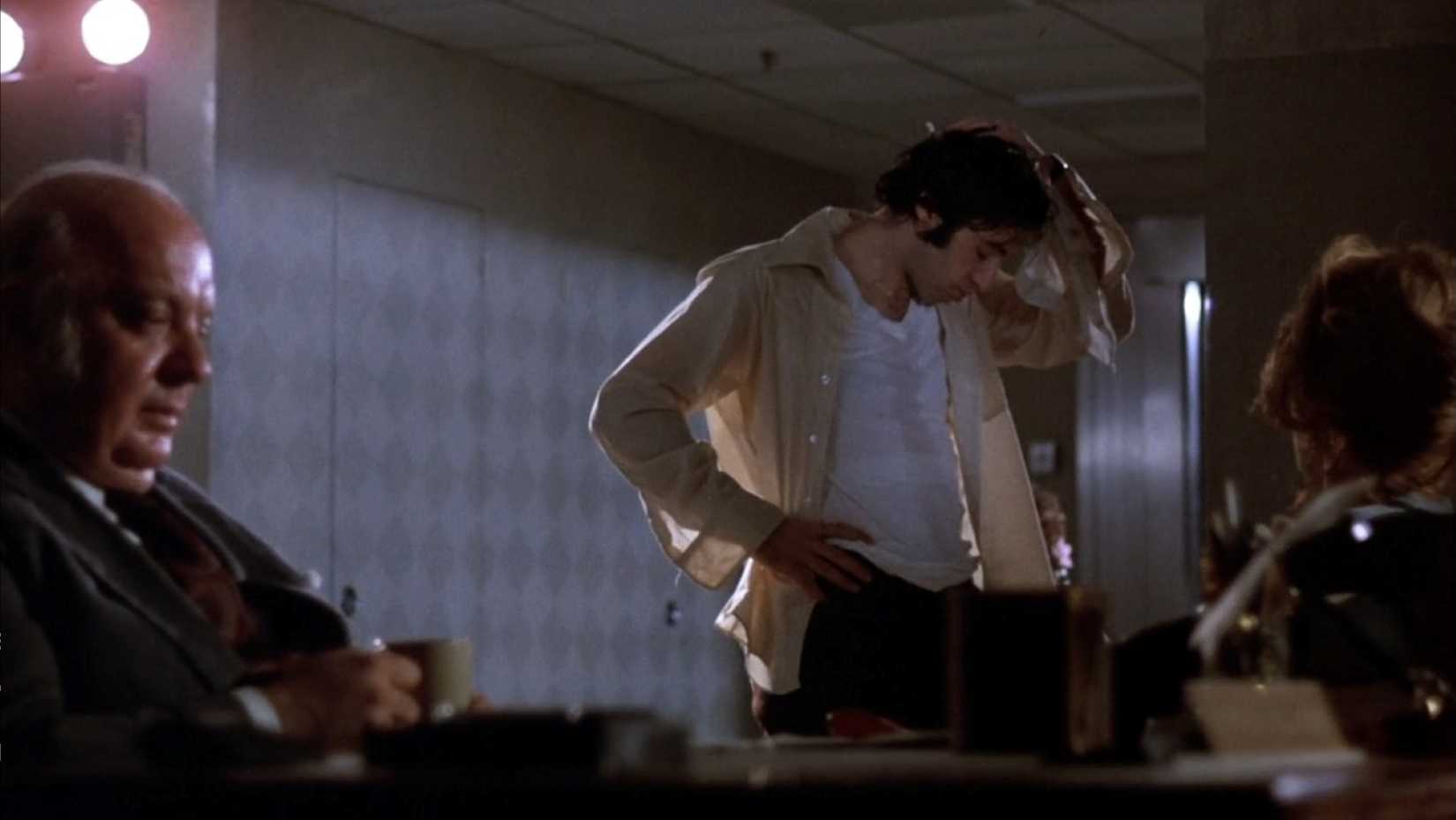
 What keeps the film feeling immediate is its attention to how public spectacles unfold. Even though the story predates cable news and social platforms, Lumet captures the social dynamics that surround sensational events: a crowd gathers, sympathies oscillate, and the moment becomes theater. Sonny courts the onlookers — at one point he distributes small amounts of the stolen cash and pays for pizza for the hostages — and the people in the street bask in the chance to be noticed. One memorable side character, the pizza delivery man, revels in the fleeting spotlight and shouts, “I’m a fucking star!” after a brief taste of recognition.
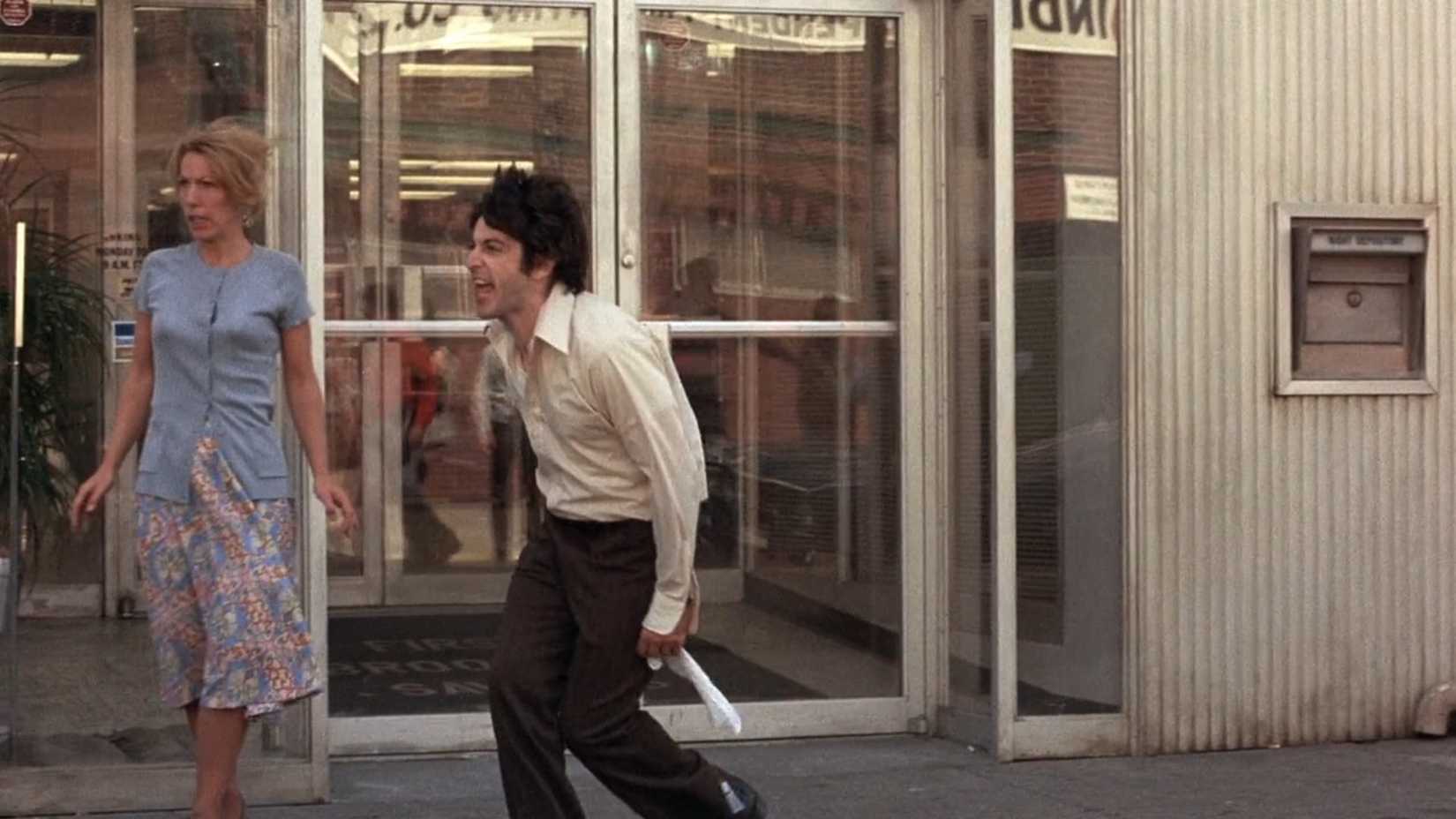
Media attention isn’t the film’s main concern, but its presence amplifies the drama in a way that feels authentic rather than exploitative. Sonny’s infamous cry of “Attica! Attica!” — a reference to the 1971 prison uprising — is thrown out partly as a provocation, partly as a raw expression of frustration. It reads like a spur-of-the-moment appeal to working-class resentment, and Pacino’s manic energy makes the moment both combustible and credible.
That invocation of Attica gestures to Sonny’s deeper grievances. In a televised conversation he describes the struggle to find stable, well-paying work — an economic anxiety that still resonates today — and the reference to unions feels anchored in the era’s realities even as other themes remain timeless.
 Credit: Warner Bros.
 The crowd’s mood shifts again when reports surface about Sonny’s sexuality and his relationship with Leon. The reversal — from sympathy to suspicion and hostility — is ugly but believable, reflecting a social intolerance that, regrettably, still has echoes today. For all the recent conversation about trans rights and visibility, Lumet’s handle on Leon is unexpectedly humane for its time. Chris Sarandon’s Leon is portrayed as a person in distress, not a caricature or a corrupting influence. If anything, the film suggests Sonny’s fixation — his insistence that surgery is the solution — reveals more about his own emotional dependency than it does about Leon.
The early portion of the movie reads at times like a screwball misadventure: bungled maneuvers, ill-advised recruits, and comic panic undercut the obvious peril. Lumet and Pacino’s grounded performances allow the humor to coexist with dread; the audience can laugh at the chaos while still sensing that the stakes are real. As the story unfolds, the comic surface gives way to a tightening sense of inevitability. The jokes don’t negate the danger — they make the eventual collapse feel more devastating.
Despite moments of levity and occasional absurdity, Lumet never signals that Sonny will miraculously prevail. The film remains scrupulous and unsentimental: Sonny’s charisma and improvised rapport with hostages and spectators can’t alter the structural forces arrayed against him. He is, in the end, an acute portrait of desperation — someone who, lacking viable alternatives, latches onto a half-formed plan. The particulars of the 1970s setting may have shifted, but the film’s core concern — people pushed to make choices they otherwise wouldn’t — remains painfully relevant across the United States.
Dog Day Afternoon is currently streaming on HBO Max.
Source: Polygon
Related articles
 Eddie Murphy to Star in Drama from ‘Mad Men’ Creator
 The Name of the Merged Paramount and Warner Bros. Company Has Been Revealed
 Bradley Cooper to Star in New G.I. Joe Movie
 Halle Berry accused of child abuse
 «The Obsession» to Compete in the Golden Globe Musical or Comedy Category
 Arnold Schwarzenegger Appears in Teaser for Christmas Comedy “The Man with the Bag”
 Sarik Andreasyan’s “Beauty” to be released in October
 Woody Allen to start filming new movie in October