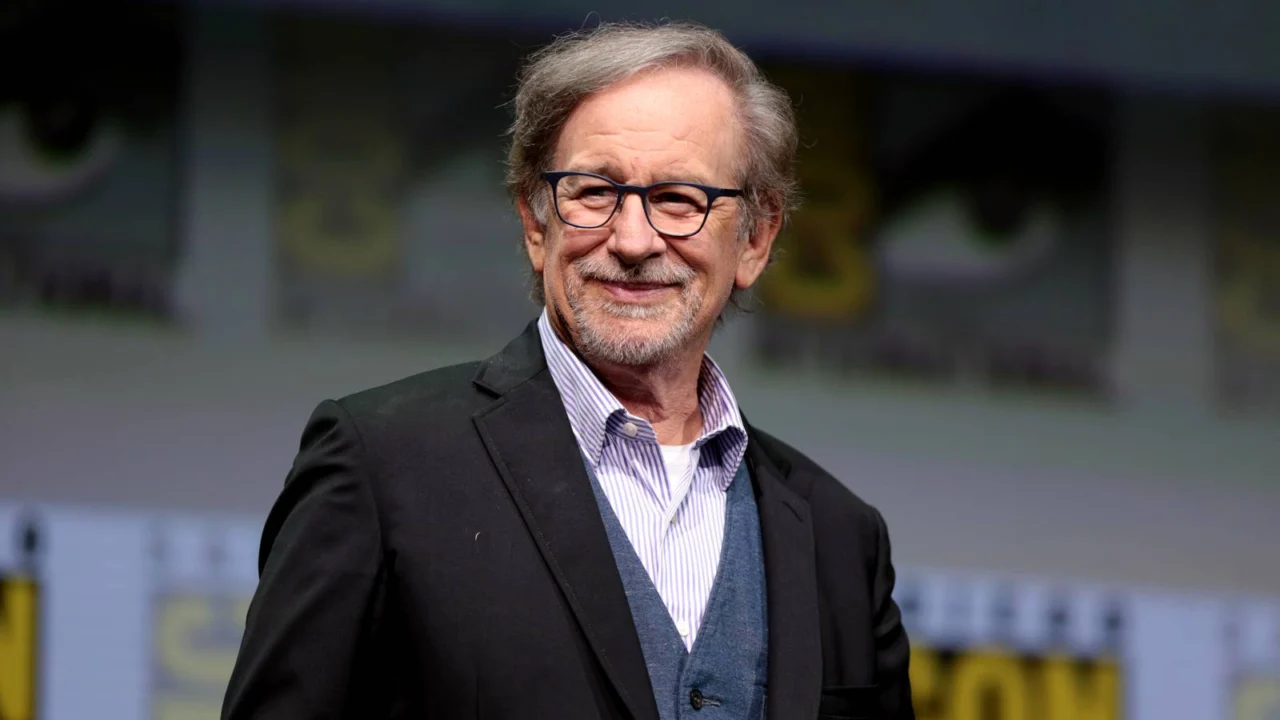
Even Steven Spielberg Has Forgotten His Weirdest Sci-Fi Sequel

During a recent appearance on the Happy Sad Confused podcast, host Joshua Horowitz posed a poignant question to Steven Spielberg: “Did Elliott ever cross paths with E.T. again?” Spielberg’s definitive “no” suggests the bond remained purely psychic, with Elliott simply catching glimpses of his friend in dreams. Yet, this sentiment stands in stark opposition to a long-obscured, officially sanctioned sequel to the 1982 cinematic classic, E.T. the Extra-Terrestrial.
Released in 1985, E.T.: The Book of the Green Planet was penned by William Kotzwinkle, the same author behind the original film’s novelization. The narrative picks up immediately following the movie’s conclusion, trailing E.T. as he returns to his home world, Brodo Asogi. Contrary to expectations of a hero’s welcome, the alien botanist finds his status diminished, demoted from his prestigious scientific post to a humble agricultural role.
Much of the novel chronicles E.T.’s profound homesickness for Earth. Desperate to reunite with Elliott, he hatches a clandestine scheme to commandeer a spacecraft and return to the boy who changed his life.
The method E.T. employs to reach out across the galaxy is bizarre: he manifests miniature, tangible psychic replicas of himself. These small avatars attempt to capture the attention of a maturing, love-struck Elliott, though they frequently meet unfortunate ends—often by being crushed or washed down household drains. Beyond this strange telepathic pursuit, the book serves as a deep dive into “Asogian” lore, detailing a world where architecture is crafted from giant gourds and flora possesses sentience. Most memorably, the vessel E.T. eventually steals to return to Earth is a gargantuan, space-faring turnip.
Image: G.P. Putnam’s Sons
Despite the absurdity of traveling via root vegetable, the novel implies that E.T. eventually reaches the Milky Way, leaving the possibility of a reunion tantalizingly open. If Spielberg’s latest remarks are anything to go by, he has either willfully discarded this literary chapter or perhaps wishes the entire project would fade from memory. While Kotzwinkle confirmed that Spielberg provided only minimal guidance during the book’s inception, he did formally endorse its release.
Alternatively, one could interpret Spielberg’s silence as a nod to a grimmer conclusion—a possibility where the “turnip spaceship” proved insufficient for the journey. After all, when it comes to interstellar travel, leafy produce is rarely a reliable engine.
Source: Polygon
Related articles
 SCS Software Showcases Prototype Interchanges for Turkey in Euro Truck Simulator 2
 Stranger Than Heaven to Feature Manageable Business System Similar to Yakuza
 Professor Layton and The New World of Steam Gameplay Shown in New 20-Minute Video
 Armed Fantasia Canceled After Several Years in Development
 Insider Gaming Predicts GTA VI Metacritic Score Below 90
 New Reports Shed Light on Hideo Kojima’s Physint and Rumored Xbox Budget
 Sony Discusses Future of Physical Discs With Publishers
 Director Jon Watts to Helm Star Wars Episode X, Reports Say