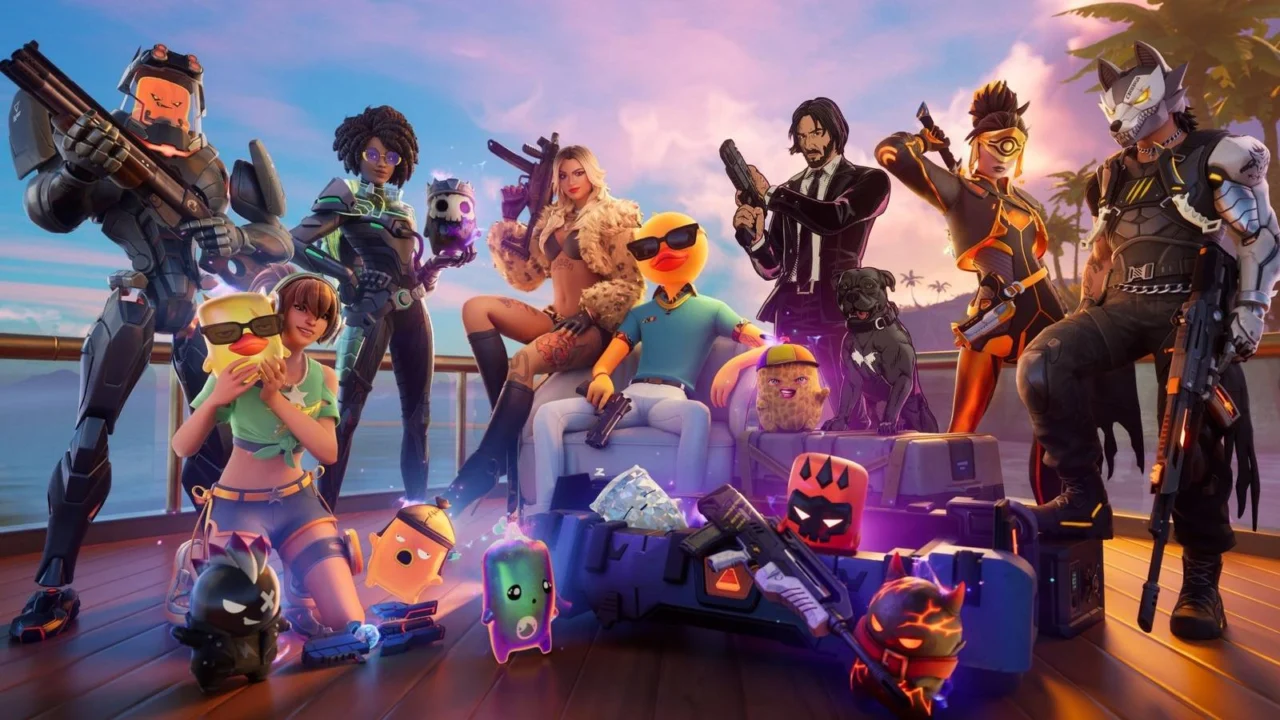
Epic Games Officially Confirms It’s ‘Vibe Coding’ Unreal Engine 6 and Future ‘Fortnite’ Updates
Epic Games remains entirely committed to artificial intelligence integration. In a recent interview with This Week In Video Games, Marcus Wassmer, Epic’s Executive Vice President of Development, outlined precisely how the organization is leveraging AI across Unreal Engine 6, Fortnite, and its broader software ecosystem.
“We view the dangers of moving too slowly as far more threatening than any skepticism surrounding AI,” Wassmer continued. While this strategic pivot comes as little surprise given CEO Tim Sweeney’s vocal support for generative technology, it represents a striking reversal from just a year ago, when Sweeney flatly denied that the enterprise was employing AI for Unreal Engine updates. The prospect that the next iteration of a premier industry engine was largely “vibe-coded”—and might not be fully comprehended by its creators—has sparked genuine alarm across the development community. Critics have also questioned why studios should bother paying Epic’s substantial licensing fees when they could theoretically vibe-code their own bespoke engines instead.
Earlier this month, Epic announced that it had leveraged similar AI methods to build a redesigned version of the Epic Games Store launcher. “Programming is difficult. Consequently, rather than traditional coding, we vibe-coded a brand-new Epic Games Launcher that delivers significantly faster response times alongside a modernized interface,” the company stated in a blog post. Shortly afterward, social media platforms flooded with videos showcasing the launcher malfunctioning, with one user even alleging that the software had bricked their computer system. Although Epic boasted that its application launched quicker than Steam, Valve countered almost immediately by pushing out a competitive store update that effectively eliminated the performance gap. Sweeney subsequently reaffirmed on Sunday that the firm relies on artificial intelligence systems to generate codebase foundations for Unreal Engine.
What other pro-AI statements has Sweeney made?
In addition to these developments, Sweeney has championed numerous pro-AI initiatives over recent months. He has asserted that an upcoming “golden age of gaming” is practically inevitable thanks to machine learning advancements. Furthermore, he has repeatedly denounced Steam’s mandate for AI-content disclosures, labeling it a politically motivated move that unfairly restricts opportunities for creators. Despite growing industry normalization, a substantial portion of players remain deeply concerned about whether narrative writing and visual assets are crafted by humans or synthesized by large language models.
Reports indicate that Epic recently postponed an unannounced crossover project featuring Marvel and Star Wars properties while aggressively pivoting toward an “AI-first” development pipeline. According to internal sources, one director bluntly informed staff that handwritten code is a thing of the past, noting that all future aesthetic assets will be entirely driven by automated AI workflows.
Tim Sweeney continues to advocate for the use of AI in video game development
Source: Polygon
Related articles
 Super Battle Golf sets March 25, 2027 console launch with cross-play
 The Must-Play Board Games from 2026’s Biggest Board Game Fair
 HYPERyuki: Snowboard Syndicate confirms Switch 2 release for early 2027
 Backrooms Director Kane Parsons Teases Potential Portal Movie
 Screen Stocks launches on Steam with a shared simulated market and clicker progression
 Warehouse Catastrophe is out on Steam with a wrecked stockroom and feline helpers
 Bolt of Whalington demo arrives November 5 with a cat-piloted mech and a floating whale city
 Boxed Games Become a Problem for Collectors as Issues Reach PS5