D&D is Officially Getting Magic’s Most Controversial Money-Making Scheme of the Decade
Magic: The Gathering raked in an astounding $1.72 billion in annual revenue for fiscal year 2025, a triumph largely driven by the staggering commercial success of its Universes Beyond product line. Although a vocal segment of purists has grumbled about these frequent crossovers, integrating powerhouse intellectual properties like *Final Fantasy*, *Marvel*, and *Avatar: The Last Airbender* has proven exceptionally lucrative. Capitalizing on this momentum, Wizards of the Coast is now pivoting the strategy toward *Dungeons & Dragons*, officially introducing its own branch of Universes Beyond via high-profile collaborations with *World of Warcraft* and *Star Wars*.
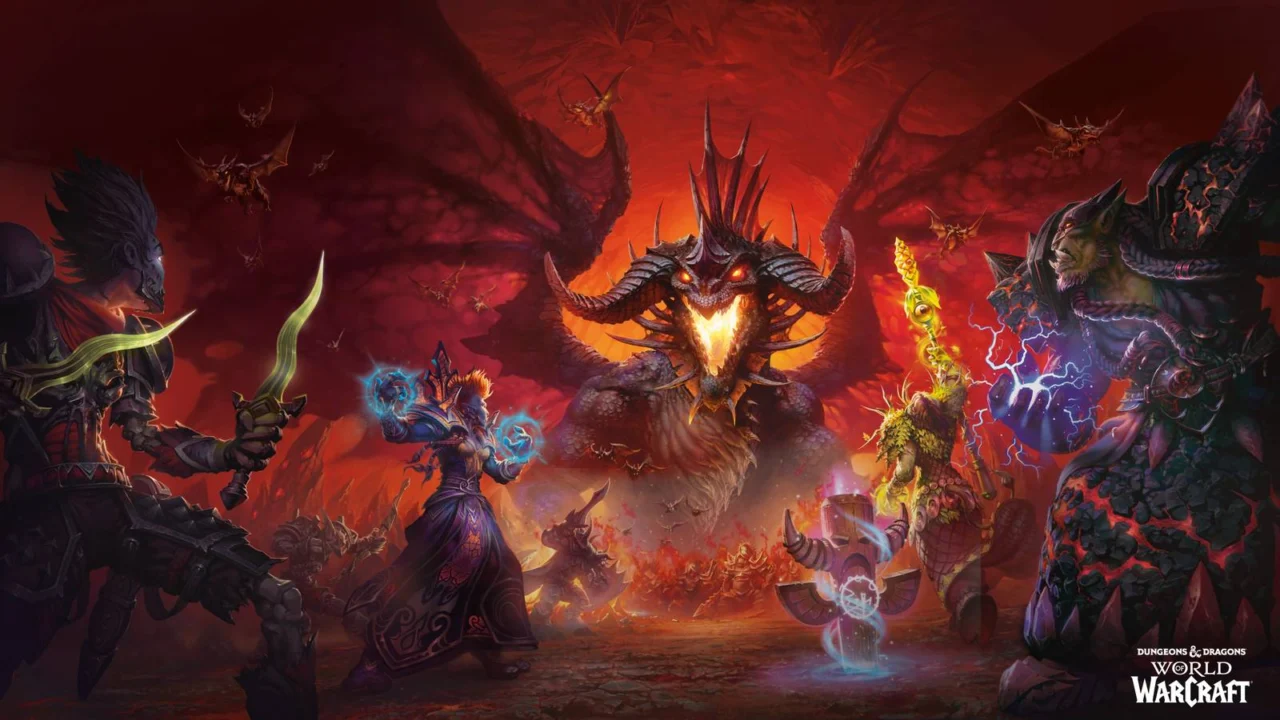
Both blockbuster partnerships broke cover during the keynote address delivered by Wizards of the Coast at Gen Con 2026. The inaugural release, Dungeons & Dragons: World of Warcraft, spans a hefty 256 pages and encapsulates lore spanning the iconic MMORPG’s 22-year legacy, including the 2026 expansion, *Midnight*. The tome introduces 11 fresh species—such as Pandaren and Draenei—alongside novel elven lineages and extensive historical lore. Furthermore, six brand-new subclasses and three overhauled options tailored for the D&D 5.5e ruleset empower adventurers to embody archetypes like Death Knights, Demon Hunters, and Shadow Priests, complemented by a robust arsenal of over 60 new spells.
“Our methodology for this volume centers on spotlighting every *World of Warcraft* class and individual specialization, detailing precisely how to construct those avatars using either standard *Player’s Handbook* mechanics, these newly introduced guidelines, or typically a dynamic blend of both,” explained principal game designer James Wyatt during a virtual media roundtable.
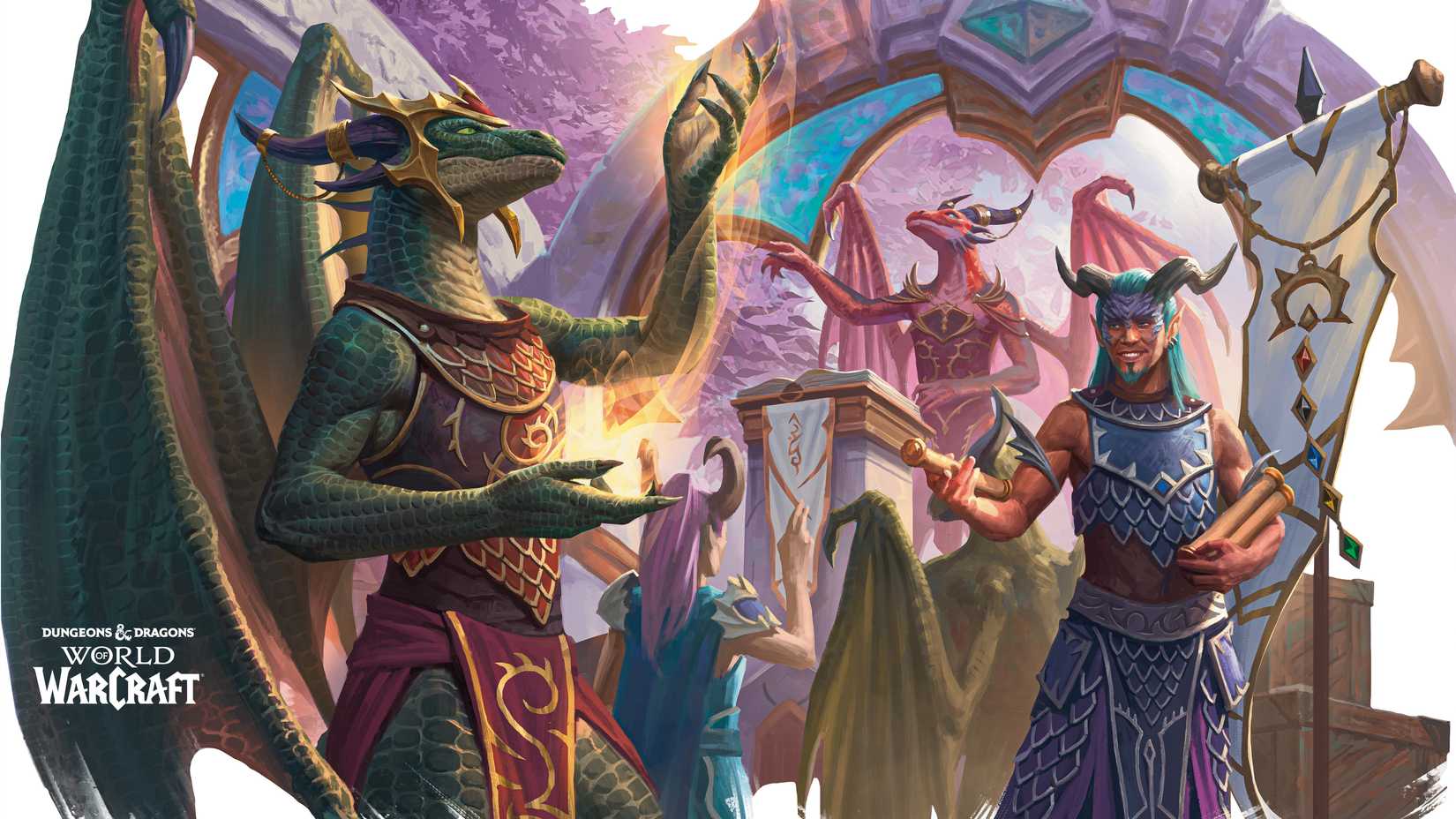 Image: Wizards of the Coast
Forsaking direct screenshots from the MMORPG, the publication curates a thoughtful blend of archival artwork—drawn from legacy properties like the defunct *World of Warcraft Trading Card Game*—and fresh, bespoke illustrations engineered to match the aesthetic tone of the core *Player’s Handbook*. The manual maps out legendary settings such as the Horde capital of Orgrimmar and the Lich King’s formidable Icecrown Citadel, complete with comprehensive statistical profiles for icons like Jaina Proudmoore and Arthas Menethil. Alongside the book, Hasbro is rolling out a targeted line of miniatures featuring figures such as Arthas and the franchise’s inaugural Demon Hunter, Illidan Stormrage. Furthermore, an Icecrown Citadel map collection will grant access to a digital module engineered to shepherd a five-player adventuring party smoothly from level 16 to 20.
Within its pages, Dungeons & Dragons: World of Warcraft details seven distinct dungeons housing 30 bosses and upwards of 50 novel adversaries, though tabletop groups will thankfully be spared the headache of coordinating a 10- or 25-person raid roster. Translating Azeroth into traditional D&D mechanics also necessitated bespoke subsystems, encompassing dedicated trade professions and renown progression systems spread across 23 factions. Treasure-seeking players can additionally hunt down 26 unique magical items, including legendary artifacts, alongside comprehensive systems for mounts and loyal companions.
While D&D has previously dabbled in modest crossovers—issuing specialized boxed sets for Rick and Morty and Stranger Things, alongside campaign books set within Magic: The Gathering universes—third-party publishers have long utilized the Open Game License to craft independent adaptations. Notably, White Wolf leveraged 3.5 edition rules to release World of Warcraft: The Roleplaying Game back in 2005, while Free League published The Lord of the Rings Roleplaying utilizing fifth-edition frameworks in 2023.
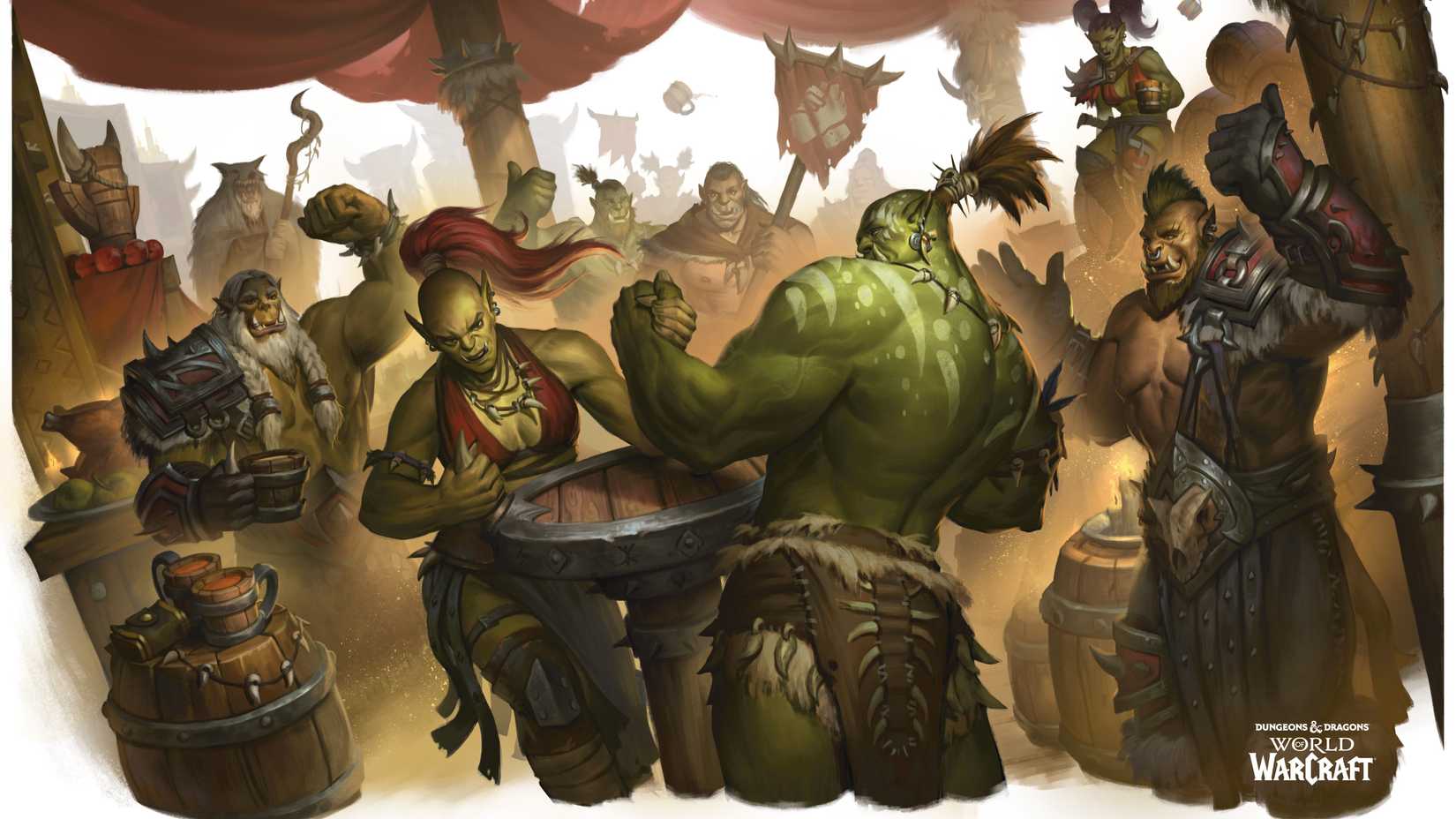 Image: Wizards of the Coast
Even so, fully embracing *Magic*’s Universes Beyond philosophy marks a paradigm shift for tabletop roleplaying. Dungeons & Dragons: World of Warcraft arrives on November 17, anchoring the upcoming “Season of Champions” within the company’s newly minted release schedule. A *Star Wars* adaptation will subsequently follow in the summer of 2027 as the centerpiece of the “Season of Rebellion,” effectively stepping into the void left by Fantasy Flight’s *Star Wars Roleplaying Game*, which went out of print in 2020.
Alongside direct internal developments, Wizards is deliberately licensing several cherished D&D settings to external publishing houses, empowering outside creators to spearhead fresh campaigns.
“Our community shouldn’t have to endure decades-long waits between official visits to Eberron, Ravenloft, or Dark Sun,” executive producer Greg Bilsland emphasized during the press gathering. “We need to streamline the process of running these adventures. Naturally, the core constraint is our internal team’s finite size, which has historically made sustaining robust adventure support across every single world a monumental challenge.”
 Image: Wizards of the Coast
Kobold Press—famed for producing the 2014 fifth-edition launch modules Hoard of the Dragon Queen and The Rise of Tiamat—is officially returning to develop content for the Forgotten Realms. Meanwhile, Ghostfire Gaming, renowned for its brooding dark fantasy setting *Grim Hollow*, will take the reins on Ravenloft. Visionary Production & Design, which previously released Exploring Eberron and Frontiers of Eberron: Quickstone via the Dungeon Masters Guild, will maintain its stewardship over that realm through the newly established arrangement.
“We remain fully committed to nurturing proprietary IPs like *Arcana Unleashed* alongside Dark Sun, while simultaneously branching into select Universes Beyond crossovers to ensure a healthy equilibrium without oversaturating any single aesthetic,” noted Blain Howard, senior manager of brand publicity and communications. “We’ve gleaned invaluable insights from our colleagues down the hall at *Magic: The Gathering* regarding how to execute these external integrations thoughtfully and impactfully.”
Given that Universes Beyond lines currently comprise half of all annual *Magic* releases, adopting this structural playbook means the future landscape of *Dungeons & Dragons* is primed for a profound evolution.
Source: Polygon
Related articles
 Major 2026 Game Releases on Xbox Game Pass Today Along with Another Premier
 Grand Blue Dreaming Renewed for Fourth Season
 Xbox Lays Off 268 More Employees and Transfers Halo Franchise to Activision
 First Details Emerge for New Sci-Fi Movie From Resident Evil Director
 Xbox Announces Halo Layoffs and Major Changes in Big ‘Reset’
 Sony Reveals Another DualSense Controller Design As Fans Again Demand Games
 Silent Hill: Townfall Receives First Reviews as Horror Game Earns Early Praise
 Spider-Man 5 Reportedly to Feature Peter Parker and Miles Morales