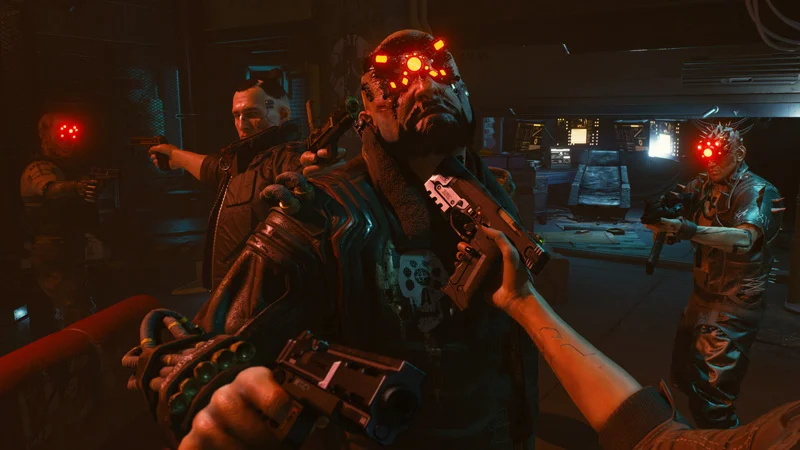
Controversial Removal of the Cyberpunk 2077 VR Mod
Virtual reality gaming remains a specialized segment of the industry, struggling to reach mainstream ubiquity despite high-profile releases like Half-Life: Alyx, Batman: Arkham Shadow, and Metro: Awakening. The fragility of the market was recently underscored by Meta’s decision to shutter three of its dedicated VR development houses. For years, the medium’s growth has been sustained largely by the ingenuity of independent enthusiasts—until a recent wave of legal friction disrupted the ecosystem.
The past month has been defined by a heated controversy involving VR modifications. Luke Ross, a prominent developer renowned for porting AAA titles to virtual reality, reported a legal challenge from CD Projekt Red regarding his Cyberpunk 2077 modification. The Polish studio took issue with the mod being distributed behind a paid Patreon subscription, asserting that this violated their Fan Content Guidelines. They demanded that Ross either remove the paywall or cease distribution entirely.
I’d like to briefly address the discussion around the “Cyberpunk VR” mod created by Luke Ross. We have indeed issued a DMCA strike, as it was available as a paid mod (only accessible to Patreon subscribers). This directly violates our Fan Content Guidelines: we never allow…
— Jan Rosner (@jan_rosner) January 19, 2026
While game developers generally embrace community-made content, they almost universally mandate that such projects remain free. Ross, however, defended his model, arguing that the technical labor required to implement VR into a title as complex as Cyberpunk 2077 was monumental. He expressed concern that making the mod free would be unfair to the patrons who had already funded its development. Ultimately, CD Projekt Red enforced its internal policies by issuing a copyright strike against his Patreon page.
In his defense, Ross claimed the DMCA notice was served before he even had a chance to negotiate the paywall issue. Furthermore, extracting the Cyberpunk 2077 mod from his proprietary R.E.A.L. VR framework—which supports over 30 titles, including Watch Dogs 1 and 2—is a complex technical hurdle. This isn’t the first time Ross has faced corporate pushback; in 2022, Take-Two Interactive successfully scrubbed his VR mods for GTA 5, RDR 2, and the Mafia trilogy from public access.
The situation escalated when the developers of Ghostrunner also filed a complaint against the modder. As a result, a vast portion of the R.E.A.L. VR catalog was taken offline. This move backfired in terms of security, as the tools were quickly pirated and distributed across the web, causing significant financial damage to Ross. At his peak in mid-2022, his Patreon was estimated to generate roughly $20,000 in monthly revenue.
The most striking detail of this conflict is that Ross actually approached CD Projekt Red four years ago to seek official backing for his VR port, but his proposal was rejected. Years of independent development later, the clash between corporate mandates and enthusiast-driven innovation has resulted in the total erasure of a tool that many players considered essential for experiencing major titles in virtual reality.
Source: gta.com.ua
Related articles
 GTA Online Launches Business Rivalries Event Part 4 Bonuses
 Twitch CEO Says GTA 6 Online Will Launch in 2027
 Rockstar Games Issues Warning to GTA 6 Actors
 GTA Online on PS4 Sees an Influx of Cheaters
 Fan-Made Ports of GTA 3, GTA: Vice City, and GTA: Liberty City Stories for Nintendo 3DS Are Now Available
 Brands Again Mimic GTA 6 Art Style in Marketing Campaigns
 GTA 6 Becomes Main Attraction at Tokyo Game Show
 GTA 6 Launch Projected to Cost US Economy $1 Billion