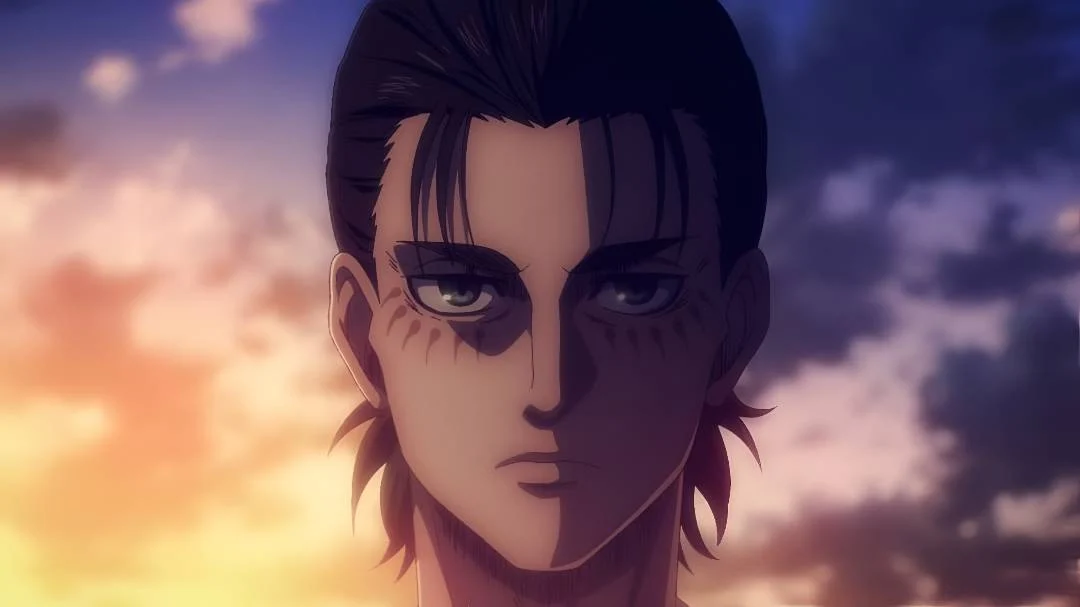
Attack on Titan creator shares his biggest regret regarding the anime’s controversial ending

Some protagonists remain steadfast in their values, while others are gradually hollowed out and redefined by their environments. Eren Yeager, the central figure of Attack on Titan, occupies a volatile space between these two extremes. His transformation is a brutal intersection of innate disposition and harsh circumstance, where the fire of righteous indignation eventually consumes everything he holds dear.
Eren’s metamorphosis from a defiant hero into a villainous architect of destruction stands as one of the most provocative arcs in modern manga. Yet, creator Hajime Isayama has recently expressed a sense of creative unease regarding the series’ conclusion, as documented on a commemorative display at the Attack on Titan Museum in Hita City. You can read his reflections below:
“Eren evolved into a protagonist responsible for mass slaughter on a scale rarely witnessed in contemporary fiction. My original intention was to craft a narrative defined by a jarring subversion—a story where the victim gradually assumes the role of the aggressor.
However, much of this was fueled by the restless volatility of my own early twenties. That sense of youthful turmoil became the bedrock of Eren’s identity, eventually steering him toward a confession not driven by necessity, but by an internal, dormant desire for destruction.
As the series progressed, however, Attack on Titan outgrew my individual vision; Eren became a character embraced by countless readers. Because I found myself unable to fully commit to painting him as a detestable monster—choosing instead to frame his descent with a lingering sense of intimacy—I am left with the feeling that the conclusion carries an inherent insincerity.”

Isayama’s recent candor likely reflects the lingering friction surrounding the manga’s finale, which faced criticism for feeling somewhat rushed. In an attempt to clarify his vision, the author introduced eight additional pages, hoping to add depth to the character arcs and provide a more cohesive sense of resolution. While this extended conclusion offered some relief, the debate remains alive. It is understandable that Isayama continues to scrutinize the impulses that birthed such a polarizing legacy.
Despite the author’s self-critique, Eren remains a masterclass in complex antagonism. The very “sympathy” Isayama identifies is precisely what makes the character work. Eren did not begin his journey with the goal of eradicating the vast majority of humanity; rather, he was pushed into a radicalized state by a lifetime of systemic trauma and unrelenting hardship.
The friction between the man Eren could have been and the monster he ultimately became is what grants the series its haunting pathos. While a more cold-blooded, purely villainous portrayal might have satisfied a traditional narrative, it would have arguably stripped Eren of the humanity that makes his collapse so devastatingly tragic.
Source: Polygon
Related articles
 10 Years Later, Naruto Mobile Fighting Game to Launch Outside China
 Fan-Made Command & Conquer Mod Generals Evolution to Receive Story Campaign
 Avengers Doomsday to Feature Exclusive Magic: The Gathering Doctor Doom Card
 ‘GTA 6’ Leaker Threatens to Release Full Game Early by Posting Nude Lucia Video
 GTA 6 Leaker Threatens To Release Full Game Build Before November Launch
 Rockstar Sends Gift to GTA VI Buyer Following Polite Request, Facing Criticism From Other Players
 Modder Restores Cut Assassin’s Creed Black Flag Resynced Scene Connecting Franchise Games
 Why Matt Mercer’s Famous Critical Role Quote Remains the Ultimate D&D Slogan