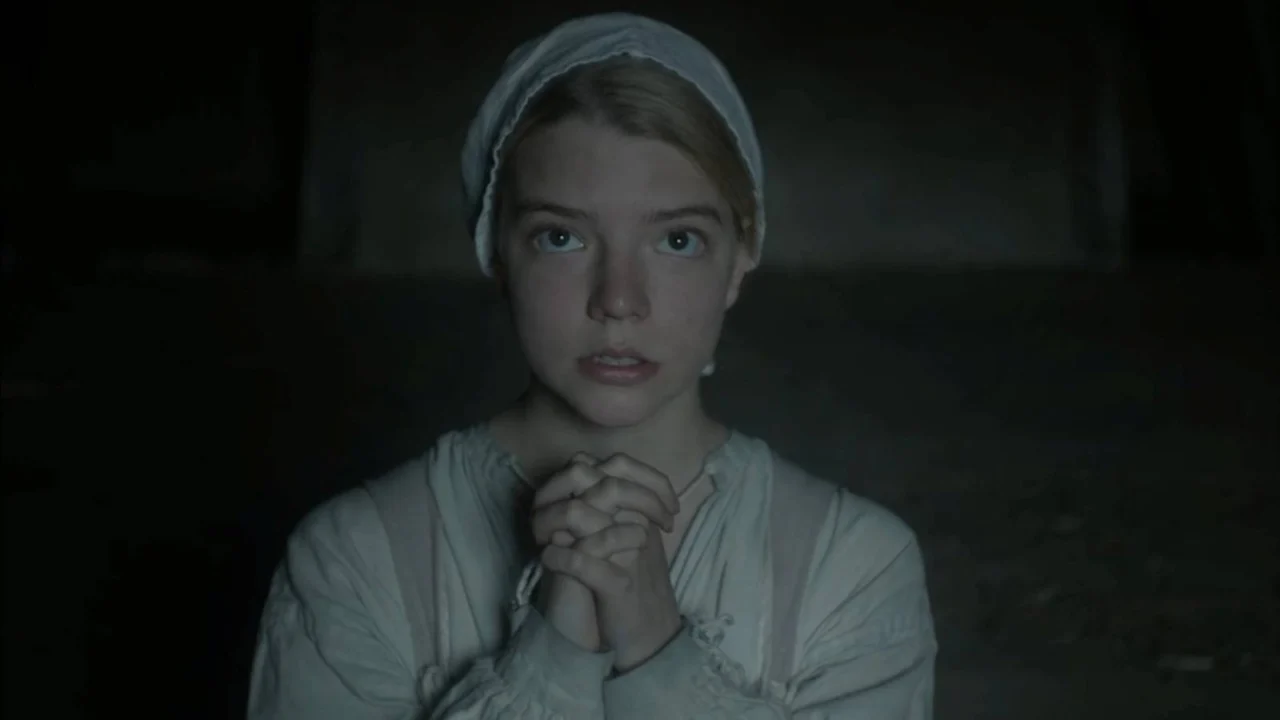
A Decade Later, the Film That Defined A24 Elevated Horror Is More Essential Than Ever
The trajectory of horror-centric studios often follows a predictable arc: a boutique label builds its reputation through chilling genre fare before pivoting toward high-concept prestige projects that target the Academy rather than the Fangoria subscribers. This evolution is perhaps best illustrated by New Line Cinema’s twenty-year odyssey from the low-budget nightmares of A Nightmare on Elm Street in 1984 to the grand cinematic triumph of The Lord of the Rings: The Return of the King.
In a similar vein, A24 has transitioned from a hip indie distributor into a global powerhouse, frequently topping box offices and awards shortlists with sophisticated dramas like Josh Safdie’s Marty Supreme and Celine Song’s Materialists. Interestingly, while A24 is synonymous with modern terror, only two of its ten most profitable films belong to the horror genre, including the seismic hit Hereditary. Yet, exactly a decade ago, it was Robert Eggers’ haunting debut, The Witch, that set the stage for the studio’s dominance.
During its initial run, Eggers’ folk-horror masterpiece nearly matched the domestic earnings of Alex Garland’s Ex Machina, even surpassing it in global markets. More importantly, The Witch defined A24 as the premier destination for atmospheric, intellectually rigorous horror. This gave rise to the often-debated moniker “elevated horror”—a term that can feel dismissive of the classics that came before it, yet remains oddly fitting for a film that concludes with its protagonist literally ascending into the night sky.
By now, the hallmarks of a Robert Eggers production are unmistakable. Whether exploring the early 20th century or traveling back through the ages, his films are defined by an obsessive commitment to historical verisimilitude. His work is immersive, characterized by period-accurate dialects and painstaking production design. Even when the narrative leans into the supernatural or the macabre, it is always anchored by an anthropological precision that makes the horror feel disturbingly tactile.
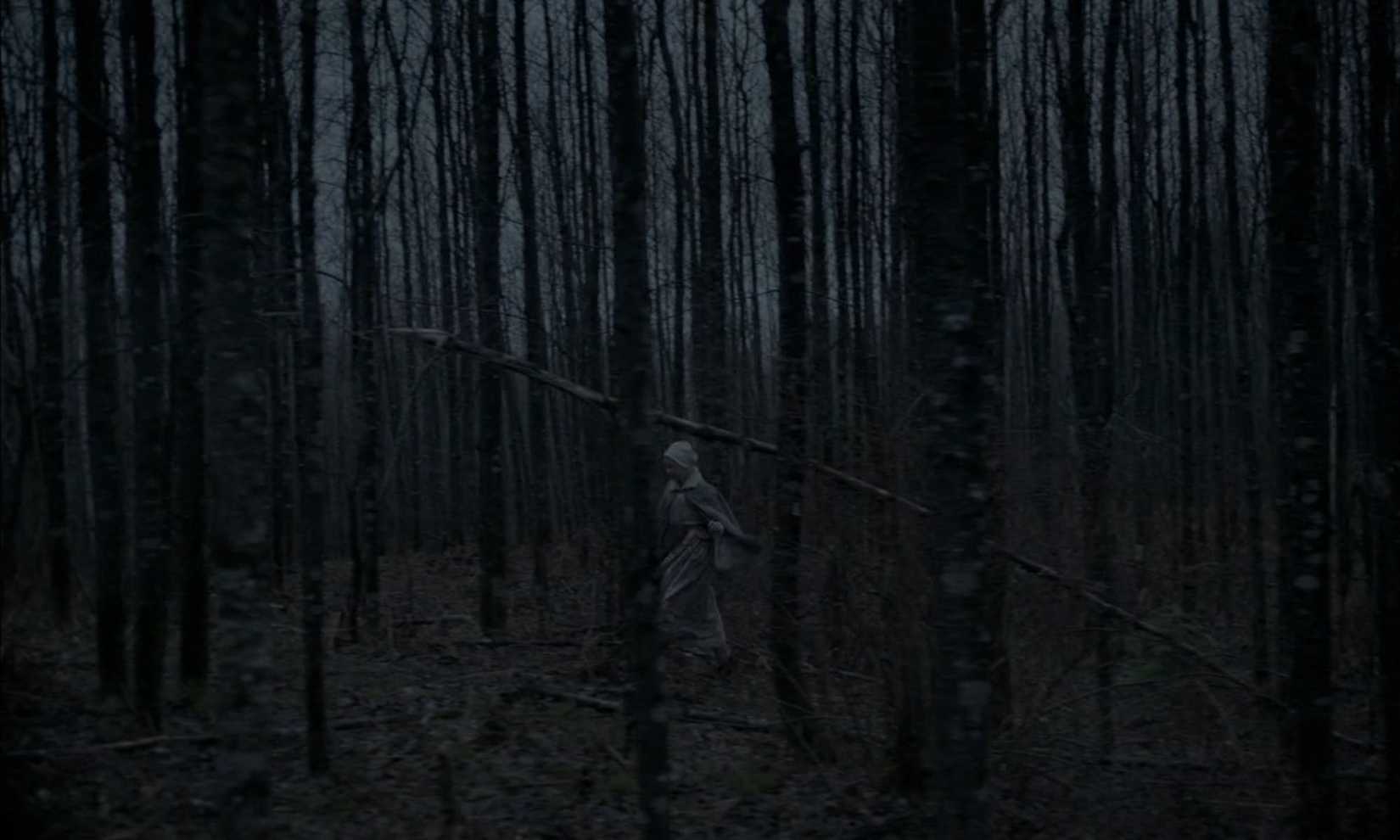
Ten years ago, The Witch captivated audiences with its stark, overcast depiction of 17th-century New England. The story begins with William (Ralph Ineson) and his kin being cast out of a Puritan colony, apparently because William’s theological rigidity proved too extreme even for his fellow zealots. The family retreats to the edge of a forbidding forest, attempting to carve a life out of the unforgiving soil. However, their struggle for survival takes a devastating turn when the infant Samuel vanishes while under the care of his sister, Thomasin (Anya Taylor-Joy).
Eggers masterfully builds dread by focusing on the unseen. Rather than relying on jump scares, he utilizes off-screen space to distort the audience’s perception of time. Samuel’s disappearance occurs in the space of a single heartbeat: Thomasin closes her eyes for a game of peek-a-boo, and when she opens them, her brother is gone. There is no sound of a struggle, no rustle of leaves. The film doesn’t treat this as a mystery; we are quickly shown a glimpse of a crone in the woods, yet the true horror lies in the gaps between what is shown and what is merely suggested.
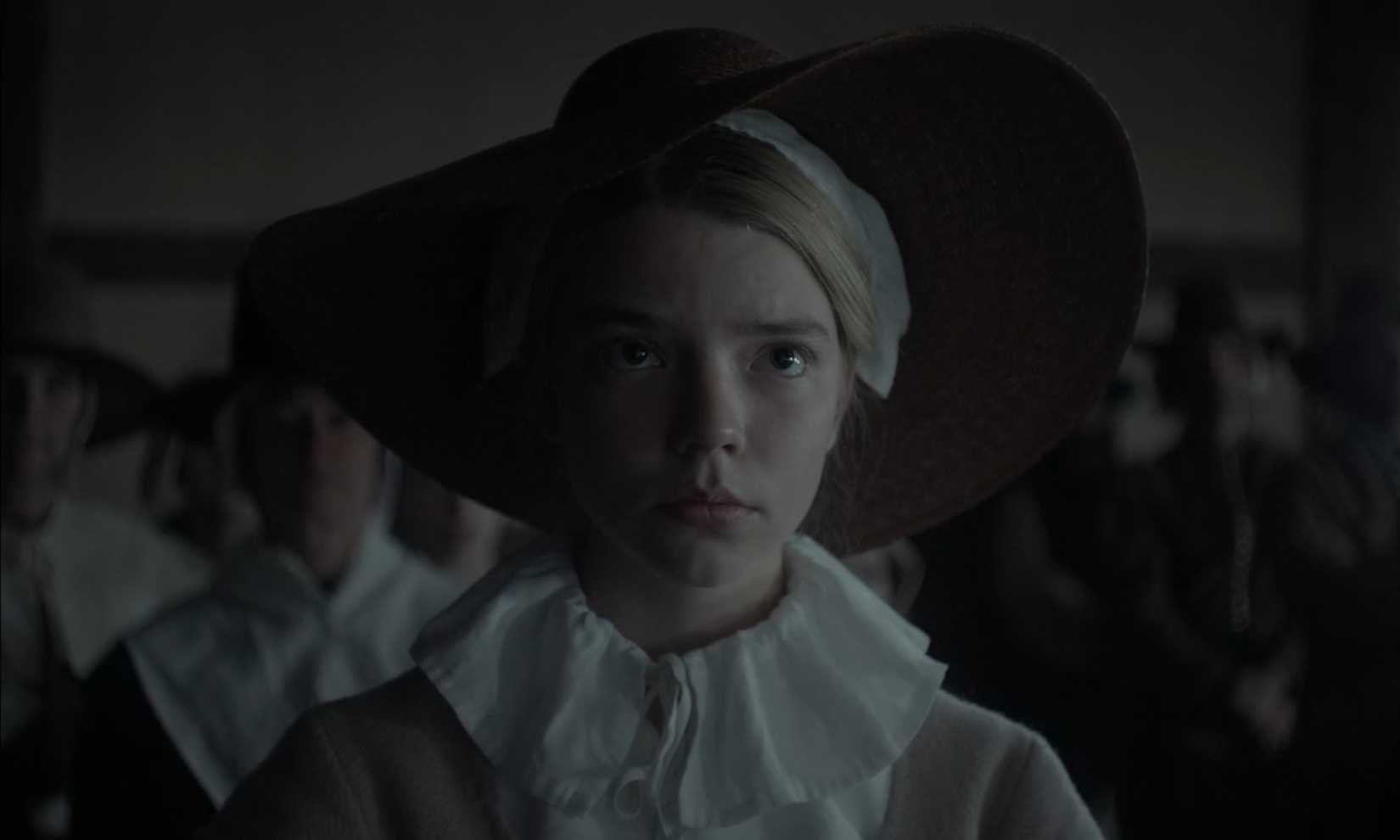
This atmosphere of ambiguity allows paranoia to fester within the family. Thomasin, desperate and maligned, eventually feigns witchcraft to frighten her younger siblings, Mercy and Jonas. This breakout performance by Taylor-Joy utilized her striking, wide-eyed gaze to convey a deep, spiritual exhaustion. As the narrative unfolds, she is caught between the looming threat in the forest and the growing hostility of her parents, who demand a scapegoat for their mounting misfortunes.
While Taylor-Joy is the heart of the film, Ralph Ineson provides its tragic weight. His performance as William captures a man broken by his own pride. While his wife Katherine (Kate Dickie) descends into hysterical grief, William remains paralyzed by a secret guilt—he knows he traded his wife’s silver cup for supplies, yet let Thomasin take the blame. Ineson portrays a father whose physical and moral strength has withered away. When the family’s goat, the sinister Black Phillip, finally turns on him, William’s surrender feels almost like a moment of relief from the burden of his failures.
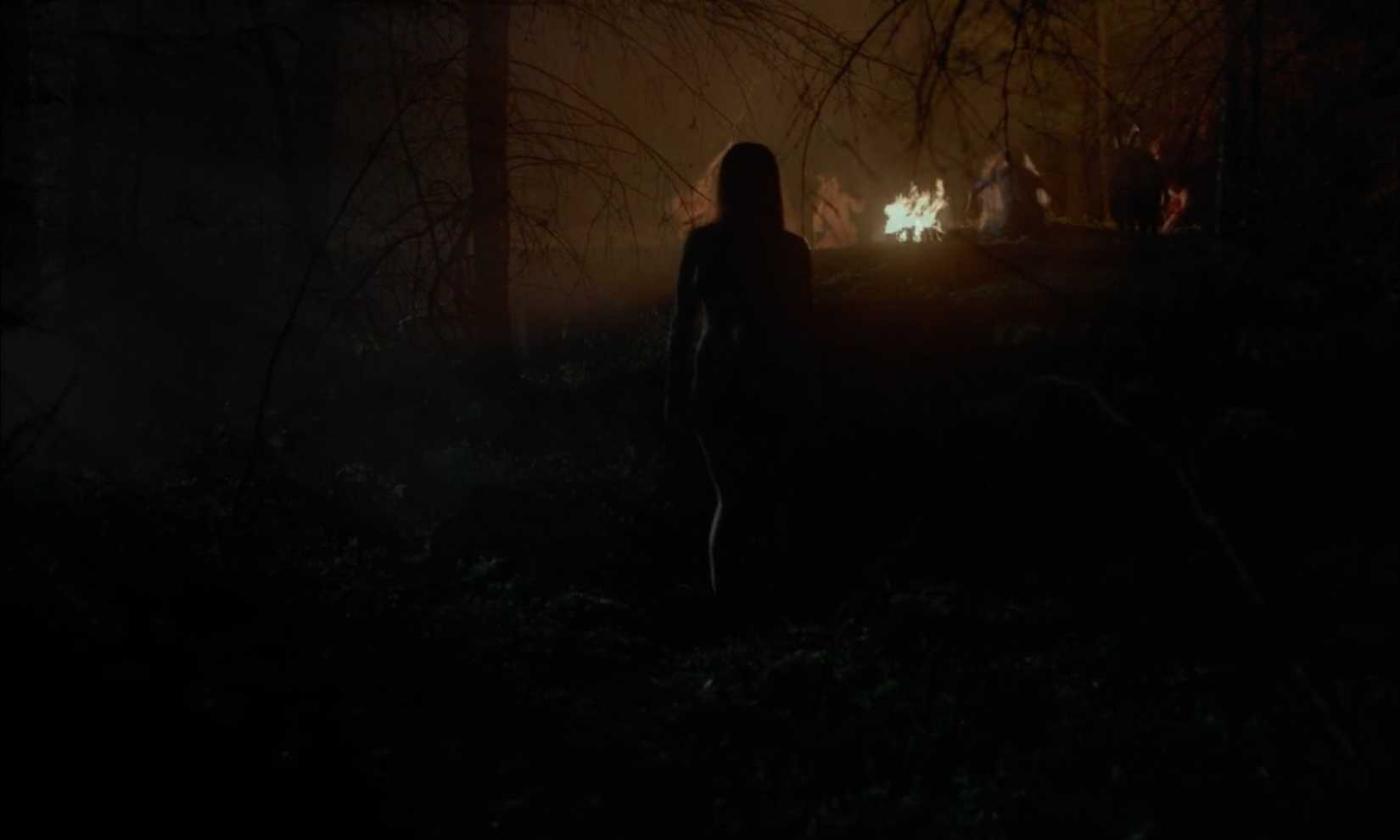
Thomasin’s own surrender is portrayed with a dark, intoxicating sense of liberation. Left with nothing, she engages with Black Phillip and accepts his invitation to “live deliciously.” The resulting finale is one of the most memorable in modern cinema; as she levitates among her new sisters, the film transforms from a grim survival story into a perverse triumph. It is a rare horror film that ends on a note of ecstatic, if hellish, transcendence.
POLY Report: Subscribe to our latest insights
In the years since its release, the “A24 horror” aesthetic has been widely imitated, often to the point of cliché. While A24 continues to experiment with the genre, Eggers has moved on to larger canvases with Focus Features, including his recent projects. Yet, The Witch remains his most potent work—a small, intimate nightmare that entices you into the woods only to leave you breathless at its sudden, skyward ascent.
The Witch is currently available to stream on HBO Max.
Source: Polygon
Related articles
 Chitose Is in the Ramune Bottle Anime Creators Publish Creditless Opening and Ending
 Fans Release Unofficial Android Ports of Burnout 3: Takedown and Burnout Revenge
 Cult Shooter Black Gets Fan-Made Android Port
 Steam Officially Launches Calendar Feature to Recommend New Games Directly
 Details Emerge on Canceled Mass Effect Universe, Reportedly With Hitman-Style Missions and a Setting 600 Years After Shepard
 Xbox COO Helen Chiang leaves Microsoft after 21 years
 Aaron Paul Originally Had a Larger Role in Clayface Before His Part Was Reduced to a Cameo
 Pixel Body Horror Game Look Outside Is Coming to Consoles