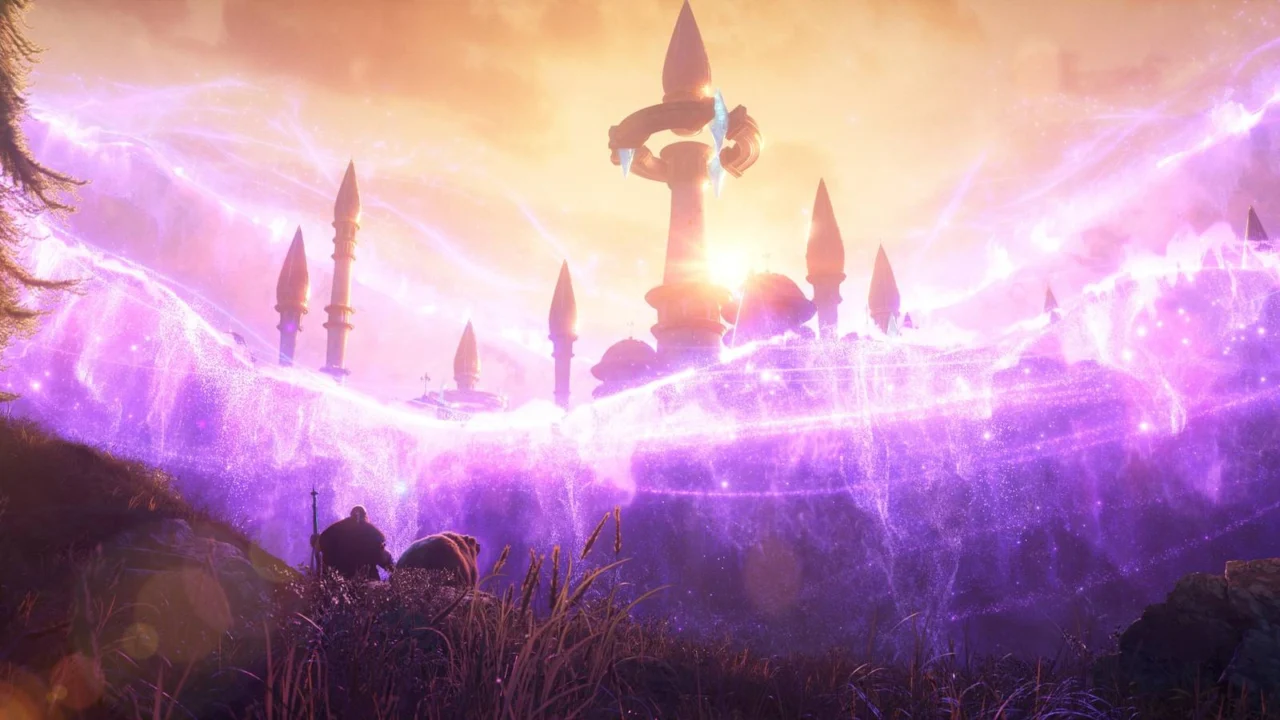
World of Warcraft Forever’s Plan to Bring ‘Classic Plus’ to New and Old Players
During BlizzCon 2026, Blizzard Entertainment unveiled one of its most eagerly awaited endeavors: World of Warcraft Forever. As the third major milestone for the iconic MMORPG, this title delivers the ultimate “Classic Plus” experience that passionate fans have persistently requested for years, even following the 2019 debut of World of Warcraft Classic.
World of Warcraft Forever operates within a temporal bubble, intentionally avoiding the expansive, sweeping overhauls that gradually transformed the beloved MMO over the past two decades. While Forever introduces fresh content—including uncharted zones, immersive quests, challenging dungeons, and a brand-new playable race—alongside thoughtful quality-of-life enhancements, the core philosophy remains deeply rooted in preservation. The development team is carefully safeguarding the elements that made early WoW legendary, striving to captivate players, inspire genuine curiosity, and allow everyone to experience Azeroth at a leisurely, rewarding pace.
At the convention, we sat down with Lead Game Designer Tim Jones and Lead Software Engineer Nora Valletta to discuss the origins of World of Warcraft Forever, the team’s lofty aspirations for this nostalgic MMORPG, and how welcoming this historic world will be for newcomers. Read the complete interview below.
World of Warcraft Forever is currently undergoing beta testing and officially launches on November 4 for Mac and Windows PC.
Polygon: You’ve announced 1,000 brand-new quests. Given how game design has evolved over the last 20 years in World of Warcraft, how is the team approaching quest and dungeon creation for World of Warcraft Forever? Are you consciously stepping back into that 2004–2006 mindset? What is your guiding philosophy?
Tim Jones: We have dedicated an immense amount of effort to analyzing what made the original Vanilla era so magical—specifically, the straightforwardness of objectives and creature designs. Through that evaluation, we established a strict set of core principles that govern combat pacing and quest complexity. Whenever we design a new quest, say in a region like the Wetlands, we evaluate whether a fresh objective naturally belongs there and how we can integrate it seamlessly.
Our priority is ensuring that any added content feels as though it could have existed back in 2004. We frequently use the phrase “found photographs.” Ideally, if a player from 2004 time-traveled to the present day and explored the zone, the objectives would feel intuitive, and the creatures would match the expected difficulty for that region. We are avoiding unnecessary complications to stay entirely faithful to the original vision of Vanilla WoW.
Many veterans who played during their teenage years or early twenties may no longer have four consecutive hours to dedicate to WoW. Is that time constraint factored into your approach for Forever?
Jones: Players certainly need to adapt their mindset for the Vanilla experience. Satisfaction comes from logging in, checking your quest log, and realizing, “I have 30 minutes, an hour, or an hour and a half to play—I can knock out a couple of quests, visit the auction house for materials, and advance my professions.”
There are countless ways to achieve meaningful, incremental progression. The leveling journey is deliberately lengthy for a reason. We want players to take their time and never feel rushed. Our level cap remains strictly at 60. While some players naturally want to sprint to the endgame to jump straight into raids, that isn’t what WoW Forever is designed for.
The leveling journey is paramount. It anchors our core philosophy: “journey before destination.” That ethos is what makes the hardcore experience so profound, as it compels players to live entirely in the moment. We hope this draws newcomers in, giving them the confidence that they can secure a quarter of a level, advance their professions, journey through Elwynn Forest in preparation for Westfall, and find genuine satisfaction in every step without feeling rushed. We are committed to this for the long haul, continuously crafting content across all level brackets indefinitely.
Nora Valletta: I completely fit that demographic. I don’t always have four free hours every evening to sit down and play. In versions of Classic featuring that deliberate gameplay loop, I often log on just to check the auction house or gather some herbs. Sometimes, the goal is simply deciding to finish one specific quest—like a time I planned to wrap up an assignment in the Wetlands. Just as I was leaving town, I noticed a skirmish on a PvP server where someone was trying to gank another player, and I thought, “Well, the quest can wait.” That turned into an impromptu 20-minute PvP encounter before I logged off for the evening. And that is genuinely fun.
Jones: Exactly, and you won’t fall “behind” by partaking in those distractions. If it takes you a hundred days to reach level 60, that is completely fine. There is rewarding progression built into our legacy system, allowing players to experiment with alternate characters or grind out reputations at their own leisure.
I am a father with seven-year-old and five-year-old daughters. Once I put the family to bed during our internal alpha playtests, I can game for a couple of hours. I can no longer commit to a hardcore competitive raiding guild like I might have in my youth, but the experience is still deeply rewarding. Simply questing through the world and occasionally grouping up with others brings immense joy.
I am fascinated by the lore implications of expanding this specific era. Are there storylines you are intentionally avoiding? This is meant to be a self-contained environment, correct?
Jones: Absolutely. We are operating inside a temporal bubble. Chronologically, we exist in the space between Warcraft 3 and The Burning Crusade. Molten Core has not been released yet. We are perpetually inhabiting that initial one-year span of the original Vanilla game. Consequently, certain canonical truths remain absolute: Arthas is still alive, and Illidan is still alive.
When considering lore, we divide content into distinct categories. First, there is anticipated content that players already know exists, such as Mount Hyjal. While it isn’t a total surprise, exploring it during this exact era offers a fresh, thrilling experience because no one has ever stepped foot in that region during this specific timeframe. Alternatively, we build entirely new spaces that feel as though they belonged there all along.
Valletta: The Riverglades is a prime example of that concept.
Jones: Precisely. For the Riverglades lore, we drew inspiration from classic Warcraft and Warcraft 2 storylines, such as the sacking of Stormwind. We incorporated elements from old campaign missions—when retreating orcs were pursued by humans across the eastern coast of the Eastern Kingdoms. The landmass itself always existed within Vanilla WoW, so we found a way to repurpose preexisting lore foundations into an exciting, novel zone for questing.
Simultaneously, we reserve space for unexpected discoveries through locations like Zephras Isle and the Skyborne, ensuring these areas remain deeply anchored in established lore.
The Skyborne, for instance, are Highborne exiles from Eldre’Thalas with a fascinating backstory detailing their defiance against Prince Tortheldrin during his attempts to summon demons through Dire Maul. We built an entirely new narrative around that event which fits seamlessly into the Classic ecosystem, resolving long-standing community mysteries while planting the seeds for new ones to explore for years to come.
We are not rewriting history to suggest Arthas never became the Lich King, nor are we claiming Jaina is secretly a dreadlord. Geographically speaking, the continental silhouettes remain unchanged; preserving structural familiarity is vital. However, we have carved out plenty of room to surprise and delight our audience using both familiar and unanticipated content styles.
Working under those strict parameters sounds fascinating. It must unlock creative opportunities you wouldn’t normally encounter.
Valletta: It opens up rich avenues for storytelling that bypass grand planetary catastrophes in favor of grounded, intimate narratives. We can focus on the everyday struggles and situations experienced by the world’s inhabitants, delivering bite-sized, deeply relatable human stories. That approach carries immense power, and it’s something I am personally most excited to experience as a player in Forever.
Jones: I love that you used the word “constraints.” The Classic team has grown very comfortable operating within specific design boundaries. We have steadily built our expertise by developing content tailored for our Classic iterations, anniversary celebrations, and seasonal variations. As our team’s responsibilities have expanded alongside the company’s trust in our capabilities to tackle larger projects, we’ve received increased resources and support. Even so, we remain fiercely dedicated to the rules and constraints of the Classic style.
We constantly test our content against our foundational principles. If we realize we’ve pushed too far in a direction that violates the Classic feel, we strip it out and pivot immediately. That adaptability is the true strength of the Classic development team.
The community has requested something akin to Forever—often dubbed “Classic Plus“—for many years. Why was now the right time to bring it to life? Was this driven by internal ambitions or community feedback?
Valletta: It was a harmonious blend of both player desires and internal team aspirations. The Classic team formed back in 2019, so our history is relatively brief, but our scope has evolved dramatically. Initially, our objective was simply delivering time-capsule experiences that let players revisit historical content exactly as it was back then. Over time, as community enthusiasm surged around Classic offerings, a powerful feedback loop emerged.
Season of Discovery served as a major experiment where we asked ourselves, “What happens if we lean into wild changes and test various adjustments within a Classic environment?” The overwhelmingly positive response proved that a massive underlying hunger existed among players, and we felt it internally as well. That realization prompted us to ask: What if we built something permanent, substantial, and compelling enough to endure forever?
How much did you consider complete newcomers who have never played World of Warcraft before? What design choices were made for that audience?
Jones: Vanilla Warcraft remains one of the absolute best entry points into the franchise. There is an inherent elegance in how the game onboards players without relying on explicit, heavy-handed tutorials. The measured pacing encourages you to log in, customize your character, step into the world, and immediately face your very first quest. The design is purposefully minimalist, introducing systems at an exceptionally gradual pace.
With WoW Forever entering the spotlight, we anticipate attracting many new players who want to jump in on the ground floor. It offers a permanent, non-seasonal fresh start where they can take their time without feeling overwhelmed or falling behind. I truly believe WoW Forever will serve as an extraordinary starting point for players of all ages.
Valletta: It is a delicate tightrope walk. We might be tempted to completely eliminate friction from the onboarding experience by adding intrusive pop-ups explaining every objective. While removing friction helps players learn faster, doing so robs them of valuable organic discovery. Instead of just Googling answers, players might actually ask fellow adventurers for help, sparking meaningful relationships. Fostering those connections is a cornerstone of WoW Forever.
Jones: “Protect and nurture social experiences.”
How is that social nurturing achieved mechanically within WoW Forever? What does that translate to from a design perspective?
Jones: The new camping system is a wonderful example of how we protect social gameplay. Shortly after leaving their starting zones, players encounter a quest that teaches them how to construct a campfire. This requires investing in a trade skill and leveling it up a few notches before acquiring a recipe to contribute a trade-specific item to the fire. Mechanically, players must sit near this campfire object for about a minute to receive a beneficial buff that assists them during leveling.
During internal playtests, we observed scenarios where players realized a friend was questing nearby in Tanaris, prompting them to set up a campfire together to share buffs. Classic excels at creating moments of quiet rest where players can reflect or converse. Flight points achieve this naturally by avoiding instant teleportation, giving you a few minutes to check guild chat. Similarly, sitting beside someone for a full minute at a campfire naturally leads to conversations like, “Hey, are you working on the Murloc quest too? Let’s party up.”
On the engineering side, we track backend interactions—noting who you form parties with, complete Westfall quests alongside, or run Deadmines with. By keeping a record of these journey companions, the server strategically places you near those same individuals later on, say when you are questing through Desolace at level 40. These serendipitous encounters might turn a random stranger into a lifelong guildmate or even a companion you attend BlizzCon with next year. We are employing deliberate design and engineering solutions to protect and nurture social bonds in WoW Forever.
Despite its aging design, ‘Classic Plus’ promises to be better for new and casual players than the modern game
Source: Polygon
Related articles
 Football Manager 27 Expected to Run on Older PCs Due to System Requirements
 Game Informer Announces Exclusive GTA VI Details Ahead
 GTA VI Collector’s Edition Items Prompt Fan Speculation Over Reused Rockstar Concepts
 GTA VI Collector’s Edition Resold at Markup Despite Availability on Rockstar Site
 Cecil from Final Fantasy IV to Return in Final Fantasy Resonance Trailer
 Cult Sci Fi Series Farscape Now Streaming Free on Tubi
 Models Cosplay Lady Dimitrescu From Resident Evil Village and Grace Ashcroft From Resident Evil Requiem
 Five Classic Sci-Fi Books With Flawless Beginnings and Endings