What It Really Took to Make Big Walk
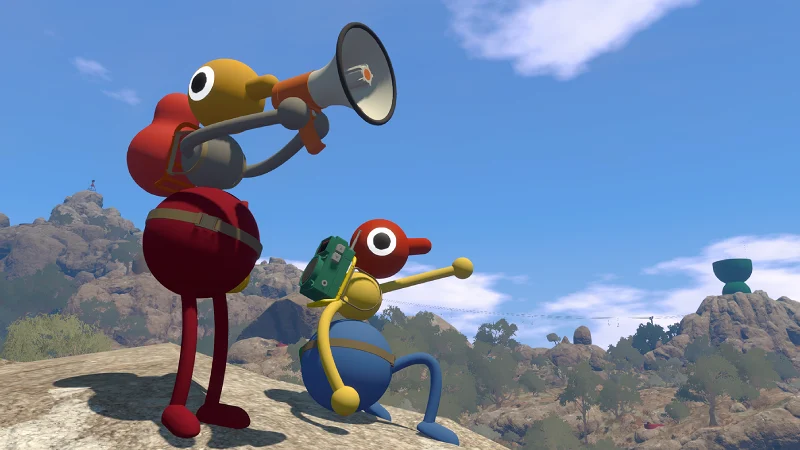
Big Walk began as an escape from lockdown. Unable to meet in person, the team behind Untitled Goose Game created a virtual place to talk and spend time together. That modest experiment grew into an island, then a playground, and eventually a game that challenges familiar ideas about cooperative multiplayer.
The game recently became the subject of controversy over its use of artificial intelligence. In a statement added to the game’s FAQ, House House explained that the team had encountered a lighting physics problem in Unity that appeared impossible to solve. After a Unity engineer told them their desired result was not possible, the developers used an LLM chatbot to help work through the code.
On Nov. 19, a group of influential Independent Games Festival jurors announced that they would not vote for games made using generative AI tools, a position that included Big Walk. The decision prompted debate about programming as an art, disclosure, ethical concerns and the difficult choices facing developers. Whatever one makes of that debate, Big Walk is a remarkable game shaped by an extraordinary amount of creative work.
In a conversation conducted before the controversy, House House co-founder and Big Walk lead designer Jake Strasser discussed proximity chat, the value of friction in cooperative play and the connections players have formed on the island. His answers are paraphrased below.
Polygon: What makes a multiplayer game great, and how did that influence Big Walk?
Jake Strasser: The team wanted to create a genuinely shared experience. Many multiplayer games put people in the same space while allowing them to pursue separate goals, making their proximity almost incidental. In Big Walk, House House wanted being together to matter throughout.
How did Big Walk become a project the studio was ready to pursue?
Strasser: Like the studio’s earlier games, it emerged almost accidentally. At first, the team imagined a much smaller project that would help them learn networking and test the foundations of multiplayer before moving on to a larger game.
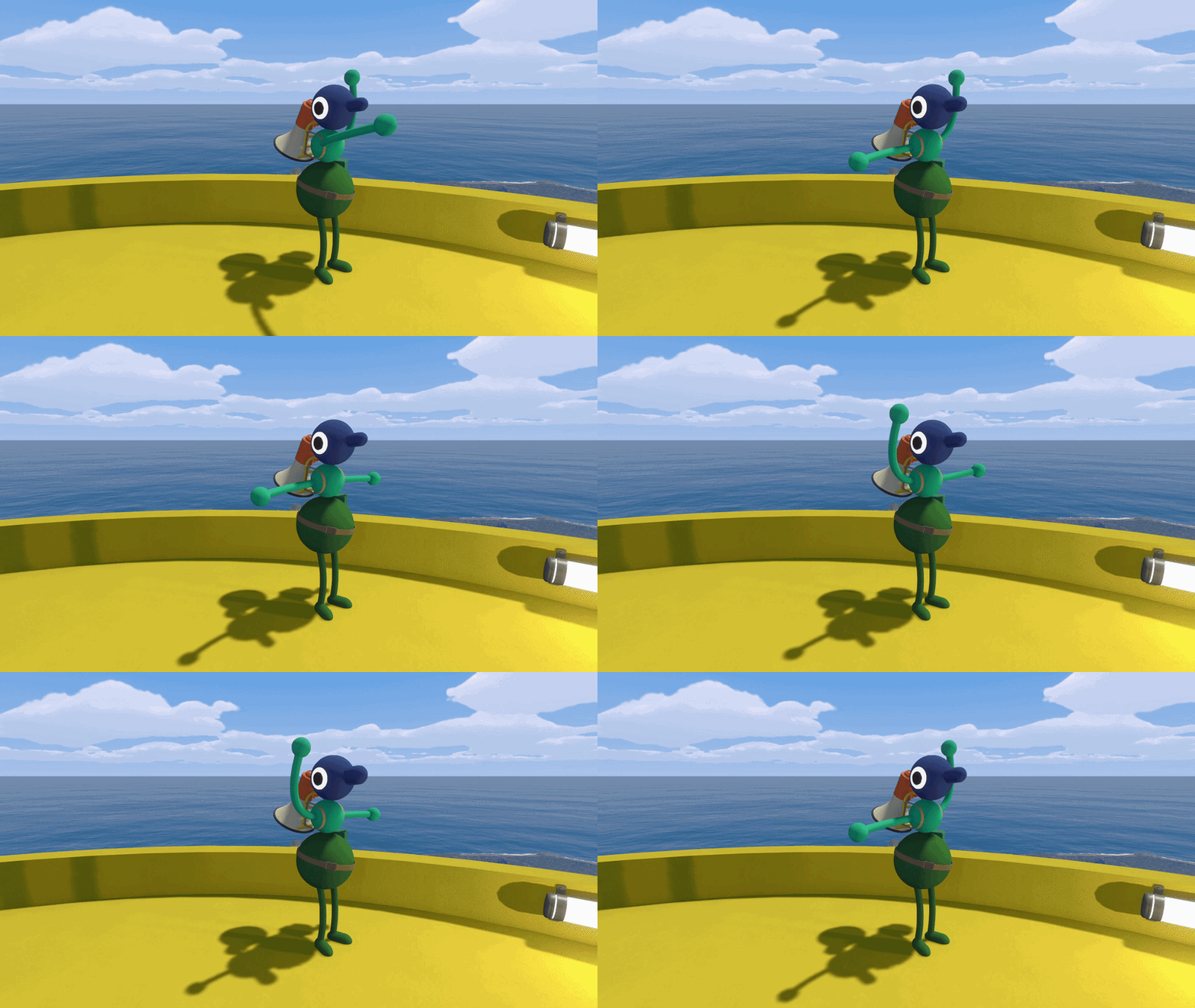
Proximity voice chat changed their ambitions. Hearing one another as though they occupied the same space felt special, particularly during COVID lockdowns, when everyone was confined to their own homes. The developers began building a place to gather and discovered something worth exploring further.
They invited Kalonica Quigley, now House House’s fifth member, to tour an early version of the island. It was a sparse place, with trees, rocks, a possible early lookout tower, a giant floating sphere and some basic shapes. Even so, wandering around together felt like spending time with friends.
When the team tried to recreate that experience with two people from a neighboring studio, however, the same magic did not appear. They realized the game needed structure: challenges that would guide players toward the social moments the developers had enjoyed.
What was an early moment when the idea clicked?
Strasser: One of the first sparks came from a huge cinema screen that could play music. Sharing media in a natural setting, with a day-and-night cycle and sound resembling a festival system, evoked memories of real-life gatherings.
The challenges took longer to define. An early experiment called the gauntlet sent one player through a series of doors while others pressed buttons to let them advance. The player in the passage would call out and wait for the right door to open. It was not quite the experience the team eventually sought, but it helped them move toward it.
What did your experiments reveal about what was not fun?
Strasser: Some early challenges could be completed alone, and players occasionally wandered away from the group. During one playtest, a friend named Tom quietly completed a fielding challenge involving a Pomodoro timer fired from a cannon, collected the reward and returned without telling anyone.
The developers watched as invisible, free-moving observers. Tom was enjoying himself, but the team felt the group had missed out on a shared experience. He could even put the reward into the monument without help.
That observation informed the game’s design. In Big Walk, putting an item away requires cooperation: one player opens the lid while another places the object inside. House House decided that encouraging togetherness, even by making simple actions require another person, led to a more rewarding kind of fun.
How did you balance realistic physics and lighting with the game’s cartoon-like appearance?
Strasser: Looking back at Untitled Goose Game, the team recognized the value of familiar objects and situations. Players intuitively understand everyday items, their significance and their relationship to the people who own them.
Big Walk is less concerned with society in that sense, but it is interested in the social world players create together. Grounding details such as eye contact, touch and physics in recognizable behavior makes the island easier to understand. Players can rely on expectations drawn from real life and settle into the experience more naturally.
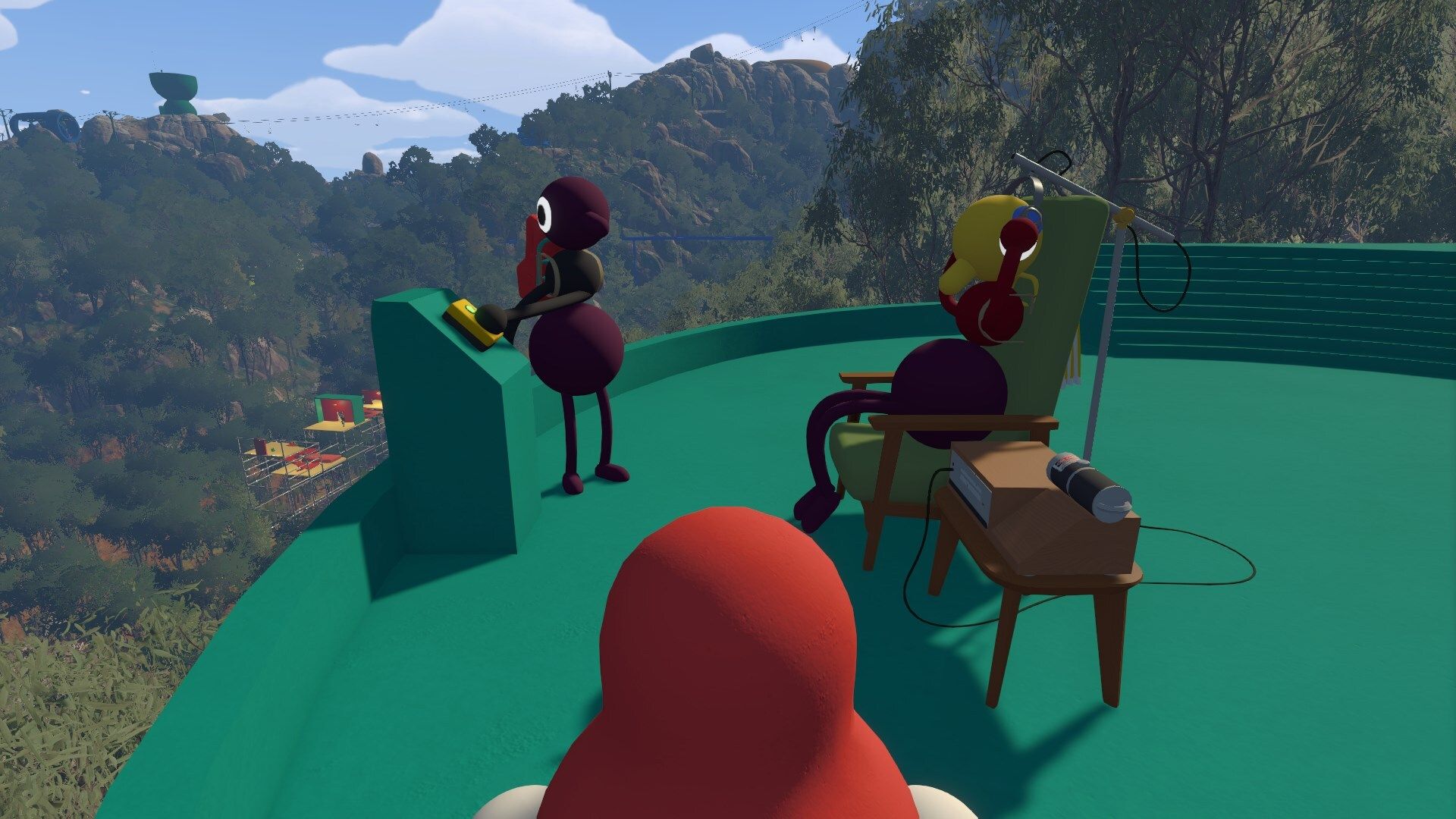
Big Walk is not a conventional narrative game. Do you nevertheless see it as being about something?
Strasser: The developers considered questions about the island’s origins and who might have made it, and they have their own answers. Ultimately, though, they do not consider those answers essential.
As development continued, the team came to see the premise almost literally: House House had made an island for people to explore together. The story is what happens during each group’s playthrough.
What kinds of stories have players shared with you?
Strasser: The studio has received countless emails describing the game’s impact. In one case, cousins who had never met spent 10 hours playing together and got to know each other for the first time. Other players have said the experience helped siblings repair relationships.
As the father of a young child, Strasser finds stories about parents connecting with their children especially moving. He has also heard from players who felt a sense of loss after finishing the game and saying goodbye to the space they had shared.
That sounds like the last day of camp: a temporary experience that leaves a lasting impression.
Strasser: He hopes players carry what they learned back into ordinary life. Some couples, for example, have said the game helped them understand each other and communicate better.
The messages are moving, even though the team sees only a small part of each player’s experience. The fact that people feel compelled to write at all suggests how deeply the game has affected them.
Spoiler warning: The following discussion reveals details about the ending of Big Walk.
Is there a moment that brings together everything the game grew to be?
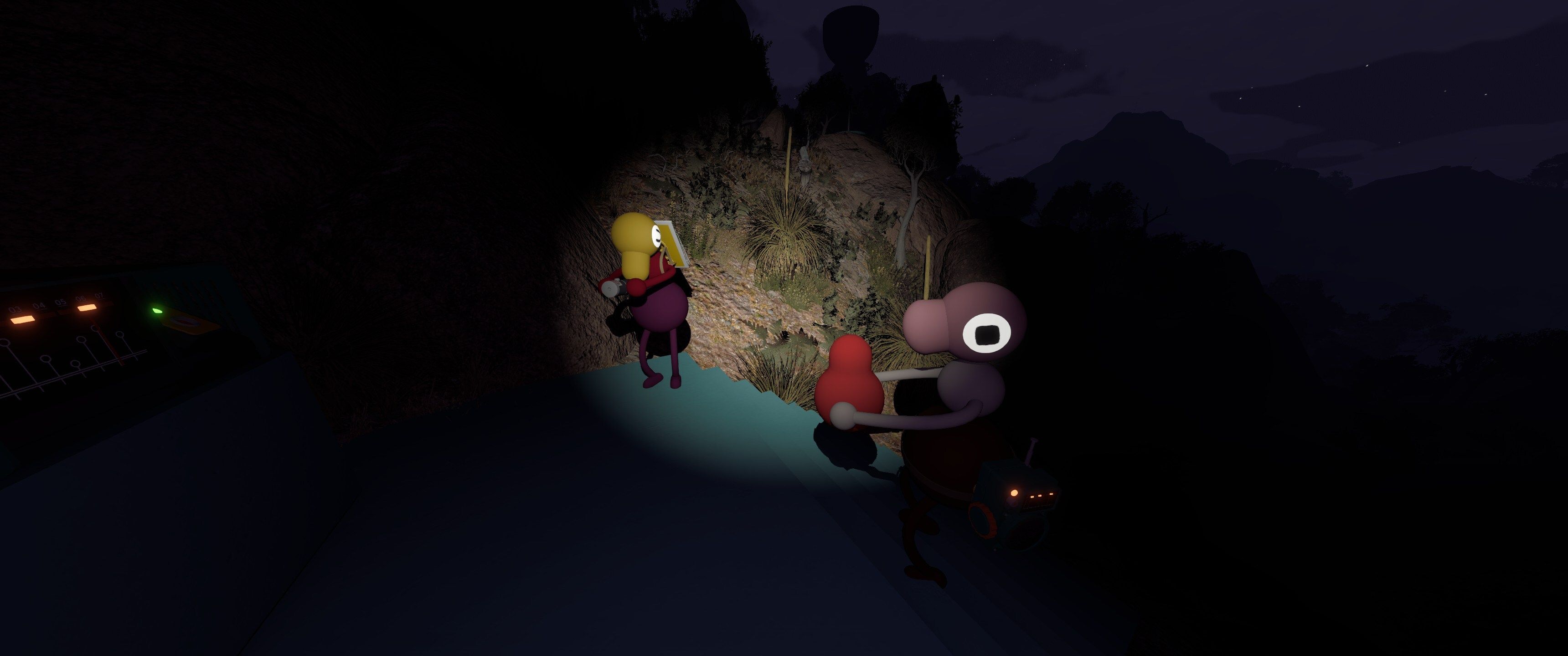
Strasser: Big Walk is built around being with friends and sometimes asks players to cooperate in ways that create friction. Tasks that might be straightforward elsewhere require help: another player must wear your backpack and handle the objects inside it.
The game also separates players at times, making reunions more meaningful. As groups progress, they learn the mechanics while developing their own ways of communicating and understanding one another.
At the end, a black orb takes away players’ voices and makes them anonymous. They must apply the skills and shared language they have developed in a situation for which they may not feel prepared. Nevertheless, groups find ways to work through it.
Strasser compares the approach to parenting: give people a clear framework, help them build skills and confidence, then let them find their own way. The ending pushes players away from familiar tools while still giving them enough support to succeed together.
He credits Nico Disseldorp and Stuart Gillespie-Cook for the design of those challenges. The sequence took considerable iteration to strike the right balance between leaving players adrift and allowing them to find a path forward.
When the sequence ends and everyone can speak again, the relief and reconnection capture the larger experience of Big Walk in miniature.
Could the game’s unusual scale and style cause people to underestimate it as a work of art?
Strasser: People who have not played may struggle to understand what the game offers. Those willing to spend time with it, however, often have a powerful experience.
The five members of House House played through the finished game together and completed everything before launch. For the team, it was a beautiful way to send the project into the world and feel that it was finished emotionally as well as technically.
Seeing players respond in the way the developers hoped has been deeply rewarding. That some people may also take something meaningful into their lives beyond the game is, Strasser says, both humbling and beautiful.
Source: Polygon
Related articles
 Microsoft Credits Original Xbox With an Invention Sony Introduced Four Years Earlier
 Xbox Shows New Fable, Where Players Will Enter a Forest Infected by Unknown Magic
 Take-Two CEO Calls The Legend of Zelda: Ocarina of Time Remake ‘Magnificent’
 The 5 Best and Weirdest Star Trek References in Magic: The Gathering
 Nintendo Confident in Switch 2’s Holiday Success as President Assesses Zelda Remake’s Launch
 New Where Winds Meet Region Shown With Scenic Landscapes and Brutal Battles
 November 12 Highlights: Jensen Huang Kicked Out of His Own Company, Gamers Can’t Distinguish GTA VI Gameplay From Real Footage
 The Rings of Power Shows the Nazgûl Still Have a Human Side