The Soul of Anatolia: Creating Biomes with Dominik
From mist-shrouded mountains to the Mediterranean coast, Türkiye offers a remarkable variety of natural scenery. Recreating that diversity for the upcoming Soul of Anatolia DLC for Euro Truck Simulator 2 calls for extensive research, creative problem-solving, and close collaboration. We spoke with Senior Map Designer Dominik and Junior Researcher Markéta about how the region’s landscapes are taking shape.
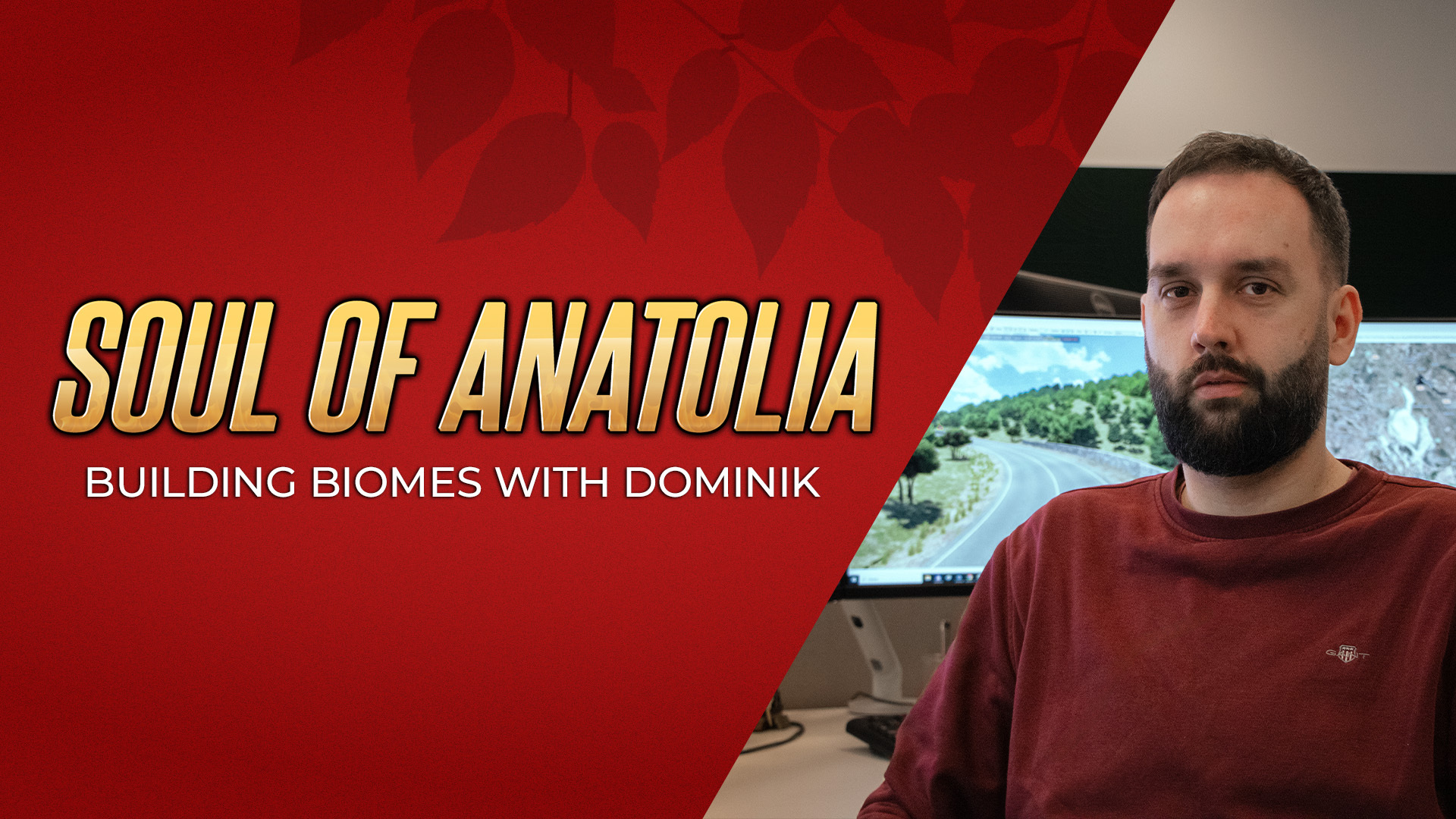
Dominik has spent six years at SCS Software, working as a map designer and vegetation specialist. His previous projects include West Balkans, Nordic Horizons, and Iceland, with vegetation forming a key part of his work on the latter two expansions.
For Soul of Anatolia, he develops biomes and environmental prototypes while connecting the Map Design, Research, and Vegetation Asset teams. He also helps map designers choose suitable vegetation, work with biome-specific assets, and maintain a consistent visual character across the region.
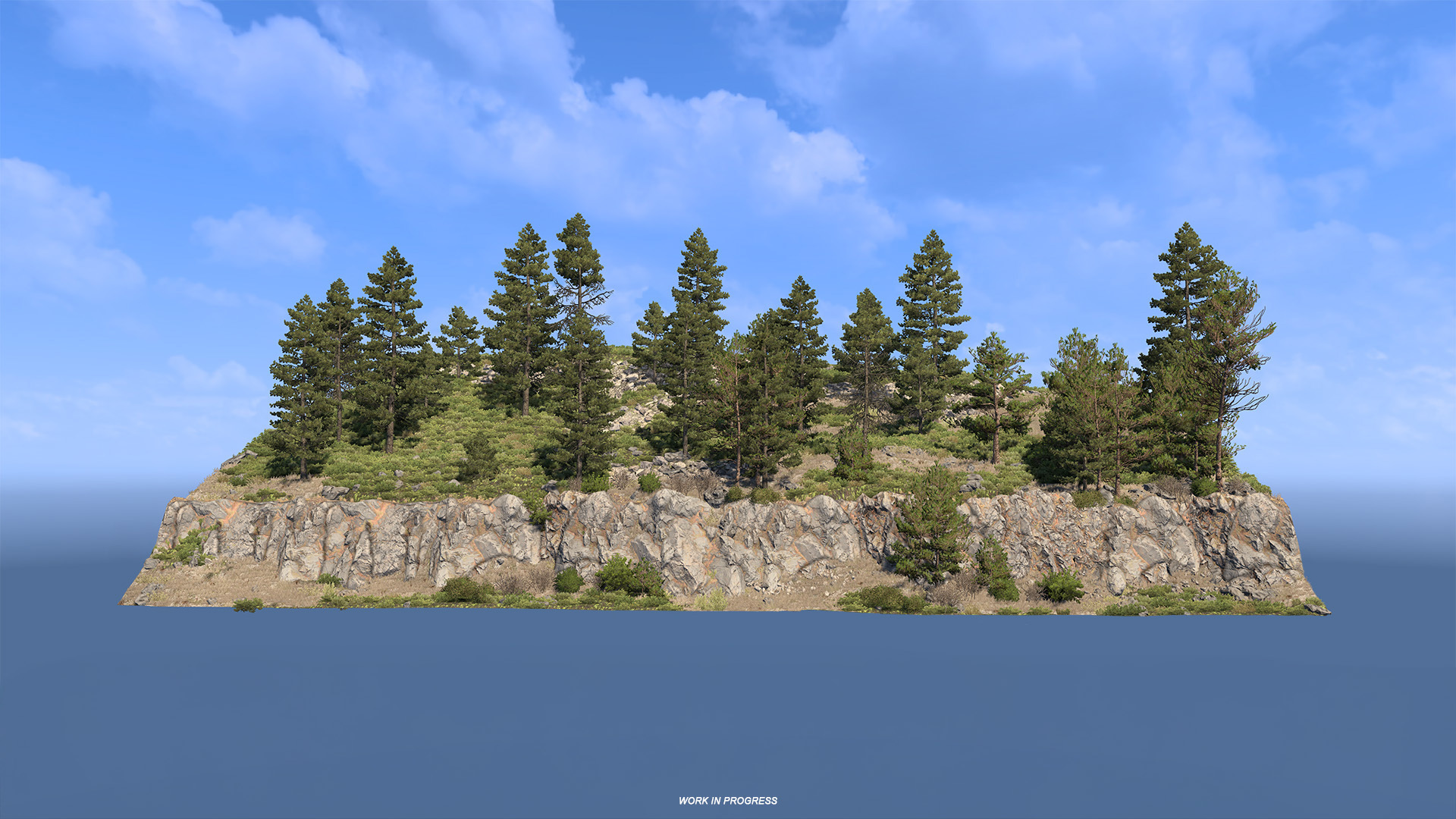
What makes Anatolia so compelling to recreate, Dominik says, is the contrast packed into a relatively compact area. A journey of just a few hundred kilometres can take travellers from the lush, misty mountains of the north across dry central plains and onward to limestone cliffs and towering pines near the coast.

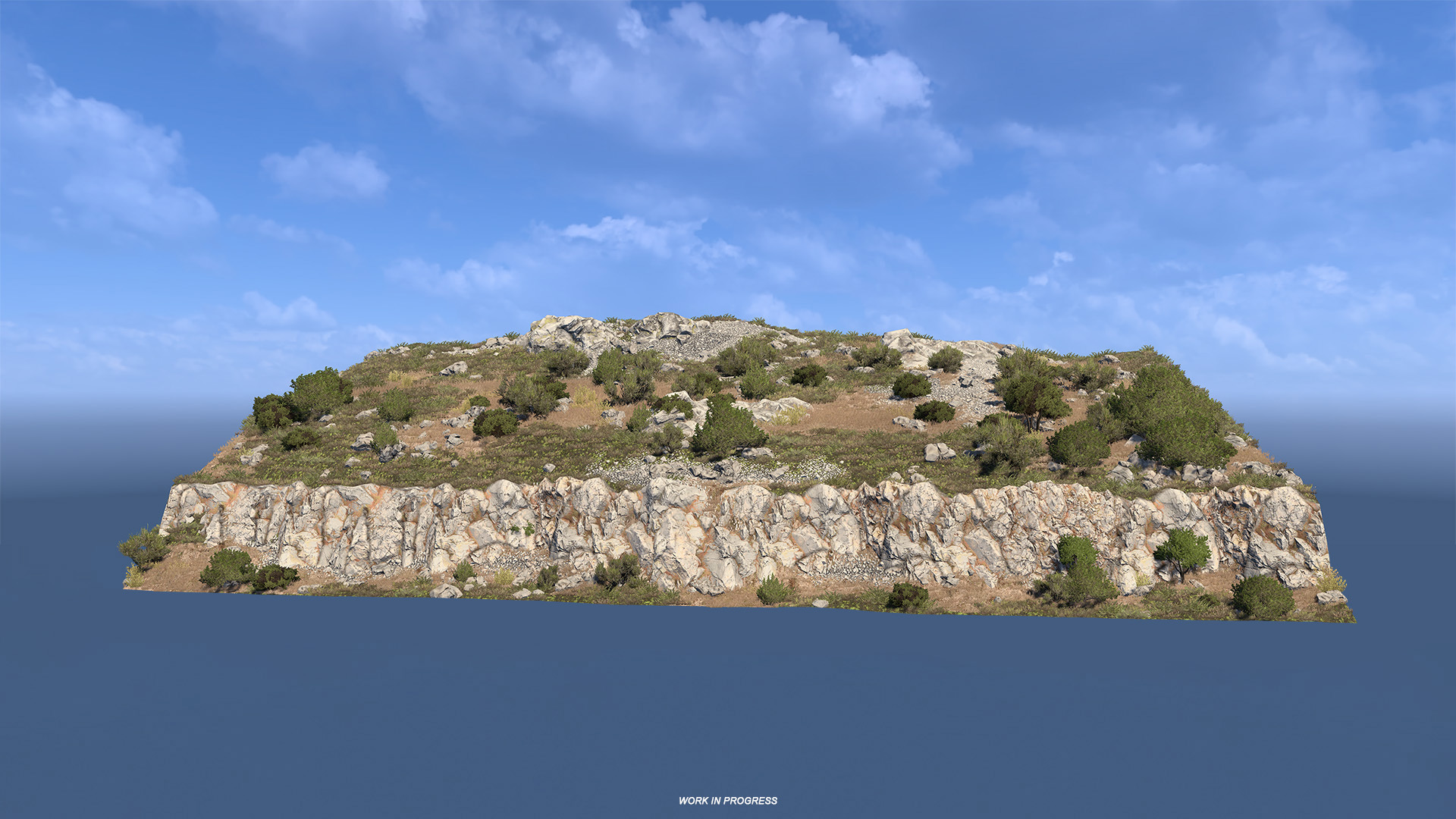
The region’s character goes beyond its vegetation. Dramatic rock formations, pale limestone marked by red soil, and Cappadocia’s distinctive volcanic features all contribute to its identity. One challenge is conveying the vastness of the inland steppes and their surrounding mountain ranges within the game’s scale, while keeping the balance between wilderness and human settlement believable.
Anatolia’s varied climates have also encouraged the teams to refine their workflows. Shared guidelines and material palettes help designers working on different areas create smoother transitions between environments, giving each biome a distinct identity while keeping the wider map cohesive.
From Research to In-Game Biomes
Every biome begins with research. During pre-production, the Research team builds a detailed picture of the region’s appearance, ecoregions, agriculture, and geology. The team also studies local plant and tree species, forest composition, and the crops grown in particular fields throughout the year.
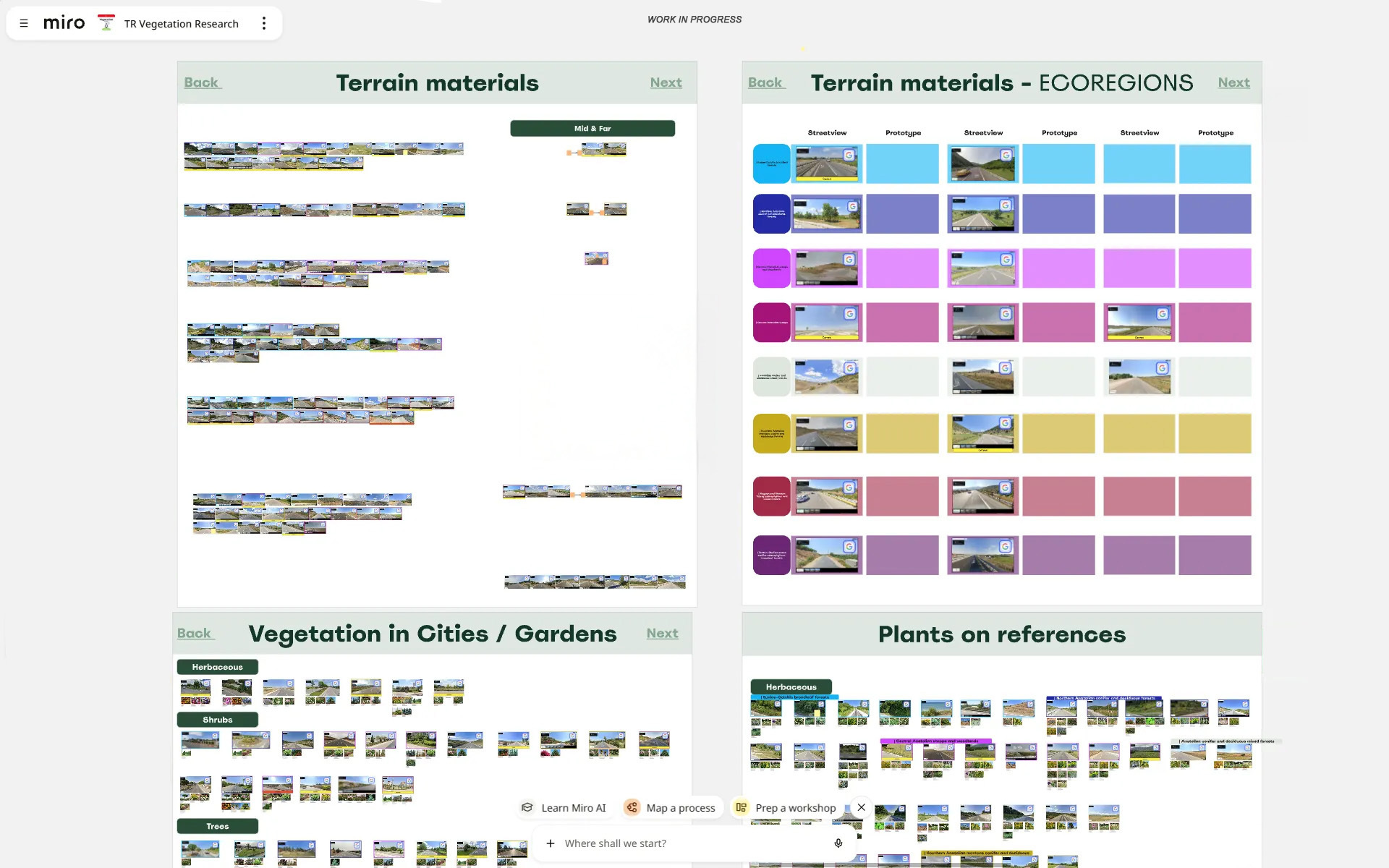
Markéta, a junior researcher specialising in vegetation, explains that the team gathers natural environment references at intervals of roughly three miles along each researched road. These references are selected and organised to inform terrain materials, agricultural fields, plant species, and rock formations.
Researchers then decide which vegetation assets belong in each biome, identifying items that can be reused from earlier expansions and those that must be made from scratch. The Vegetation Assets and Materials teams receive assignments alongside visual reference boards that guide the finished in-game collections.
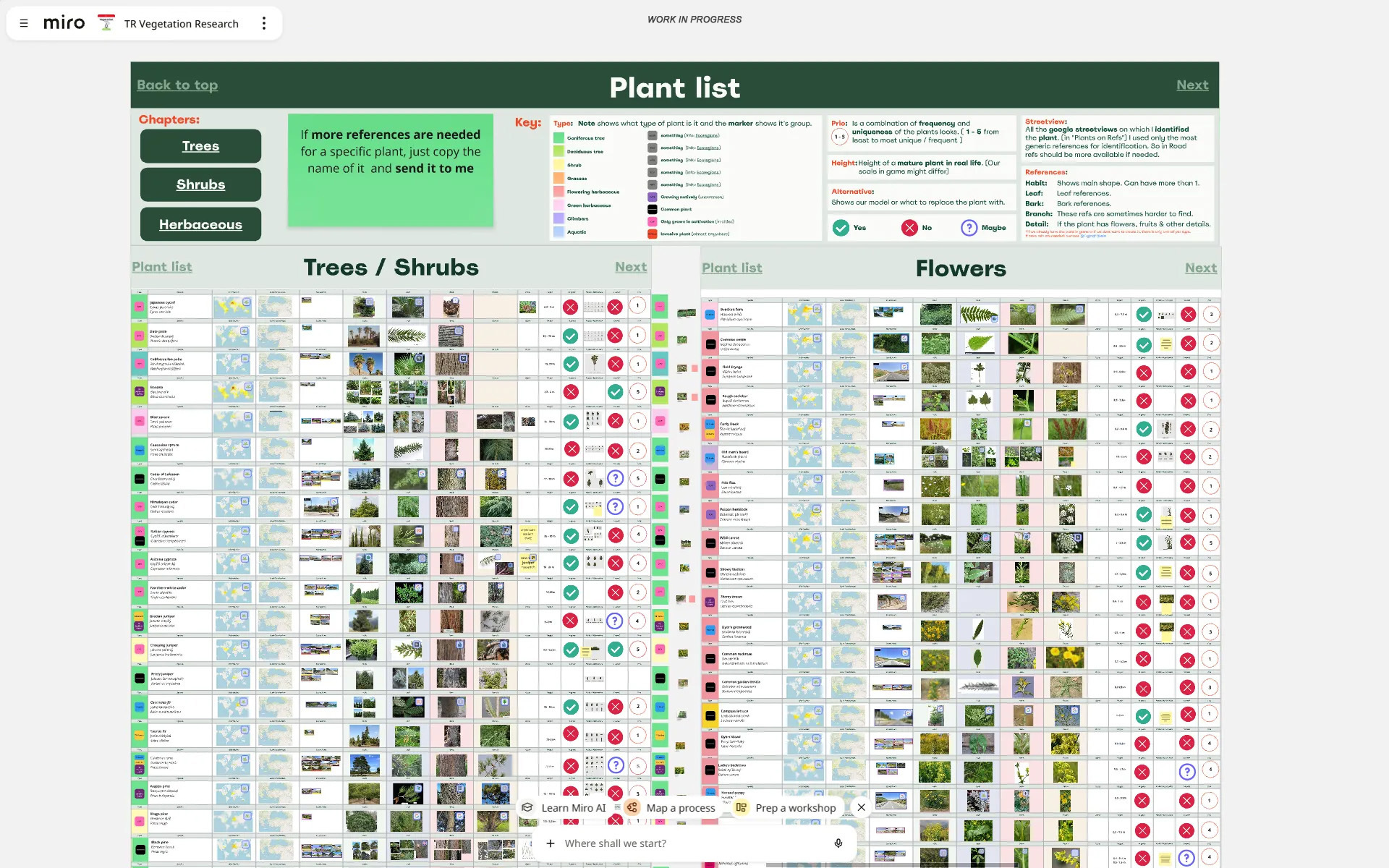
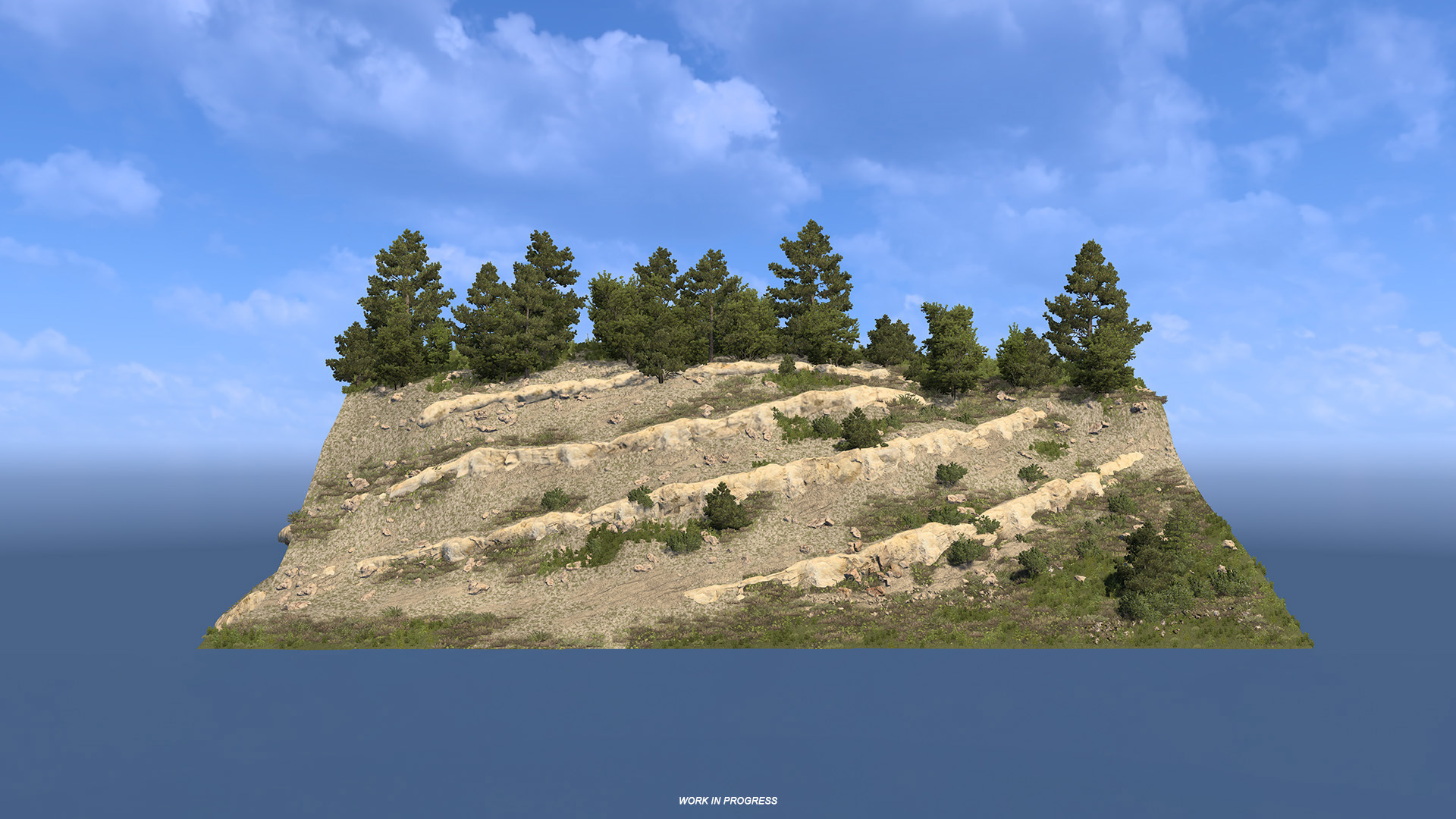
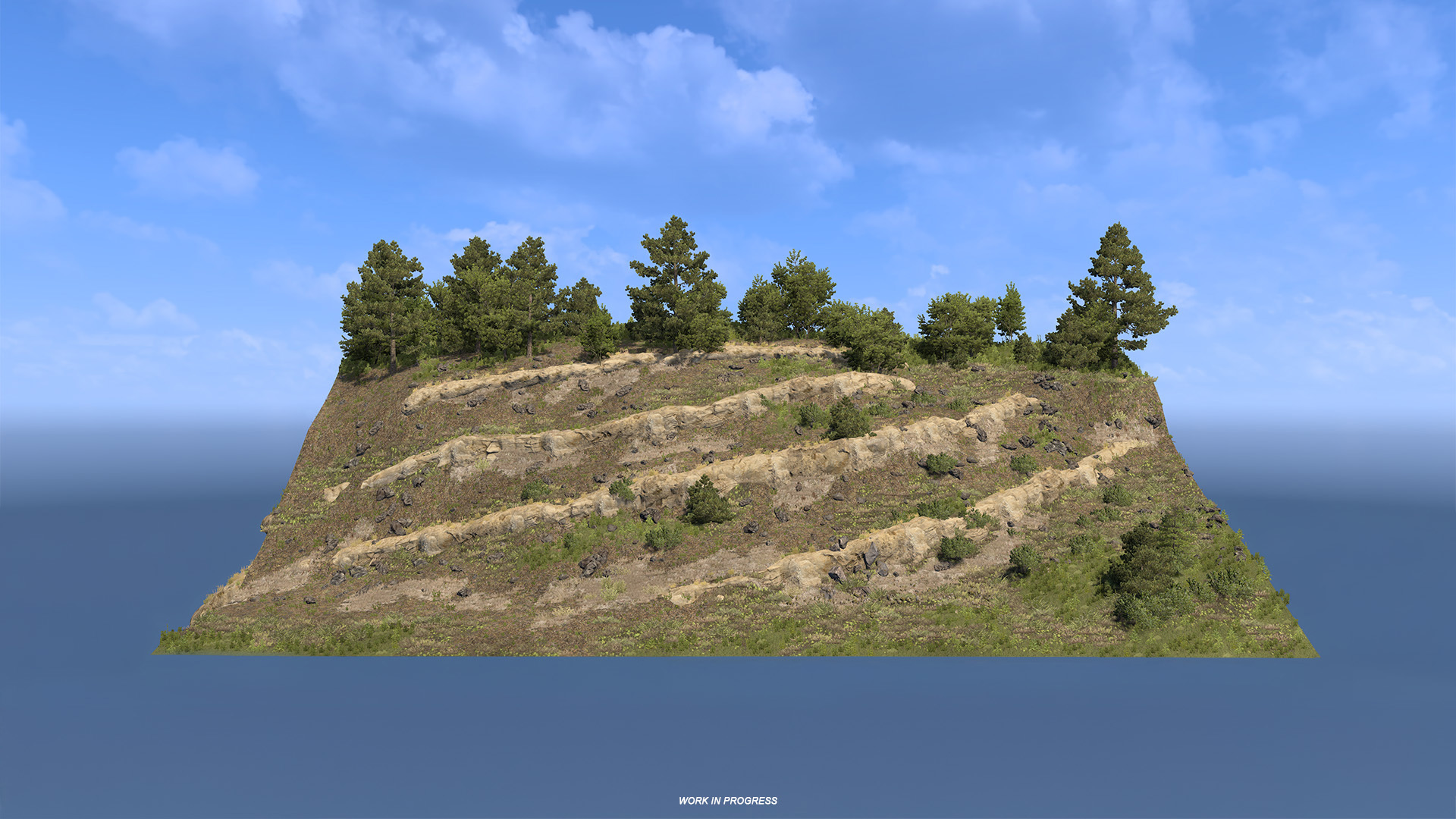
Once the region has been divided into biomes, Dominik creates environmental prototypes. These establish everything from distant mountain silhouettes and eroded slopes to grass and urban terrain materials. Each prototype brings together the colours, materials, and assets that give its biome a recognisable character.
When existing assets cannot capture a feature convincingly, the Research and Vegetation Asset teams collaborate on new ones. The completed prototypes and asset collections then become visual guides for the map designers.
As Dominik explains, biomes give the map a natural logic: players should be able to recognise where they are while experiencing smooth transitions between regions. Achieving that authenticity means looking beyond what appears in a reference image and understanding why the landscape looks that way.
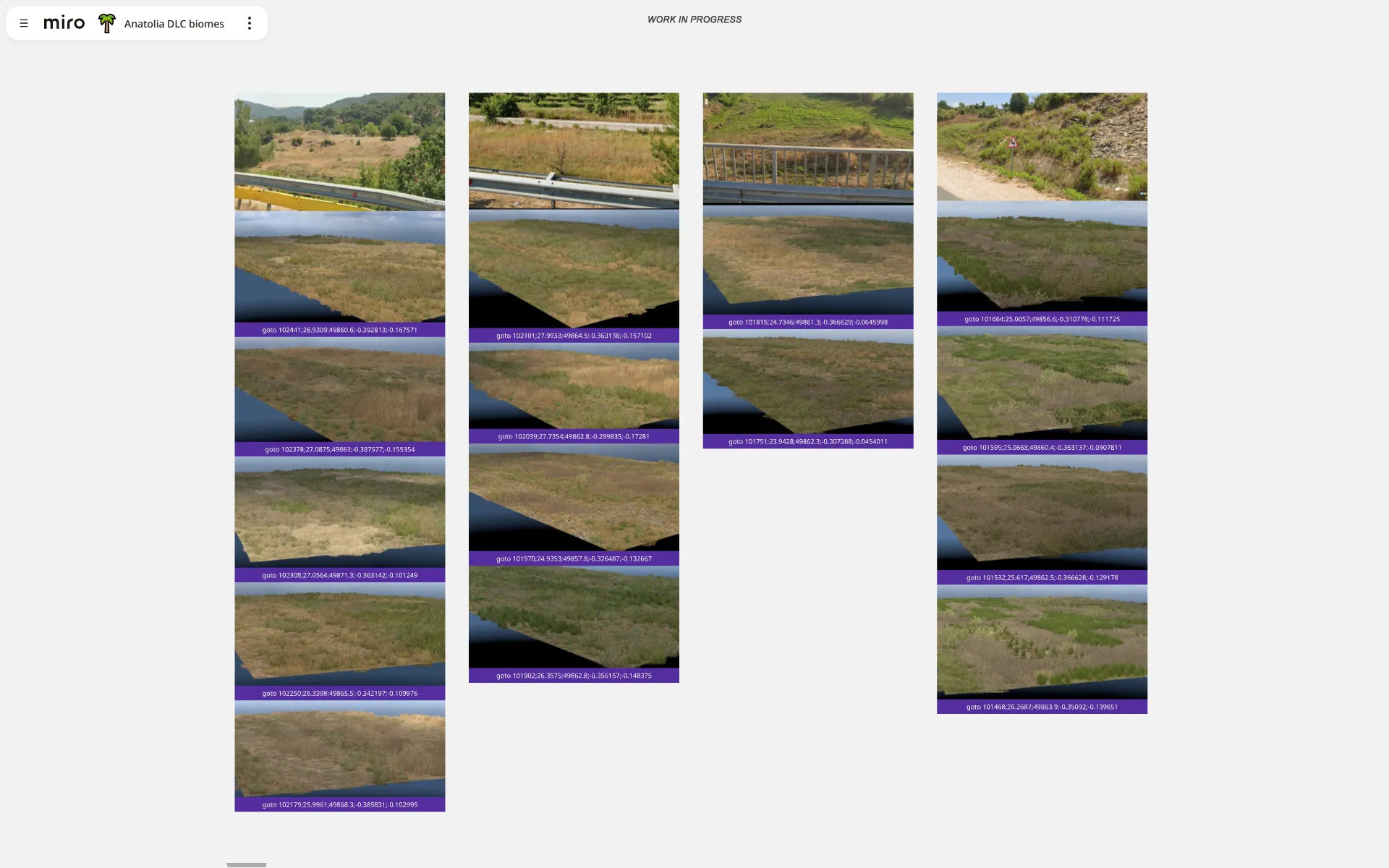
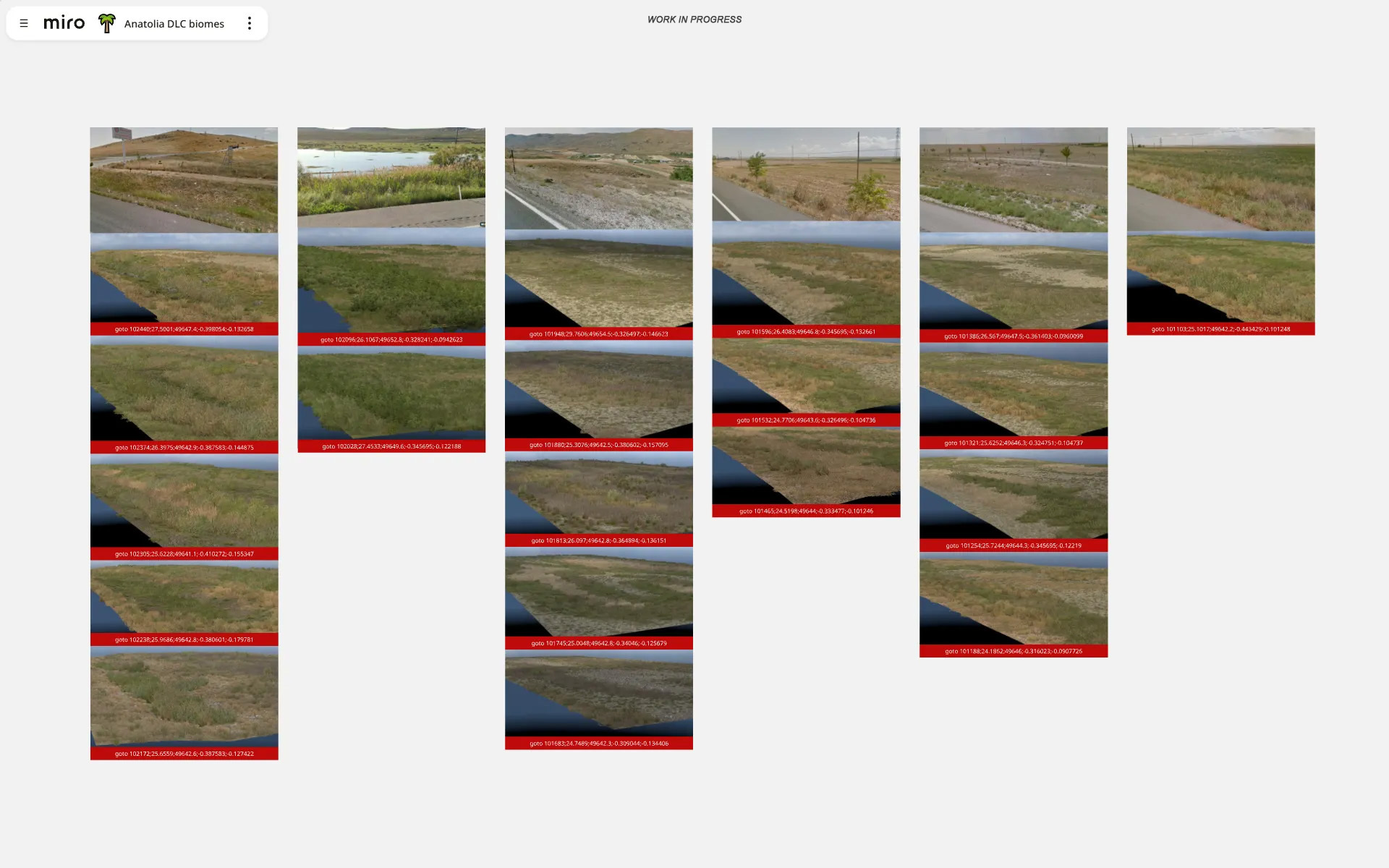
For example, bushes beside a dirt road may be coated in yellow dust. If the road is removed from a scene but the dusty bushes remain, the result can feel out of place. Small details like these may not be immediately noticeable, but together they help make the virtual world convincing.
Water can have an equally striking effect. Dominik notes that vegetation tends to change gradually in the milder, more evenly moist parts of Europe. In Anatolia during summer, however, a small stream or shaded valley can transform scorched steppe into a green oasis within a few metres.
A Landscape Shaped by Nature and People
Human activity is another essential part of Anatolia’s story. As Markéta points out, agriculture has shaped the region for thousands of years. Fields, orchards, plantations, greenhouses, and planted groves sit alongside natural vegetation, creating a varied landscape that remains home to thousands of endemic plant species.

Even the plants beside the roads have received careful attention. Roadside vegetation helps prevent soil erosion and brings visual variety to a journey through grasses, shrubs, and ornamental planting.

The team’s vegetation collection reflects this diversity, from colourful roadside plants to orchards, farmland, and both natural and planted groves. Because Euro Truck Simulator 2 cannot reproduce every location metre by metre, map designers focus on selecting a place’s most characteristic features and arranging them into a believable whole.

Capturing the Feeling of a Journey
For Dominik, the most rewarding part of map design is recreating the emotions inspired by real places: the surprise of a sweeping view beyond a bend, or the sense of travelling through a vast, untamed landscape. Creating those moments can involve subtle changes to a road’s curve, the density of vegetation, or the position of a distant village.
He is especially eager for players to discover Cappadocia’s atmosphere. More broadly, he hopes they will enjoy the region’s rugged natural character and the changing rhythm of the journey, from long, open highways with distant views to demanding mountain passes framed by dramatic scenery.

Our thanks go to Dominik, Markéta, and everyone helping bring Anatolia’s landscapes to Euro Truck Simulator 2. We hope this look behind the scenes gives you a fresh appreciation for the natural details that accompany every journey.
Ready to explore the region? Add Soul of Anatolia to your Steam wishlist and follow our social media channels for the latest development updates. Happy trucking!
Related articles
 Road Trip: RAM & Dodge – Dodge Challenger Hellcat Gameplay Preview
 Iceland: Community Spotlight
 Truck Stops in North Dakota
 Community Stories: Overcoming Cerebral Palsy Through Trucking
 Road Trip: RAM and Dodge – The Dodge Viper
 Indiana: Get to Know the Team
 Nevada Overhaul Project: Settlements
 The Island of Ireland: Galway