The Legend of Zelda: Ocarina of Time Is the Perfect Introduction to Nintendo for Kids
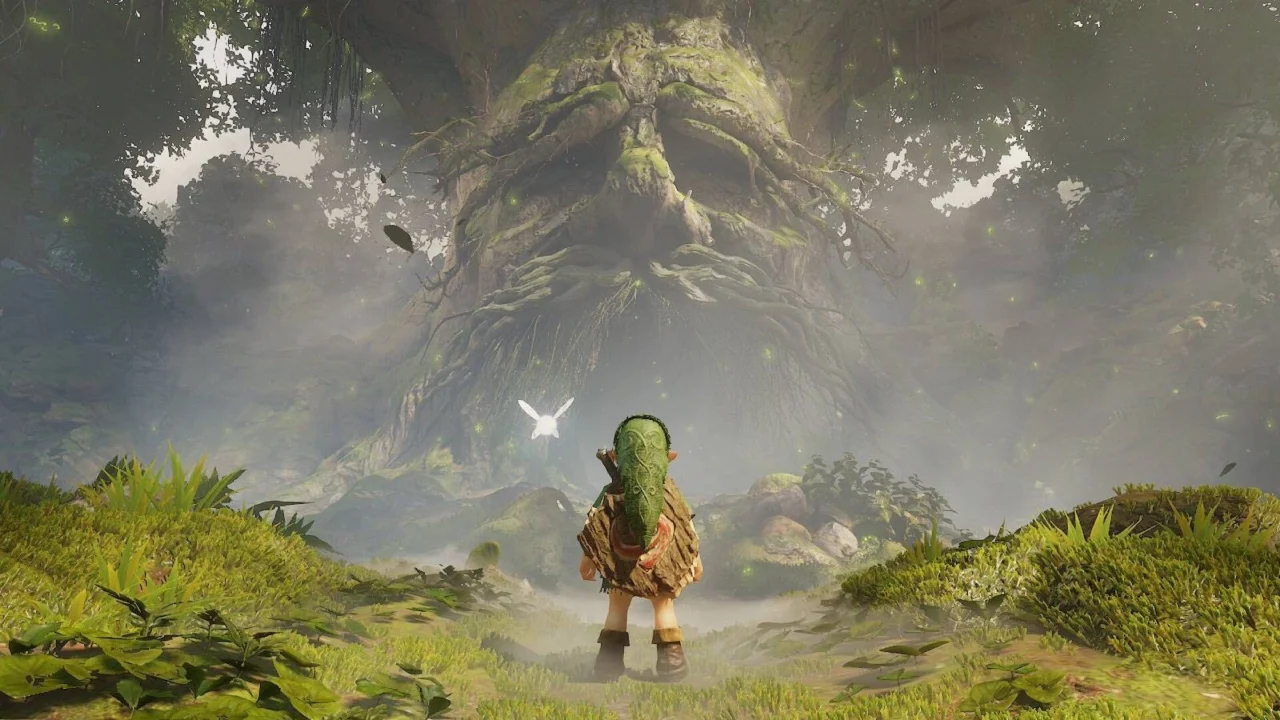
Entering Kokiri Forest in The Legend of Zelda: Ocarina of Time feels like stepping into an illustrated storybook. In the remake, sunlight filters through a landscape of lush greens, fairies dart through the air, and Kokiri children go about their daily routines. The inhabitants are welcoming, the surroundings are lovely, and everything feels reassuringly ordered. Then you venture inside the Great Deku Tree, and spiders drop from the ceiling. My daughter screamed. Even though I knew they were coming, I jumped too.
Since the Switch 2 remake of Ocarina of Time arrived on Nov. 5, parents on Reddit have been debating whether its scares are appropriate for children. Some say the updated visuals make spiders and ReDeads even more unsettling. Others remember playing at eight without lasting harm. Some families play together while skipping entire dungeons to avoid potential nightmares. All are reasonable approaches, but they point to a larger question: Can a game featuring a screaming zombie in an underground mausoleum be a child’s first Nintendo adventure? Parents of children as young as 4 and 5 are asking just that, despite its E10+ rating.
I’ve played through the three childhood-era dungeons with my 4-year-old. The game has plenty of frightening moments, but it also gives players ways to confront them. For me, that makes Ocarina of Time, with its fairy-tale spirit, a wonderful introduction to Nintendo.
Parents Are Preparing for the Darker Adult Chapters
The ReDead’s immobilizing shriek, Dead Hand’s grasping arms in the Well, the ominous journey through the Shadow Temple: Parents who played the Nintendo 64 original often remember the same disturbing moments. Most occur in the later dungeons, however, and nearly three decades of revisiting those formative experiences may have made them loom even larger in memory.
Parents introducing the game to children in 2026 describe smaller fears that can be easier to work through: 4-year-olds frightened by the first boss but delighted by the second, or terrified of spiders until they discover they can fight back.
The best fairy tales have always made room for fear. G.K. Chesterton wrote that a child already knows the dragon “intimately ever since he had an imagination”; what the fairy tale offers is “a St. George to kill the dragon.” Here, young Link is a hero close to my daughter’s own age, facing frightening things with tools suited to the challenges before him. The childhood portion isn’t free of scares, but it gives children a way to meet them.
A Little Frightening, but Full of Charm
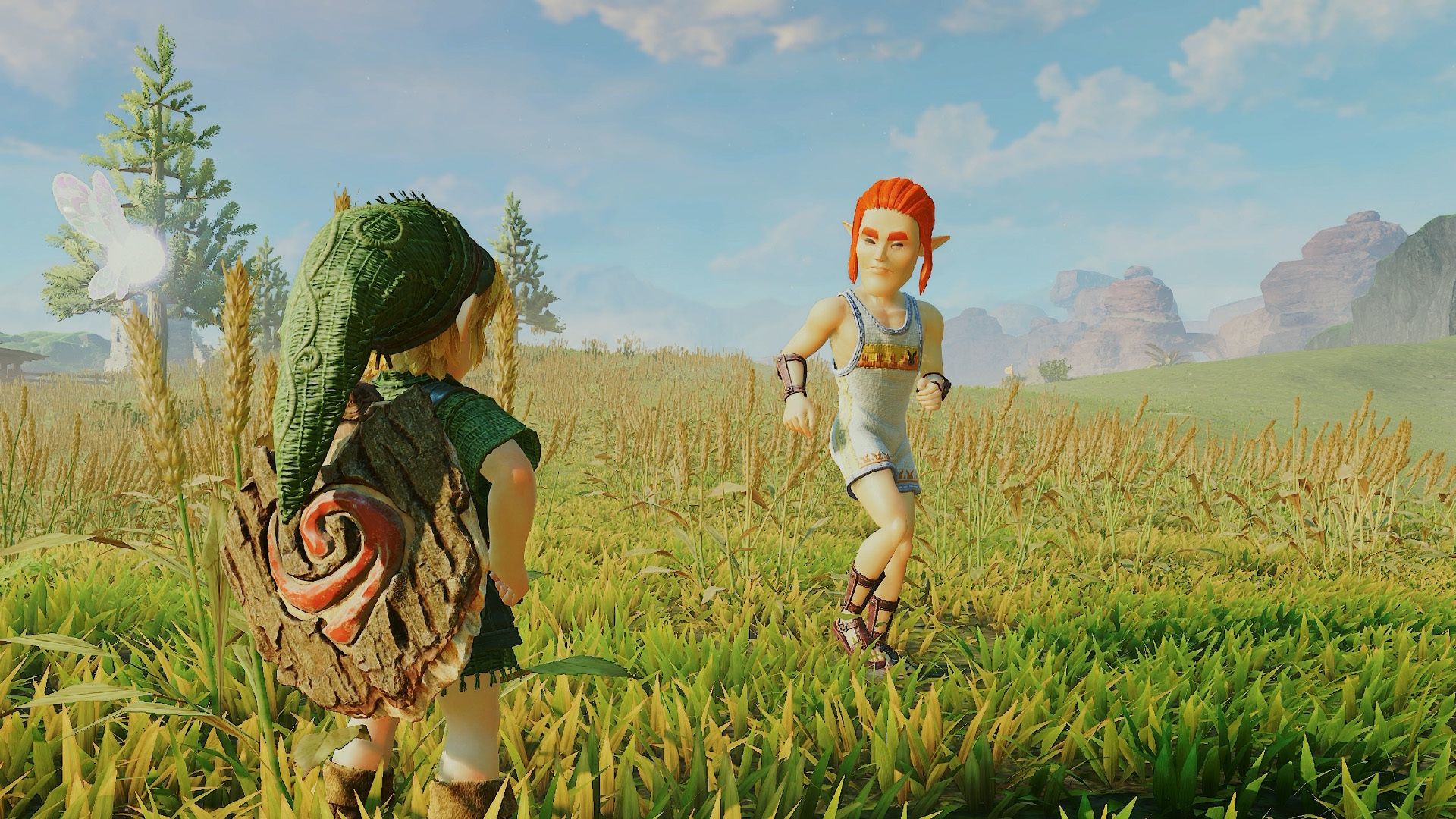
Producer Eiji Aonuma describes Hyrule as a world with both bright and dark sides. Link comes from the former, he told an interviewer, while Ganon emerges from a place filled with frightening things. The remake’s technology could have made the game “very, very scary”, he said, but the team wanted it to remain accessible to all kinds of players.
Art director Aya Shida aimed to make Hyrule believable without rendering it literally. Her team looked to puppet shows and practical-effects films, where fantastical characters can feel tangible without looking entirely realistic. The world “feels somewhat dark”, she said, but its colorful, eccentric inhabitants lend it a “mysterious, almost dreamlike charm.”
That balance keeps the darkness rooted in fairy-tale territory: unsettling enough to matter, yet inviting enough to explore. One moment you’re fleeing spiders; the next, you’re hurrying to release a squawking chicken from a wooden crate. How did it get there? My daughter wants to know. Navi does too.
The Scarier Parts Can Wait Until Children Are Ready
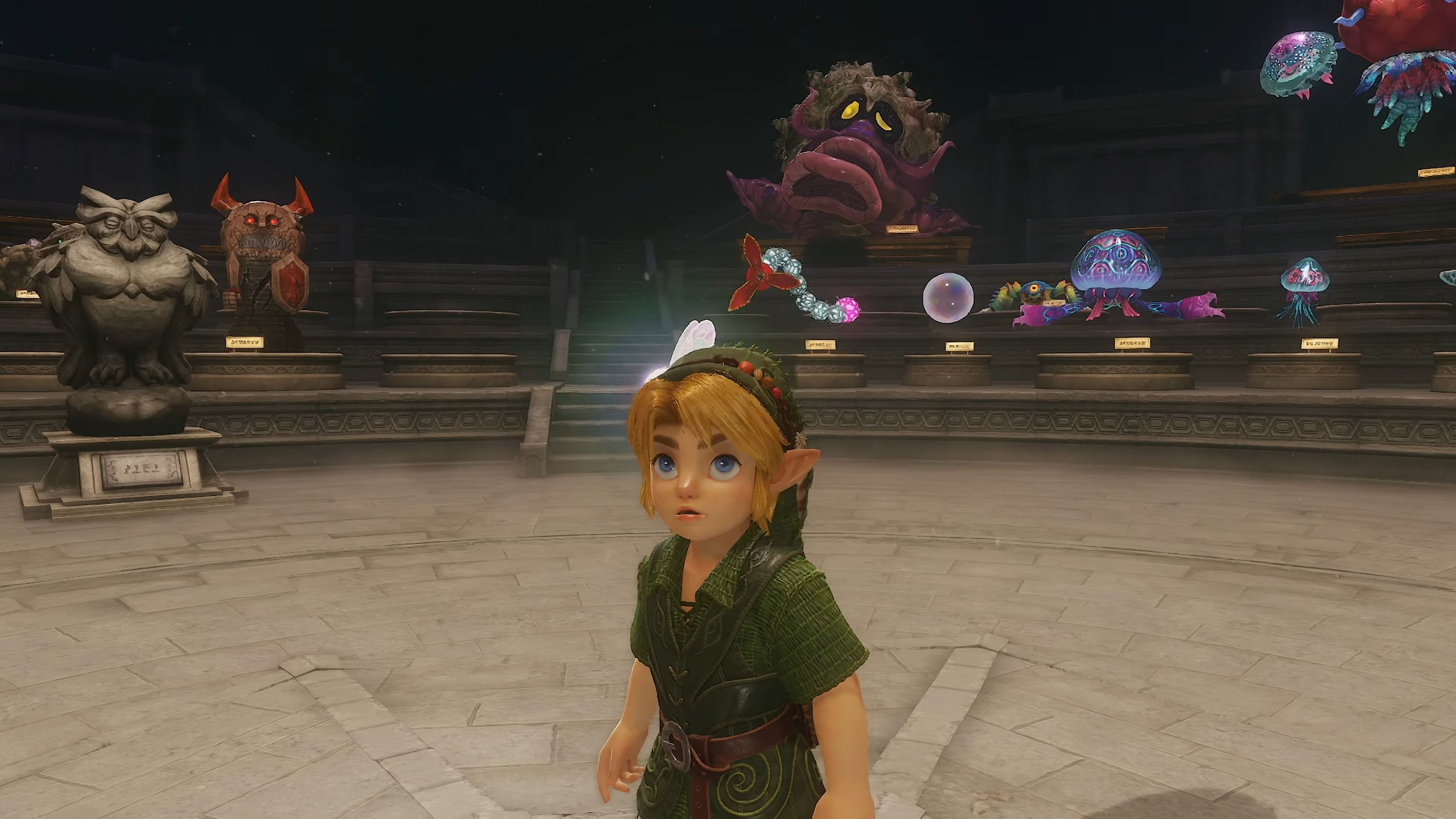
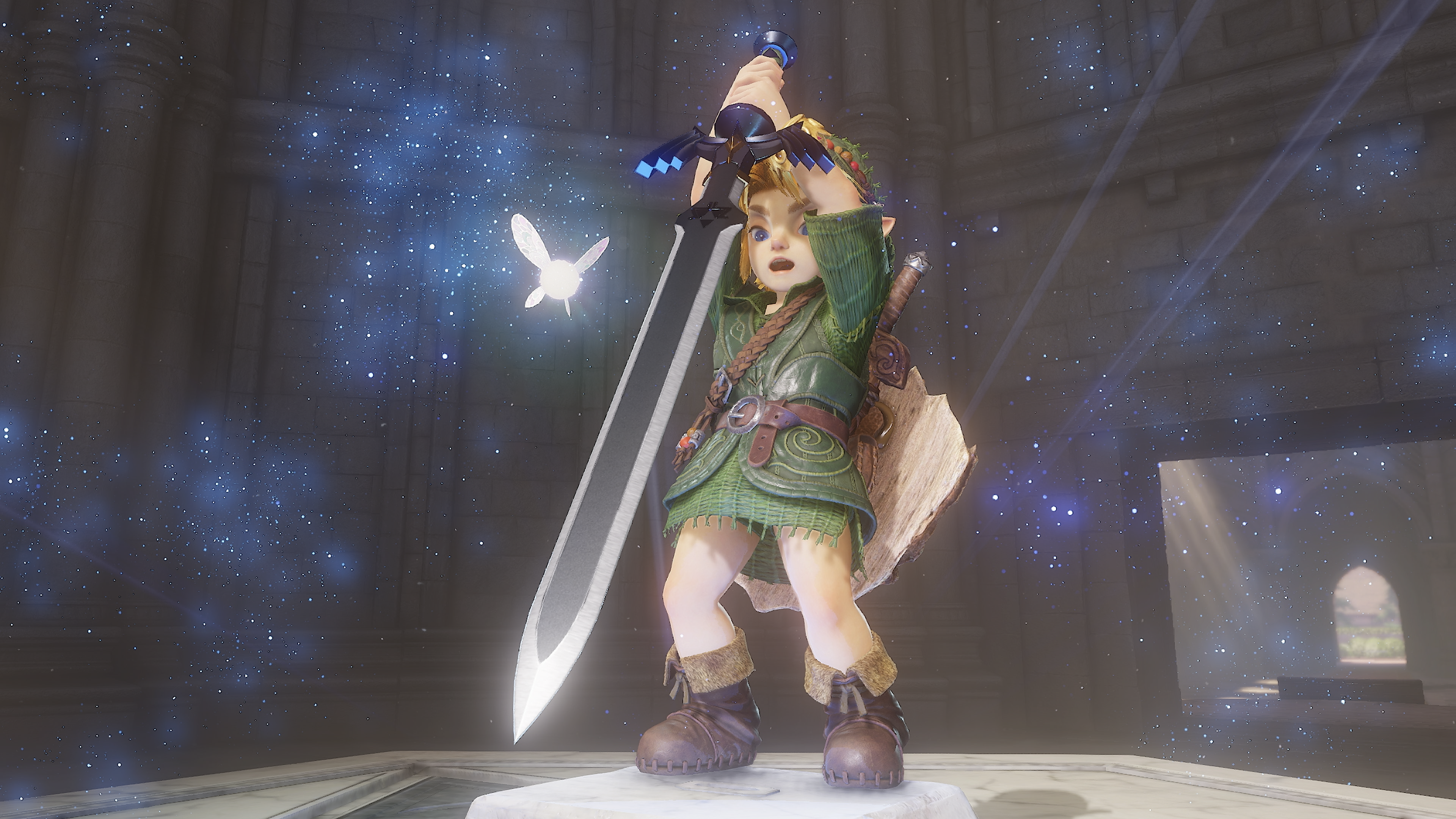
Once Link draws the Master Sword and advances seven years into the future, the story takes a darker turn. Parents have found different ways to handle it. Some are saving the Well and Shadow Temple for later, while commenters in Reddit discussions recommend waiting until children are 8 or 9 before beginning. Others describe a 4-year-old thrilled to see Link grow up and a 15-year-old moved to tears by the ending. I understand both reactions.
Reading is another frequent consideration. Parents often read dialogue aloud to younger players, and some credit the game with helping their children learn to read.
Ultimately, each parent is best placed to judge whether their child is ready. Playing the remake with my daughter has made young Link’s wonder at discovering the wider world feel vivid again, while giving me a fresh appreciation for how thoughtfully the first half welcomes younger players. The Great Deku Tree gives Link a mission he can understand and the means to begin. By the time greater dangers appear, he has had room to grow.
That’s what I hope for my daughter, too, when she’s ready. For now, we’re still exploring the childhood chapters together. She shouts “fight, mommy, fight!” whenever a Skulltula descends, considers Jabu-Jabu’s Belly appropriately gross, and has become a fan of young Princess Ruto. She laughed when my first attempt at using the dedicated jump button sent me belly-flopping into Kokiri Forest’s lake.
She also immediately noticed that the Keaton Mask resembles her beloved Pikachu, which should make it easy to follow this adventure with Kirby and the Forgotten Land, Super Mario Bros. Wonder, and Pokémon: Let’s Go! I’ve since tackled the Forest Temple without her. It is scarier, but it’s also longer and involves more backtracking than she would have the patience for. The temple and the rest of Link’s adult adventure will still be there when she’s ready. I look forward to seeing her grow into them, even if I’ll miss the days when the childhood world held all her attention.
Source: Polygon
Related articles
 GTA VI Physical Edition Sales in Europe Reach Levels Not Seen Since FIFA 20
 Max Verstappen Says He Spent 40 Hours Playing GTA VI in Las Vegas Between Races
 Is GTA VI Overheating Xbox Series X|S? Repair Shop Reports Sharp Rise in Console Failures
 Hideo Kojima Visits CD Projekt Red as Players Notice Photo of an Alcoholic Drink
 GitHub Praised Developers Running GTA 6 on PC, but the Post Was Deleted
 Experts Call GTA VI Running on a 13-Year-Old Xbox One an Unusual Achievement
 Arkheron Brings Large-Scale Online Battles to Xbox Game Pass
 GTA 6 Fans Are Pulling Off Perfect Heists With Just a Six-Pack of Beer