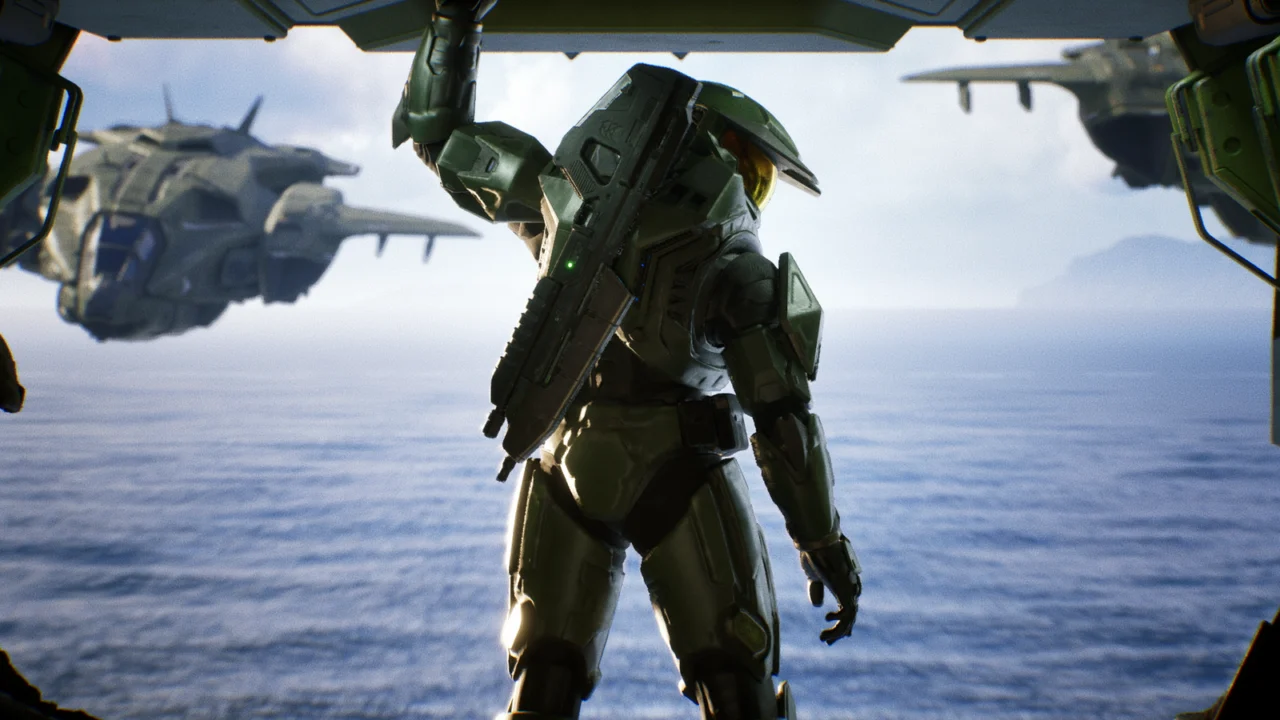
The End of an Era for Halo Is Now Official
The landscape of Halo is shifting irrevocably. Xbox announced the latest phase of its ongoing corporate restructuring via an internal memo from Executive Vice President Matt Booty, identifying Halo Studios as the primary target in a wave of 268 layoffs. While Booty noted that a minimal crew at Halo Studios will remain dedicated to maintaining the existing community and live games, the development reins for the next mainline Halo installment have officially been handed over to Activision—the corporate powerhouse synonymous with Call of Duty.
A decade ago, this headline would have read like an elaborate online prank. Yet today, navigating an era where billionaire industrialists ascend to the highest political offices and tech conglomerates casually push the boundaries of automation without consequence, it simply registers as standard industry protocol. For Xbox specifically, this development represents another sobering milestone in a decade marked by brand fragmentation and a symbolic conclusion to one of gaming’s most storied console rivalries.
From its inception, Halo served as the undisputed cornerstone of the Xbox ecosystem. Bungie’s visionary 2001 shooter, Halo: Combat Evolved, single-handedly drove original hardware sales, while its legendary successors—2004’s Halo 2 and 2007’s Halo 3—cemented their status as peerless masterpieces of the genre. Even celebrated side stories like Halo: Reach garnered immense critical and commercial acclaim.
Following Microsoft’s separation from Bungie, Xbox established 343 Industries to shepherd the franchise forward. Their tenure delivered ambitious experiences consistently plagued by turbulent rollouts. Halo 4 initiated a deep ideological divide within the community, while the ambitious Halo: The Master Chief Collection required years of rigorous patching before achieving technical stability. Later, Halo 5: Guardians hit a nadir for many purists who felt the gameplay drifted too close to contemporary military shooters.
When 343 Industries prepared to launch Halo Infinite in 2020 as the flagship title for the Xbox Series X generation, Master Chief’s likeness adorned retail hardware packaging globally. Yet, an eleventh-hour delay arrived too late to alter those physical retail boxes, foreshadowing a rocky road ahead.
When Halo Infinite ultimately debuted as a hybrid free-to-play multiplayer experience paired with a paid campaign, it attracted an astronomical initial user base of 20 million players. However, retention faltered due to missing core features like campaign co-op and robust custom game creation tools at launch. Although developers painstakingly patched in these missing elements over time, the momentum had already dissipated, and active development largely wound down earlier this year.
Much of these structural difficulties stemmed from a fractured focus: 343 Industries was tasked not only with game design but also with engineering and maintaining the proprietary Slipspace engine—a grueling endeavor one insider famously likened to “building a railroad while simultaneously operating the train.” Seeking a fresh start, the studio rebranded as Halo Studios in 2025 and shifted toward Epic Games’ industry-standard Unreal Engine. This pivot yielded this summer’s Halo: Campaign Evolved, an exceptionally faithful modern recreation of the 2001 classic complete with modern traversal tweaks like sprint mechanics.
While the unveiling of Campaign Evolved hinted at several active initiatives inside Halo Studios, their present roadmap remains shrouded in uncertainty as Xbox representatives decline to offer immediate clarification. What remains absolute, however, is that Activision will spearhead the next proper Halo release. According to Booty’s internal memo, the project will be driven by a dedicated, newly assembled team operating independently from the ongoing production cycles of Call of Duty, meaning powerhouse developers like Treyarch, Infinity Ward, and Sledgehammer Games will not directly oversee the franchise.
Even so, the institutional DNA of Call of Duty’s annualized, assembly-line development philosophy is bound to leave an imprint. While Campaign Evolved demonstrated that Halo’s distinctive physics can thrive beyond proprietary software, it is hard to dismiss the likelihood of familiar industry tropes—such as granular loadout systems, aggressive seasonal monetization models, and dense menu interfaces—finding their way into future iterations.
Predicting the exact shape of the next chapter is premature, though a robust competitive multiplayer suite remains a financial necessity that modern leadership simply cannot overlook. The profound irony of transferring Microsoft’s crown jewel to the stewardship of its historical adversary is staggering. Historically, Halo functioned as the cerebral, atmospheric alternative to Call of Duty’s aggressive military bravado, faltering only when attempting to mimic its rival’s pacing and systems. As the saga passes into the House of CoD, players are left to wonder what distinctive identity, if any, will survive.
Get Polygon’s Wishlister newsletter
A weekly cheat sheet to what you’ll eventually love to play. No buying, no commitment — just saving for later.
Free. Unsubscribe anytime.
Only three studios remain at the flagship studio group; Xbox’s own publisher is on the way out
Source: Polygon
Related articles
 Marvel Tōkon: Fighting Souls to Add Four New Characters and Arena
 Nintendo Executive Officially Comments on Future Physical Game Support
 Braid and The Witness developer returns after 10 years with Order of the Sinking Star
 Dozens of New Games Scheduled for Release on Xbox This Week
 Microsoft to Release Physical Edition of Forza Horizon 6 for PS5 with a Catch
 Modder Enables PS5 to Run PS2 Disc Games
 Dungeon Crawler Carl Author Settles Audiobook Debate
 Gears of War: E-Day Suffers DDoS Attacks Amid Backlash From Activists