Ranked: Five of Snoopy’s Greatest Quotes From Peanuts
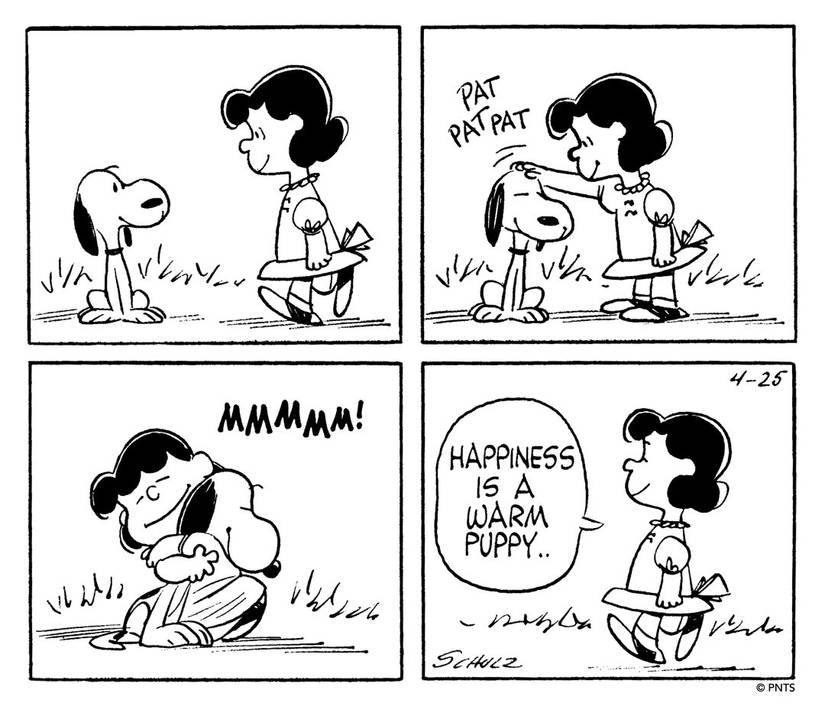
“Happiness is a warm puppy.”
That stands as the greatest-ever quote about Snoopy. It originates from the Peanutscomic strip that ran on April 25, 1960. While readers might assume Charlie Brown would deliver the line as Snoopy’s owner, Lucy actually utters the profound little phrase.
The comic shows Lucy walking up to Snoopy, patting him on the head, giving him a hug, and walking away while telling herself, “Happiness is a warm puppy.”
Determining the best quote ever uttered by Snoopy himself proves a much different task. Readers might wonder if Snoopy even talks.
The answer is both yes and no.
Audiences familiar with the Peanuts gang through movies and television specials have probably never heard Snoopy talk because he usually remains silent in those formats. However, in the Peanuts comic strip, he speaks to his inner self via thought bubbles much like Garfield does in his own comic strip. Nobody in the strip can ever hear the dog speak aloud, but he expresses plenty of thoughts, and Charles Schulz frequently used Snoopy to dispense thoughtful bits of wisdom.
Five specific Snoopy quotes prove just how wise a beagle can be.
5 Snoopy’s best alter ego
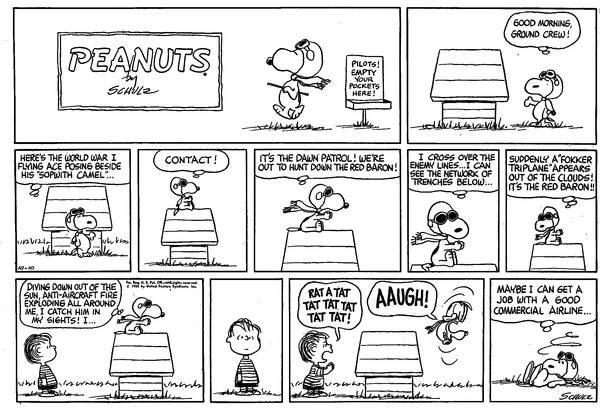
Snoopy maintained several different personas, including the suave Joe Cool and the fearsome wrestler known as The Masked Marvel, but his greatest alter ego was the World War I Flying Ace. Wearing a leather flight helmet and goggles, Snoopy would sit atop his doghouse and imagine himself as a masterful pilot during the Great War hunting down the Red Baron. Snoopy’s top five quotes should include something from his beloved Flying Ace comics, serving as a stand-in for all of them:
“Here’s the World War I Flying Ace posing beside his ‘Sopwith Camel’…”
4 His first words
This entry functions less as a standard Snoopy quote and more as one of the most important moments in the strip’s history. On May 27, 1952, Charles Schulz had Snoopy speak for the first time. Charlie Brown walks up to Snoopy, touches his ear, and says, “Kind of warm out today for ear muffs, isn’t it?” Snoopy thinks to himself in response:
“Why do I have to suffer such indignities!?”
The minor joke carried major implications for the character. For the first two years of Peanuts, Snoopy did not speak in any capacity, but Charles Schulz published this strip to give the beagle a voice and a distinct personality. The change gave Schulz more creative freedom with the character. Snoopy began talking regularly from this point forward.
3 Sleep on it
Peanuts functioned as a thoughtful comic strip because Charles Schulz created soulful characters who delivered deep observations about life, often accidentally. Although the children in the strip talked like little adults, they occasionally dropped wisdom beyond their years.
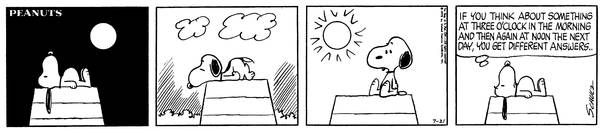
Schulz bypassed the pretense of accidental wisdom with Snoopy. He treated the dog as a credible vessel for insight. The following piece of advice advises people to reconsider before they act:
“If you think about something at three o’clock in the morning and then again at noon the next day, you get different answers.”
2 Profound words
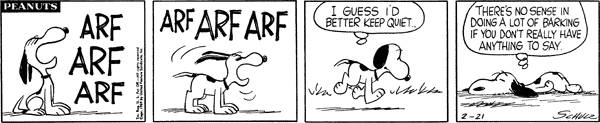
A comic strip from February 1959 features Snoopy barking repeatedly for two panels straight. He gives up, mutters “I guess I’d better be quiet,” lies down, and thinks to himself:
“There’s no sense in doing a lot of barking if you don’t really have anything to say.”
The line offers solid advice for human behavior. Anyone lacking something worthwhile to say should simply stop talking.
1 Not a bad way to live your life
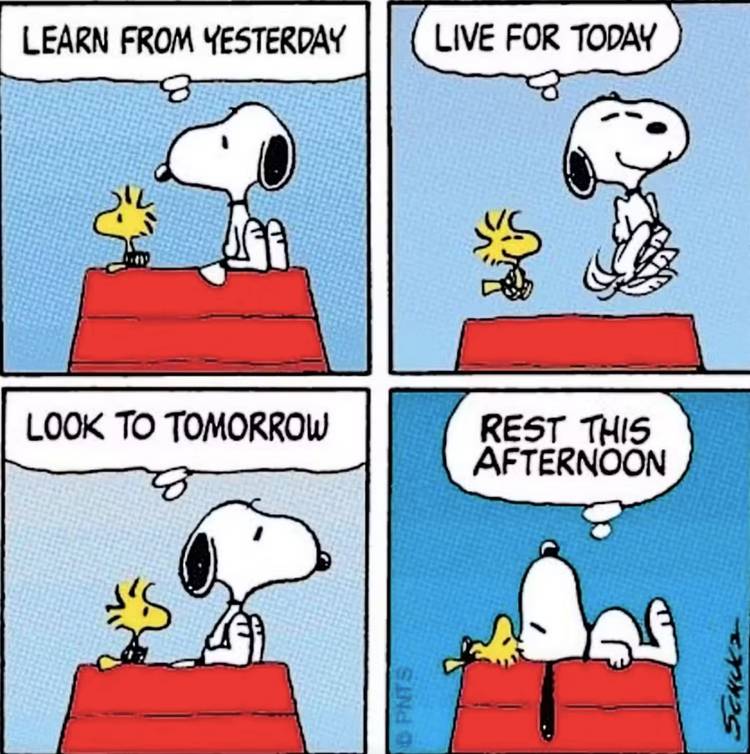
Charles Schulz published what stands as Snoopy’s philosophy on life in November 1978:
“Learn from yesterday. Live for today. Look to tomorrow. Rest this afternoon.”
The quote is funny, playful, adorable, and deeply wise.

 Naughty Dog Confirms Multiple New Projects in The Last of Us Franchise
 The Witcher 3 Remaster Tops 2026 Game Rankings
 Naughty Dog Prepares Major Presentation for Intergalactic, Dubbed Its Most Ambitious Game
 Daredevil: Born Again Season 3 Undergoes Reshoots Following Abrupt Cancellation
 Microsoft Simplifies Transferring Disc Games to Digital Library on Xbox
 How to Finally Kick the Baldur’s Gate 3 Restartitis
 Control Resonant Criticizes Players Who Focus Too Much on Side Quests
 Diablo IV Update 3.2.2 to Fix Seasonal Quests, Druid Ability, and Horadric Cube