Nick Cave Reflects on Grief Lessons on Anniversary of Son’s Death
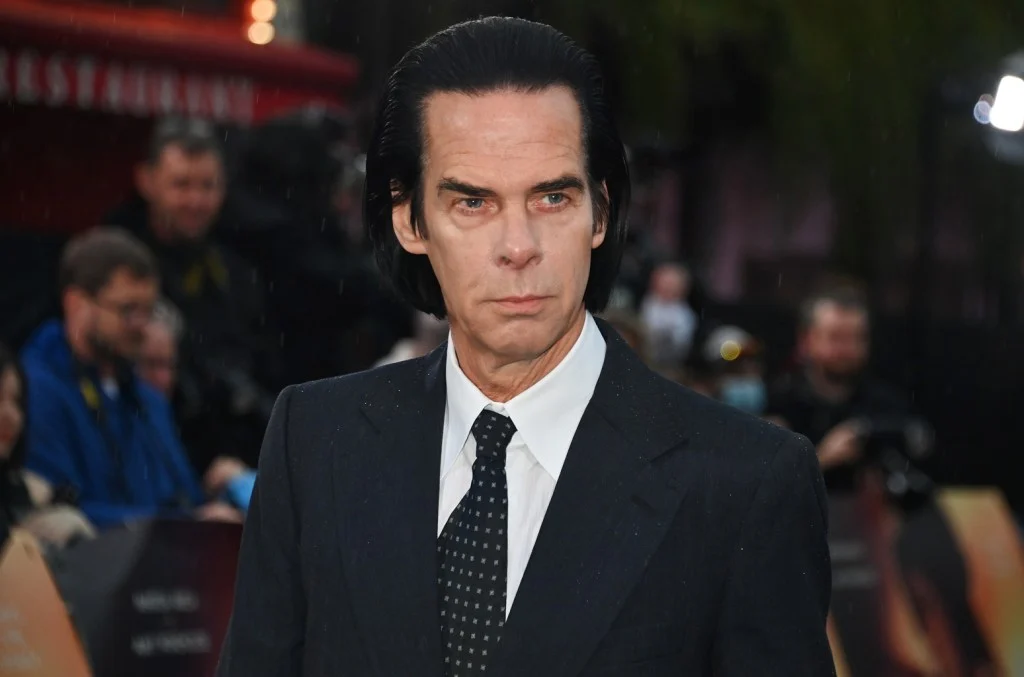
Nick Cave attends the World Premiere of “Back To Black” at Odeon Luxe Leicester Square on April 8, 2024 in London. Dave Benett/WireImage
Ten years on from the passing of his son, Arthur, Nick Cave has reflected on his loss and the lessons he has learnt from the process of grieving.
Cave’s comments were shared on his frequently-updated Red Hand Files website, in which he answered questions from fans about what he and wife Susie had learned in the decade since the passing of their son, and whether their pain is one that continues eternally.
“The pain remains, but I have found that it evolves over time,” Cave began. “Grief blossoms with age, becoming less a personal affront, less a cosmic betrayal, and more a poetic quality of being as we learn to surrender to it.
“As we are confronted with the intolerable injustice of death, what seems unbearable ultimately turns out not to be unbearable at all. Sorrow grows richer, deeper, and more textured. It feels more interesting, creative, and lovely.
Trending on Billboard
“To my great surprise, I discovered that I was part of a common human story,” he continued. “I began to recognise the immense value and potential of our humanness while simultaneously acknowledging, at my core, our terrifyingly perilous situation. I learned we all actually die.
“I realised that although each of us is special and unique, our pain and brokenness is not. Over time, Susie and I came to understand that the world is not indifferent or cruel, but precious and loving – indeed, lovely – tilting ever toward good.”
Cave’s 15-year-old son Arthur passed away on July 14, 2015, as a result of injuries sustained from a fall from a cliff in Brighton, Sussex in England. “Our son Arthur died on Tuesday evening,” the Caves said in a joint statement at the time. “He was our beautiful, happy loving boy.”
Cave’s experience with the grieving process was captured as part of the final sessions for Nick Cave & the Bad Seeds’ 2016 album Skeleton Tree, while the subsequent Andrew Dominik-directed documentary One More Time with Feeling provided an intimate insight into Cave and the band during this period.
“I discovered that the initial trauma of Arthur’s death was the coded cypher through which God spoke, and that God had less to do with faith or belief, and more to do with a way of seeing,” Cave continued in his post.
“I came to understand that God was a form of perception, a means of being alert to the poetic resonance of being. I found God to be woven into all things, even the greatest evils and our deepest despair. Sometimes I feel the world pulsating with a rich, lyrical energy, at other times it feels flat, void, and malevolent. I came to realise that God was present and active in both experiences.”
“I’m not sure what else I’ve learned, […] except that here we still are, a decade later, living within the radiant heart of the trauma, the place where all thoughts and dreams converge and where all hope and sorrow reside, the bright and teary eye of the storm – this whirling boy who is God, like every other thing,” Cave concluded. “We remember him today.”
Cave recently used his Red Hand Files website to share insights into less heartbreaking topics, having reflected on turning down an offer from Morrissey to perform an “anti-woke screed” on a track, and sharing fanciful tales of being mistaken for similarly-named actor Nicolas Cage.
Related articles
 Stella Lefty Reacts to Saturday Night Live Sketch Parodying Debate Over Her Songwriting Credits
 Lady Gaga Apologizes Over Haus Labs Bronzer Controversy
 Lola Young Says It Feels Like Hard Work Just to Breathe After Years of Vaping
 Bruno Mars Asks Karol G to Dance With Me in New Music Video
 Noah Kahan Discusses Lead Single For Hunger Games Sunrise on the Reaping Soundtrack
 Ashley Tisdale’s Husband Christopher French Discusses ‘Toxic Mom’ Drama and Supporting Her
 Teddy Swims, Gunna, and Morgan Wallen featured on the Southern Heat Movement playlist
 BTS Release 36-Minute Behind-the-Scenes Arirang World Tour Video