
Keeper: A Salvador Dalí–Inspired Surreal Adventure Without Dialogue or Combat, Featuring a Walking Lighthouse
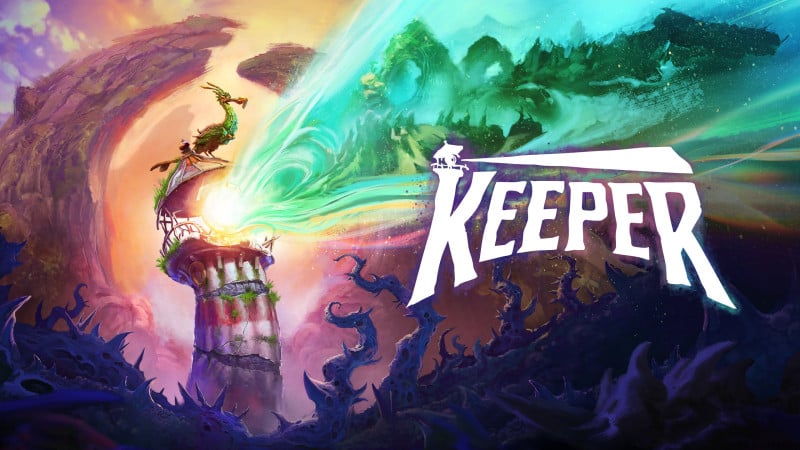
It’s rare to be genuinely astonished during a game preview, yet that’s exactly how I felt stepping into the modest confines of Xbox Room #10 at Xbox’s business hall on Day 1 of Gamescom 2025. Six stools, a small table, and a screen showcasing Keeper—the next adventure from Psychonauts creator Double Fine Productions, starring a walking lighthouse and a sea bird—were waiting. Oh, and the studio’s CEO and industry legend, Tim Schafer, was there too.
No one warned me Schafer himself would lead the demo, so being greeted by the man I’ve long admired was surreal. His warmth and quick humor dissolved my nerves as he invited me to watch three pre-recorded gameplay sequences of Keeper.
Before diving into gameplay, Schafer shared some intriguing context. He hadn’t done press since Psychonauts 2 in 2021 and admitted he was a bit jittery—plus it was his first Gamescom in 16 years. Though he was on hand to champion Keeper, he was eager to spotlight Lee Petty, the game’s director (formerly art lead on Brutal Legend and Broken Age) and the creative spark behind Keeper’s wildly original premise.
Schafer explained that Keeper only came to life after Double Fine joined the Xbox family. “Once we had Xbox’s support, we didn’t need to pitch commercially driven ideas or worry about bankruptcy every day,” he said, emphasizing the creative freedom the partnership brought.
Meanwhile, during the height of the COVID-19 lockdowns, Petty sought refuge on solitary hikes through San Francisco’s rolling hills. He couldn’t shake a haunting question: what if humanity vanished, leaving nature to reclaim our world? “Lee’s a quirky guy obsessed with surreal imagery—he grew up on Dark Crystal and Salvador Dalí,” Schafer remarked, capturing his collaborator’s imaginative spirit.
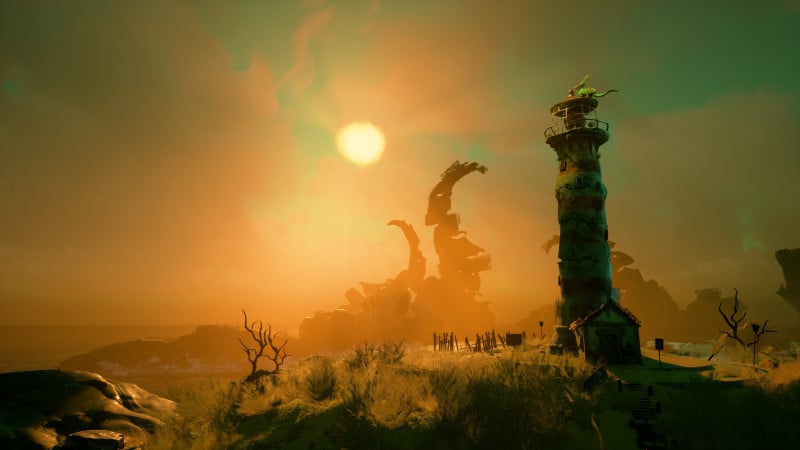
The product of Petty’s reflections is Keeper: an experience that’s as strange as it is serene. At its core, it’s an adventure laced with light puzzles, but its true essence lies in atmosphere, ambiance, and the growing bond between its two protagonists—Twig, a lone sea bird, and a sentient lighthouse.
After a furious storm separates Twig from her flock, she perches atop an ancient lighthouse. The collision jolts the structure to life, sprouting legs in a whimsical twist. Compelled by an unseen force toward a towering mountain at the island’s summit, the unlikely duo sets off on their journey.
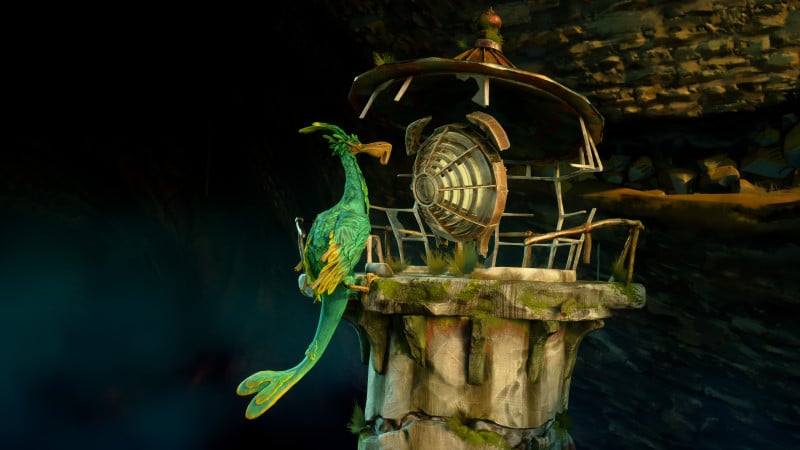
Gameplay revolves around guiding the lighthouse and its beam. Shining light on foliage can spur growth; illuminating gears prompts Twig to alight and turn them to unlock gates; and directing your beam at curious creatures can send them tumbling, sometimes revealing hidden objects.
In its mood and pacing, Keeper evokes the charm of a Disney dark ride—think Pirates of the Caribbean or The Haunted Mansion—where immersion and storytelling take precedence over thrills.
I delighted in how the beam animates even non-essential elements. Watching sunflowers sway under its glow or seeing whimsical spring-loaded devices dance simply enhances the world’s sense of life.
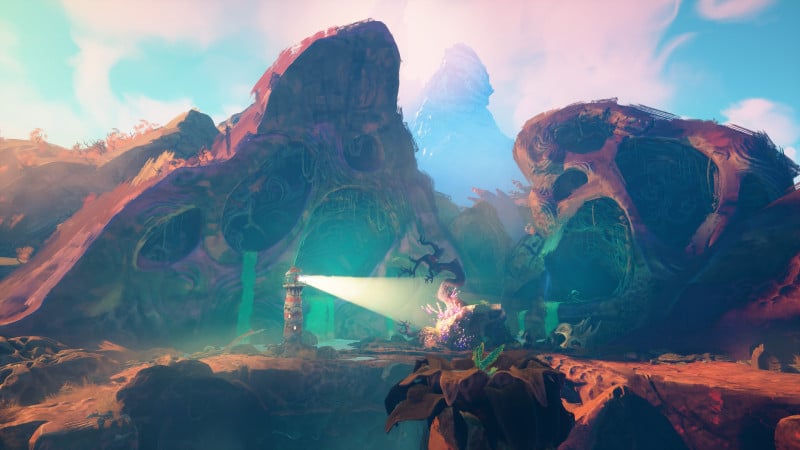
Although puzzles appear straightforward, I found myself drawn to the periphery: sunflowers swaying as light grazes them, carrots diving into the soil, and other delightful surprises that make the world feel alive.
I spotted moments of delightful absurdity: Twig transforming into a giant egg on the lighthouse’s back, a village of tiny, rusty watchmen scurrying below, and fields of pink pollen that grant buoyant, low-gravity hops. Each scene brims with Dalí-inspired whimsy filtered through Double Fine’s playful lens.
Schafer noted that some areas follow a linear, puzzle-centric design, while others invite open exploration. Yet, in every locale, Keeper explores transformation—of the environment, of Twig, and of the lighthouse itself—each character experiencing its own narrative arc.
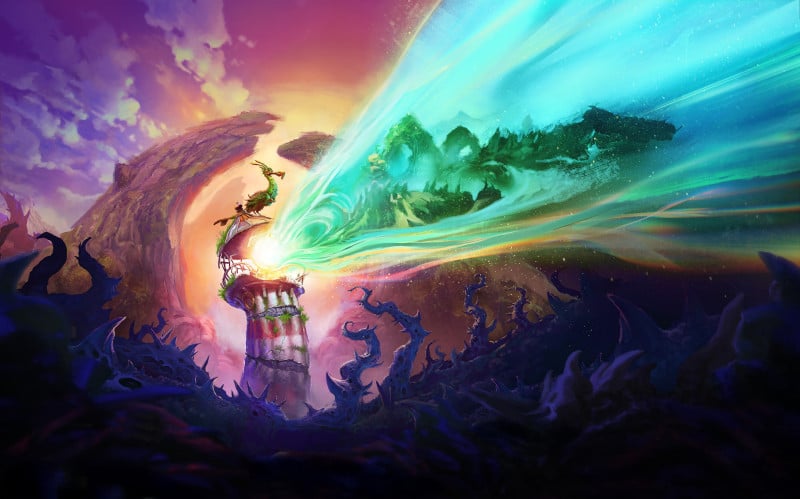
When I asked why players control a lighthouse, Schafer chuckled that even he wasn’t certain. Originally a side character, the walking lighthouse captivated both Petty and Schafer with its surreal charm, earning its place in the spotlight.
He wrapped up by underscoring Double Fine’s passion for the bizarre—work that would appeal to auteurs like David Lynch or David Cronenberg. Keeper is undeniably odd, yet imbued with unmistakable Double Fine charm. I can’t wait to experience it firsthand when it launches on October 17 for Xbox Series X|S and PC.
Related articles
 Ubisoft Names New Generative AI Initiative Motherbrain
 Another Country Seeks to Require Publishers to Preserve Digital Games After Server Closures
 Call of Duty: Modern Warfare 4 to Feature Changed Token System
 Wardogs Game Director Joe Brammer Says Balance Will Not Be Fixed by Season Two
 Russian Official Calls Gamers Taxpayer Parasites
 Pokémon Pokopia Celebrates Its First Halloween with Themed Event
 Comedy Film Hundreds of Beavers Starts Streaming on Dropout
 PlayStation 5 Game Natively Ported to PC for the First Time