
★★★★ ½
Over the years, the rise and fall of Tonya Harding has advanced from tabloid fodder to a punch line to the stuff of half-remembered legend. I, Tonya presents the unconventional Olympic determine skater’s stranger-than-fiction story with stability, nuance, and affection—however not fairly redemption—for the movie’s titular tragic hero.
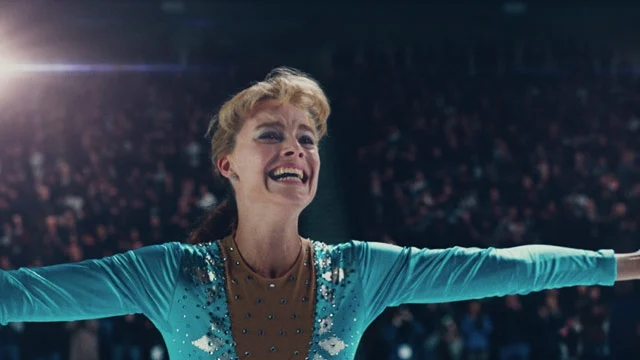
I, Tonya chronicles 40 years within the lifetime of Harding (Margot Robbie), a poor, brash skater raised by an abusive mother, who first made historical past by changing into the primary American girl to land a triple axel in competitors. The movie makes use of a wide range of narrative gadgets, together with an “irony-free” and “wildly contradictory” mockumentary format, to border the narrative. Sequential scenes are interrupted by interview footage of Harding and her internal circle within the current day, as they recall their variations of the occasions depicted. This motif—together with moments through which characters in the primary story line break the fourth wall to offer their two cents—efficiently creates a fragile stability between darkish comedy and brutal sincerity. After among the movie’s most gut-wrenching moments, a personality in an interview section will chime in with a deadpan one-liner. For instance, after Harding’s chain-smoking mom, LaVona Golden (Allison Janney), unintentionally stabs her daughter, present-day Golden responds, “What household does not have its ups and downs?”
On high of building such a fancy tone, the movie has the duty of being an Olympic-level sports activities film on an indie funds—and to that finish, it succeeds commendably. Director Craig Gillespie and cinematographer Nicolas Karakatsanis choreograph dramatic, sweeping camerawork to seize Harding’s athleticism and prowess in her routines. While Robbie did be taught to ice-skate for the movie, her face is imposed on a double à la Black Swan for the extra taxing technical strikes. This impact is noticeable at instances, but it surely works for probably the most half, permitting Robbie’s facial expressions to coexist with the skating so the viewers will get a whole image of Harding as a performer. The meticulous recreation of Harding’s routines is matched by the copy of her ensembles, topped with spot-on make-up from Deborah La Mia Denaver and hair by Oscar winner Adruitha Lee. Denaver’s delicate, low-budget old-age make-up is price applauding, because it’s really easy to get improper and may simply distract from an actor’s efficiency.
While the movie’s technical components are harmonious, its success comes all the way down to the performances of Robbie, Janney, and Sebastian Stan, the latter of whom performs Harding’s ex-husband, Jeff Gillooly. These actors have the tough process of portraying actual, still-living folks, and exhibiting their troubling faults alongside their virtues. A constant, proficient performer, Janney knocks it out of the park as Golden, who’s callous, irredeemable, and riotously blunt. Meanwhile, Stan’s means to make Gillooly appear loving and meek simply as simply as violent and controlling muddies the viewers’s means to decipher whether or not his or Harding’s model of occasions is the reality.
For her first function as a number one woman, Robbie took her destiny into her personal palms to point out what she’s able to as an actress. The Aussie discovered the film’s script herself, then negotiated to each star in and produce the movie. Robbie portrays Harding as a damaged however relentless girl who, although she was persistently dismissed by the media, the world of determine skating, and the American public, fought again in opposition to the inflexible gender norms and classism in skating.
Yet for all her attraction as a form of feminist icon, Harding is not completely let off the hook for her function in her personal misfortunes. Robbie’s Harding sneers and scoffs, refusing to just accept accountability for failures that have been fully inside her management. She bad-mouths Nancy Kerrigan whereas claiming she’d by no means harm her “good friend.” Robbie captures the self-pity, insecurity, and desperation that radiated off Harding and made her not simply unlikeable, however a simple cultural punching bag.
I, Tonya lags when the results of “the incident” change into too miserable to intersperse with comedy, however the movie in the end succeeds at pulling again the curtain to disclose the individual behind the punch line. While the film won’t change everybody’s opinion of Harding, it contextualizes and humanizes her, revealing a flawed however sympathetic girl nonetheless preventing for her place on the planet.
 Venice Film Festival 2026 Winners Announced
 “The Odyssey” Becomes Universal’s Highest-Grossing Film of All Time
 “Privet semye” to get a sequel
 Rumor: New Wonder Woman Movie Delayed Following Supergirl’s Failure
 New Bond Film Director Finishes Script
 Lady Gaga becomes a mother
 “A Tale of Two Cities” series starring “Game of Thrones” actor to be released in Russia
 New Johnny Depp movie to be released in Russia