How Queen’s Domain’s Two-Person Team Reimagined an RPG Legacy from a Basement
Eric Berger has spent more than two decades making games, but that doesn’t mean he’s enamored with the industry. The co-developer of the viral RPG Queen’s Domain began creating maps and mods for Unreal Tournament as a teenager, before landing a professional level design contract with Gearbox at 19.
His career took him to GlyphX, where he worked on Advent Rising, and Mad Doc Software, where he contributed to an unreleased project. At Airtight Games, he developed his level design and environment art skills on titles including Dark Void. Later, while working on Rocket Arena at Final Strike Games, Berger began considering a game he truly wanted to play.
There he met Bradley Boothe, a technical artist and former software engineer who shared his frustrations with the limitations of conventional studio development. The pair left their jobs to establish Freshly Baked Games, a two-person studio that offered creative independence at the cost of financial security.
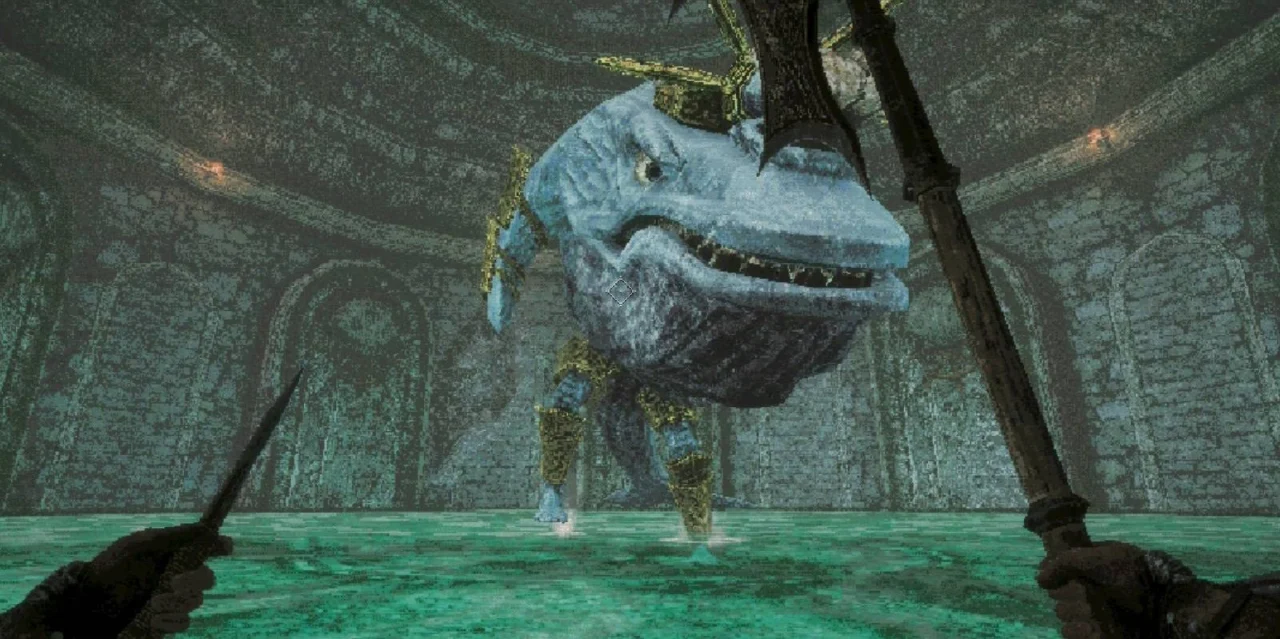
After years spent prototyping a project they eventually considered too ambitious, the developers returned to another idea: a more focused first-person fantasy game inspired by FromSoftware’s King’s Field. They expected it to take a year. Three years later, Queen’s Domain emerged as an expansive, low-poly world filled with weapons, monsters, and intricately connected environments. The team still hopes to revisit its earlier prototype.
In his first interview since the game’s release, Berger spoke with Polygon about designing a world that rewards curiosity, embracing player choice, and letting determined RPG fans become overwhelmingly powerful.
This interview has been edited and paraphrased for clarity.
Polygon: What did you want to achieve with Queen’s Domain? Was it primarily an exercise in King’s Field nostalgia?
Eric Berger: Part of our approach is moving away from the idea that every game needs a distinctive hook. We enjoy games that take a strong foundation and explore it thoroughly. Rather than spending all our time trying to make something radically different, we wanted to make each element as good as we could.
That meant focusing on level design that feels tight and rewarding to explore. If the game has a hook, it’s probably the sword dash, though multiple air dashes aren’t revolutionary. What matters more to us is using mechanics well and developing them in depth.
Was leaving the industry to work independently a risk?
It was, although the direction the industry has taken since we left makes it feel like less of a bad decision. There have been so many layoffs, and people I’ve spoken to have had a difficult time finding work. At least that’s one concern we don’t have in the same way.
Bradley is married, and his partner supported him in giving the studio a serious try for a couple of years. As for me, I made the familiar sacrifice of asking my mom if I could live in her basement. I was 41, and I’ve been here for about five or six years.
What makes a great level, and what philosophy guided your work on Queen’s Domain?
I think the most important thing is understanding what the game is about and what players want to do in it. In an RPG, they’re thinking about finding items, encountering unusual enemies, discovering new areas, and locating somewhere to save. The environments should support those interests.
Players also need to understand where they are. Landmarks and lighting help draw attention to important places, and paths should look like routes worth following. If a cliff isn’t somewhere players can reach, for example, I wouldn’t put a cluster of torches there to suggest otherwise.
Above all, I want moving through a space to be interesting and for the world to feel like more than a collection of video game boxes. When I see a building in a game, I want to enter it. If too many buildings are just façades, the setting starts to feel artificial.
Sometimes I realize players can reach a place I hadn’t intended. Instead of blocking them, I try to make the route understandable and put a suitable reward there. If someone makes the effort to get up there, I don’t want them to be disappointed.
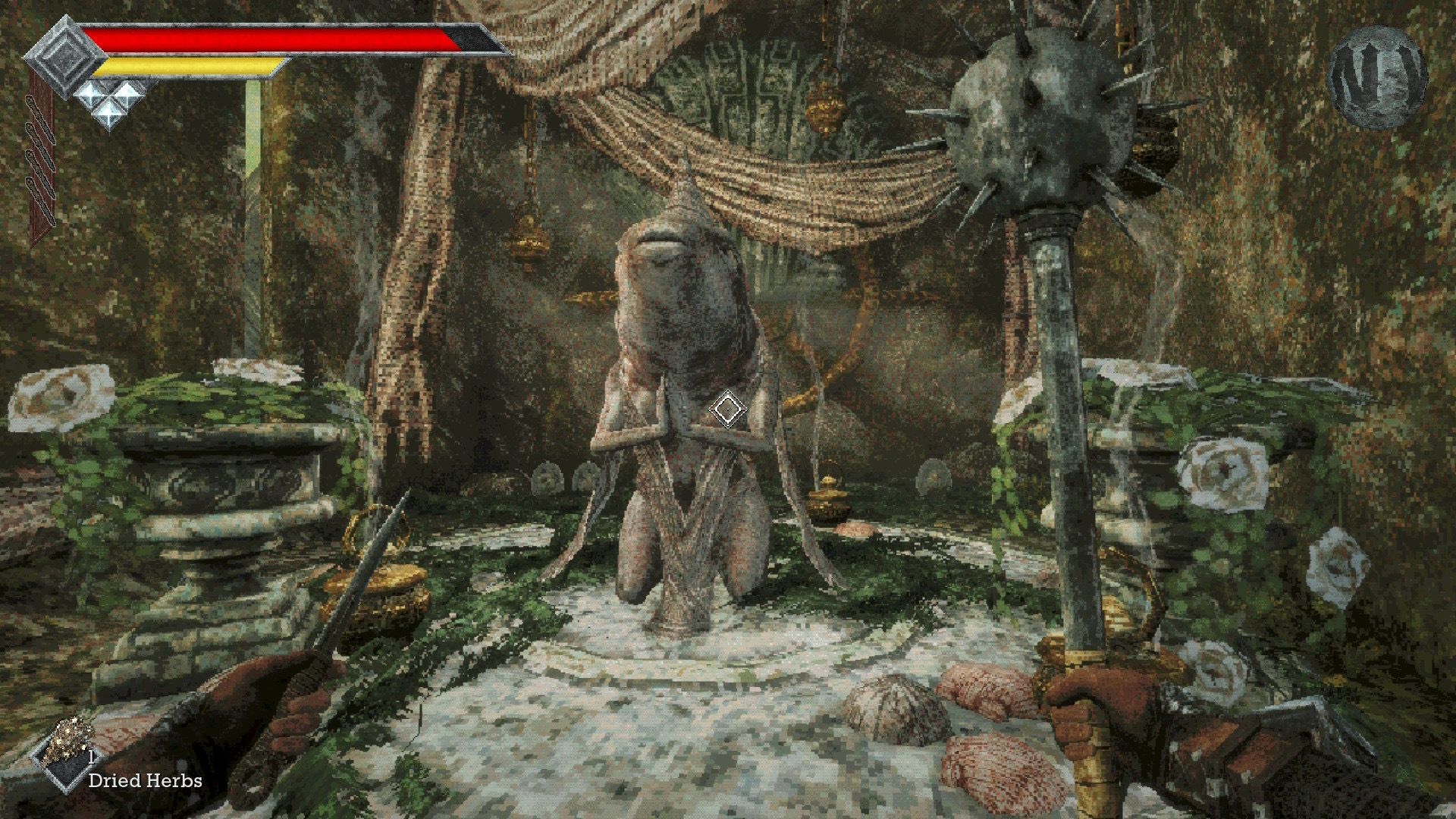
One example is the shrine where players find Endu, the main sword. There’s a silver skull collectible on its roof. I know that if I were playing, I’d wonder whether there was anything up there. With enough dashes, you can jump from a high point and reach it.
Are there particular video game levels you consider exceptional?
I wouldn’t call it a pantheon, but the castle in Ico is incredible. It feels like a real place where I simply enjoy spending time. Shadow of the Colossus is another favorite, though it wasn’t necessarily a direct influence on this game.
Then there are the obvious choices: Dark Souls and King’s Field IV. I love how they make exploration feel like a journey through a place where you might discover something, rather than just another level to complete.
On the other hand, you put a dangerous well near the beginning of the game. I went down it and was completely unprepared.
That’s part of making the setting feel like a world rather than a sequence of levels. I trust players to recognize that an area is dangerous and decide whether to leave. But I don’t want to prevent them from pushing ahead. They might find useful loot or defeat an enemy and earn a lot of experience.
I love games that present several possibilities at once. Some of my favorite moments in the first two Dark Souls games come from knowing there are multiple places to explore, wondering which one to tackle, and remembering an area that was too difficult before. The appeal is being able to choose.
Someone in our Discord said they went down the well and fought their way through until they emerged at level 25. That’s a valid way to play.
Why return to the King’s Field formula now, when FromSoftware itself has moved on?
I rented King’s Field on PS2 when I was a teenager. I found it fascinating, even though I had very little idea what I was doing and never got especially far. The games had a raw sense of mystery about their worlds, despite some rough mechanics and unusual camera systems.
I wanted to revisit what I remembered and loved about them, then bring that feeling into a more modern game. Lunacid was encouraging in that respect. I loved seeing someone create such a compelling contemporary take on that style, and seeing an audience embrace it suggested there was room for more.
I also enjoy many modern FromSoftware games, but they’ve increasingly moved away from the things I value most. I love exploring their worlds and seeing their weapons, armor, and enemy designs. But I’m getting older, and the demanding action and parrying are becoming harder for me to manage.
I didn’t want Queen’s Domain to be easy, but I do like how older RPGs let players steadily build power. In Souls games, the benefits of increasing your stats eventually diminish, so grinding won’t necessarily let you overpower everything. I think an RPG should reward players who want to put in that time. In our game, you can keep growing stronger in a more linear way and eventually defeat enemies in a single hit. You don’t have to play that way, but I like having the option.
How do you keep leveling up satisfying?
For me, a great RPG respects the player’s effort and investment. It’s not enough to have lots of equipment and upgrades; those things need to make a meaningful difference.
I’m not fond of games that constantly rebalance enemies around your level. If a player has spent time becoming powerful and can defeat an enemy from the opening area in one hit, that feels right to me. If you need to limit how strong a player can become, do it without undermining their progress.
How did you develop the creatures and visual identity of the world?
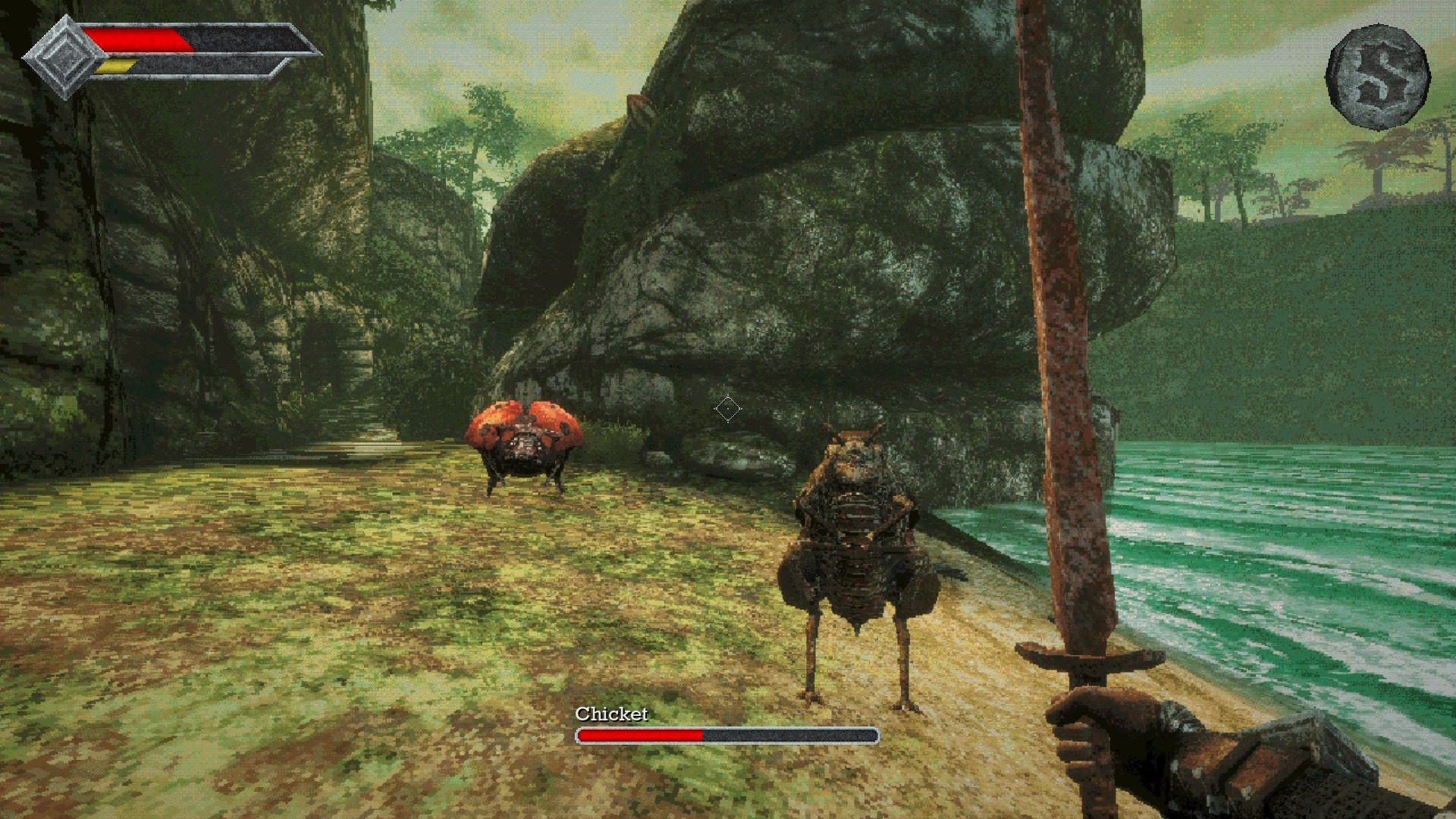
I draw on inspirations such as the bestiary in Shadow Tower and other older games. I value enemies that are genuinely varied, rather than a collection of near-identical zombies followed by a larger one.
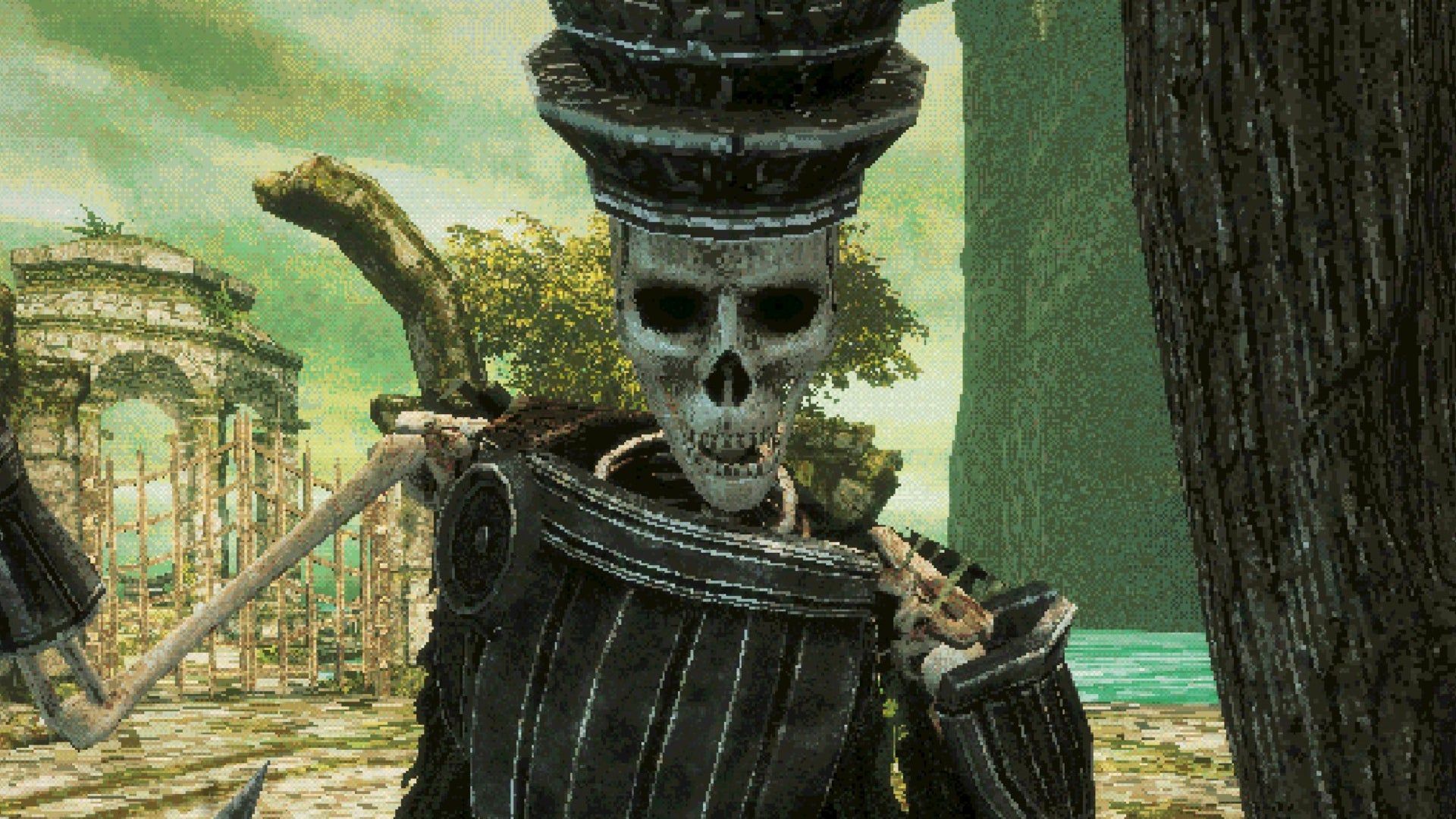
Some creatures make sense because of the setting. In a magical world, someone would probably animate stones to create a golem, and skeletons are a natural fit too. For stranger designs, I might combine features from animals I find interesting or transform them into something I haven’t seen very often.
My favorite may be a creature that appears later in the game: a sort of cuttlefish dog that produces bubbles.
The opening hour can be punishing. How did you balance the difficulty, especially for players who might give up early?
A lot depends on the player. We’ve heard from people who think the game is too easy and others who think it’s too hard. Because we don’t adjust the numbers behind the scenes, someone who understands combat and survives encounters will gain experience faster and become stronger. Someone who dies frequently will have a tougher time.
For players who are struggling, it helps to return and save, pay attention to damage types, and remember that not every encounter is mandatory. You don’t have to fight the centipede creature just because it’s there.
I want players to encounter problems and feel satisfaction when they discover solutions. Enemies such as the laser eyes also encourage observation. There are no tutorials telling you where to go, and we deliberately avoid highlighting items dropped by enemies. We want players to look carefully and pay attention to their surroundings.
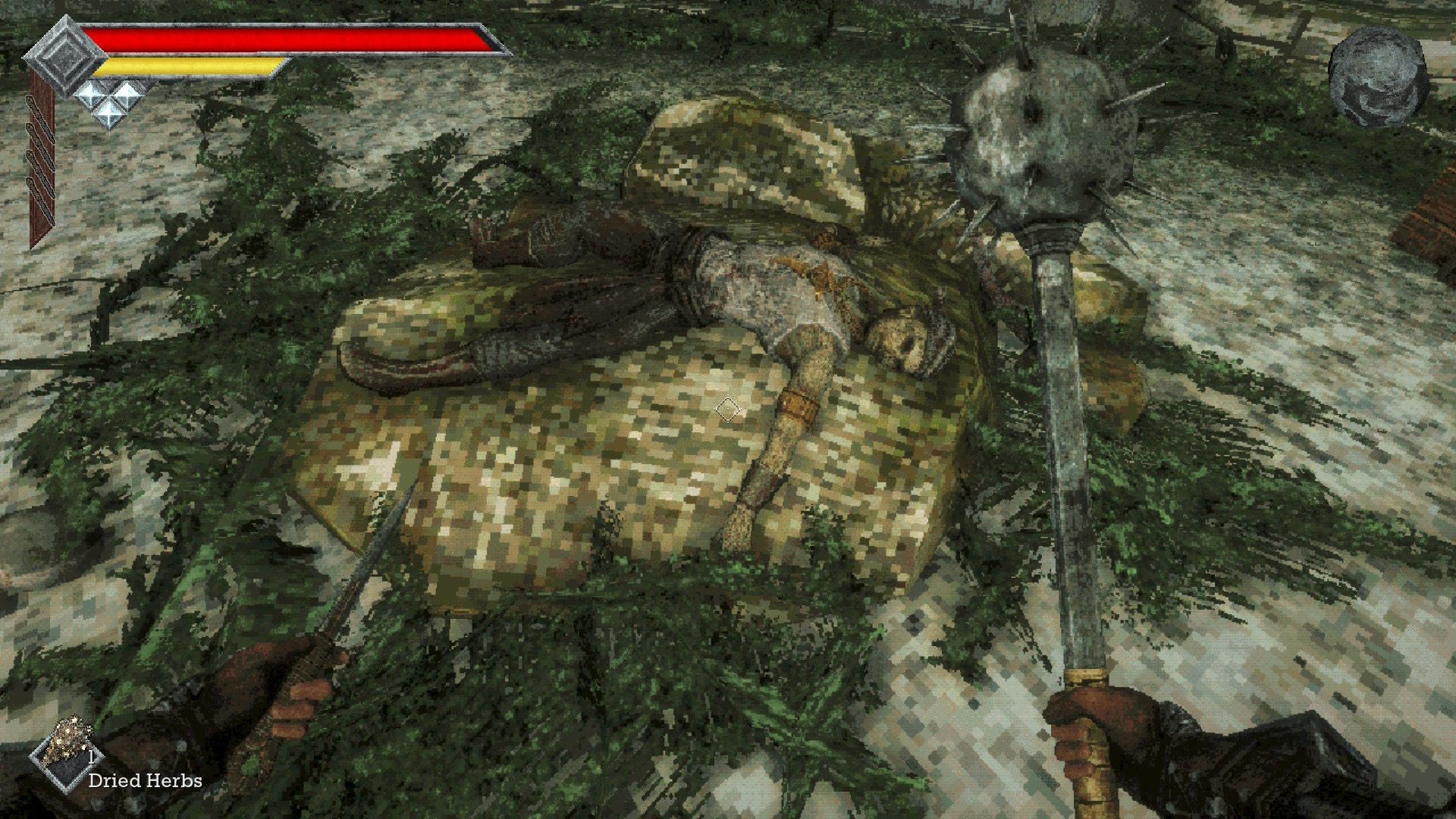
I’ve certainly missed a few dropped elixirs in the pixelated undergrowth. How did you decide how low-poly the game should look?
When I look at game art, I care less about the amount of detail than the composition of spaces, visual variety, and whether what I’m seeing feels distinctive. That applies to enemies and weapons as much as environments. Lower-resolution art makes it much easier to create that variety.
For a two-person team, making everything highly detailed would be a huge burden. We had already tried that approach twice. If I can make a character in four hours instead of four days, I can produce several different models in a week. Detailed models also take longer to rig and come with higher expectations for animation.
The simpler style gives us flexibility. I can keep editing the world without spending forever perfecting every brick and crack. With a tiled texture, for instance, I can cut a hole in a wall and turn it into a cave.
Even with the low-detail art, the entire game is one connected world, and working on it in the editor has become slow. The map takes about 20 minutes to load. At a modern level of visual detail, I’d probably need a better computer, and we would likely have had to divide the map into multiple sections.
Is there a particular dungeon or traversal sequence that captures what you wanted the game to be?
After the first area, players gain the dash and find a torch puzzle that asks them to light three fires. Many assume they need to find all three immediately to reach the next level, but an entire area lies between them and one of those torches.
For me, that shows the game isn’t simply a series of stages. You can tackle certain things earlier or return to them later, depending on where you go.
Falling down the well might communicate that idea for some players. Another example is the entrance to the dark underworld, which is accessible from the first area. You can wander in, meet extremely dangerous enemies, and decide to leave. I like places that make players take mental notes and think about coming back.
Would you like to expand on Queen’s Domain, or are you and Bradley interested in making something different next?
I’m not sure we’ll make another game quite like this anytime soon. We both enjoy a wide range of games, and there are other genres we feel deserve more attention.
I love Resident Evil 4 and its particular blend of survival and action: the tension, the horror, and the resource gathering. My favorite version of that formula is Resident Evil 5, partly because it lets you farm money and become extremely powerful. We might like to make something along those lines.
We’ve also considered a Soulslike. For gameplay, Demon’s Souls may still be my favorite in that family, so it would be interesting to explore that style through the things I appreciate about it. Whether I’d want to make 150 sets of armor is another question.
What would connect those projects? What do you and Bradley want your games to offer as an alternative to mainstream studio releases?
Whatever we make, I don’t think it will be completely disconnected from Queen’s Domain. The gods of that universe would appear throughout our games, and their stories could intersect in different ways, even if one takes place a thousand years after another.
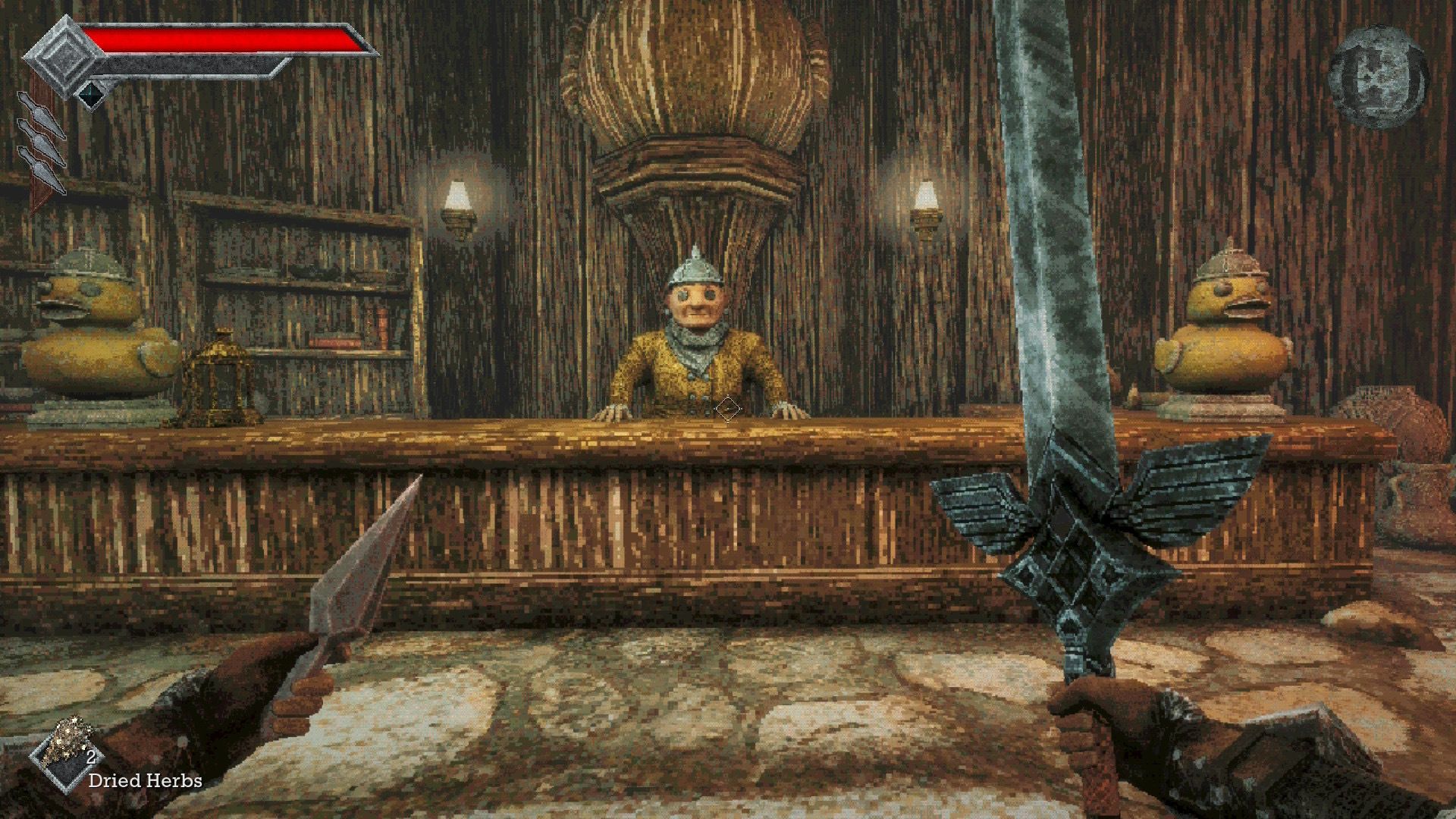
Our core design values would remain consistent too. We both enjoy real-time combat, so I don’t expect us to make a turn-based game. We also love RPG systems: collecting items, leveling up, choosing equipment, earning money, and shopping. Those are the things we naturally gravitate toward.
I’ve played so many games that felt almost perfect, except that I wished I could level up my character. Sometimes I want the game to let me become stronger through its systems rather than asking me to rely entirely on improving my reflexes.
Source: Polygon
Related articles
 Analysts Don’t Expect PS5 and Xbox Prices to Drop for Several More Years
 New NVIDIA Driver Fixes SSD Issue but Breaks Monitors
 Festival for Games Made Without AI Emerges After Steam Next Fest Controversy
 New God of War Runs on PC at 4K and 240 FPS
 Remedy Explains Who Is Standing in the Way of Quantum Break 2
 Could Half-Life 3 Have No Loading Screens? Insider Shares New Details
 Silent Hill Gets Ray Tracing and Improved Textures
 New NVIDIA Driver Causes FPS Drops in Call of Duty: Modern Warfare 4