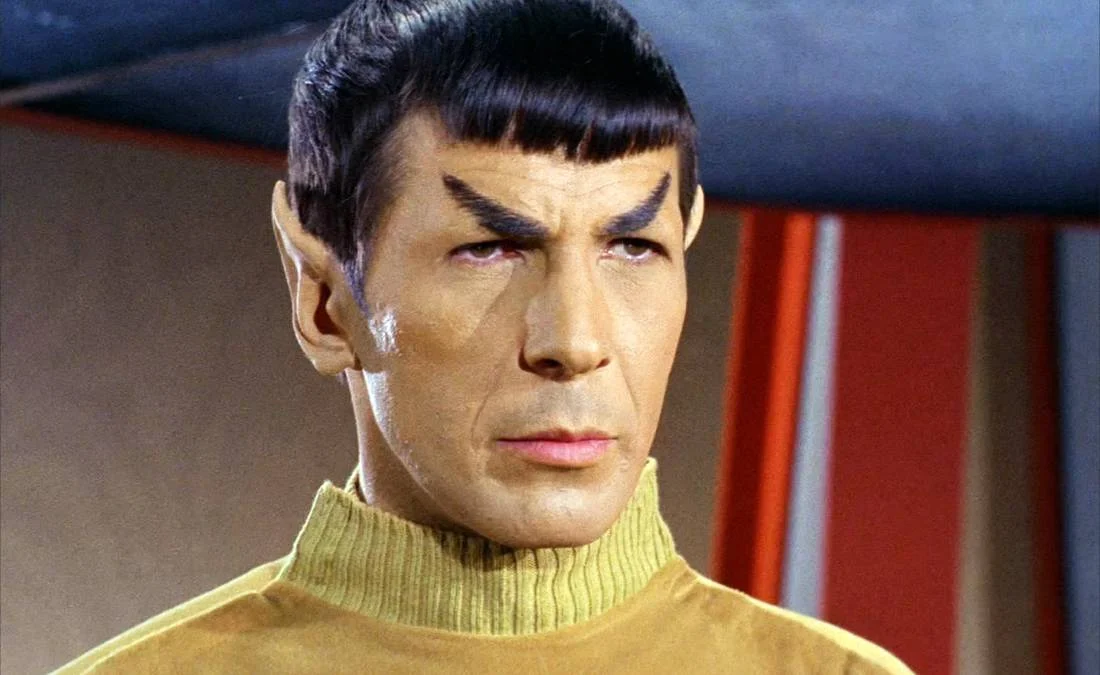
Five Classic Star Trek Episodes That Have Aged Poorly
Time can treat television in strange ways. Some shows and individual episodes improve with age, revealing ideas and themes that audiences may miss the first time around. Others make viewers wonder how something that once seemed normal can feel uncomfortable decades later.
Sometimes television ages like a fine Romulan ale. Other times, it spoils like a carton of milk left on the counter. Star Trek has experienced plenty of both. The original series was remarkably progressive for television in the 1960s, imagining a future where humanity moved beyond many era-defining divisions. Nearly six decades of changing attitudes and continuous evolution in the franchise have not been kind to every trip aboard the Enterprise. After celebrating classic episodes that have grown better with time, it helps to check the expiration date on the other end of the spectrum.
Here are five Star Trek episodes that have aged poorly.
“What Are Little Girls Made Of?” (Season 1, Episode 8)
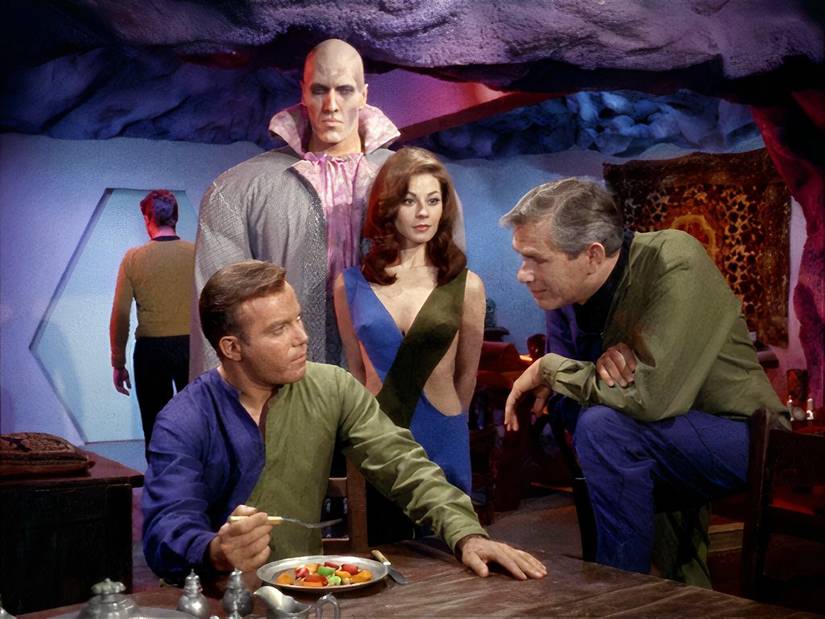
“What Are Little Girls Made Of?” introduces one of Star Trek’s earliest androids, and its vision of an artificial woman is very much a product of 1966. Andrea, played by Sherry Jackson, was created by Dr. Roger Korby, played by Michael Strong, as a beautiful and obedient female companion who follows commands and claims she is incapable of emotion. She also spends the episode in an outfit that makes the Enterprise miniskirts look conservative. When Korby orders Andrea to kiss Captain Kirk, played by William Shatner, she complies, making her feel less like a person than another piece of technology at her creator’s disposal.
To the episode’s credit, Andrea eventually develops feelings Korby insists she cannot have. Nearly 60 years of stories about androids, artificial intelligence, and personal identity make her treatment feel particularly dated. Later Star Trek stories would explore these questions with characters like Data, played by Brent Spiner, in far greater depth. Andrea instead begins as the fantasy of an artificial woman who is beautiful, compliant, and literally made to obey a man. She eventually gains some agency, but navigating that road feels uncomfortable.
“The Apple” (Season 2, Episode 5)

“The Apple” presents Kirk with what seems like paradise. The Vaalians live peaceful and extraordinarily long lives without disease or war, but their society is maintained by a machine they worship as Vaal. The catch is that they possess little individual freedom, do not reproduce, and remain technologically stagnant. Kirk, prompted by McCoy, played by DeForest Kelley, decides that life lacks value and destroys Vaal, which was holding the Enterprise in orbit. He then tells the Vaalians they must learn about having children and assures them, “Just go on the way you’re going. You’ll find out.”
The episode carries an uncomfortable whiff of cultural imperialism. The Enterprise arrives, decides the society lives the wrong way, destroys the center of its culture, and leaves the population to adopt what Kirk considers a more natural life. The Vaalians never ask to be liberated. Even Spock, played by Leonard Nimoy, questions whether the crew had the right to interfere. Kirk and McCoy brush him off, but later Star Trek entries would take that question much more seriously.
“Mudd’s Women” (Season 1, Episode 7)
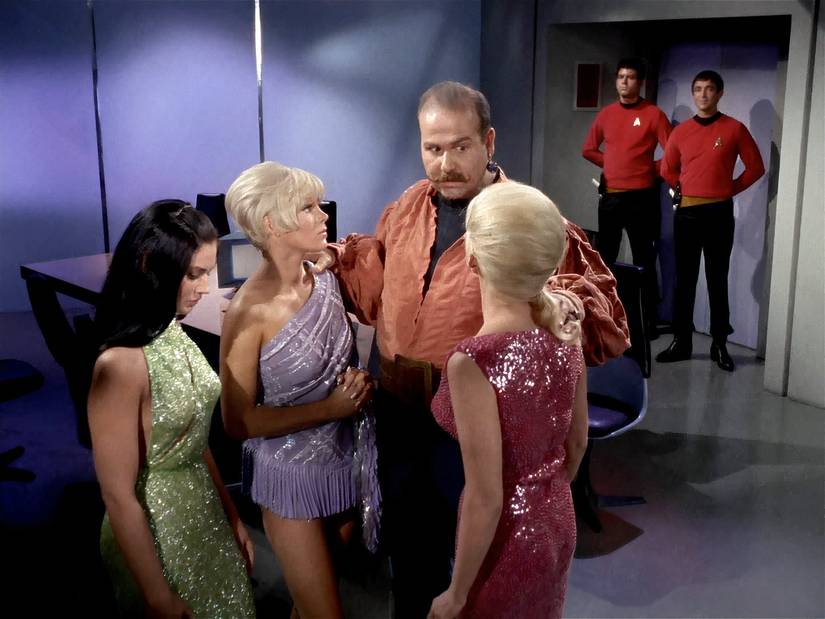
Harry Mudd, played by Roger C. Carmel, became one of Star Trek’s most memorable recurring troublemakers, but his introduction has aged worse than the character. “Mudd’s Women” finds him transporting three women to become wives for lonely miners, essentially treating them as cargo for prospective husbands. The women take the Venus Drug, which temporarily makes them extraordinarily beautiful. Much of the episode involves men staring at them and evaluating their attractiveness while Mudd tries to turn the arrangement into a business.
The episode attempts a more progressive message when Eve, played by Karen Steele, discovers the Venus Drug Kirk gives her is actually a placebo, and that her transformation stems from believing in herself. Rather than questioning a society valuing women largely for their appearance, the episode suggests Eve’s insecurity is the real problem, positioning self-confidence as the fix. It is an oddly patronizing solution for a story spent objectifying its female characters. “Mudd’s Women” sometimes feels like it barely made it out of 1966.
“The Paradise Syndrome” (Season 3, Episode 3)
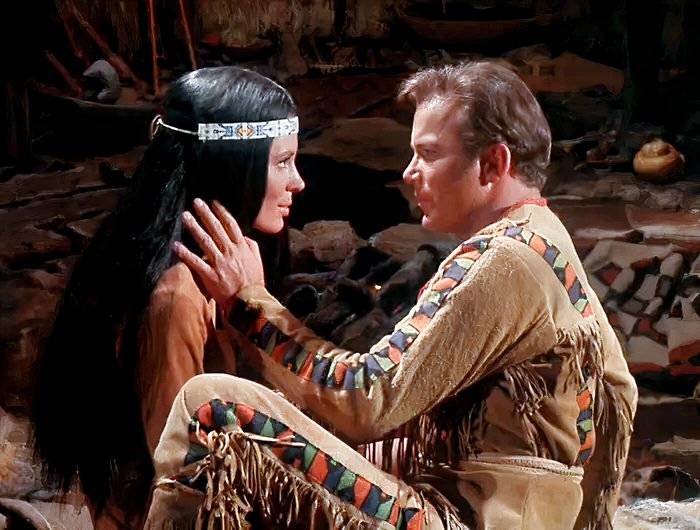
“The Paradise Syndrome” finds an amnesiac Kirk on a planet inhabited by Indigenous peoples transported from Earth centuries earlier. He is mistaken for a god, becomes the tribe’s medicine chief, and marries Miramanee, who becomes pregnant with his child. The episode presents the society as a collection of Native American imagery, combining distinct cultures into one generic version complete with buckskins and tepees. Worse, the two most prominent Indigenous characters, Miramanee and Salish, are played by non-Native actors Sabrina Scharf and Rudy Solari in brownface.
It is a romanticized depiction that feels out of place in Star Trek. Rather than imagining how these cultures might have developed after centuries on another planet, the episode freezes them in an idealized version of America’s past. Miramanee is eventually stoned by her own people while protecting Kirk and dies from her injuries. For a franchise built around celebrating different cultures, “The Paradise Syndrome” reduces this one to stereotypes.
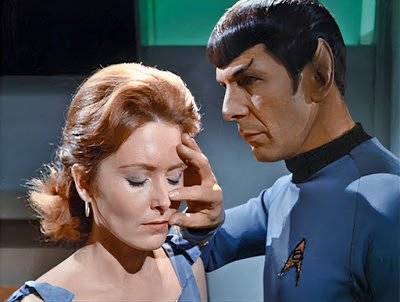
“Turnabout Intruder” (Season 3, Episode 24)
There is something poetic about the final episode of Star Trek: The Original Series being one the franchise would spend the next 60 years proving wrong. “Turnabout Intruder” introduces Dr. Janice Lester, played by Sandra Smith, a former lover of Kirk who resents that she could never have his career. “Your world of starship captains doesn’t admit women,” she tells him. Lester then uses alien technology to swap bodies with Kirk in a manner similar to Freaky Friday, finally putting herself in the captain’s chair.
The problem is not simply that the episode suggests women cannot command starships. It repeatedly connects Lester’s ambition and resentment with emotional instability. Kirk, trapped in Lester’s body, explains that “she wanted to murder James Kirk, a man who once loved her. But her intense hatred of her own womanhood made life with her impossible.” Later, Star Trek introduced Kathryn Janeway, Michael Burnham, and many other women in leadership positions. As a sendoff for a series famous for imagining a progressive future, “Turnabout Intruder” picked an unfortunate way to say goodbye.
Source: Polygon
Related articles
 Valve Refunds Gamer Whose Steam Account Was Hacked and Drained
 Manor Lords Publisher Says Game Is Not Afraid of GTA 6 Release Date
 Historian criticizes Kingdom Come Deliverance combat system for being too realistic
 Cyberpsychosis Strikes Former Night City King in Cyberpunk: Edgerunners Season 2 Clip
 Code Geass Franchise to Return Next Year With ‘Aspal: The Star Seeker’ Trailer
 Laura Bailey Joins Cast of The Last of Us Season 3 to Play Abby
 Gabe Newell Confirms Practicing Throat Singing in Valve Office
 Reports Indicate Control Resonant Involves Sweet Baby Inc Consultants