Five Anime Arcs That Are Perfect From Start to Finish
A great story arc can lift even a flawed anime. The best arcs raise the stakes, test their characters, and build toward a satisfying payoff. Their conflicts feel convincing because the antagonists’ goals and the heroes’ motivations evolve as the story unfolds.
The Chimera Ant arc in Hunter x Hunter is a rite of passage. It pushes the series’ deconstruction of shonen conventions to their limits while sending Gon Freecss and Killua Zoldyck in starkly different directions. The Shibuya Incident arc in Jujutsu Kaisen is just as transformative. Its intersecting perspectives, major character deaths, and relentless battles shatter the established order of jujutsu society.
Perfection is subjective, but the finest anime arcs tend to be memorable, well-paced, emotionally compelling, and meaningfully resolved. By those standards, these five arcs come remarkably close. We wouldn’t change a thing.
Warning: This article contains major spoilers for every story arc discussed below.
5. The Promised Day Arc (Fullmetal Alchemist: Brotherhood)
What happens when a brilliant story ends with an equally brilliant final arc?
Fullmetal Alchemist: Brotherhood has plenty of memorable stretches, from its exploration of the Ishvalan War to the heroes’ hunt for the Homunculi. But the series saves its best for last with the Promised Day arc, a chaotic culmination of Father’s 400-year plan for Amestris and the intertwined destinies of Edward and Alphonse Elric.
Greed’s rebellion becomes a decisive turning point. The brothers’ journey eventually brings them back to the Gate of Truth for one final reckoning.
The intricate buildup gives the concluding arc enormous scope. State Alchemists join military defectors, Xingese royalty, and ordinary citizens in a resistance against Father. The full complexity of Amestrian politics comes into play as nearly every faction and character converges on Central.
Even amid the battles and political upheaval, the story stays focused on Edward and what he has learned about sacrifice, equivalence, and human connection. The Promised Day arc balances quiet character moments with spectacular battles without letting either overwhelm the other.
Edward’s final sacrifice feels inevitable and surprising at once. His decision completes his character development without taking away the life he fought so hard to reclaim. It’s a fitting conclusion for someone with a Fullmetal heart.
4. Golden Age Arc (Berserk)
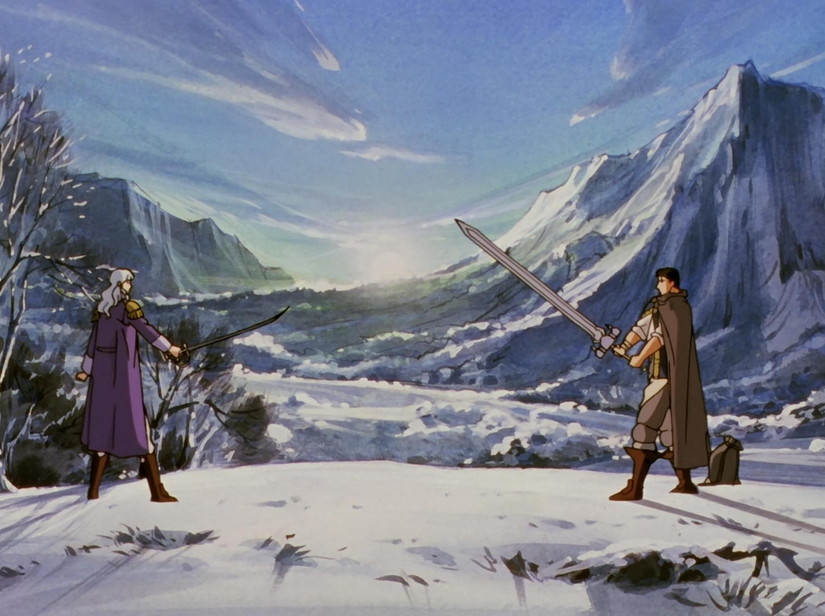
The Berserk: The Golden Age Arc film trilogy adapts the corresponding portion of Kentaro Miura’s Berserk. One could argue that the trilogy isn’t technically perfect. Despite its stunning hand-drawn artwork, its blend of 2D and 3D animation can feel uneven.
Even so, the films capture the essence of the Golden Age: a powerful exploration of ambition, psychological trauma, betrayal, and the fragile relationships that give people hope. The Egg of the King, The Battle for Doldrey, and The Advent trace the deteriorating bond between Guts, Griffith, and Casca, as well as how each character responds to grief, desire, and loss.
Griffith and Guts are presented as foils from the start, but their relationship develops with remarkable depth and nuance. Guts, shaped by a brutal childhood and hardened by the need to survive, gradually lowers his defenses and learns to trust others. Griffith’s fall from magnetic leader to a man consumed by pain and ambition destroys that progress, pulling Guts back into anguish and revenge.
The Eclipse delivers the arc’s unforgettable climax and establishes the horror that will define Guts’ later campaign against the Apostles and the God Hand. Hope and despair collide throughout the Golden Age, forcing the characters to face the limits of human resilience. The result is unforgiving, devastating, and hard to forget.
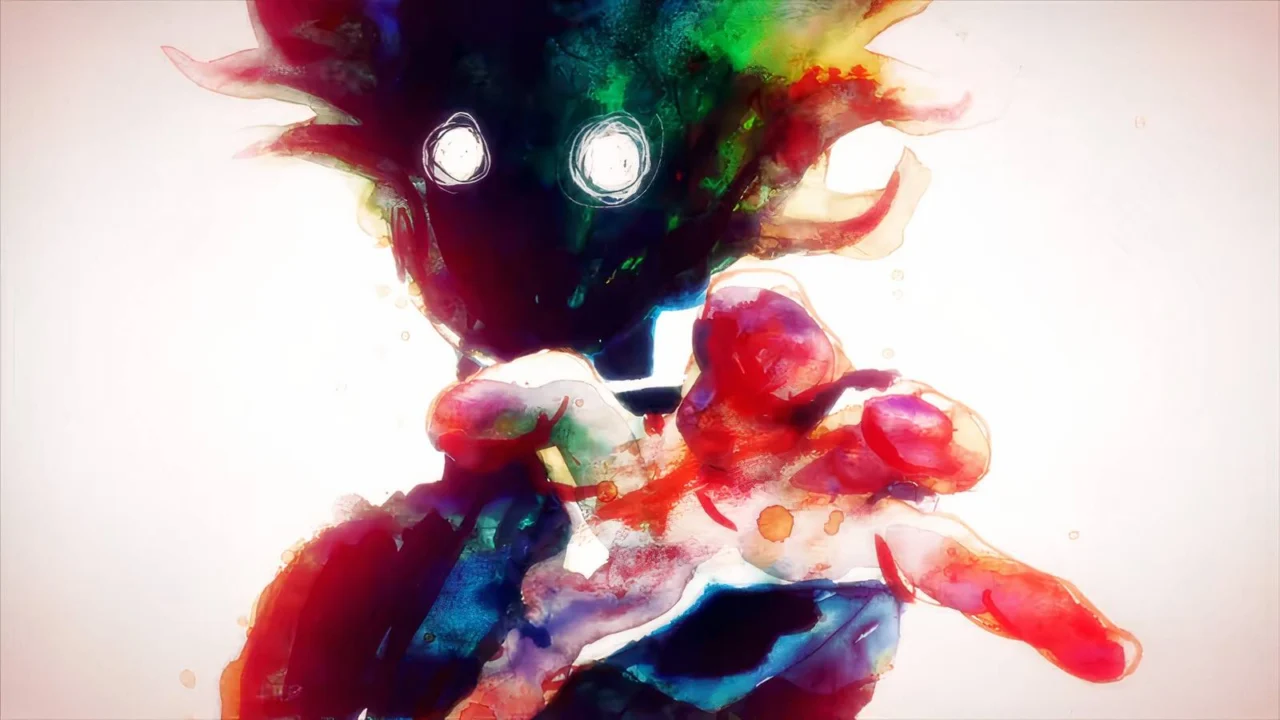
3. ???% Arc (Mob Psycho 100)
Mob Psycho 100 is shonen storytelling at its best. It uses the genre’s familiar framework for a subversive coming-of-age story about empathy, self-acceptance, and human connection.
Shigeo “Mob” Kageyama spends much of the series trying to control his immense psychic powers. But the story isn’t about physical training or becoming stronger. Mob’s real challenge is developing the emotional intelligence to understand himself and connect honestly with the people around him.
Mob’s powers are closely tied to his psychological state, so the ???% arc brings years of emotional suppression to a head. It asks what happens when an overpowered protagonist reaches his breaking point. The final conflict isn’t between Mob and another gifted antagonist. It’s between Mob and the part of himself he has always refused to accept.
His repressed emotions and unresolved trauma take shape as ???%, also known as the “Unknown.” A conventional power-up or last-minute supernatural solution can’t settle the conflict. Instead, Reigen Arataka’s unflinching honesty helps Mob face the truth. Mob accepts the Unknown as part of himself, not as a separate monster he must defeat.
Mob Psycho 100 resolves its protagonist’s deepest conflict without giving him an easy way out. Mob still has to live with his trauma and keep working to stay emotionally open. His carefree laughter at the end of the anime suggests he is finally ready to do that.
2. Pain’s Assault Arc (Naruto)
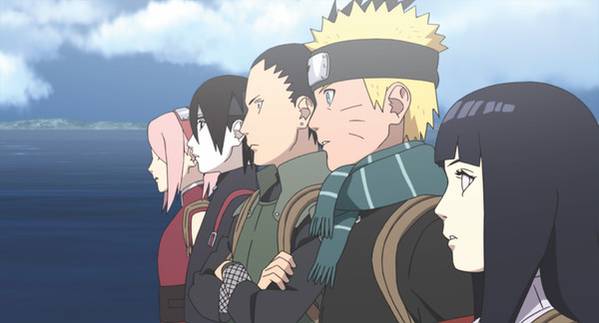
A sprawling anime like Naruto has room for several standout arcs, especially when filler episodes interrupt its central story. The Chunin Exams and Sasuke Retrieval arcs remain popular for good reason, but Pain’s Assault is the series’ most uncompromising stretch.
Nagato, also known as Pain, is one of the saga’s most compelling antagonists. His attack threatens to destroy the Hidden Leaf Village and forces Naruto and his allies to confront the ideology behind his violence.
Jiraiya’s death during his infiltration of Amegakure casts a shadow over everything that follows. But Nagato’s motives go beyond simple revenge. He believes humanity can achieve peace only after suffering a catastrophe so great that people become afraid to repeat it. Since empathy can’t be imposed, Nagato tries to create it through devastation, convincing himself that atrocity is justified in the pursuit of lasting peace.
Naruto explores Nagato’s philosophy through dialogue and combat. The sprawling, devastating battle delivers the arc’s greatest emotional and dramatic highs. For a time, no character seems safe, and the apparent destruction of the Hidden Leaf unsettles the series’ familiar world.
The danger doesn’t truly lift until Naruto rejects the endless cycle of retaliation. Rather than defeating Nagato through force alone, Naruto chooses empathy. He resolves their ideological conflict by showing the compassion Nagato believed could come only through shared suffering.
1. Civil War Arc (JoJo’s Bizarre Adventure: Steel Ball Run)
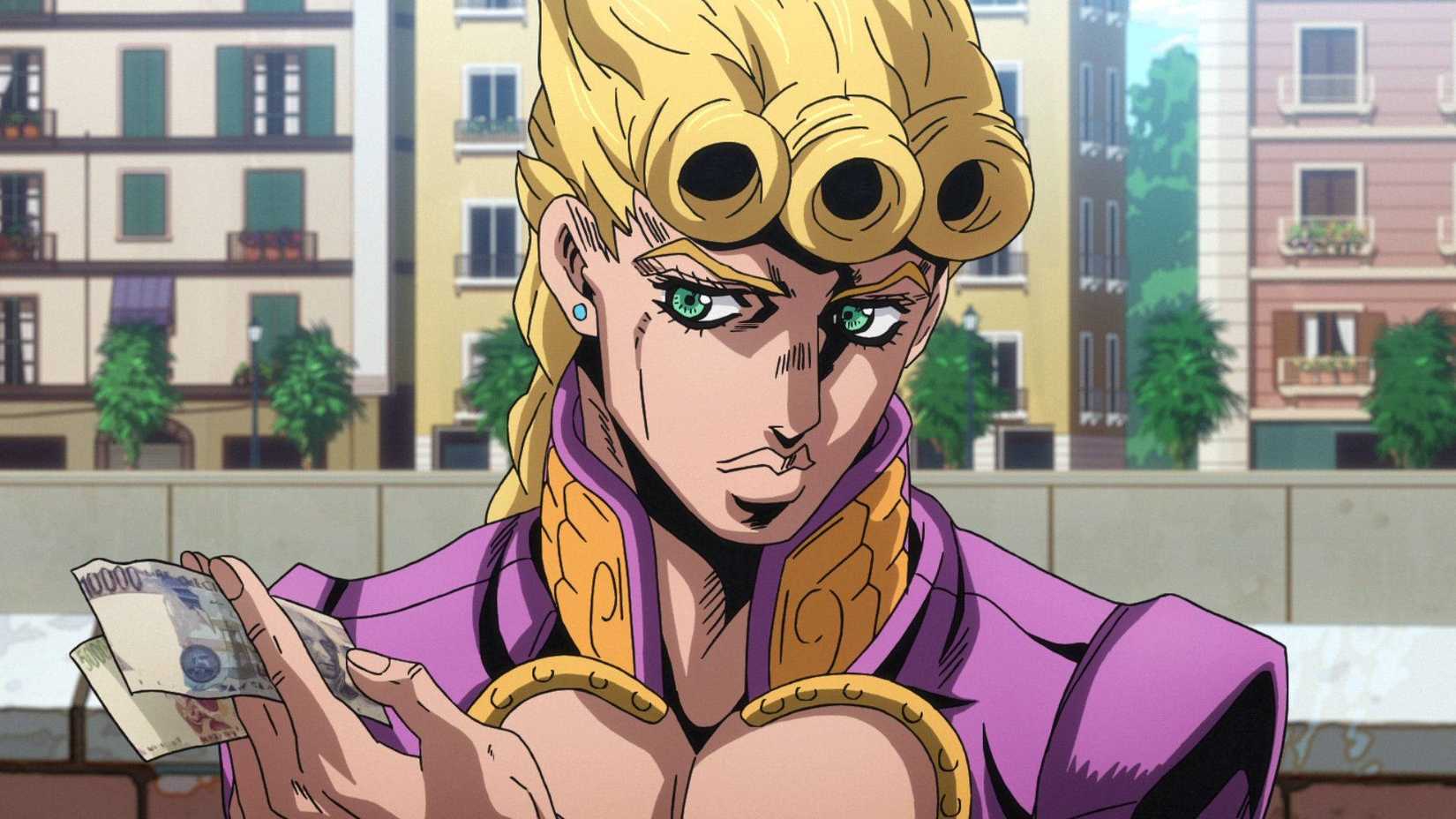
The Steel Ball Run anime is taking viewers through the early stages of its cross-country race, but it has not yet reached the Civil War arc. For now, this brilliant section of JoJo’s Bizarre Adventure: Steel Ball Run remains a manga story waiting to be animated.
Hirohiko Araki excels at turning abstract concepts into bizarre, visually inventive conflicts. The whole of JoJo’s Bizarre Adventure showcases his eccentricity, but the Civil War arc stands out even in a series built on surreal confrontations.
The arc’s titular Stand belongs to government agent Axl RO. It turns the guilt carried by Johnny Joestar, Hot Pants, and Gyro Zeppeli into physical manifestations. Johnny’s accumulated trauma comes to the surface, exposing the childhood experiences that continue to haunt him.
The manifestations can take almost any form, from a broken knife to a teddy bear. Once touched, they surround their target with a membrane that slowly crushes them to death. The only way to endure the nightmare is to confront the guilt that gave it shape.
Johnny must face his past and unlock a new stage of his Spin ability. Jesus Christ himself also appears during the conflict, reinforcing a story steeped in faith, personal transformation, and the destructive consequences of unchecked ambition.
The Sugar Mountain and High Voltage/D4C arcs are exceptional too, but Civil War marks a monumental turning point for Johnny. It turns an inventive Stand battle into something like a spiritual rebirth and shows that even by JoJo standards, Araki can get profoundly weird.
Source: Polygon
Related articles
 Insider Discusses GTA VI End Credits Length: Could They Be Shorter Than Suicide Squad: Kill the Justice League’s?
 GTA VI Dataminer Shares Findings About GTA Online
 NVIDIA Launches Investigation Amid Reports of Jensen Huang’s Close Ties to Alleged Spy
 Microsoft Reveals Full List of 37 New Games Coming to Xbox This Week
 PlayStation Cancels Fairgames, Live-Service Shooter From Jade Raymond’s Former Haven Studio
 Former PlayStation Boss Urges Sony to Abandon Tech Race for a $300 PS6
 Minecraft Is Back Among Japan’s Top Sellers, Outselling Dozens of New Releases
 4 Upcoming Fantasy RPGs Better Than Waiting for the Next Dragon Age